





Wire Rope Tension vs Breaking Strength: What Buyers Should Compare
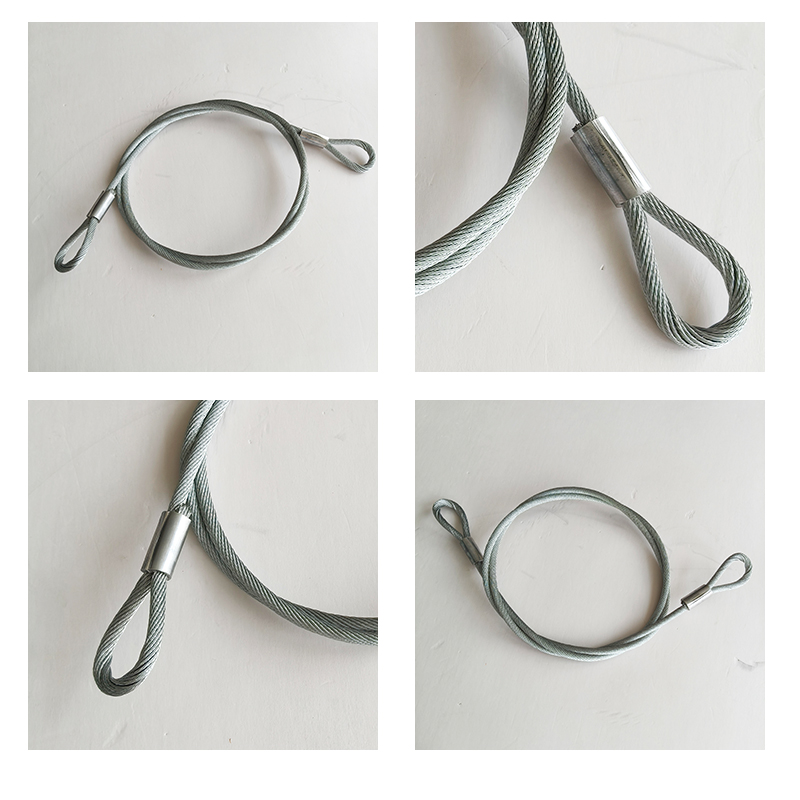
Wire Rope Tension vs Breaking Strength: What Buyers Should Compare
The mistake is easy to make: a buyer sees a high breaking strength on a data sheet and assumes the rope is automatically suitable for the job. It is not. Breaking strength tells you the load at which a wire rope is expected to fail under test conditions. Wire rope tension is the actual force the rope experiences in service. Those are related numbers, but they are not interchangeable, and treating them as if they were is one of the fastest ways to choose the wrong rope.
For selection work, the real question is not “Which rope has the biggest number?” It is “How much tension will this rope see in my application, and what safety margin is required between that working tension and the rope’s minimum breaking force?” That distinction matters whether the rope is being used for lifting, marine rigging, mine hoisting, construction handling, port operations, or static restraint.
In practice, tension is dynamic. A rope holding a steady suspended load behaves very differently from a rope exposed to shock loading, bending over sheaves, wind movement, repeated starts and stops, or uneven load distribution. Buyers often compare only the nominal load and the catalog breaking strength, while the service conditions are what actually determine whether the rope will last or fail early.
What each value really tells you
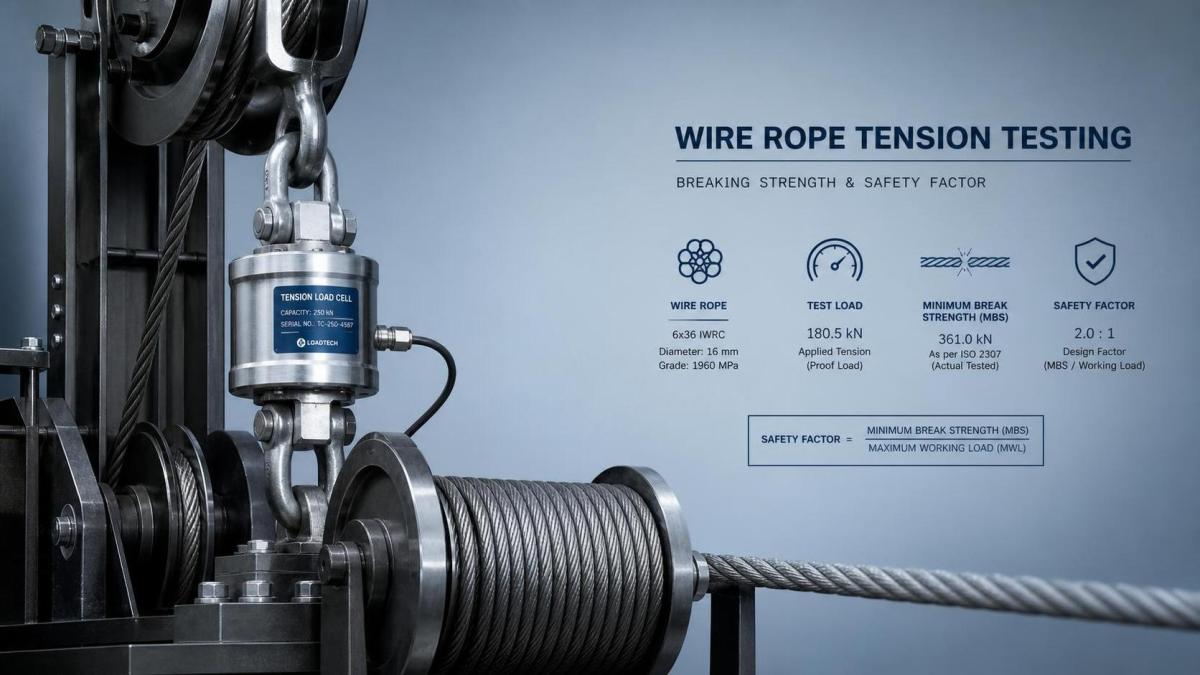
Breaking strength is a laboratory-based capacity figure. It is useful because it gives a common reference point for comparing ropes of different construction, diameter, and material grade. But it does not mean the rope should ever be used near that limit. In most industrial settings, the allowable working load is only a fraction of the breaking strength, because engineers have to account for wear, fatigue, installation quality, bending stress, and unexpected overload.
Wire rope tension, by contrast, is a field condition. It may be the direct result of suspended weight, or it may include acceleration forces, angle factors, drag, vibration, or pulsing load. A rope in an elevator system, a crane reeving system, or a port handling line is not simply “holding X tons.” It is operating inside a changing mechanical system. That is why experienced buyers ask how the rope is loaded, not only how strong it is on paper.
A simple way to think about it is this: breaking strength is the edge of failure; tension is the stress of daily use. Good selection depends on the distance between them.
Why buyers get misled by “stronger” ropes
A higher breaking load is not always the better purchase. If two ropes can both handle the expected operating tension with the required safety factor, the better option may come down to fatigue resistance, corrosion behavior, flexibility, or compatibility with the equipment. A compact, high-strength rope can be the wrong choice if the application involves small sheaves and constant bending. A galvanized rope may outperform a stronger untreated rope in a wet or marine environment simply because corrosion is the real life-limiting factor.
This is especially relevant in industrial supply decisions. Companies that manufacture across multiple wire rope types usually see the same pattern: customers often begin by asking for the highest tensile figure, then later discover that rope construction, surface condition, and working cycle were the more decisive variables. Shandong Faster Technology, for example, produces galvanized, stainless, and plastic-coated steel wire ropes in diameters from 1 mm to 20 mm, and that range exists for a reason. Different environments and load paths create different failure modes.
What should actually be compared before purchase
When reviewing quotations or specifications, compare these points together rather than in isolation:
That last point is often underrated. Full-process control, from raw material selection through wire drawing, stranding, and final inspection, has a direct effect on consistency. For buyers, consistency matters as much as headline strength because field performance depends on batch reliability, not a single sample result.
The role of safety factor and application type
No serious buyer should compare tension and breaking strength without also asking about safety factor. The acceptable ratio depends on the application, the governing standard, and the risk of shock or human exposure. A static restraint line, a lifting sling, and a mine handling line do not all use the same decision logic. This is why a catalog number alone cannot finish the selection process.
There is also a boundary where wire rope may not be the only product worth evaluating. In some lifting or traction scenarios, especially where abrasion, link articulation, or direct hook engagement matters, buyers compare rope systems with chain systems. That is where products such as NACM90 EN818-2 G80 Black Heavy Duty 6mm 8mm 10mm Alloy Steel Lifting Chain enter the conversation. A G80 lifting chain is not a substitute for every rope application, but its standard-based load relationship is easy to interpret: the provided product information states that the minimum breaking force is four times the rated working load and the test load is two times the rated load. For buyers, that kind of ratio is more decision-useful than a bare strength claim because it ties performance directly to working conditions.
The same principle should guide wire rope purchasing. Ask what the rope will see in operation, what design margin is expected, and whether the manufacturer can match the product to corrosion, fatigue, and handling conditions. Strength without context is incomplete information.
Common buying errors
One common error is using static load alone to estimate wire rope tension. Inclined lifting, multi-leg assemblies, sudden starts, and uneven distribution can all raise the actual line force. Another is assuming diameter automatically equals safety. A larger rope may add strength, but if it does not fit the drum, groove, end fitting, or bending radius properly, service life can become worse instead of better.
Buyers also sometimes overlook environment. In ports, ships, coastal construction, and wet mining conditions, corrosion can reduce effective service life long before nominal strength becomes the issue. In those cases, comparing galvanized, stainless, or coated rope options is part of the tension-versus-strength decision, not a separate cosmetic choice.
A final mistake is treating all compliant products as functionally identical. Standards matter, but manufacturing control matters too. A supplier with automated production lines, stable output, and inspection capability across the whole process is usually better positioned to deliver repeatable performance than a supplier relying mainly on final-stage sorting.
A better way to decide
For real purchasing decisions, compare the expected service tension first, then check the required safety margin, then evaluate rope construction, material, and operating environment. Only after that should you compare price. If the job involves lifting, marine exposure, mining, elevators, or repeated duty cycles, the “strongest” rope on the sheet may not be the rope that performs best over time.
So when someone asks whether wire rope tension or breaking strength is more important, the practical answer is neither one by itself. Tension tells you what the rope must survive every day. Breaking strength tells you how far away failure begins. Buyers should compare the gap between those numbers, and then judge whether the rope’s design, material, and manufacturing quality make that gap reliable in the real application.
Navigation
Send Us A Message



Shandong Faster Technology Co., Ltd. is a professional manufacturer of steel wire ropes.
Get in Touch
*We respect your confidentiality and all information are protected.