





Wire Rope Tension Problems That Lead to Premature Fatigue Failure
Start With the Tension Pattern, Not the Broken Wires
When a wire rope starts failing early, the first mistake is treating visible wire breaks as the root cause. In many lifting and traction systems, the real problem started much earlier with poor tension control. Uneven wire rope tension changes how load moves through the rope, concentrates bending stress, and turns normal service cycles into accelerated fatigue. For QC and safety teams, that means inspection has to begin with load distribution, installation condition, and operating pattern, not just the damaged section.
A rope can look acceptable on the reel and still fail too soon after commissioning if one strand carries more load, if the system shocks the rope repeatedly, or if the rope is forced to bend while already overstressed. The checklist below follows the order that usually saves the most time on site.
Check Whether the Load Is Shared Evenly
Premature fatigue often starts with uneven tension rather than excessive average tension. This matters most in multi-part reeving, multiple rope lines, synchronized lifting points, and assemblies where end terminations were installed at different effective lengths.
- Compare rope lengths under working load, not unloaded condition alone. A line that appears equal at rest may stretch differently once loaded.
- Look for one rope polishing faster than the others, one groove running hotter, or one termination showing earlier seating marks. Those are practical signs that load is not balanced.
- Check whether dead-end connections, sockets, wedges, or clamps were installed in a way that changed effective rope length.
- If the system uses several ropes to support one moving structure, verify that the equalization method is still functioning after maintenance.
A rope that is consistently carrying more tension will show earlier crown wear, broken outer wires, and faster diameter change. If you only replace that rope without correcting the load split, the next one will fail in the same way.
Separate High Static Tension From Shock Loading
These two problems leave different service histories, even when the damage looks similar at first glance. High static tension shortens fatigue life by keeping the rope closer to its stress limit during every bend. Shock loading adds brief spikes that can break wires long before the average load appears alarming.
Ask three practical questions:
- Does the operation include sudden starts, abrupt stops, snag release, or load pick-up with slack in the line?
- Did failures increase after drive settings, brake response, or operator practice changed?
- Do broken wires cluster after known impact events or overload incidents?
If the answer is yes to any of these, tension control is no longer just a rope issue. You need to review acceleration, braking, pick-up procedure, and whether slack is allowed before load transfer. A rope cannot maintain fatigue life if the system keeps hitting it with transient peaks.
Inspect Bending Zones Where Tension Does the Most Damage
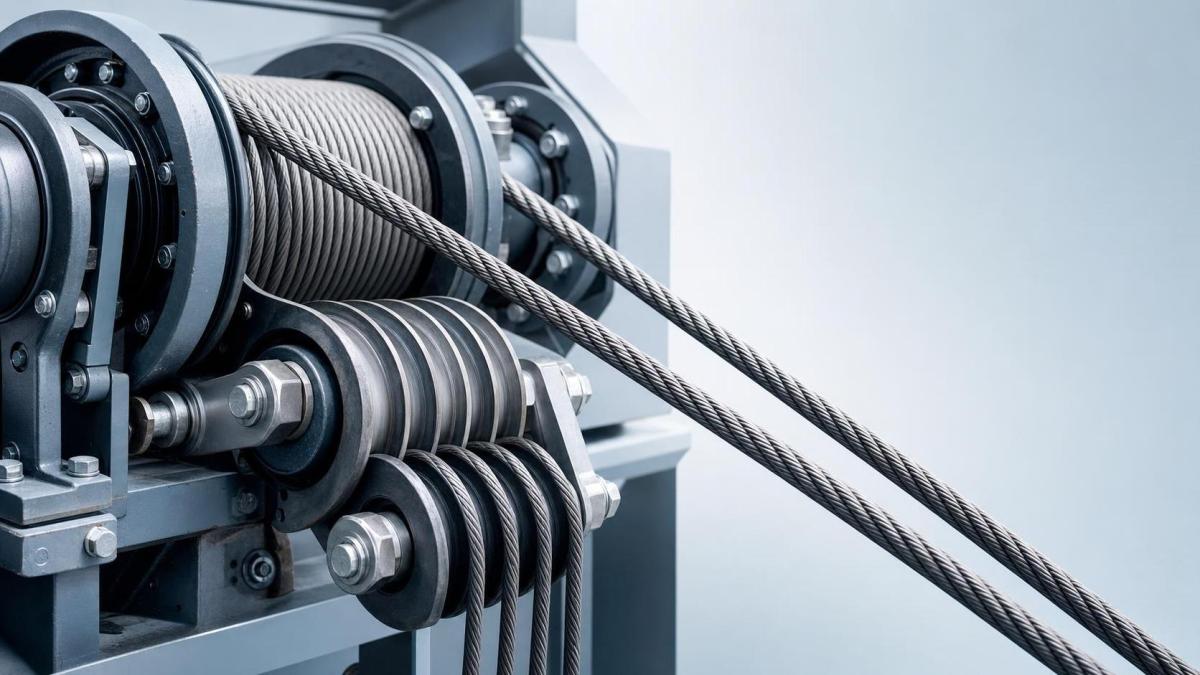
Fatigue rarely develops evenly along the full length. It builds fastest where wire rope tension combines with repeated bending: sheaves, drums, deflection points, and termination entries. That is where QC teams should inspect first.
Focus on these signs:
If damage is appearing in straight sections only, look harder for hidden tension spikes or installation damage. Straight-run fatigue without a bending trigger is less common.
Do Not Ignore Tension Loss Either
Low or unstable tension also causes fatigue trouble. A rope that goes slack, whips, re-seats suddenly, or climbs the groove improperly can be damaged even when nominal load seems moderate. This shows up in hoisting lines, traction lines, brake and control cable assemblies, and smaller diameter ropes used in directional pull applications.
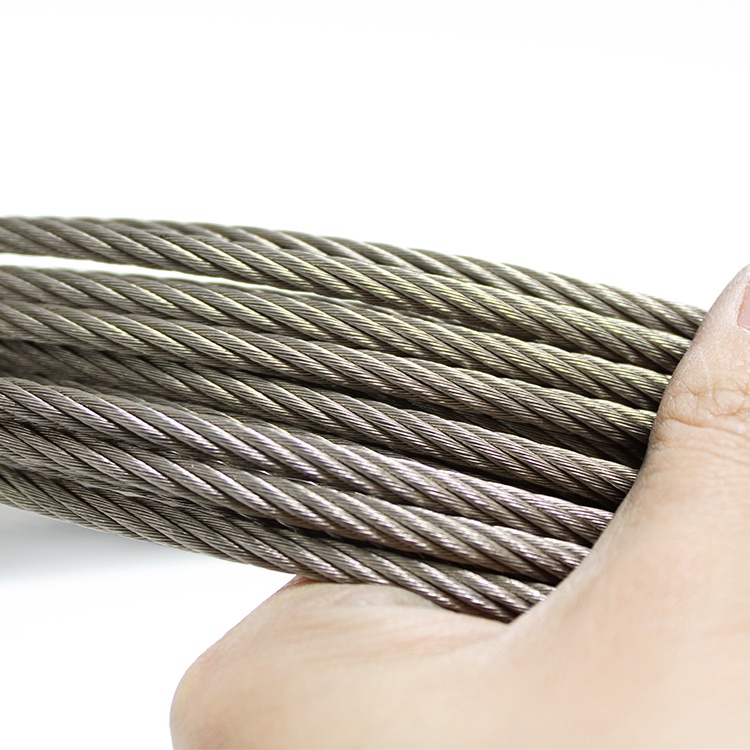
For compact, relatively rigid constructions used mainly under one-way pull, installation discipline matters a lot. A product such as 1x19 Galvanized Steel Wire Rope 1.5mm 1.8mm 2mm Inner Wire Steel Core Brake Cables is built for high tensile loading and low torsional distortion, but that same stiffness means poor routing, forced bending, or unstable working tension can shorten service life quickly. In brake, clutch, throttle, facade support, or agricultural transmission uses, check the actual path, pulley size, entry angle, and whether the rope is being asked to flex more than the application allows.
Review Installation History Before Blaming the Rope
A surprising number of fatigue complaints begin with handling mistakes made before the rope ever saw service. If tension was applied before the rope settled properly, or if twist was introduced during installation, the rope may carry internal stress from day one.
- Check whether the rope was paid off correctly from the reel. Pulling it the wrong way can induce loops and residual twist.
- Confirm that initial loading was controlled. A few light seating cycles are very different from putting the rope straight into hard service.
- Inspect the first wraps on the drum. Early crushing, gapping, or cross-over damage usually points to installation and spooling issues, not material fatigue alone.
- Review whether terminations were made after the rope had stabilized under load, especially in systems sensitive to equal length.
This is also where supplier consistency matters. Manufacturers with full-process control from wire drawing through rope closing and finished inspection are better positioned to provide stable construction quality, especially when the application depends on repeatable tension behavior across batches.
Match Rope Construction to the Real Duty, Not the Purchase Description
A rope can be strong enough on paper and still be wrong for the fatigue duty. The key question is not only breaking force. It is whether the construction suits the mix of tension, bending frequency, routing geometry, corrosion exposure, and need for flexibility.
Single-strand constructions in the 1.0-3.5 mm range can make sense where straight-line pull, anti-twist behavior, and compact rigidity are needed. They are less forgiving when the application introduces repeated small-radius bending. For QC review, compare the rope actually installed against the equipment movement it sees every shift, not just against the item code on the purchase order.
If your incoming material is certified to standards such as GB/T 20118-2006, GB 8918-2006, or DIN3052, that helps define the product basis, but it does not replace application review. Fatigue life still depends on how tension is applied in service.
Build Inspection Records Around Change, Not Just Condition
Static pass/fail inspection is not enough for tension-related fatigue. The more useful approach is to track change over time: where broken wires first appear, whether diameter loss is accelerating, whether one side wears faster, whether replacement intervals are shrinking, and whether failures follow maintenance on brakes, drives, or alignment points.
When the trend shows faster deterioration after a system change, investigate the system first. That will usually tell you more than arguing about rope grade in isolation.
Use a Practical Order of Action
For safety managers and QC personnel, the most efficient sequence is simple. Start by identifying where the rope is failing. Then verify whether the rope was overloaded steadily, shocked intermittently, or allowed to run with unstable tension. After that, inspect alignment, bending points, drum spooling, and termination equality. Only once those points are clear does product selection become a useful discussion.
That order prevents a common waste of time: replacing rope with the same specification while leaving the tension problem untouched. Fatigue failure is rarely random. In most cases, the tension pattern has been leaving clues well before the rope breaks.
Navigation
Send Us A Message



Shandong Faster Technology Co., Ltd. is a professional manufacturer of steel wire ropes.
Get in Touch
*We respect your confidentiality and all information are protected.