





Will galvanized steel rope rust?
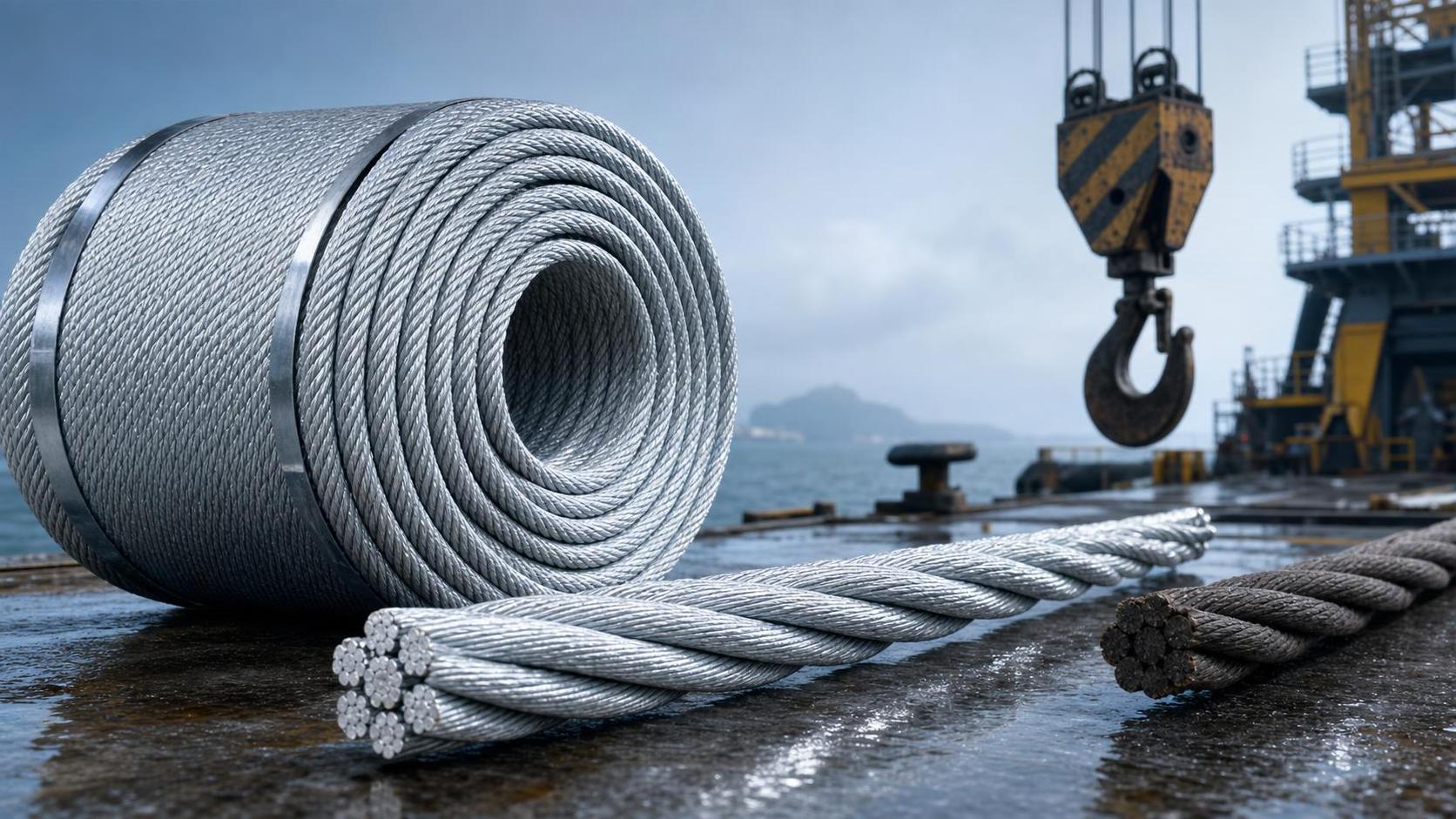
Will galvanized steel rope rust? Yes, but it resists corrosion much better than ordinary carbon steel rope because the zinc coating protects the steel underneath. For buyers and engineers in lifting, marine, construction, mining, and infrastructure work, the real question is not whether rust can happen, but how fast it may develop, under what conditions, and whether galvanized rope is the right balance of cost, strength, and service life for the job.
In practice, galvanized steel wire rope performs well in many outdoor and humid environments, especially where uncoated rope would deteriorate quickly. However, its corrosion resistance still has limits. Salt spray, standing moisture, chemical exposure, surface damage, and poor maintenance can all shorten service life. Understanding these factors helps users choose the correct rope specification and avoid premature failure.
Why does galvanized steel rope still rust at all?
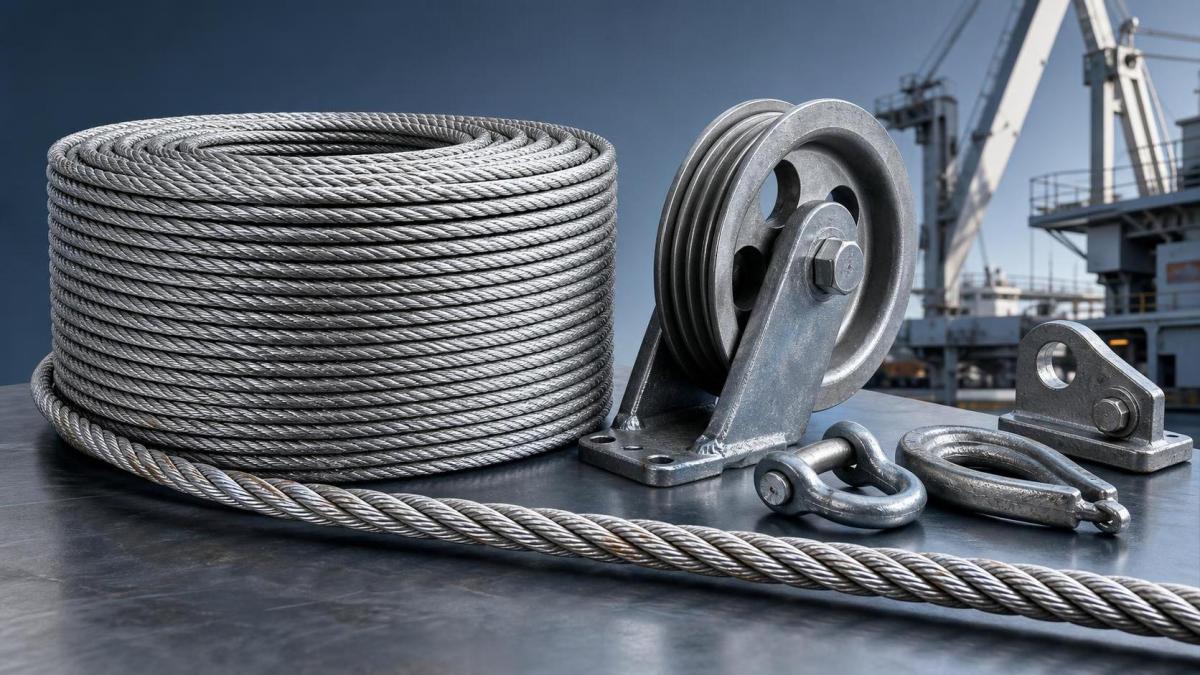
Galvanized steel rope is made from steel wires coated with zinc. This coating acts as a barrier against moisture and oxygen, and it also provides sacrificial protection. That means the zinc corrodes first, helping delay direct attack on the steel core.
Even so, galvanized rope is not permanently rust-proof. Over time, the zinc layer gradually wears away due to friction, weather, bending, abrasion, and corrosive exposure. Once the coating becomes thin or damaged, the underlying steel can begin to oxidize and form rust.
This is especially important with wire rope because corrosion does not always stay on the surface. Moisture and contaminants can enter the gaps between strands and wires. Internal corrosion may progress without being obvious at first, which makes regular inspection essential in safety-critical applications.
How much better is galvanized rope than ordinary steel wire rope?
Compared with bright or uncoated steel wire rope, galvanized rope usually offers significantly longer service life in wet, outdoor, or mildly corrosive conditions. The improvement can be substantial in applications such as tower guy lines, port handling, hoisting support, agricultural machinery, and construction site use.
The exact difference depends on the environment. In moderate exposure, galvanized rope may remain serviceable far longer than ordinary rope. In severe marine or chemical conditions, the benefit is still meaningful, but the rope may require more frequent inspection, lubrication, and earlier replacement.
For many industrial users, galvanized rope is the practical middle option. It offers better corrosion resistance than plain carbon steel while typically remaining more economical than stainless steel rope. That cost-performance balance is why it is widely specified across multi-industry operations.
What conditions make galvanized steel rope rust faster?
The most aggressive factor is chloride exposure, especially in marine and coastal environments. Saltwater, sea air, and splash zones can consume the zinc coating much faster than inland conditions. Once the coating is compromised, rust can spread quickly on exposed steel surfaces.
Frequent wet-dry cycles also accelerate corrosion. Rope that gets wet and then dries repeatedly often suffers more than rope kept consistently dry. Construction sites, docks, mines, and outdoor lifting systems commonly create these cycles, particularly where drainage and ventilation are poor.
Mechanical wear is another major issue. When rope runs over sheaves, drums, or contact points, the zinc coating can wear off. Abrasion between strands during repeated bending also reduces protection. In dynamic applications, corrosion resistance depends not only on coating thickness but also on rope design and operating conditions.
Chemical exposure matters as well. Acids, alkalis, fertilizers, industrial fumes, and contaminated water can all attack the zinc layer. In these settings, buyers should not assume that “galvanized” alone is enough. Material selection must match the actual service environment.
When is galvanized rope the right choice, and when is it not?
Galvanized steel rope is usually a strong choice for outdoor lifting, general port work, construction support, light-to-medium marine use, agricultural equipment, and infrastructure applications where moisture is present but corrosion is not extreme every hour of operation.
It is also suitable when buyers need a combination of strength, availability, and controlled cost. For many industrial fleets and project-based purchases, galvanized rope provides dependable performance without the higher material cost associated with stainless steel grades.
However, if the rope will operate continuously in highly corrosive marine zones, chemical plants, or applications with strict cleanliness requirements, stainless steel rope may be more appropriate. If the rope faces heavy abrasion plus corrosive attack, users may also need to compare galvanized, stainless, and plastic-coated options rather than relying on one material by default.
How can buyers judge the quality of galvanized steel wire rope?
Not all galvanized rope performs the same. Buyers should look beyond a basic product name and review the manufacturer’s process control, raw material quality, coating consistency, rope construction, and inspection capability. A rope that looks similar on paper can behave very differently in service.
Key points include wire tensile consistency, strand uniformity, coating quality, dimensional accuracy, and traceable testing. Industrial users should also confirm whether the supplier can provide specifications matched to load conditions, bending fatigue, environmental exposure, and service life expectations.
Shandong Faster Technology Co., Ltd. manufactures steel wire rope with automated wire drawing, twisting, and rope-closing lines, supported by quality inspection equipment for full-process control from raw materials to finished products. With annual production capacity exceeding 70,000 tons and supply capability for single and multi-strand ropes from 1mm to 20mm, the company supports galvanized, stainless steel, and plastic-coated material series for different corrosion and strength requirements.
That manufacturing range is important for buyers who do not want a one-size-fits-all answer. In real projects, rope selection depends on whether the task involves lifting, traction, securing, marine handling, elevator systems, mining, or construction support. Matching the rope to the operating condition is what reduces lifecycle cost and safety risk.
What maintenance helps galvanized rope last longer?
First, keep the rope as clean as possible. Dirt, salt, mud, and chemical residue trap moisture and accelerate coating breakdown. Regular cleaning is especially valuable after exposure to seawater, slurry, dust, or industrial contaminants.
Second, use proper lubrication where the application allows it. Lubrication helps reduce internal friction, repels moisture, and slows corrosion between wires and strands. For moving rope systems, this step can significantly improve both corrosion resistance and fatigue life.
Third, inspect for broken wires, red rust, coating loss, crushing, flattening, and localized wear. Pay attention to end terminations, sheave contact zones, and areas where water tends to collect. Internal damage often begins in the places that experience repeated bending or poor drainage.
Finally, store rope correctly before installation. Even a high-quality galvanized rope can deteriorate early if it is left uncovered in wet ground conditions, exposed to standing water, or handled roughly enough to damage the protective coating before use.
What related components should also be considered in corrosive environments?
Wire rope rarely works alone. In many lifting, securing, mooring, and fixed installation systems, buyers also need compatible chains, slings, connectors, and assemblies that can handle similar environmental conditions. If one component corrodes much faster than the others, the whole system becomes the weak point.
For lighter-duty static securing, bundling, hanging, or traction applications, some users also evaluate chain products such as DIN5685 A/C Short or Long Link Chain. Depending on the scenario, short-link structures offer a more compact form, while long-link versions provide more flexibility for general non-heavy-load use.
That is relevant in warehouses, agricultural equipment, docks, trailers, guardrails, and industrial protective setups where corrosion resistance, dimensional fit, and load type all influence service life. When the environment is wet or outdoors, buyers should review rope, sling, and chain materials as one system instead of purchasing each part in isolation.
How should decision-makers choose between galvanized, stainless, and coated options?
A practical approach is to compare three things: corrosion severity, mechanical wear, and replacement cost. If corrosion is moderate and budget matters, galvanized rope is often the best value. If corrosion is severe and downtime is expensive, stainless steel may justify its higher upfront cost.
If surface protection against abrasion, visibility, or handling comfort is also needed, plastic-coated rope may be worth evaluating. However, coating type should never be selected purely for appearance. The base rope construction, load rating, and actual operating environment remain the primary decision factors.
For procurement teams and project managers, the best purchase is usually the option that delivers predictable service life with manageable inspection intervals. That means asking suppliers for technical guidance, not just price per meter or per reel.
Conclusion
So, will galvanized steel rope rust? Yes, eventually it can. But compared with ordinary steel rope, it provides much better protection against corrosion and is often the most practical solution for demanding industrial environments where strength, reliability, and cost control all matter.
The right conclusion is not that galvanized rope is rust-proof, but that it is highly useful when selected correctly and maintained properly. Buyers who understand exposure conditions, wear patterns, inspection needs, and supplier quality standards will make better decisions and get longer, safer service from their rope systems.
For applications in lifting, ships, ports, construction, mining, elevators, and related sectors, choosing a manufacturer with stable production, material options, and customization capability is just as important as choosing the rope material itself. That is where long-term operating value is really determined.
Navigation
Send Us A Message



Shandong Faster Technology Co., Ltd. is a professional manufacturer of steel wire ropes.
Get in Touch
*We respect your confidentiality and all information are protected.