





What is galvanized wire rope used for?
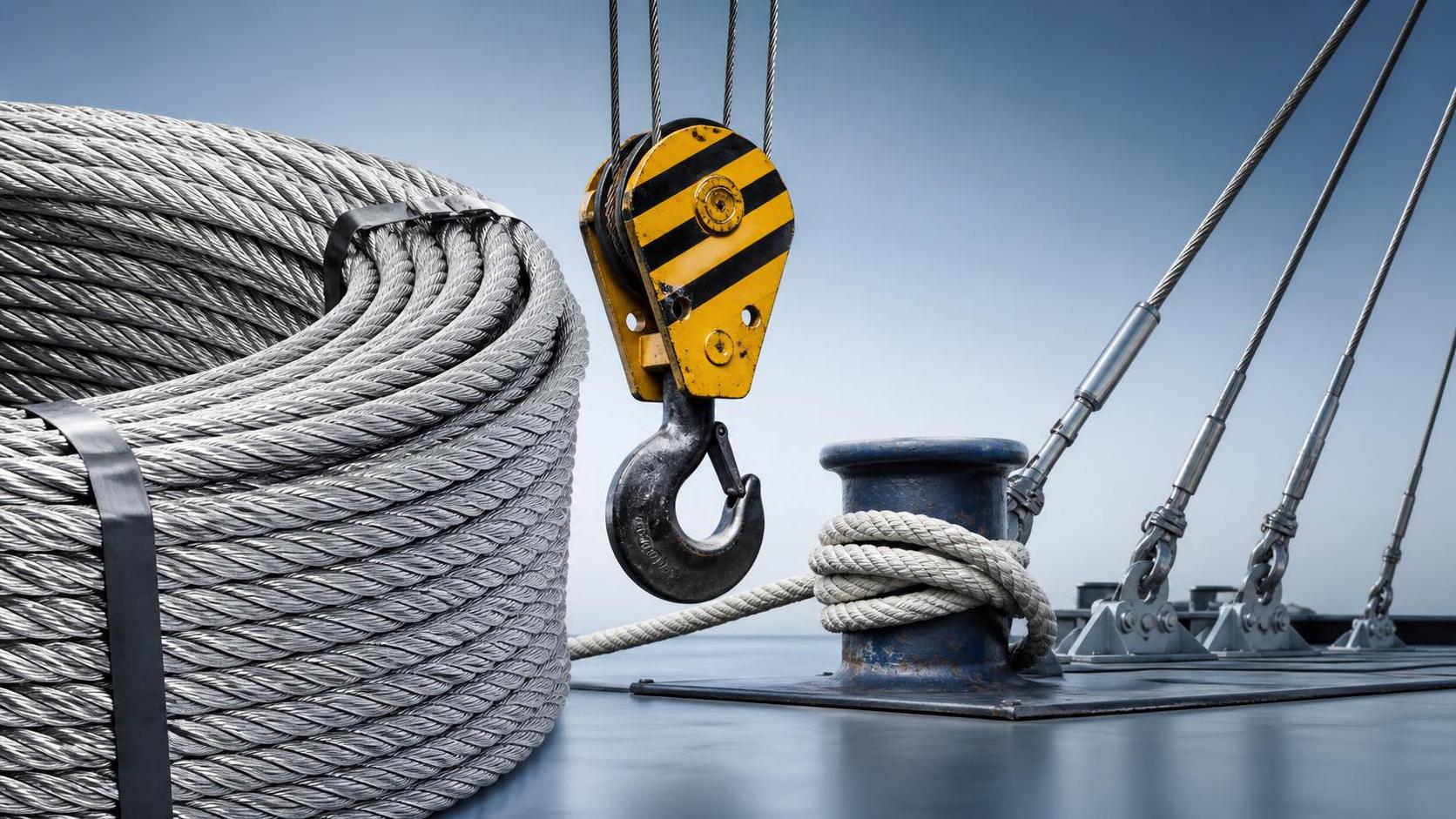
Galvanized wire rope is used when buyers need a balance of strength, flexibility, and moderate corrosion resistance without the higher cost of stainless steel. In practice, it is common in lifting, marine support, construction, mining, transport, and general industrial systems where ropes must handle repeated loads and outdoor exposure.
For most searchers, the real question is not only what galvanized wire rope does, but where it fits best, where it does not, and how to choose the right type for safety and service life. Those are the points this article focuses on.
Where Is Galvanized Wire Rope Commonly Used?
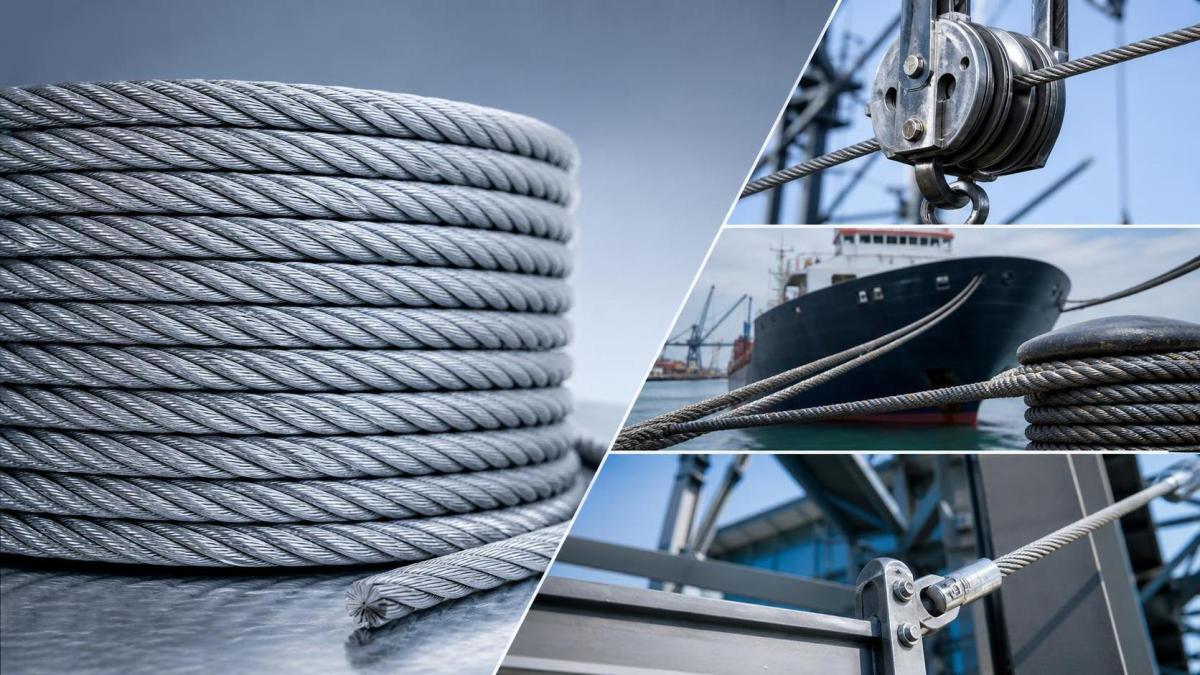
Galvanized wire rope is widely selected for equipment and structures that work in open air, humid spaces, and dirty industrial environments. The zinc coating helps protect the steel surface from rust, which makes it practical for long-term use.
In lifting and material handling, it is often used for slings, hoisting lines, winch systems, crane support applications, and load control. Buyers in these fields usually want a rope that remains dependable under frequent mechanical stress.
In marine and port operations, galvanized wire rope is used for mooring support, dockside handling, cargo movement, and auxiliary rigging. It performs better than uncoated carbon steel in wet conditions, although constant saltwater exposure may require higher-grade alternatives.
Construction companies use galvanized wire rope for tower support, temporary structure stabilization, guard systems, scaffolding-related restraint, and pulling work. These jobs often involve dust, rain, changing loads, and outdoor storage, so corrosion resistance matters.
Mining and quarry operations also rely on galvanized wire rope in hauling, dragging, guiding, and equipment support tasks. These environments are abrasive and demanding, which means buyers must consider both tensile strength and wear resistance, not coating alone.
It is also common in agriculture, fencing, transportation, stage systems, and general factory use. Whenever a project needs mechanical strength plus better rust resistance than plain steel, galvanized wire rope is usually part of the shortlist.
Why Do Many Industrial Buyers Choose Galvanized Wire Rope?
The main advantage is cost-effective durability. Galvanized wire rope gives more corrosion protection than bright steel wire rope, while usually remaining more economical than stainless steel options, especially in large-volume industrial procurement.
Another reason is versatility. It can serve across lifting, traction, fixing, suspension, and structural support applications. That broad usability is important for contractors, distributors, and equipment manufacturers who need one product family for different operating conditions.
Galvanized wire rope also offers a practical service life in outdoor or semi-corrosive environments. Rain, humidity, mud, and intermittent water exposure will gradually affect any steel rope, but galvanizing slows surface deterioration and reduces maintenance pressure.
For procurement teams, this often translates into lower replacement frequency and more stable lifecycle cost. The cheapest rope on paper is not always the lowest-cost choice once downtime, inspection burden, and early replacement are considered.
Manufacturing consistency also matters. A supplier with controlled drawing, twisting, rope closing, and inspection processes can provide more stable diameter accuracy, tensile performance, and coating quality, all of which directly affect field reliability.
What Types of Jobs Is It Best Suited For?
Galvanized wire rope performs best in applications where mechanical strength is critical and the environment is corrosive, but not so aggressive that stainless steel becomes necessary. This is the typical decision point many buyers need clarified.
It is well suited for general outdoor lifting equipment, pulley systems, winches, guy wires, safety restraints, farm and infrastructure support, and port-related handling equipment. In these conditions, it gives a strong balance between performance and budget.
It is also a good fit for projects that need multiple diameters and constructions for different load paths. Manufacturers like Shandong Faster Technology can supply single and multi-strand steel wire ropes from 1-20mm for varied industrial requirements.
Where buyers need complete matching solutions, rope may also be combined with pressed slings and graded chains for lifting, traction, and securing tasks. This integrated sourcing approach can reduce compatibility issues and simplify procurement across job sites.
However, galvanized wire rope is not always the best answer for precision devices, medical mechanisms, or highly corrosive chemical and seawater conditions. In those cases, stainless steel often offers a better long-term performance profile.
When Should You Choose Stainless Steel Instead?
This is one of the most important buying decisions. If the application involves continuous seawater exposure, chemical contact, strict hygiene requirements, or small-diameter precision movement, stainless steel wire rope is usually the better option.
For example, in precision machinery, medical devices, civilian traction products, and outdoor marine components, a stainless steel construction can offer smoother surface behavior, better corrosion resistance, and more reliable performance in delicate systems.
A relevant example is 1x7 Stainless Steel Wire Rope 0.3-6.0mm use For Hanging Traction and guardrail, which is designed for hanging, traction, and guardrail uses where rigidity, smooth surface quality, and corrosion resistance are especially valuable.
Compared with galvanized rope, 304 stainless steel is often preferred for humid and mildly corrosive environments, while 316 or 316L is more suitable for harsh marine and chemical conditions. The right material depends on the exposure level and motion pattern.
For very small diameters, such as 0.3mm to 2.0mm, stainless steel ropes can also better meet subtle tensile and guiding requirements. These are not typical heavy lifting scenarios, but they are common in specialized industrial assemblies.
How Can Buyers Choose the Right Galvanized Wire Rope?
Start with the application, not the product name alone. Buyers should confirm whether the rope will be used for lifting, pulling, fixing, suspending, or guiding, because each function places different demands on construction, flexibility, and fatigue resistance.
Next, check the environment. Outdoor rain exposure, coastal humidity, abrasive dust, and chemical splash all change the material decision. Galvanized wire rope works well in many industrial settings, but severe corrosion may justify stainless steel from the start.
Load requirements are equally important. Buyers should define working load, peak load, shock loading risk, bend radius, pulley size, and operating frequency. A rope that is strong enough in theory may still fail early if the structure is wrong.
Diameter and rope construction should be selected according to both strength and handling conditions. Larger diameters may improve load capacity, while the strand arrangement affects flexibility, wear behavior, and compatibility with drums or sheaves.
It is also necessary to confirm compliance, inspection standards, packaging, and delivery capability. For industrial procurement, stable lead time and consistent batch quality are often as important as the technical specification itself.
Shandong Faster Technology Co., Ltd. supports this type of demand with automated production lines, inspection equipment, and annual steel wire rope output exceeding 70,000 tons. That scale helps buyers who need dependable supply for ongoing industrial projects.
What Risks Should Buyers Avoid?
The most common mistake is choosing galvanized wire rope only by price. A lower-cost rope may have weaker coating quality, unstable diameter tolerance, or inconsistent mechanical properties, which can create hidden operational and safety risks.
Another mistake is using galvanized rope in environments that clearly require stainless steel. If the rope will face constant salt spray, immersion, or corrosive chemicals, initial savings can quickly be lost through rust, maintenance, and replacement costs.
Buyers should also avoid overlooking end fittings, sling processing, and system compatibility. The rope itself may be correctly chosen, but poor terminals, incorrect pressing, or mismatch with pulleys and hardware can reduce overall performance.
Finally, do not underestimate inspection and maintenance needs. Even corrosion-resistant rope requires regular checking for broken wires, surface wear, deformation, crushing, and loss of lubrication or coating condition, depending on the working environment.
Conclusion
Galvanized wire rope is used across lifting, marine support, construction, mining, transport, and general industry because it offers a practical combination of strength, flexibility, and corrosion resistance at a competitive cost.
For most industrial buyers, it is the right choice when conditions are demanding but not extremely corrosive. The best purchasing decision comes from matching rope construction, diameter, environment, and load profile rather than choosing by price alone.
If the application involves fine diameters, precision movement, medical use, or harsh seawater and chemical exposure, stainless steel may be the smarter long-term option. Understanding that distinction helps reduce risk and improve lifecycle value.
In short, galvanized wire rope is not just a general-purpose product. It is a practical engineered solution for many industrial tasks, and its real value depends on choosing the right specification for the job.
Navigation
Send Us A Message



Shandong Faster Technology Co., Ltd. is a professional manufacturer of steel wire ropes.
Get in Touch
*We respect your confidentiality and all information are protected.