





Is galvanized or stainless wire rope better?
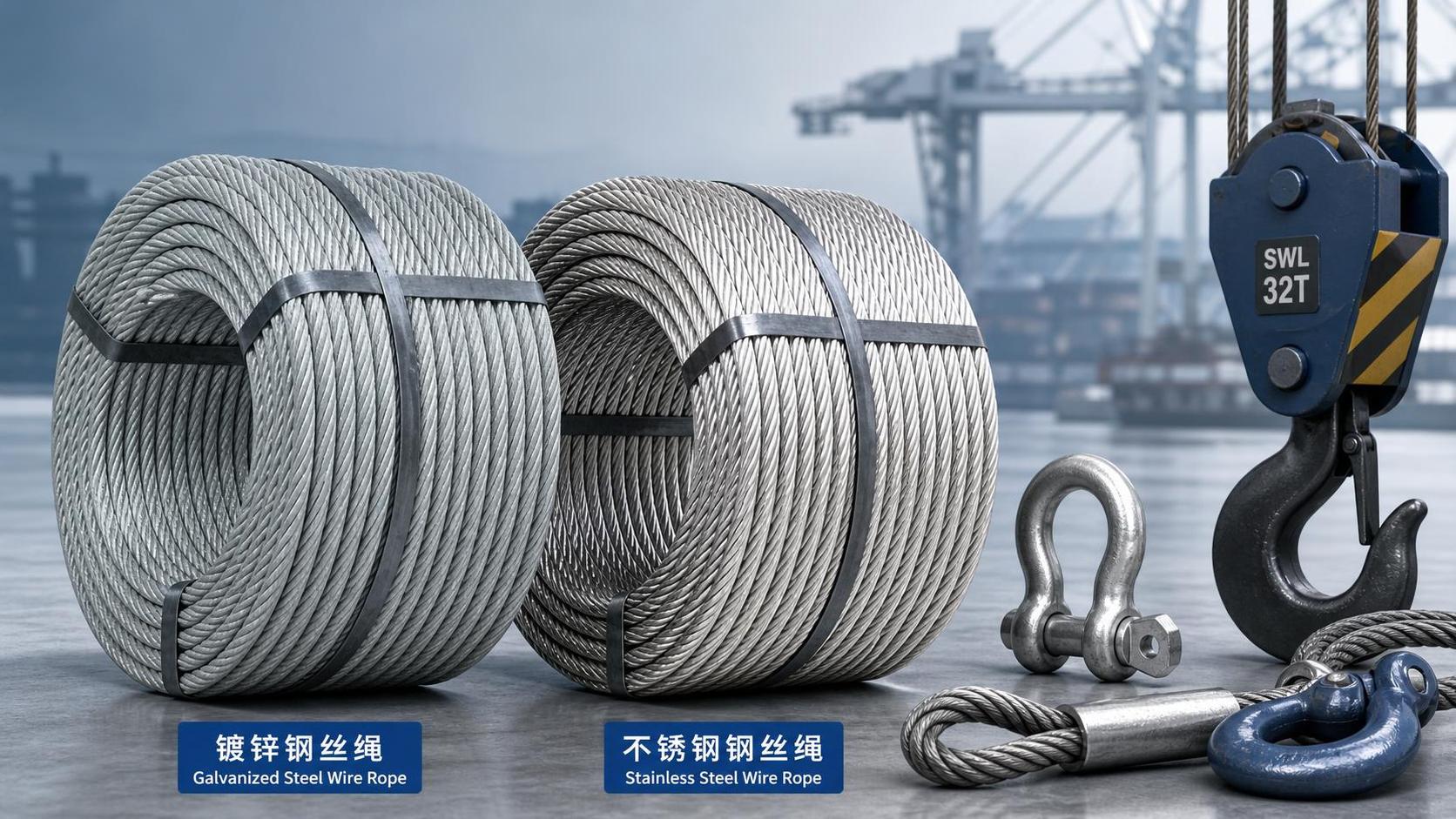
Choosing between galvanized and stainless wire rope depends on where the rope will work, how much corrosion resistance you need, how often you replace equipment, and what budget you can justify. For most general lifting, construction, mining, and inland industrial use, galvanized wire rope is the more practical choice because it balances strength, durability, and cost. Stainless wire rope is usually better when the rope faces saltwater, high humidity, chemicals, or strict hygiene requirements, where long-term corrosion resistance matters more than upfront price.
That is the real answer behind the question, “Is galvanized or stainless wire rope better?” Neither is universally better in every case. The right choice depends on service environment, maintenance conditions, safety expectations, and lifecycle cost. For buyers in ports, ships, hoisting, construction, and material handling, the best decision comes from matching material performance to actual working risk.
What buyers are really trying to decide
When people search for galvanized vs stainless wire rope, they are usually not looking for a textbook definition. They want to know which option will last longer, which one is safer, which one fits their budget, and which one reduces replacement frequency in real operations.
For procurement managers, project engineers, and equipment buyers, the concern is practical. A wrong wire rope choice can increase downtime, create corrosion problems, shorten service life, and raise total cost. In lifting and load-handling environments, it can also affect reliability and inspection cycles.
This is especially true in industries such as marine transport, ports, mining, elevators, and construction, where the wire rope is not just a component. It is part of a safety-critical working system that must perform consistently under load, weather exposure, abrasion, and repeated use.
Galvanized wire rope: where it performs best
Galvanized wire rope is steel wire rope coated with a zinc layer to improve corrosion resistance. It is widely used because it offers a strong balance between mechanical strength, reasonable corrosion protection, and cost efficiency for many industrial applications.
In general industrial settings, galvanized wire rope is often the preferred solution. It performs well in outdoor construction, general lifting, mining support, agricultural applications, inland transport, and many port operations where exposure exists but is not continuously aggressive.
Its main advantage is value. Compared with stainless steel wire rope, galvanized rope usually costs less while still providing reliable service in environments exposed to rain, moisture, and moderate atmospheric corrosion. That makes it attractive for users managing large-volume purchasing and replacement planning.
Another reason galvanized wire rope remains popular is its broad specification availability. Manufacturers can provide different constructions such as 6x19, 6x24, 6x37, 7x19, and 19x7, making it easier to match flexibility, fatigue resistance, and load requirements to the job.
However, galvanized wire rope is not a permanent answer for highly corrosive environments. If the zinc coating wears away because of friction, bending, or prolonged exposure to salt and chemicals, the underlying steel can corrode faster and reduce the rope’s effective service life.
Stainless steel wire rope: when the higher cost is justified
Stainless steel wire rope is designed for stronger corrosion resistance, especially in wet, marine, chemical, and sanitary environments. It is commonly selected when exposure conditions are severe enough that ordinary coated steel products would deteriorate too quickly.
If the rope will operate near seawater, in offshore structures, fishery operations, food-related settings, or locations with frequent washdown and humidity, stainless wire rope is often the better investment. The higher purchase cost can be justified by lower corrosion risk and fewer unexpected replacements.
Stainless material is also preferred where appearance matters or where surface rust is unacceptable. In some architectural, marine, and public-facing applications, users choose stainless not only for durability but also for cleaner visual condition over time.
Still, stainless wire rope should not be chosen automatically. In some heavy-duty industrial operations, buyers focus so strongly on corrosion resistance that they overlook load pattern, bending fatigue, installation method, and inspection practice. Material choice matters, but the working design matters just as much.
Which is better for strength and heavy lifting?
Many buyers assume stainless wire rope is always stronger because it is more expensive. That is not necessarily true. The better comparison is not simply galvanized versus stainless, but rope construction, tensile grade, core type, diameter, and the exact lifting or traction requirement.
For many industrial lifting tasks, galvanized carbon steel wire rope can provide excellent strength performance. Depending on the specification, tensile strength can range from 1570 to 2160 N/mm2, which suits many demanding applications in hoisting, construction, mining, and cargo handling.
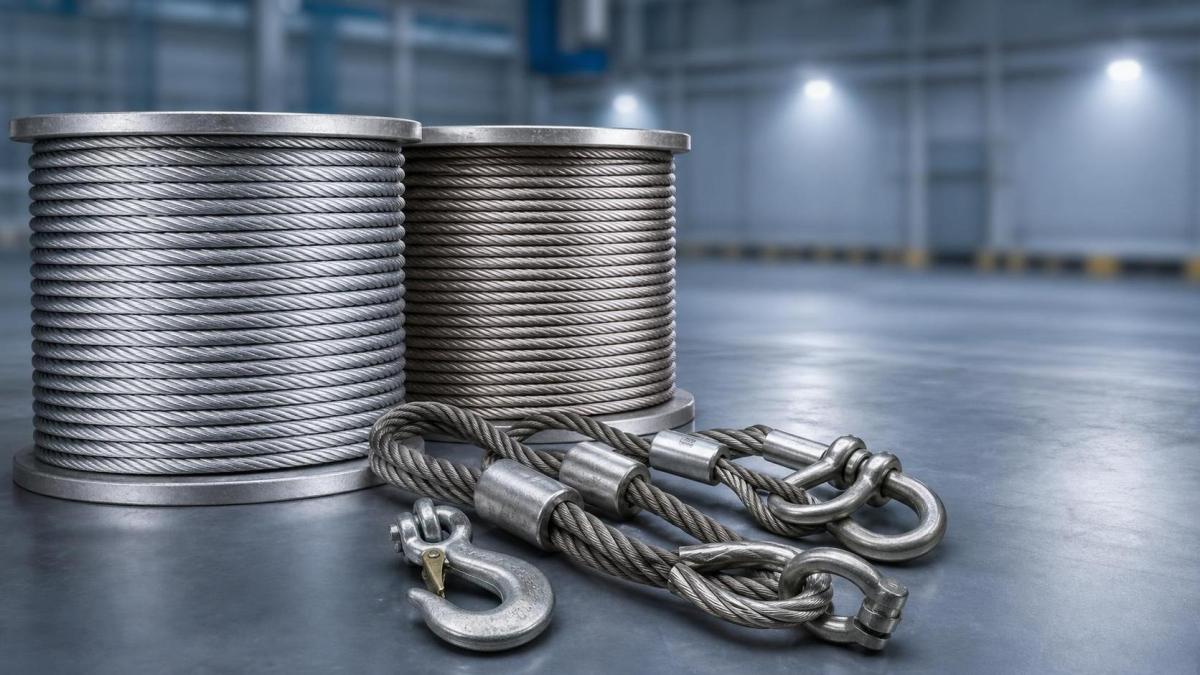
In heavy lifting assemblies, the full system matters more than the surface material alone. Factors such as independent wire rope core, ferrule quality, end fittings, hook design, and equal load distribution across legs all influence actual performance and safety.
For example, in multi-leg lifting configurations, stability and load control are essential. A properly engineered sling assembly can improve handling efficiency and reduce operational risk. One example is 4 Leg Wire Rope Sling Carbon Steel With Latched Eye Sling Hook for Heavy Lifting, which is designed for applications requiring strong bearing capacity, secure attachment, and better load stability when the load is distributed evenly.
That is why industrial buyers should avoid making decisions based only on raw material labels. A galvanized rope with the right structure and sling configuration may outperform a poorly matched stainless option in real lifting work.
How to choose based on environment, budget, and replacement cycle
The simplest way to choose is to start with the operating environment. If the rope will face regular salt spray, marine humidity, or corrosive chemicals, stainless wire rope usually offers better long-term value. If the environment is moderately corrosive or mostly dry, galvanized often delivers better cost-performance.
The second factor is replacement economics. If a rope is easy to inspect and replace, galvanized rope may remain the smarter option because the lower initial cost offsets a shorter service interval. If replacement causes shutdown, access difficulty, or high labor cost, stainless may reduce total lifecycle expense.
The third factor is safety margin under actual use conditions. Repeated bending, shock loading, abrasion, and end termination quality all affect rope life. Buyers should evaluate the complete working system, not only the corrosion category listed on a product sheet.
It is also important to confirm available diameter range, rope construction, and customization capability. For projects with specific drawings or nonstandard requirements, supplier flexibility becomes part of the material decision because the best wire rope is the one that fits the application correctly.
Why supplier capability matters as much as material selection
Even the right material can underperform if manufacturing quality is inconsistent. Wire drawing, twisting precision, rope closing, and inspection control all influence stability, strength consistency, and field performance. That is why experienced buyers look beyond the material type and assess the manufacturer’s process capability.
Shandong Faster Technology Co., Ltd. focuses on steel wire rope, sling, and chain manufacturing for industries including lifting, ships, ports, construction, mining, and elevators. With automated production lines and inspection equipment, the company supports full-process control from raw materials to finished products.
Its annual production capacity exceeds 70,000 tons, with supply capability for single-strand and multi-strand steel wire ropes from 1 mm to 20 mm. Available material series include galvanized, stainless steel, and plastic coated options, which helps customers choose according to corrosion resistance, strength, and working conditions.
Beyond standard rope products, the company also provides customized slings, pressed assemblies, and chain products such as G30, G43, G70, G80, and G100. For industrial customers, this integrated rope-sling-chain supply model can simplify sourcing and improve consistency across lifting and securing applications.
Final answer: galvanized or stainless wire rope?
If the application is general industrial lifting, construction, inland transport, mining, or cost-sensitive outdoor use, galvanized wire rope is often the better choice. It gives a strong balance of performance, availability, and budget control for many real working environments.
If the application involves seawater, ports with constant salt exposure, fishery, chemical moisture, or other highly corrosive conditions, stainless wire rope is usually the better option because it protects service life and reduces corrosion-related failure risk.
So, galvanized or stainless wire rope is not a question of which material is universally superior. The better wire rope is the one that matches your environment, load requirement, inspection plan, and operating cost target. Buyers who evaluate those factors clearly will make better purchasing decisions and achieve more reliable long-term performance.
Navigation
Send Us A Message



Shandong Faster Technology Co., Ltd. is a professional manufacturer of steel wire ropes.
Get in Touch
*We respect your confidentiality and all information are protected.