





Why Choose Galvanized Steel Wire Rope for Heavy-Duty Applications?
For demanding environments where strength, durability, and corrosion resistance matter most, galvanized steel wire rope remains a practical choice, not just a familiar one. In ports, construction sites, mines, ship operations, and lifting systems, the rope is rarely working in ideal conditions. It sees moisture, abrasion, repeated bending, shock loading, dirt, and sometimes long idle periods followed by sudden heavy use. In that reality, material selection is less about theory and more about how the rope behaves after months of service.
That is why galvanized steel wire rope continues to hold its place in heavy-duty applications. It offers a useful balance: strong enough for serious load-bearing work, more corrosion-resistant than bright wire rope, and often more cost-manageable than stainless steel when large quantities or replacement cycles are part of the equation.
Where galvanized rope earns its keep
A lot of buyers ask whether galvanizing is really necessary. In some indoor, dry, controlled environments, maybe not. But heavy-duty projects are usually not that forgiving. If a wire rope is exposed to coastal air, rainwater, deck wash, slurry dust, or intermittent humidity, bare steel starts losing ground quickly. Corrosion does not only affect appearance. It can reduce wire integrity, increase surface roughness, accelerate internal wear, and make inspection less straightforward over time.
Galvanized coating helps delay that process. In marine and port work, it is often chosen because ropes may face salt-laden air even when they are not directly submerged. On tower cranes and lifting equipment, weather exposure combines with cyclic bending over sheaves. In mining and material handling, the rope may deal with both abrasion and corrosive moisture. In those cases, galvanizing gives operators more margin before corrosion becomes the failure driver.
It is not just about rust resistance
People often reduce galvanized steel wire rope to one benefit: anti-rust performance. That is true, but incomplete. The better reason to choose it is reliability under mixed stresses. Heavy-duty rope does not fail for one simple reason. It usually wears out through a combination of bending fatigue, outer wire abrasion, crushed strands, poor lubrication retention, and corrosion acting in the background.
A well-made galvanized rope supports operational consistency because it starts with controlled wire quality, proper twisting, and stable rope closing. Coating alone cannot compensate for poor manufacturing. If lay length is inconsistent or wire quality varies from batch to batch, users may see uneven elongation, handling problems during installation, or shorter service life. This is where manufacturing discipline matters more than sales language.
Shandong Faster Technology Co., Ltd. works from wire drawing to twisting and rope closing with automated production lines and inspection equipment, which matters in a category like this. Full-process control is not a decorative phrase in wire rope production. It is often the difference between a rope that performs predictably and one that behaves differently from reel to reel. With annual production capacity exceeding 70,000 tons and supply capability across galvanized, stainless steel, and plastic-coated series, the company is positioned to serve applications that care about repeatability as much as nominal strength.
Choosing galvanized versus stainless or bright rope
There is no universal “best” rope material. The better question is what risk you are trying to control.
Bright steel wire rope can be suitable where corrosion exposure is limited and maintenance is disciplined. Stainless steel makes sense where corrosion resistance is critical and the budget allows it. Galvanized rope sits in the middle and that is exactly why it is so widely used. It handles harsh outdoor conditions better than bright rope, while remaining more economical than stainless for many lifting, traction, and structural support tasks.
In practice, many industrial users do not upgrade to stainless unless the environment clearly demands it. For general heavy-duty use in construction, ports, shipping, and outdoor machinery, galvanized rope is often the more balanced choice.
Structure matters as much as material
One mistake buyers make is selecting by material only. Two galvanized ropes can perform very differently if their construction is different. Strand design, core type, diameter range, flexibility, and bending behavior all affect field performance.
For example, in elevator systems, cranes, cableways, and port handling equipment, the rope may pass over sheaves repeatedly and work under frequent cycling. In that kind of duty, flexibility and wear resistance deserve close attention. An 8-strand construction such as 8x19S is often considered when smoother bending and better contact characteristics are needed. A product like Elevator steel wire rope 8x19S wear-resistant 6-22mm machine rope reflects that thinking, especially for applications where smaller pulley diameters or repeated bending can shorten the life of a more rigid rope.
The fiber core versus steel core decision also should not be made casually. Fiber cores can improve flexibility and reduce weight, which may help during installation and bending service. Steel cores generally support higher structural stability in some load conditions. The right option depends on equipment design, duty cycle, safety factor requirements, and local standards.
Hot-dip or electro-galvanized?
This is another decision that looks minor on paper but matters in the field. Hot-dip galvanized rope usually offers heavier coating and stronger corrosion protection, which is valuable in marine, coastal, and exposed outdoor environments. Electro-galvanized rope may be chosen where a cleaner surface finish or a different cost-performance balance is acceptable. Neither is automatically better in every project. The operating environment should decide.
If the rope will spend years around salt air, port spray, or wet construction conditions, cutting cost at the coating level can become expensive later. On the other hand, for less aggressive environments, over-specifying material can add cost without extending useful service proportionally.
What experienced buyers usually check
The real buying decision usually comes down to a few practical questions:
- What is the actual environment: dry indoor, outdoor weather exposure, coastal, or chemically aggressive?
- Is the rope mainly lifting, pulling, supporting, or cycling over sheaves?
- Does the application prioritize flexibility, abrasion resistance, or structural stability?
- What diameter, breaking load, reel length, and packaging are needed for installation and logistics?
- Can the supplier provide consistent quality and realistic lead times, not just a catalog?
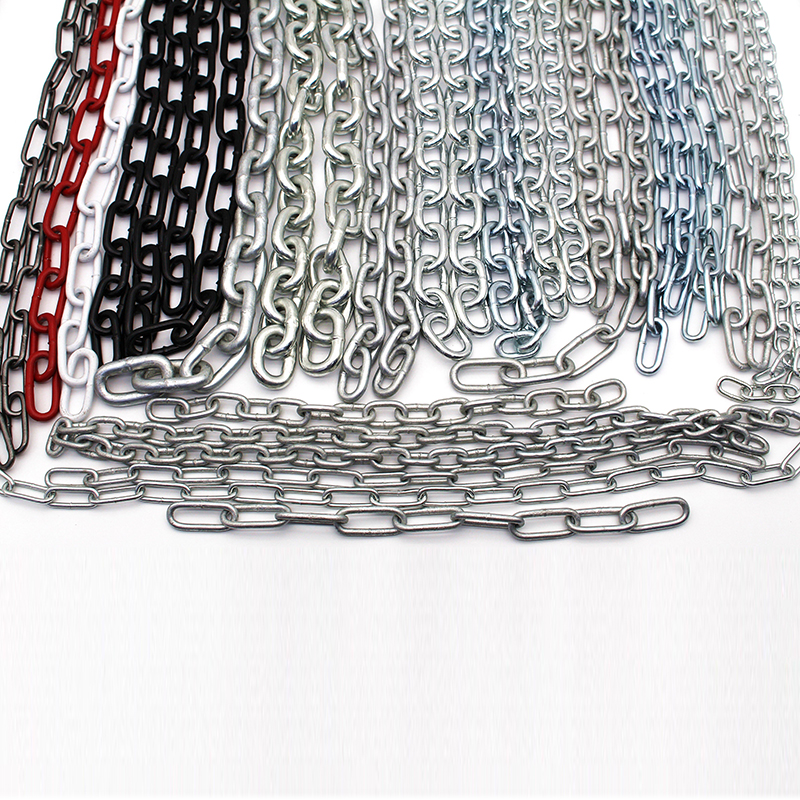
Those details are where supplier capability starts to matter. Shandong Faster can supply single- and multi-strand steel wire ropes in diameters from 1mm to 20mm as part of its standard production range, while also supporting customization, pressed slings, and chain products such as G30, G43, G70, G80, and G100. For buyers managing lifting, traction, and fixation systems together, that kind of integrated rope-sling-chain supply can simplify specification and procurement, especially when projects require matching components rather than isolated parts.
A final point that often gets overlooked
Galvanized steel wire rope is a strong choice for heavy-duty applications, but it is not a shortcut around proper selection and maintenance. Even the right rope will underperform if the sheave diameter is wrong, lubrication is neglected, or installation introduces twist and crushing from day one. Buyers sometimes focus heavily on nominal breaking load and miss the service conditions that actually determine rope life.
So the better reason to choose galvanized rope is not simply that it resists rust. It is that, when matched to the job correctly, it gives heavy-duty operations a more forgiving and more durable working margin. In rough industrial environments, that margin is often what keeps equipment running between scheduled replacements instead of forcing an earlier changeout.
If a project involves variable exposure, repeated bending, or outdoor service with real corrosion risk, galvanized steel wire rope is usually the baseline worth evaluating first. After that, the smart move is to narrow the structure, core, coating method, and specification to the actual machine and duty cycle rather than buying by name alone.
Navigation
Send Us A Message



Shandong Faster Technology Co., Ltd. is a professional manufacturer of steel wire ropes.
Get in Touch
*We respect your confidentiality and all information are protected.