





Chinese Galvanized Steel Wire Rope Supplier
Choosing a Chinese Galvanized Steel Wire Rope Supplier: What Actually Matters in Real Projects
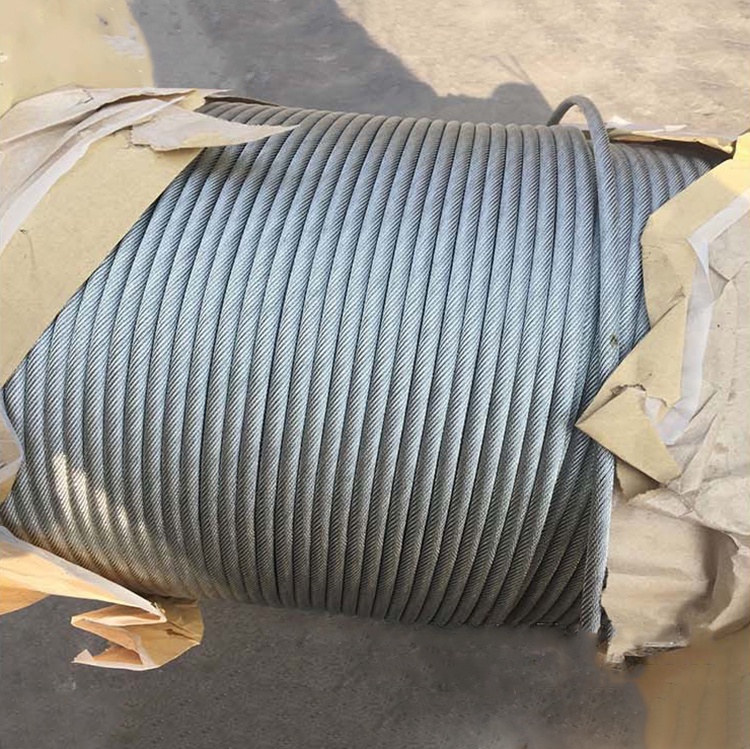
As a trusted Chinese galvanized steel wire rope supplier, Shandong Faster Technology Co., Ltd. delivers reliable, high-strength wire rope solutions for lifting, marine, construction, mining, and other demanding industries. Backed by advanced automated production lines, strict quality control, and strong customization capabilities, the company provides stable product performance and one-stop support for diverse industrial applications.
That sounds straightforward, but buyers in this field usually know the real issue is not just finding a supplier that can quote a diameter and a price. The harder part is judging whether the rope will behave consistently once it is exposed to load cycles, abrasion, moisture, salt spray, or awkward rigging conditions on site. In practice, galvanized steel wire rope is often selected because it sits in the middle ground: stronger and more economical than many alternatives, with better corrosion resistance than bright wire rope in outdoor or humid environments.
For that reason, supplier selection is less about catalog size and more about process discipline. A manufacturer that controls wire drawing, twisting, rope closing, and inspection in-house usually has a better chance of keeping structure stability and batch consistency under control. Shandong Faster’s setup is built around that full-process approach, which matters when customers need repeatable performance across lifting, ports, ships, elevators, mining equipment, or construction jobs where one weak batch can create expensive downtime.
Galvanized rope is not a single answer for every environment
One common mistake is treating “galvanized” as a universal solution. It helps, but it does not cancel out the need to match rope structure, core type, and tensile grade to the job. A rope used for static fixation has a very different working profile from one used in frequent lifting or repeated bending over sheaves. Likewise, port handling and fishery applications can involve both corrosion and shock loading, while mining may place more emphasis on wear resistance and strength.
This is where technical range matters. Shandong Faster supplies single-strand and multi-strand steel wire rope from 1mm to 20mm diameter, with galvanized, stainless steel, and plastic coated series available. That range is useful not because more options always mean better value, but because industrial buyers often need to balance several constraints at once: corrosion resistance, flexibility, service life, handling characteristics, and replacement frequency.
If the environment is wet but not aggressively corrosive, galvanized rope is often a sensible starting point. If the application involves stronger chemical exposure or stricter hygiene requirements, stainless steel may need to be considered instead. If the rope needs extra surface protection or reduced contact damage, plastic coated designs can make more sense. The right answer usually comes from the application, not from the product list.
What experienced buyers usually check before placing an order
In real procurement discussions, buyers tend to focus on a few practical questions.
- Is the rope structure suitable for the load pattern and bending condition?
- Does the core need to be steel core or fiber core?
- What tensile strength range is required for the application?
- Will the supplier provide stable quality across repeated orders?
- Can non-standard assemblies or slings be delivered without long lead times?
Those are not minor details. For example, structures such as 6x37, 6x24, 6x19, 19x7, and 7x19 behave differently in flexibility and fatigue performance. Tensile strength in the 1570-2160N/MM2 range may be appropriate depending on design requirements, but the selection should still be checked against actual working load limits, end fittings, safety factors, and local standards. A serious supplier will not reduce that conversation to a single price per meter.
Lead time also matters more than many people admit. On paper, 5-10 days can be reasonable for standard requirements, but customized assemblies, inspection documents, or special end terminations may affect scheduling. If a project depends on synchronized delivery of rope, sling, and chain components, it is easier to manage when the supplier can support all three categories instead of splitting the order across several factories.
Why integrated rope-sling-chain capability can reduce project friction
A lot of site problems do not come from the wire rope alone. They come from the connection points: mismatched sling lengths, unsuitable hooks, inconsistent ferrule quality, or chains chosen without thinking about the full lifting path. Shandong Faster’s “rope-sling-chain” supply capability is valuable here because many industrial jobs are not buying a rope in isolation. They are building a working system for lifting, traction, or fixation.
That is also why customized processing matters. Standardized rope is fine for many uses, but actual job sites often involve offset lifting points, irregular loads, or structures that cannot be handled safely with a simple single-leg assembly. In those cases, fabricated slings are not an upgrade for marketing purposes; they are the practical way to make the lift controllable.
A good example is 3 Leg bright oil steel Wire Rope Sling Hook and Loop 3tons Lifting Slings. Three-leg rigging is useful when the load is not perfectly balanced or when lifting points are spread apart. The triangular force arrangement generally improves stability, and adjustable leg length can help when the center of gravity is not where the drawing says it is. That kind of sling is commonly seen in heavy equipment lifting, bridge work, port loading, steel structure installation, and some marine handling tasks. Still, final selection should always consider lift angle, fitting type, and actual working conditions rather than rated tonnage alone.
Manufacturing scale only helps if quality control is real
An annual output of more than 70,000 tons tells you the factory has scale, but scale by itself is not proof of suitability. What matters more is whether inspection is built into production, from raw material control to finished rope verification. In steel wire rope manufacturing, small inconsistencies in wire quality, lay formation, lubrication condition, or closing tension can show up later as uneven wear or premature failure in service.
This is where automated production lines can be helpful, especially in wire drawing, twisting, and rope closing. Automation does not replace engineering judgment, but it usually improves repeatability. For buyers managing long-term supply, consistency is often more valuable than a one-time low quote. If replacement intervals, assembly fit, and mechanical behavior stay predictable, maintenance planning becomes easier and operational risk drops.
Certifications such as SGS, CE, RoHS, and ISO may also appear in supplier discussions, but they should be treated as part of the evaluation, not the entire evaluation. Buyers still need to confirm which documents apply to which product and whether the test basis matches the intended market or equipment requirement.
A practical way to evaluate a supplier before long-term cooperation
If the project is important, it is usually worth checking a few things early: available rope structures, material options, dimensional tolerance, inspection capability, customization support, packaging method, and communication speed when technical details change. These are ordinary details, but they often reveal whether the supplier understands industrial use or is only good at quoting standard items.
For companies sourcing from China, the better partnerships tend to come from suppliers that can discuss application conditions clearly, not just send a specification sheet. Shandong Faster stands out here because its manufacturing base, broad material coverage, and ability to supply wire rope, slings, and chain products together fit the way many industrial buyers actually purchase. That does not mean every product suits every job. It means the conversation can start from the real working condition, which is usually the right place to start.
When evaluating a Chinese galvanized steel wire rope supplier, the best question is not “Who has the cheapest rope?” It is “Who can keep the rope performing the way the job requires, batch after batch?” In lifting and heavy-duty environments, that difference is rarely small.
Navigation
Send Us A Message



Shandong Faster Technology Co., Ltd. is a professional manufacturer of steel wire ropes.
Get in Touch
*We respect your confidentiality and all information are protected.