





When galvanized steel wire rope is right for outdoor hoists
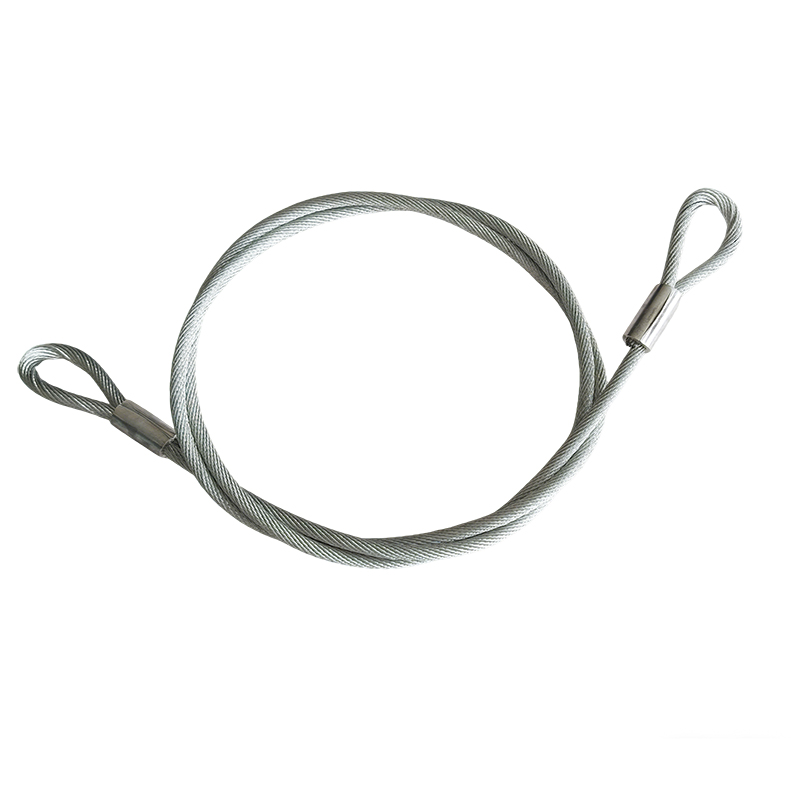
Galvanized steel wire rope is often the right choice for an outdoor hoist when the equipment faces regular rain, condensation, humidity, dirt, or temperature swings but does not operate in an aggressively corrosive chemical or marine environment. It offers a practical balance: better surface corrosion protection than bright wire rope, broad availability, and a cost profile that is usually easier to justify than stainless steel for general construction, yard, port-adjacent, and outdoor material-handling duties.
That conclusion depends on more than the phrase “outdoor use.” A rope that spends its life under a roof with occasional wet exposure has different needs from one installed on a coastal quay, a washdown area, or a mine site with abrasive slurry. Procurement decisions should begin with the hoist's exposure, duty cycle, reeving arrangement, inspection access, and required lifting rating, then determine whether galvanizing provides sufficient protection for the expected service life.
Where galvanized rope makes commercial sense
For a fixed or mobile outdoor hoist exposed to weather, galvanized steel wire rope can reduce the risk of rapid red-rust formation on the outer wires. The zinc coating acts as a sacrificial protective layer, helping protect the steel substrate when moisture reaches the rope surface. This matters because corrosion does more than affect appearance. Pitting and wire-section loss can reduce fatigue performance, make lubrication less effective, and complicate inspection.
The material is particularly suitable where water exposure is intermittent and equipment can be inspected and maintained on a planned schedule. Typical examples include construction hoists, outdoor maintenance winches, lifting equipment in open yards, agricultural handling equipment, and general-purpose lifting systems near ports without direct or persistent saltwater exposure.
It is also useful when replacement cost must be considered beyond the purchase price. Bright rope may be less expensive initially, but frequent corrosion-related replacement, downtime, and inspection failures can erase that saving. Stainless steel may offer a stronger answer in severe corrosion conditions, yet its cost and mechanical characteristics must be assessed against the actual hoist design. Galvanized rope commonly occupies the sensible middle ground.
Do not treat “galvanized” as a complete specification
A galvanized finish does not establish lifting suitability by itself. Buyers should first confirm the rope's rated capacity in the intended configuration, including the number of supporting parts of line, sheave arrangement, termination efficiency, and applicable safety factor. Selecting by rope diameter alone is a frequent source of error. Two ropes of the same diameter can behave differently because of construction, wire grade, core type, and lubrication.
Construction affects both durability and handling. A rope with more, finer wires is generally more flexible and may work better over sheaves and drums, while a construction with fewer, larger outer wires can offer stronger resistance to abrasion. Neither is automatically superior. The right choice follows the hoist geometry and dominant wear mechanism.
- Flexing over sheaves: Review the sheave diameter, groove condition, fleet angle, and expected number of bending cycles. A rope selected only for tensile strength can fail early if its construction is poorly matched to repeated bending.
- Crushing on multi-layer drums: Where rope wraps build over one another, the core and construction need sufficient stability to resist distortion and strand damage.
- Surface abrasion: Dust, grit, rough sheaves, and contact with structural edges can wear through a zinc layer quickly. Galvanizing helps with corrosion; it does not solve mechanical abuse.
- Rotation behavior: Single-part lifts, long travel distances, and loads that must remain correctly oriented may require attention to rope rotation characteristics and end fitting selection.
Ask suppliers to state the rope construction, nominal diameter, minimum breaking force, lay direction, core type, galvanizing process, lubrication condition, and relevant manufacturing or test documentation. Those details make quotations comparable and give the maintenance team a usable baseline for acceptance inspection.
Exposure severity sets the limit
The main limitation of galvanized steel wire rope is that the zinc coating is consumed over time. Continuous wetness, salt spray, industrial fumes, alkaline or acidic contaminants, and poor drainage can shorten protection substantially. A rope may look acceptable on the upper wraps while corrosion develops inside strands, under deposits, or in areas that remain wet against a drum or sheave.
Outdoor hoists near the sea deserve a more conservative review. Airborne salts can reach equipment well beyond the waterline, especially where wind-driven spray and long idle periods allow deposits to remain. In these conditions, a galvanized rope may still be used where inspection and replacement intervals are tightly managed, but stainless steel or a different protective strategy may be the more defensible life-cycle decision. The same caution applies to chemical plants, fertilizer handling, wastewater facilities, and locations where cleaning agents or process residues contact the rope.
Cold weather creates a different concern. Zinc coating does not prevent ice accumulation, lubrication stiffening, or shock loading caused by frozen loads and poor handling. Procurement specifications should therefore avoid presenting corrosion resistance as a substitute for operating controls. Hoist brakes, limit switches, reeving, load control, and rope lubrication still determine whether the system operates safely.
Galvanizing helps only when maintenance supports it
A galvanized rope should not be installed and forgotten. Dirt and dried lubricant can hold moisture against wires, while excessive lubricant can conceal broken wires during inspection. The practical objective is a clean, lightly protected rope surface that allows inspectors to see damage and lets lubricant reach the areas where strands move against one another.
Inspection planning should focus on the places where deterioration is likely to start: termination zones, drum crossover areas, sheave contact points, low points where water collects, and sections exposed to abrasion. Purchasers should also confirm that site teams can inspect the full working length. A rope routed through enclosed guards or elevated machinery may need access provisions before it is selected, rather than after a problem appears.
Replace a rope according to the hoist manufacturer's instructions and the applicable lifting standard or site procedure. Corrosion, broken wires, diameter reduction, crushing, kinks, birdcaging, heat damage, and damaged end terminations should be evaluated together. Waiting for visible rust across the entire rope is poor practice; local damage can govern removal long before the rope looks uniformly deteriorated.
Specify the whole lifting path, not just the rope
Many outdoor hoist problems originate at interfaces. The rope may be adequately specified, while the hook block, socket, thimble, shackle, chain, or attachment point is unsuitable for the load direction or environmental exposure. Procurement should review the complete load path and ensure each component has an identifiable working load limit compatible with the planned lift.
For ancillary securing, connecting, or non-primary handling tasks, galvanized chain may be considered alongside the rope assembly, provided its grade and intended use are appropriate. For example, Welded Steel Electric Galvanized Ordinary Short Medium Long Link Chain is available in short-, medium-, and long-link forms for applications such as equipment connection, binding, transport, and selected handling duties. Link geometry affects how the chain sits on hooks, fittings, and contact surfaces; it should not be chosen simply because its finish resembles the rope's.
Ordinary welded chain and lifting chain also should not be treated as interchangeable. Where a chain forms part of a lifting assembly, the required grade, working load limit, marking, traceability, and compatibility with hooks and connectors must be specified for that duty. Corrosion protection does not establish lifting classification.
A procurement checklist before placing the order
A useful request for quotation describes the operating condition rather than asking only for “galvanized rope.” Include the maximum working load, lifting arrangement, hoist make and model where available, rope length, drum and sheave dimensions, reeving pattern, duty cycle, expected outdoor exposure, temperature range, and preferred termination. State whether the rope will be used for lifting people, suspended platforms, general materials handling, towing, or another application, as each use can have different requirements.
Then compare suppliers on more than unit price. Confirm diameter tolerances, rope length tolerance, coating consistency, lubricating treatment, test documentation, marking, packaging that prevents transit moisture damage, and the ability to supply matching fittings or replacement lengths. For multi-rope equipment, consistency between ropes is important because uneven diameter or construction can affect load sharing and winding behavior.
Galvanized steel wire rope is right for an outdoor hoist when weather resistance is needed, corrosion exposure is manageable, and the rope construction matches the hoist's mechanical demands. It becomes a weaker choice when salt, chemicals, standing moisture, or inaccessible inspection points will consume the coating faster than a realistic maintenance program can control. Framing the purchase around that exposure-and-duty assessment leads to a more reliable decision than choosing by finish, diameter, or initial price alone.
Navigation
Send Us A Message



Shandong Faster Technology Co., Ltd. is a professional manufacturer of steel wire ropes.
Get in Touch
*We respect your confidentiality and all information are protected.