





When electro-galvanized wire is unsuitable for outdoor exposure
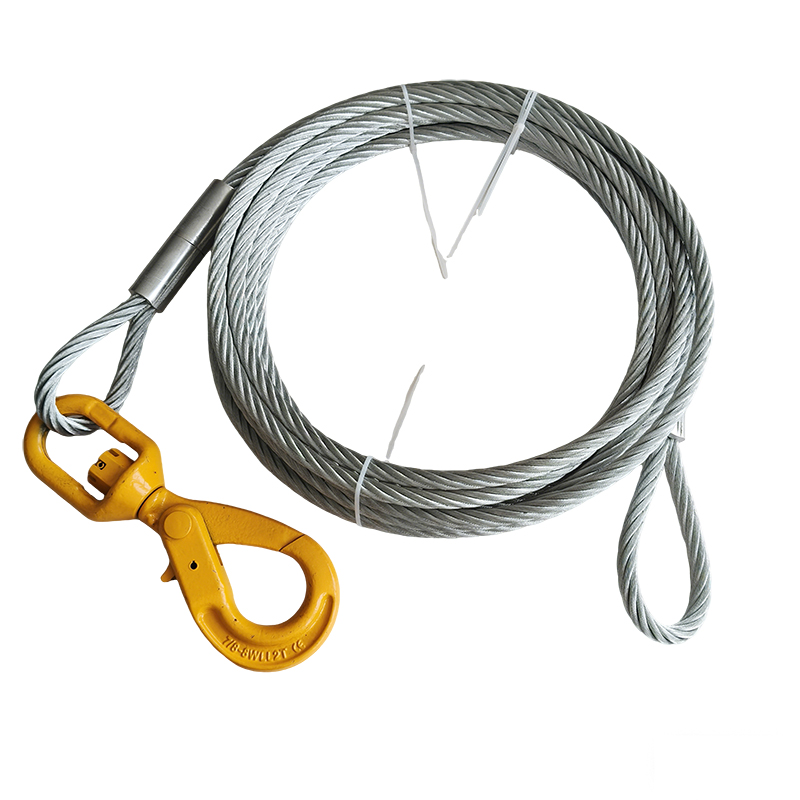
When Electro-Galvanized Wire Is Unsuitable for Outdoor Exposure
Electro galvanized wire is often chosen because it is clean in appearance, economical, and easy to source in a wide range of diameters. For indoor tying, packaging, temporary fixing, and dry sheltered installations, it can be a sensible specification. The problem starts when “outdoor use” is treated as one simple condition. A wire or chain exposed beneath a roof in a dry inland yard faces very different corrosion risks from one installed beside a road, on a coastal berth, or around wet aggregate.
For purchasing decisions, the key question is not whether electro galvanized wire has a zinc coating. It does. The more useful question is whether that coating, the base material, the expected service life, and the consequences of corrosion are appropriate for the actual exposure. In many outdoor projects, electro galvanized wire is not the lowest-cost choice once replacement, inspection, downtime, and safety risk are considered.
Why the zinc coating matters—and where its limits appear
Electro galvanizing deposits zinc onto the steel surface through an electrolytic process. It gives components a relatively bright and uniform finish, which is useful where appearance and dimensional consistency matter. However, buyers should not assume that every zinc-coated product offers the same outdoor durability. Electroplated coatings are generally a different proposition from hot-dip galvanizing, particularly where a component must tolerate persistent moisture, abrasion, or salt contamination.
Corrosion usually does not begin dramatically. It often starts at cut ends, weld areas, threads, points of contact, or locations where water sits after rain. Once white corrosion products develop and the zinc layer is consumed locally, red rust can progress into the steel. On wire rope, this process may also occur in less visible areas between strands. A surface that looks acceptable from several metres away may already have corrosion at contact points or inside a poorly drained assembly.
This is why a purchase specification that says only “galvanized” leaves too much open to interpretation. It should clarify the coating process, service environment, inspection expectation, and whether the item is safety-related or simply used for non-critical securing.
Outdoor conditions where electro galvanized wire is a weak choice
A continuously wet or poorly drained installation is one of the clearest warning signs. Fence tension wire near irrigation, securing wire under exposed roof drainage, and chain left on muddy ground all remain wet longer than a component in open, ventilated air. Repeated wet-dry cycles can be especially troublesome because they renew oxygen access and concentrate contaminants as water evaporates.
Coastal and offshore locations deserve a stricter material review. Airborne chlorides can settle on metal even where the component is not directly splashed by seawater. Ship decks, port equipment, marine access areas, and offshore support work are not good places to rely on a light electro-galvanized finish for long-term corrosion protection. The same caution applies to winter road environments where de-icing salts are present. Salt does not need to be visible to change the corrosion decision.
Industrial atmospheres can be equally demanding. Facilities handling fertilizers, chemicals, coal, mineral concentrates, wastewater, or acidic cleaning products may create localized conditions that are harsher than ordinary outdoor weather. Mining and construction sites also introduce impact, grit, and abrasion. If the zinc coating is worn away through rubbing against a sharp edge, pulley, hook, or adjacent chain link, the protection expected on paper may not survive in service.
Another poor fit is an assembly where the wire is difficult to inspect or replace. A low-cost wire used behind cladding, inside a closed guardrail system, beneath a floating platform, or in a hard-to-access restraint point may become expensive if premature corrosion requires disassembly. The realistic replacement cost, not the unit price, should guide the selection.
Do not confuse corrosion resistance with load suitability
This distinction is important in lifting, towing, and restraint work. Electro galvanized wire can be unsuitable outdoors because of corrosion, but it can also be unsuitable because the product itself is not rated or designed for the intended load. A bright zinc finish does not establish a working load limit, fatigue performance, weld quality, or suitability for overhead lifting.
The same principle applies to welded link chain. DIN link dimensions help identify chain geometry, but dimensional conformity alone should not be read as approval for every lifting or anchoring duty. Procurement teams should ask for the applicable grade, material, proof or breaking requirements where relevant, traceability requirements, and the manufacturer’s intended use. For a task involving people, suspended loads, or critical restraint, the specification must be reviewed against the project’s safety rules and applicable local requirements.
For example, an electric-galvanized DIN763 long-link chain may be practical for temporary bundling, light-duty fixing, or controlled dry-area use. But a buyer should pause before placing it into a permanently exposed coastal guardrail, ship anchoring arrangement, or mining traction line. Those terms describe demanding applications; the correct chain grade and coating system need confirmation before purchase.
A practical comparison before issuing the purchase order
Questions that reveal a weak specification
Before approving electro galvanized wire, ask where water collects, how often the component will be handled, whether chlorides or chemicals are present, and whether corrosion can be detected before strength is affected. It is also useful to identify the required design life. A temporary construction tie and a fixed external support expected to remain in place for years should not be bought under the same material description.
Ask the supplier to separate finish-related information from mechanical information. For wire rope, that means confirming rope construction, diameter, material series, and intended application rather than selecting solely from a photograph or finish name. Manufacturers with drawing, twisting, rope-closing, and inspection capability can usually support this discussion more effectively because they can align the rope, sling, chain, and corrosion requirements instead of treating each item as an isolated commodity.
For chain procurement, the available dimensions are only one part of the decision. Products such as DIN763 DIN764 DIN766 Standard Carbon Steel Electric Galvanized Welded Link Chain cover long-link, medium-link, and short-link forms used in binding, fixing, towing, and related applications. Their stated diameter range can help with fit and handling, but the outdoor environment and required duty still determine whether electric galvanizing is the right finish.
Choose the replacement strategy before choosing the finish
Electro galvanized wire is not inherently a poor product. It is a poor choice when its modest corrosion allowance is being asked to survive an aggressive environment, a long unattended service interval, or a safety-critical function. The biggest purchasing mistake is selecting it because it is zinc-coated, then discovering that the actual exposure was closer to marine, chemical, wet, or abrasive service.
Where exposure is mild and replacement is simple, an electro-galvanized solution can remain efficient. Where corrosion is expected, specify the alternative early—often hot-dip galvanized, stainless steel, plastic-coated wire, or a properly matched higher-duty chain and rope system. The correct choice is the one that remains inspectable, fit for load, and predictable for the full period the installation is expected to serve.
Navigation
Send Us A Message



Shandong Faster Technology Co., Ltd. is a professional manufacturer of steel wire ropes.
Get in Touch
*We respect your confidentiality and all information are protected.