





How nylon-coated galvanized wire reduces surface damage in routing
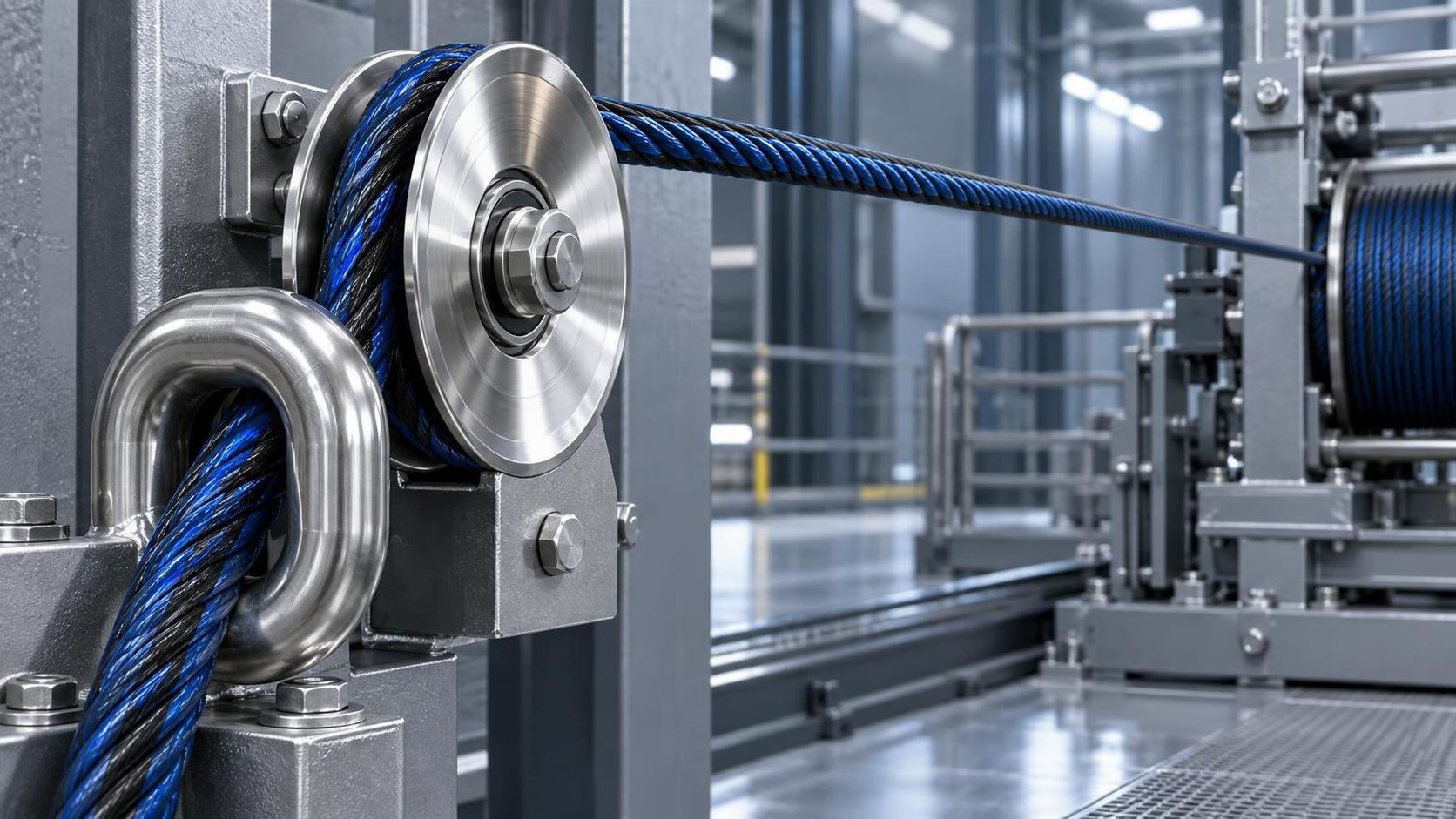
In demanding routing applications, surface damage rarely begins with a dramatic failure. It often starts as a faint scrape at a guide, a polished groove on a pulley, or a strand that rubs against a sharp frame edge during repeated movement. Over time, those small contact points can remove protective finishes, accelerate corrosion, create local stress concentrations, and shorten the useful life of the wire assembly.
Nylon coated galvanized wire is widely used where a wire must be routed through guides, around fixtures, or near painted, plated, or sensitive surfaces. Its value lies in the combination of a galvanized steel substrate and a polymer outer layer: the steel provides tensile capability, the zinc layer contributes corrosion resistance, and the nylon coating creates a lower-abrasion contact surface. For quality control and safety managers, the practical question is not simply whether a coating is present, but whether the whole routing system allows that coating to keep doing its job.
Why bare wire damages both itself and surrounding equipment
A bare galvanized wire can perform well in many static fastening or general support tasks. In a moving route, however, metal-to-metal contact changes the risk profile. When wire travels across a sheave, guide eye, roller, bracket, or machine frame, contact pressure is concentrated on relatively small areas. Vibration, misalignment, changing tension, dust, and moisture compound the problem.
The result may be damage in two directions. The wire surface can experience zinc wear, strand abrasion, flattening, or fatigue initiation. At the same time, the contacted component may suffer scratched paint, worn plating, damage to protective linings, or scoring on guide surfaces. These effects are especially unwelcome in port equipment, construction machinery, mining installations, marine systems, and enclosed routing paths where inspection access is limited.
Nylon coating acts as a sacrificial and protective interface. Rather than allowing the galvanized steel surface to rub directly against adjacent hardware, the nylon layer absorbs much of the sliding contact. It also reduces the sharp, noisy feel of metal-on-metal movement and helps protect finished surfaces during installation and normal operation.
How the nylon layer changes routing behavior
The coating does not turn wire into a friction-free material, nor does it eliminate the need for correct route design. What it does is make everyday contact more forgiving. A properly selected nylon-coated galvanized wire can reduce scuffing where the wire crosses supports, enters guide channels, or touches neighboring cables and structures.
- Surface cushioning: Nylon separates the metal core from pulleys, guides, frames, and other wires, lowering the likelihood of direct abrasive contact.
- Protection for adjacent finishes: Coated wire is useful near painted panels, galvanized structures, stainless components, and sensitive equipment housings that would otherwise be marked by moving steel.
- Additional environmental defense: If the outer coating remains intact, it limits direct exposure of the galvanized substrate to water, dust, salt spray, and industrial contaminants.
- Improved handling: During installation, operators are less likely to create incidental scratches on nearby components, particularly where routing is tight or visibility is poor.
There is an important quality distinction here: the coating must be continuous, appropriately bonded, and suitable for the expected bending and abrasion conditions. A coating that cracks during installation, peels at bends, or is cut by undersized guides cannot provide sustained protection.
Routing design still determines the outcome
A common mistake is to treat nylon coating as a cure for poor routing. It is not. If the wire is forced over a sharp corner, pinched in a narrow slot, or operated at an unsuitable bend radius, even a durable coating will wear prematurely. The same is true where a guide has burrs, weld spatter, corrosion pits, or a rough pulley groove.
Before approving a routing arrangement, inspect the complete contact path rather than the wire alone. Follow the line from the fixing point to the moving point and look for changes in direction, intermittent rubbing points, trapped debris, and places where the wire may contact an edge under load. In dynamic installations, confirm whether vibration or side loading can move the wire outside its intended groove.
A practical inspection checklist
For incoming inspection and routine maintenance, a simple but disciplined check can prevent many avoidable problems:
- Verify the wire diameter including the coating, not only the metallic core diameter. This matters when selecting pulleys, guide eyes, clamps, and pass-through holes.
- Check coating continuity along the full accessible length. Look for cuts, flattened areas, blistering, peeling, discoloration, or exposed galvanized steel.
- Inspect the routing hardware for burrs, sharp edges, embedded grit, worn rollers, and groove damage.
- Confirm that the route provides adequate bend radius and does not create repeated reverse bends beyond the intended service conditions.
- Examine termination zones closely. Coatings can be vulnerable near clamps, sleeves, hooks, or fittings if assembly methods are not matched to coated wire.
- Record the location and progression of any coating wear. A small recurring mark often identifies an alignment problem before the steel substrate is affected.
For safety managers, documentation is as important as the visual check. A recurring abrasion point should not be recorded merely as “surface wear.” The report should identify the contact component, motion type, environment, loading pattern, and whether the wire is static, intermittently tensioned, or continuously moving. That level of detail makes corrective action more reliable.
Where nylon coated galvanized wire is most useful
This material is particularly relevant when corrosion resistance and surface protection are both required, but stainless steel is not necessary for the full application. Typical uses include control-wire routing, guard and restraint systems, protective lanyard paths, cable supports, light-duty traction or positioning arrangements, and equipment installations with painted or coated structural surfaces.
In marine-adjacent, port, fishery, construction, and mining environments, the galvanized core provides a useful barrier against corrosion while the nylon exterior reduces physical wear from contact with hardware. However, exposure conditions should be assessed honestly. High temperatures, aggressive chemicals, prolonged ultraviolet exposure, or severe abrasive dust may require a different coating formulation, an alternative protective system, or a redesign of the route.
Do not confuse routing wire with lifting rope selection
One operational risk is using a protective-routing mindset for a load-bearing lifting application. Nylon coated galvanized wire should be selected according to its intended function, construction, diameter, and rated system requirements. A wire used to reduce surface damage in a routing path is not automatically suitable for overhead lifting, sling fabrication, or safety-critical load handling.
Where the task involves lifting heavy or irregular loads, the rigging assembly must be designed as a lifting system, with appropriate rope construction, terminations, hooks, angle factors, inspection criteria, and applicable standards. For example, a three-leg configuration can improve load distribution and stability when lifting equipment with multiple lifting points. For projects requiring such an arrangement, 3 Leg bright oil steel Wire Rope Sling Hook and Loop 3tons Lifting Slings can be considered as part of a properly specified rigging solution rather than as a substitute for coated routing wire.
That distinction matters because a nylon coating may conceal early surface changes if inspection is careless. In lifting service, inspectors need to evaluate the rope, fittings, and sling configuration as a complete assembly. In routing service, the main concern may be protecting the wire and its surrounding equipment from repeated contact. The two applications can share material knowledge, but their acceptance criteria are not the same.
Specification questions worth asking suppliers
Before purchasing nylon coated galvanized wire, quality teams should request more than a nominal diameter and color. Ask for the core wire or rope construction, galvanized condition, finished outside diameter, coating material, expected coating thickness range, tensile requirements, and recommended application limits. If the installation will bend repeatedly, clarify the intended flexing behavior and minimum recommended sheave or guide dimensions.
For tailored industrial requirements, manufacturers with control over wire drawing, stranding, rope closing, and final inspection can provide more meaningful support than suppliers who only list a generic coated-wire size. Shandong Faster Technology Co., Ltd. supplies galvanized, stainless steel, bright, and plastic-coated steel wire rope options in diameters from 1 mm to 20 mm, with configurations selected for different corrosion-resistance and strength needs. This broader material range is useful when a site must balance routing protection, mechanical performance, and environmental exposure rather than making a decision based on coating alone.
Use coating wear as an early warning signal
A worn nylon surface should not always be interpreted as product failure. In many cases, it is evidence that the wire is revealing a route defect: a misaligned guide, a damaged pulley, an unexpected vibration path, or a contact point created during equipment modification. When teams respond by replacing the wire without correcting the cause, the same wear pattern often returns.
The most effective approach is to treat nylon coated galvanized wire as both protection and feedback. Its outer layer helps preserve surfaces during normal service, while visible changes in that layer can guide maintenance teams toward developing mechanical issues. With correct sizing, clean routing hardware, compatible terminations, and scheduled inspection, the coating becomes a practical part of a wider damage-control strategy—not simply an added finish on the wire.
Navigation
Send Us A Message



Shandong Faster Technology Co., Ltd. is a professional manufacturer of steel wire ropes.
Get in Touch
*We respect your confidentiality and all information are protected.