





How a wear-resistant wire rope core helps prevent strand collapse
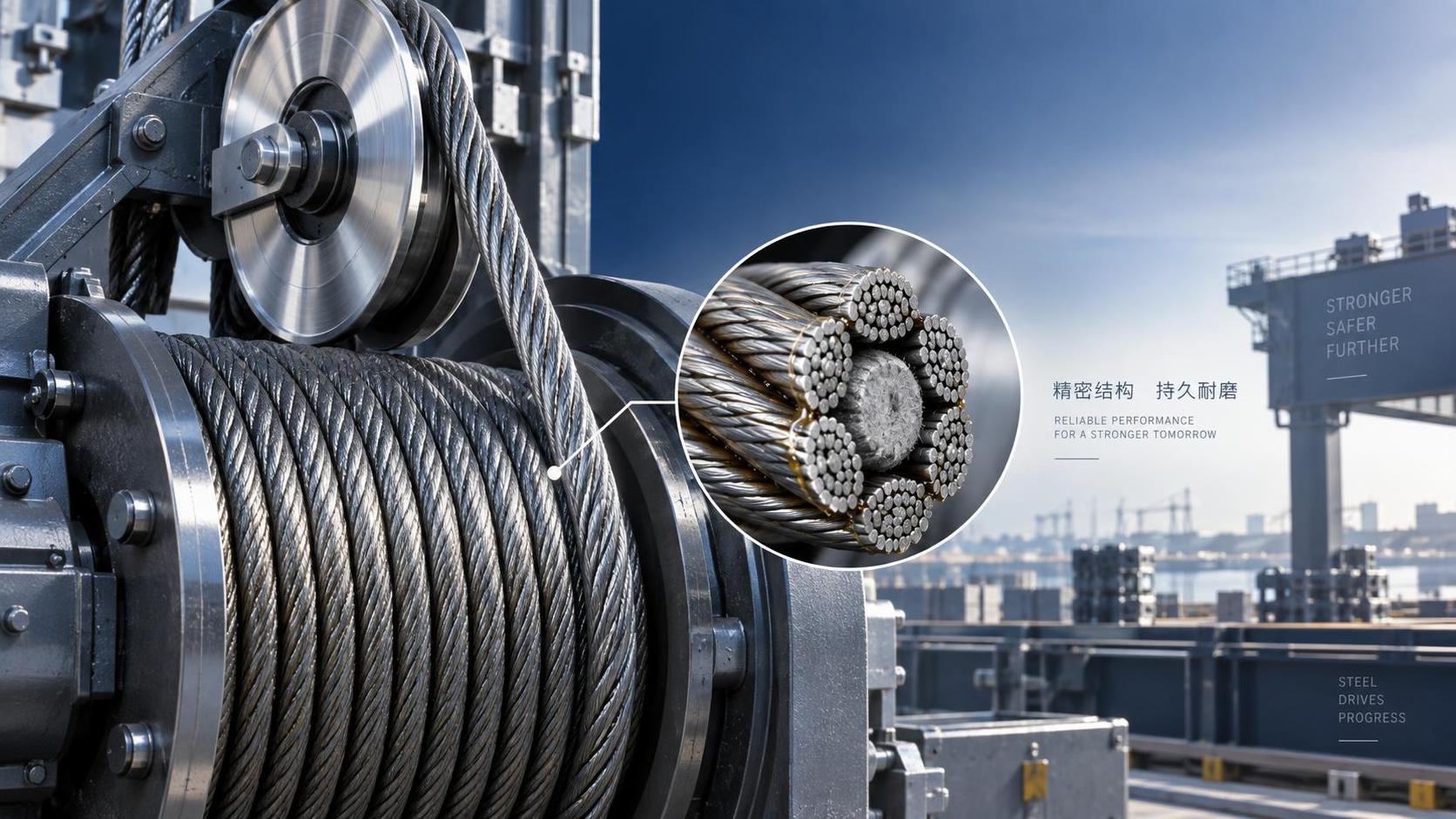
Strand collapse is not simply a cosmetic defect. When the outer strands lose their intended position and move inward, a wire rope can develop uneven bearing pressure, poor spooling behavior, accelerated wire breaks, and reduced stability at sheaves, drums, or terminations. A wear resistant wire rope core helps prevent this failure by supporting the strands from the inside while limiting the internal abrasion that gradually removes that support.
The core does not carry the same visible role as the outer strands, but it controls how well the rope preserves its shape under service. This matters most where a rope repeatedly bends, runs under tension, layers on a drum, experiences side pressure, or works in abrasive contamination such as dust, grit, moisture, or old lubricant.
Why strands collapse in the first place
A wire rope is a moving structure, not a solid steel bar. During bending, the strands shift slightly relative to one another and relative to the core. That movement is necessary for flexibility, but it creates internal friction. If the core compresses too easily, wears away, dries out, or becomes displaced, the outer strands no longer have consistent support. They can flatten, separate, or sink toward the rope center.
Collapse often develops from several conditions acting together:
- Repeated bending over undersized sheaves or drums.
- High fleet angles that force the rope to enter the drum sideways.
- Poor winding, crossover crushing, or multilayer drum pressure.
- Inadequate lubrication, allowing metal-to-metal or strand-to-core friction.
- Abrasive particles entering the rope and acting like grinding media.
- Sudden loading, shock loading, or a duty cycle that exceeds the rope construction selected.
It is easy to blame the visible strand when the rope becomes distorted. In many cases, however, the underlying problem is loss of internal support. Replacing the rope with the same construction without correcting the drum condition, reeving geometry, lubrication practice, or core selection can lead to the same failure pattern.
What a wear-resistant core changes
A wear-resistant core is designed to retain its supporting function despite repeated internal contact. Depending on the rope construction, the core may be a fiber core, an independent wire rope core, or another engineered internal support arrangement. The correct choice depends on the application; “more wear resistant” is not automatically the best answer if it compromises the bending behavior needed by the equipment.
Its value comes from three practical effects.
It maintains strand geometry under compression
When a loaded rope passes through a sheave or builds multiple layers on a drum, the outer strands are pushed toward the center. A resilient, durable core distributes that inward pressure and gives the strands a stable foundation. This helps the rope remain round rather than developing local flattening or a valley between strands.
That support is particularly important in multilayer winding. The lower wraps experience pressure from the layers above, while crossover points create concentrated contact loads. A core that resists crushing helps reduce the risk that strand positions become permanently disturbed.
It reduces internal wear before it becomes visible damage
Internal wear can progress for a long time before external broken wires appear. As the rope bends, strands and core surfaces rub under pressure. A core with better wear resistance retains its dimensions and frictional performance longer, slowing the process that creates excess internal clearance. Less clearance means less strand movement, and less uncontrolled movement means a lower chance of strand collapse.
This does not remove the need for rope lubrication. Lubricant must reach the internal contact zones and remain compatible with the rope’s environment. A good core and poor lubrication are not an effective combination; the core can delay wear, but it cannot compensate indefinitely for dry or contaminated operation.
It keeps load sharing more consistent
A round, well-supported rope allows the strands to share load in the way the construction was designed to work. Once one strand sinks or protrudes, contact pressure becomes uneven. Localized stress rises at sheaves, drum grooves, and clamps, which can lead to rapid deterioration in one area while the rest of the rope still looks acceptable.
For inspection purposes, this is why visible distortion deserves attention even when there are few broken wires. A rope that has lost its geometry may no longer track or bend predictably.
Core choice must match the failure mechanism
Before specifying a wear-resistant wire rope core, identify how the rope is being damaged. A rope used on a lightly loaded guide system has different needs from one that cycles on a lifting hoist, operates on a crane drum, or pulls equipment through abrasive mine conditions.
A steel core can provide strong structural support and is often considered where crushing resistance and dimensional stability are important. A fiber core can offer flexibility and lubricant storage, which can be useful where frequent bending and internal lubrication are the dominant concerns. The correct decision should be based on the rope’s duty, reeving system, bending requirements, and the manufacturer’s stated application guidance rather than core type alone.
Inspection signs that point to internal support loss
Do not wait for a dramatic birdcage or complete flattening to investigate. Early strand-collapse risk is often visible as subtle changes in rope behavior. Compare suspect sections with an undamaged portion of the same rope, especially where it normally passes over sheaves or stores on the drum.
- Loss of roundness, flattened areas, or an oval cross-section.
- One strand sitting lower or higher than adjacent strands.
- Unusual gaps between strands or a loose-looking surface pattern.
- Rope vibration, erratic tracking, or poor spooling that was not present previously.
- Concentrated wear at crossover points or at one part of a drum layer.
- Lubricant being forced out in one location, accompanied by dry areas elsewhere.
Inspection should also include the system around the rope. A worn groove can pinch the rope; an oversized groove can reduce support; poor alignment can force side loading. These equipment faults can produce the same visible symptoms as an unsuitable core. The practical question is not “Is the core defective?” but “What is removing support from the strand structure?”
Selection and prevention should be handled together
When replacing a rope after strand deformation, record the rope construction, diameter, service location, running direction, loading pattern, and visible damage location. Then inspect the drum, sheaves, terminations, and lubricant condition before selecting a replacement. This turns a rope replacement into a corrective action rather than a repeat purchase.
For lifting, traction, marine, port, construction, mining, and elevator applications, a supplier should be able to discuss the intended rope construction, core option, coating or material requirements, and whether the equipment subjects the rope to bending fatigue, crushing, corrosion, or abrasion. Shandong Faster Technology supplies galvanized, stainless steel, and plastic-coated wire ropes in multiple constructions, alongside sling and chain products, allowing the rope and associated load-handling components to be reviewed as part of the same operating system.
Where the work is better performed by a fixed-length chain assembly rather than a running wire rope, the selection logic changes. Link geometry, chain grade, corrosion exposure, and connection method become more relevant than rope-core support. For applications such as binding, towing, guardrail work, ship anchoring, or mining traction, DIN763 DIN764 DIN766 Standard Carbon Steel Electric Galvanized Welded Link Chain provides long-link, medium-link, and short-link options for evaluating the appropriate chain arrangement.
Do not use the core to mask an equipment problem
A more durable core is a meaningful preventive measure, but it cannot correct a damaged drum groove, excessive fleet angle, severe side pulling, improper installation, or operation beyond the rope’s intended use. Treat core selection as one part of a control plan: specify the rope for the duty, preserve lubrication, maintain the running surfaces, monitor distortion, and remove a rope from service when its condition no longer supports reliable operation.
The most useful next step is to match the observed damage pattern to the operating point where it begins. If deformation appears mainly in drum layers, focus on winding pressure and drum condition. If it appears near sheaves, focus on bending geometry and alignment. That distinction makes it far easier to determine whether a wear-resistant core will address the cause, or merely delay a recurrence.
Navigation
Send Us A Message



Shandong Faster Technology Co., Ltd. is a professional manufacturer of steel wire ropes.
Get in Touch
*We respect your confidentiality and all information are protected.