





When coated wire creates hidden inspection risks
When Coated Wire Creates Hidden Inspection Risks
Coated wire can be a sensible engineering choice. Plastic-coated steel wire rope is easier to handle, can reduce incidental contact damage to adjacent surfaces, and may provide an additional barrier in wet, dirty, or corrosive environments. In ports, construction sites, warehouses, marine work, and general securing applications, those benefits are real.
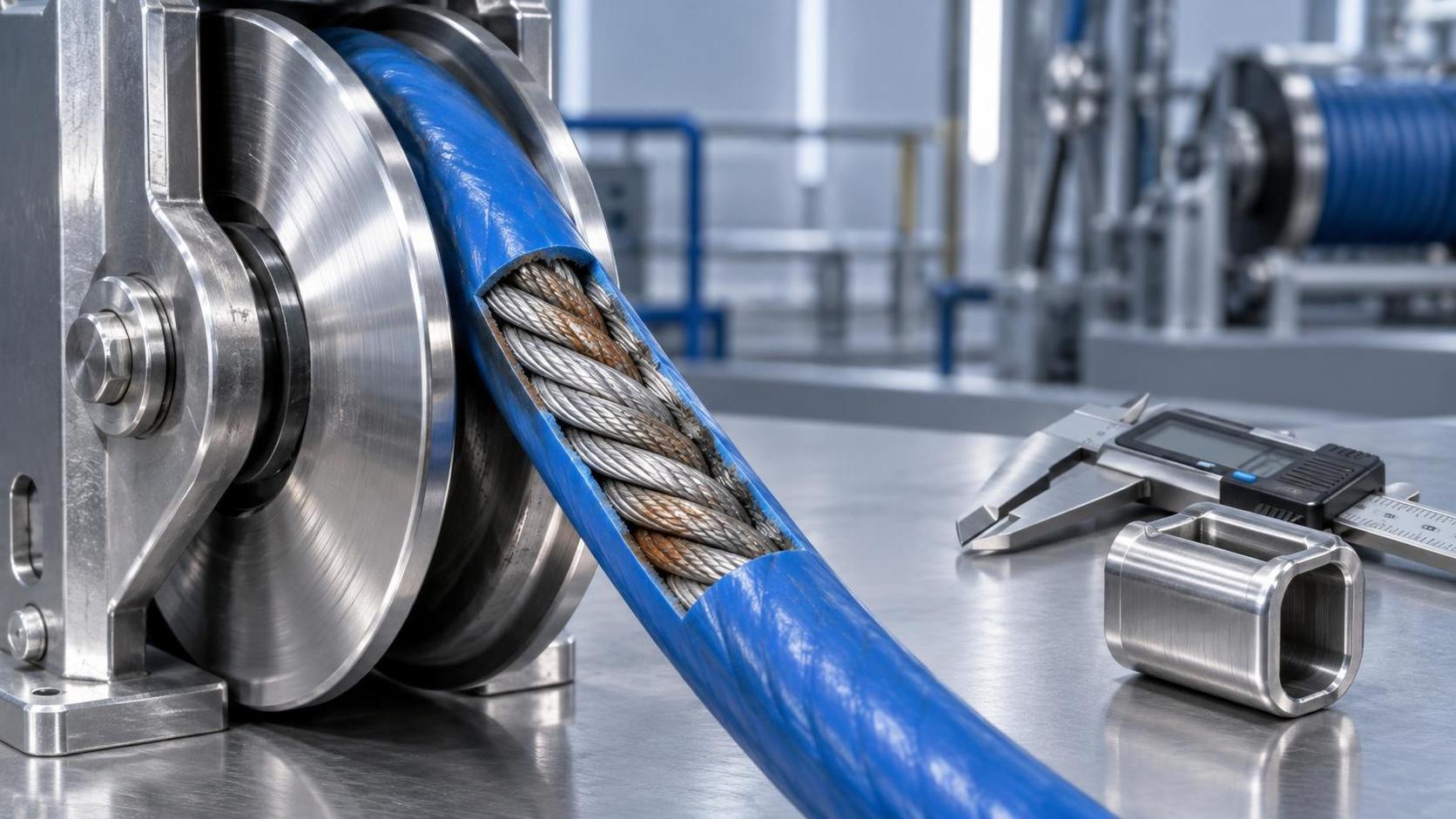
The inspection problem is equally real: the coating changes what an inspector can see. A clean outer surface can create a false impression of sound condition while the metallic load-bearing element beneath it has begun to deteriorate. Broken wires, fretting, localized corrosion, crushed sections, strand displacement, and heat-related damage may be obscured until the rope has lost a meaningful part of its original condition.
For quality-control and safety managers, coated wire should not be treated as “maintenance-free wire.” It needs an inspection method that recognizes the limits of visual examination and distinguishes between a cosmetic outer layer and the structural condition of the underlying steel.
Why a good-looking coating can be misleading
With uncoated steel wire rope, inspectors can usually see broken outer wires, red rust, abrasion, lubricant loss, flattening, or changes in strand geometry directly. A plastic jacket makes that first-pass inspection less reliable. It may cover the sharp wire ends that would otherwise be visible or detectable during a careful wipe-down. It can also retain moisture after the outer surface has been scratched, cut, or compressed.
Damage is often concentrated where the rope bends, passes over a sheave, enters a sleeve, wraps around a drum, contacts an edge, or terminates at a fitting. These are not merely visual concerns. Repeated bending and contact pressure can affect the rope internally before any dramatic external symptom appears. A coating may crack at a bend radius, become polished by abrasion, or develop a raised area over a damaged strand. None of these conditions should be dismissed as an appearance issue.
The same caution applies to coated wire used for traction, restraint, and securing. If the item is part of a lifting arrangement or carries personnel, property, or operational risk, the applicable equipment rules and the rope manufacturer’s inspection and discard guidance must govern the decision. A coating is not a substitute for confirming the rope’s construction, diameter, rated use, termination condition, and service history.
Hidden conditions that deserve closer attention
Inspection should begin with the coating, but it cannot end there. The following findings commonly justify a more detailed assessment or removal from service pending review:
- cuts, splits, deep gouges, blistering, brittleness, or areas where the jacket has separated from the steel core;
- local swelling, soft spots, flat areas, kinks, birdcaging, or a measurable change in outside diameter;
- rust staining, discoloured seepage, moisture emerging from a damaged section, or residue around the ends of the coating;
- unusual stiffness, rough travel through a sheave or guide, twisting under load, or a change in handling feel reported by operators;
- damage near ferrules, swaged sleeves, eyes, hooks, thimbles, clamps, drum attachment points, or other terminations.
A key practical point is that coating damage and wire-rope damage are not always in the same place. For example, a coating may split where it was bent sharply, while internal corrosion develops farther along a section that held water or contaminants. Inspection routes should therefore include the whole accessible working length, not only the visibly damaged area.
Build inspection around service conditions, not just calendar dates
A calendar-based check is useful for planning, but it does not capture the risk created by duty cycle and environment. A coated wire rope in dry, occasional service is different from one repeatedly exposed to salt spray, abrasive dust, chemicals, impact, or cyclic bending. Inspection frequency should reflect the equipment’s use, consequences of failure, exposure conditions, and the rate at which damage can develop.
Routine pre-use checks are best used to find obvious changes: damaged coating, distortion, termination movement, contamination, and abnormal handling. Periodic documented inspections should go further, recording rope identification, installation location, observed damage, outside diameter where relevant, photos of suspect sections, and the decision made. Trend records matter. A small damaged patch that remains stable may be managed differently from a patch that is growing after each operating cycle.
When the jacket prevents a confident determination, the right response is not to assume that the steel is intact. Depending on the application and applicable procedures, a competent person may need to inspect an exposed section, assess the termination, or use an appropriate non-destructive examination method. Any removal of coating should be controlled: cutting or stripping material carelessly can damage outer wires and invalidate the inspection itself.
Specification decisions that reduce future blind spots
The best time to manage hidden inspection risk is before installation. Procurement specifications should identify whether the coating is intended for corrosion protection, handling comfort, identification, surface protection, or a combination of these purposes. They should also make clear whether the rope is for lifting, traction, restraint, or a non-load-critical task. Those uses are not interchangeable.
A sound technical review considers rope construction, steel grade, nominal metallic diameter, finished coated diameter, coating material, expected bend radius, sheave compatibility, end terminations, and exposure to oils, ultraviolet light, temperature, salt, or chemicals. The relevant load ratings must be based on the actual rope and assembly, not inferred from a similar uncoated product. Where lifting is involved, users should also confirm the applicable local rules and the documentation required for the completed sling or lifting arrangement.
It is also worth separating coated wire rope from chains used in nearby but different duties. For non-heavy-load bundling, hanging, protective barriers, or light traction, a welded round-link chain may provide more visible inspection points than a coated rope. A short-link configuration is generally more compact and resistant to shape change, while a long-link arrangement provides greater flexibility for some routing and securing tasks. The choice still depends on the rated application, proof load, breaking load, dimensions, and material rather than appearance alone. For such applications, DIN5685 A/C Short or Long Link Chain options can be reviewed in carbon steel or stainless steel, with the final selection matched to the intended duty rather than used as a lifting substitute.
Make operators part of the inspection system
Operators are often the first people to notice that a coated wire behaves differently. Yet vague instructions such as “check before use” rarely produce consistent reporting. Training should define what abnormal looks and feels like: a sudden change in flexibility, a jacket that rotates independently of the rope, a new bulge near a fitting, snagging through a guide, or coating fragments found beneath the equipment.
It also helps to make quarantine straightforward. If a worker finds a suspicious condition, the rope should be identifiable, isolated from accidental reuse, and evaluated by an authorized person. A clear hold process avoids the common failure mode in which a questionable item remains in service because no one is certain who can make the discard decision.
Traceability matters before defects appear
Traceability is especially valuable when a coating masks the rope’s structure. Retain product identification, supplier documentation, rope construction details, assembly information, inspection records, and any repair or modification history. If a rope must be assessed after abnormal loading, chemical exposure, or an impact event, that information gives the reviewer a basis for deciding whether the original design assumptions still apply.
Shandong Faster Technology Co., Ltd. supports rope, sling, and chain requirements across lifting, marine, port, construction, mining, and elevator-related applications. Its production capability covers wire drawing, twisting, rope closing, and inspection processes, with galvanized, stainless steel, and plastic-coated wire rope available in single- and multi-strand forms from 1 mm to 20 mm. For a safety team, the useful value of this integrated rope-sling-chain capability is not simply supply convenience: it allows the conversation to include operating conditions, termination design, material choice, and how the chosen product can realistically be inspected throughout service.
Coated wire is not inherently unsafe; it simply demands a less superficial inspection mindset. Treat the coating as one condition indicator among several, establish escalation criteria for anything concealed or uncertain, and verify that the selected rope or chain is suited to both the working environment and the inspection resources available on site.
Navigation
Send Us A Message



Shandong Faster Technology Co., Ltd. is a professional manufacturer of steel wire ropes.
Get in Touch
*We respect your confidentiality and all information are protected.