Is Galvanized or Stainless Wire Rope Better?
A lot of buyers run into this question when a project moves from planning to actual procurement. On paper, both galvanized and stainless wire rope look like durable choices, but in real working conditions the wrong pick can mean early corrosion, unnecessary replacement, higher maintenance, or paying for a material level the job never needed.
When choosing between galvanized and stainless wire rope, the better option depends on your working environment, load requirements, and budget. In industrial equipment and components applications, both materials offer distinct advantages in corrosion resistance, strength, and service life. Understanding these differences helps buyers, engineers, and project managers select the most reliable wire rope solution for lifting, marine, construction, mining, and other demanding scenarios.
Why this choice becomes difficult in real projects
The confusion usually starts because both materials are described as corrosion resistant, and both are widely used across lifting, ships, ports, construction, mining, elevators, and general industrial support applications. If you are comparing quotations without looking closely at the working environment, it is easy to reduce the decision to price alone. That is where many selection mistakes begin.
In practice, wire rope performance is shaped by more than the metal name. Moisture, salt exposure, abrasion, chemical contact, cleaning routines, temperature variation, and inspection frequency all matter. A rope used indoors on dry lifting equipment faces very different risks from one installed near seawater, in a washdown area, or in a corrosive plant environment. So the better answer is not “galvanized is always better” or “stainless is always better,” but “better for which conditions?”
Common misunderstandings before comparing galvanized and stainless wire rope
One common misunderstanding is assuming stainless wire rope is automatically stronger in every sense. Stainless usually wins on corrosion resistance in harsh environments, but that does not mean it is the most economical or necessary option for every lifting or support task. Another misunderstanding is thinking galvanized wire rope is only a low-end choice. In many industrial settings, galvanized rope provides a very practical balance of strength, protection, and cost.
There is also a tendency to compare materials without considering system matching. In many jobs, wire rope is only one part of the assembly. Hooks, slings, chains, end fittings, sheaves, and anchoring points also affect safety and service life. A rope selected correctly but paired with unsuitable connected hardware can still create reliability problems.
How to decide which wire rope is better for your application
A useful way to make the decision is to compare four standards: environment, mechanical wear, hygiene or appearance requirements, and budget over the full service period.
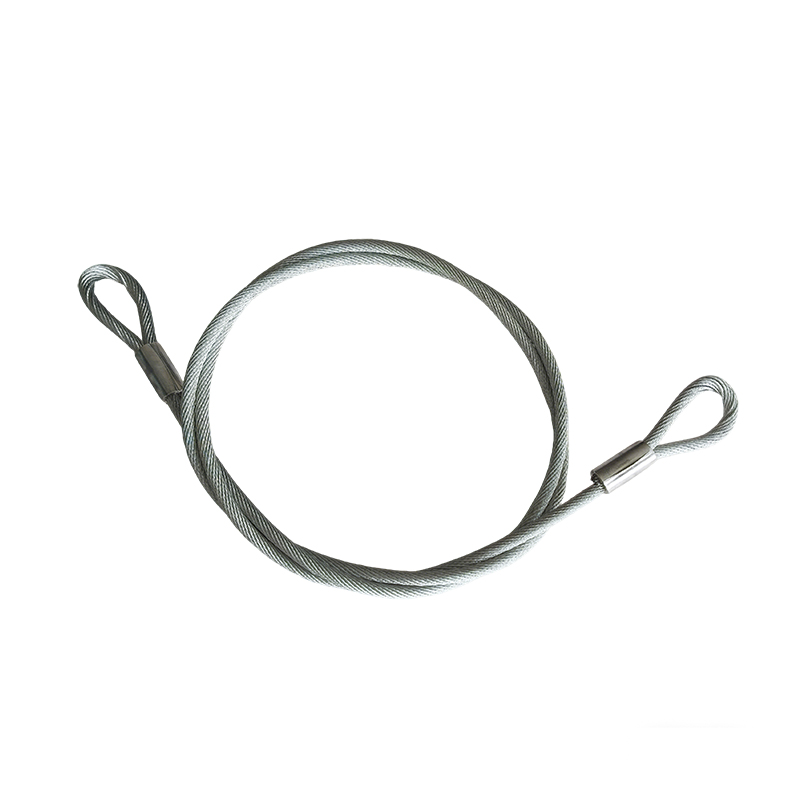
Galvanized wire rope is carbon steel rope protected by a zinc coating. That coating helps resist rust, especially in outdoor or moderately wet environments. It is often a solid choice for construction sites, general lifting, ports, agricultural equipment, and many outdoor installations where some corrosion protection is needed but conditions are not continuously aggressive.
Stainless wire rope is usually selected when corrosion resistance is the main pressure point. Marine equipment, coastal exposure, food-related handling areas, chemical settings, and clean-looking architectural applications often lean toward stainless because the material itself resists corrosion rather than relying mainly on a surface coating.
If your priority is cost efficiency in a normal industrial environment, galvanized wire rope is often the better option. If your priority is surviving constant moisture, salt, or corrosive contact with lower risk of surface breakdown, stainless wire rope is generally the better choice.
Where galvanized wire rope usually makes more sense
Galvanized wire rope is commonly the practical answer when equipment operates outdoors but not in severe chemical or marine corrosion. Many users choose it for construction hoisting, mining support tasks, port handling equipment, general towing, and fixed installations where the rope needs dependable rust resistance without the higher material cost of stainless.
It also suits situations where periodic inspection and replacement are already part of normal maintenance. In these cases, the zinc coating offers a useful layer of protection, and the lower procurement cost can make lifecycle planning easier. For buyers handling larger quantities across multiple machines or support systems, galvanized rope often aligns better with budget control.
Where stainless wire rope is usually the better answer
Stainless wire rope tends to be the better choice when corrosion is persistent rather than occasional. Marine exposure is the obvious example, but it is not the only one. Coastal construction, ship equipment, humid processing areas, and applications involving frequent cleaning can all push the decision toward stainless.
It can also be preferred where appearance matters, such as visible installations, architectural support uses, or systems where staining from corrosion would be a problem. In those cases, stainless is not chosen because it sounds premium, but because the service environment makes corrosion resistance the main performance requirement.
A simple selection checklist buyers and engineers can use
- Check the environment first. Is the rope exposed to rain, salt spray, standing water, chemicals, or repeated washdown?
- Review the mechanical duty. Will the rope see frequent bending, abrasion, impact loading, or only static support?
- Match the maintenance reality. Can the site inspect, clean, and replace rope on schedule, or is access limited?
- Think in system terms. Consider whether connected slings, chains, and fittings need similar corrosion resistance.
- Compare total use cost, not only purchase cost. A lower initial price may not stay lower if replacement intervals become shorter.
This checklist usually leads to a clearer answer than material labels alone. It helps avoid overbuying stainless for a moderate environment, and it also helps prevent underestimating corrosion risk when galvanized rope would age too quickly.
Why integrated lifting components matter in the final decision
In many industrial jobs, wire rope does not work alone. Lifting and traction systems often include slings and chain components that must match the operating conditions. That is why many purchasers prefer suppliers that can support rope, sling, and chain selection together, especially when a project covers multiple scenarios such as ports, mining, construction, or equipment maintenance.
For example, if a lifting setup requires chain components in addition to rope, a product such as NACM90 EN818-2 G80 Black Heavy Duty 6mm 8mm 10mm Alloy Steel Lifting Chain may fit as part of the broader assembly where high-strength lifting hardware is needed. Its available surface treatment options, including blackening and galvanizing, matter for the same reason wire rope material matters: the environment should guide the finish and configuration, not habit or appearance alone.
Shandong Faster Technology Co., Ltd. works in this wider “rope-sling-chain” context, which is useful when a buyer needs consistency across wire rope, pressed slings, and chain products rather than sourcing each part separately. That does not change the material logic, but it can make specification and compatibility work more straightforward.
What usually causes a bad choice
Most poor selections come from one of three shortcuts. The first is choosing only by unit price. The second is assuming the harshest material is always the smartest purchase. The third is ignoring how the rope will actually be used day to day. A rope on a dry indoor system, a rope on deck equipment, and a rope near corrosive dust are not facing the same problem, even if the load rating looks similar.
Another issue is failing to verify production consistency and inspection control. For industrial equipment and parts, stable quality matters just as much as material type. Manufacturers with full-process control from raw materials to finished products are often better positioned to deliver consistent rope performance, especially when applications involve repeated lifting, traction, or long-term fixed use.
Common questions
Is stainless wire rope always better than galvanized wire rope?
No. Stainless is often better in highly corrosive or marine environments, but galvanized wire rope can be the better overall choice in general industrial and outdoor applications where cost control and solid corrosion resistance are both important.
Does galvanized wire rope rust?
It can eventually rust, especially after the zinc protection is worn down or when exposure is severe and continuous. The coating improves corrosion resistance, but it does not make the rope immune to damage or poor maintenance.
When should I move from galvanized to stainless?
If the rope will work in saltwater, coastal air, chemical moisture, repeated washdown conditions, or places where corrosion quickly affects safety or appearance, stainless is usually worth stronger consideration.
Should I match the corrosion resistance of wire rope and chain components?
Yes, as much as the application requires. If the rope is chosen for a corrosive environment but the connected components are not, the weaker part of the system may still limit service life or reliability.
Conclusion
If you need a short answer to “Is galvanized or stainless wire rope better?”, the honest answer is that stainless is better for severe corrosion, while galvanized is often better for cost-effective use in normal industrial outdoor conditions. The right decision comes from checking the environment, duty cycle, maintenance reality, and the rest of the lifting system before placing the order.
For most buyers, that decision becomes easier once the question changes from “Which material sounds better?” to “Which material actually fits this job?” That is usually the point where wire rope selection stops being confusing and starts becoming reliable.