





How minimum order quantities affect OEM wire rope costs
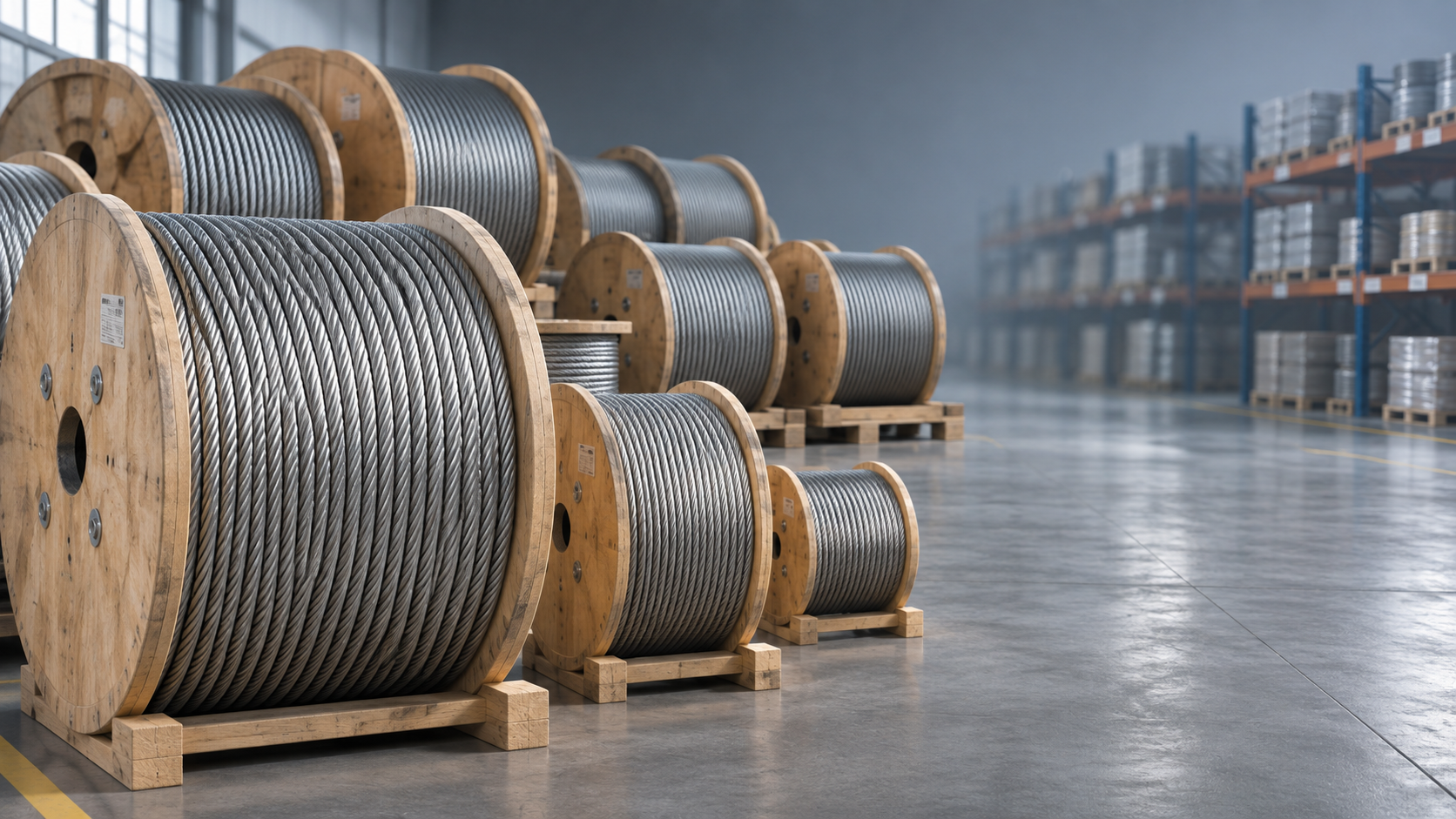
A larger minimum order quantity (MOQ) can reduce the quoted unit price of OEM wire rope by spreading setup and customization costs across more material. It can also tie up cash in stock that may not be used for months. The better financial decision is therefore the order with the lowest expected total cost over the required period—not necessarily the lowest price per meter.
This distinction matters when a supplier offers a discount for a production run that exceeds the equipment maker’s confirmed demand. Before approving the larger commitment, compare the saving with freight, storage, financing, potential waste and the cost of changes to the rope specification.
What the minimum order is paying for
An MOQ is the smallest quantity a supplier will accept under specified terms. For customized rope, it may reflect the material purchase, machine setup, production scheduling, testing or packaging needed for that particular order. These costs do not always increase in proportion to the length produced, so a larger run can lower the amount allocated to each meter.
Ask whether the MOQ applies to the whole purchase order or separately to each construction, diameter, material, coating, cut length or packaging format. A quoted total can look achievable until it is divided among several distinct specifications. Also establish whether the quantity is measured in meters, weight, reels or finished assemblies; conversion depends on the rope specification and packaging.
A standard construction may have a different minimum from a rope made to a unique drawing. Changes such as individual cutting, end processing or custom labeling can introduce separate minimums or setup charges. Request those charges as line items rather than assuming they are included in the rope price.
Compare the landed cost with the cost of holding stock
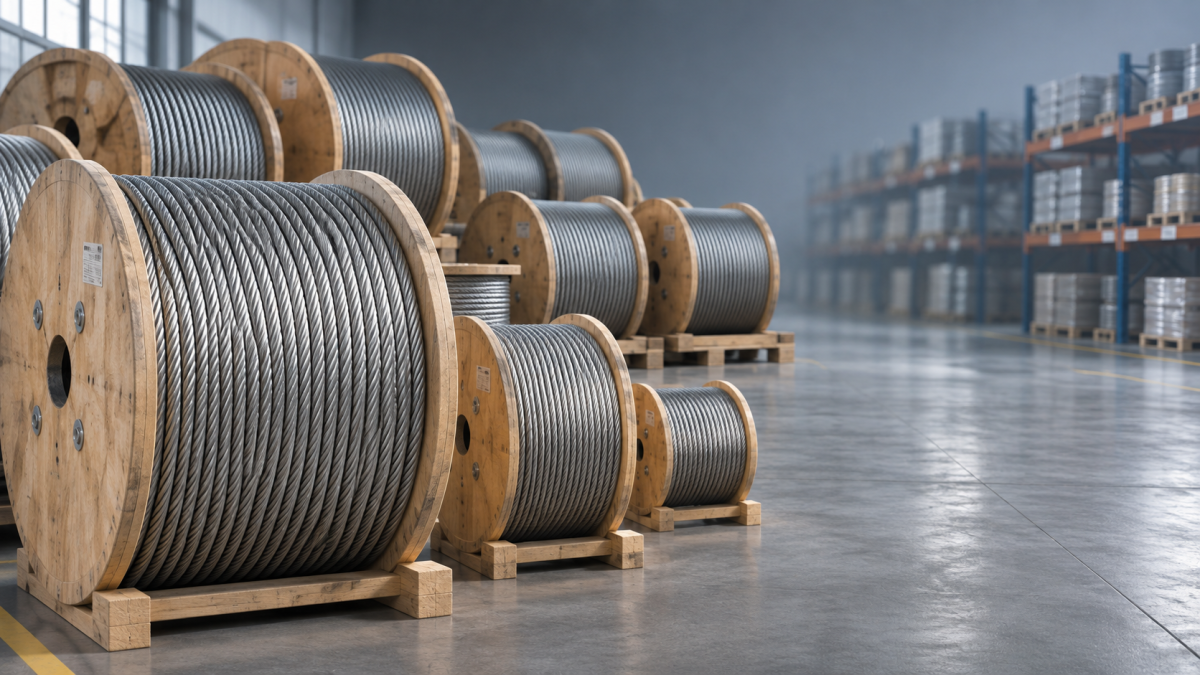
Start with two or more quotes for the same technical specification and delivery basis. For each quantity, calculate the purchase value plus freight, insurance where applicable, duties, handling and any separately charged setup or inspection. Then add the expected cost of carrying the inventory until it is used.
Expected total cost = landed purchase cost + inventory carrying cost + expected waste or obsolescence cost + other relevant order costs.
Inventory carrying cost can include warehouse space, handling, insurance and the financing cost of cash tied up in stock. Apply the company’s approved assumptions and expected stock levels rather than charging the full order value for the entire period when material will be consumed gradually. Do not add costs already included in a supplier’s delivered price.
The following comparison illustrates the arithmetic only; the figures are hypothetical and are not market quotations. Both options cover the same confirmed requirement over the same period, and all amounts use the same currency.
Here, the larger plan saves 1,000 on landed purchases but adds 1,100 in estimated holding and obsolescence costs. It is slightly more expensive overall. The conclusion could reverse if demand is more certain, storage costs less or the price reduction is greater. Any remaining stock should be valued consistently in both options rather than treated as fully consumed in one and as an asset in the other.
Separate confirmed demand from forecast demand
Before accepting a higher MOQ, map the quantity to the production schedule. Confirmed requirements support a firmer commitment than forecasts for equipment orders that may change. Compare the proposed quantity with expected consumption, the lead time for replenishment and the date by which any unused rope might become unsuitable for the intended design.
Pay particular attention to specifications tied to a single machine model. A change in diameter, construction, coating or termination can leave a reel usable in theory but unsuitable for the approved assembly. Storage conditions and packaging also matter: damaged, contaminated or poorly identified stock can create inspection and replacement costs.
Where the forecast is uncertain, calculate the break-even point. The additional quantity discount must exceed the extra carrying cost, expected loss on unusable stock and any other incremental expense. Test the calculation against a lower-demand scenario; a small expected saving may not justify a commitment that becomes expensive if orders are delayed.
Ways to reduce the commitment without losing visibility
A supplier may be able to quote alternatives to a single large shipment. None should be assumed available without written agreement:
- Scheduled releases: One production commitment is delivered in batches. Confirm who owns the unreleased stock, when payment is due, storage charges and the deadline for taking delivery.
- Standardization: Engineering can check whether existing approved rope specifications can serve more than one application. Do not substitute a rope solely to reach an MOQ.
- Separate setup charges: A smaller quantity with a transparent setup fee may cost less than buying surplus material to qualify for a lower unit price.
- Forecast-based agreements: A supplier may quote against an estimated volume, but the agreement should distinguish a nonbinding forecast from a binding purchase obligation and state any price adjustment conditions.
Combining related purchases can simplify freight or ordering, but it does not automatically combine manufacturing minimums. For example, a procurement team also sourcing the NACM90 EN818-2 G80 Black Heavy Duty 6mm 8mm 10mm Alloy Steel Lifting Chain can ask for a consolidated logistics quote. The chain and wire rope remain different products; confirm their separate minimums, lead times and technical requirements before attributing any freight saving to the rope order.
Put the approval conditions in writing
A comparable quotation should identify the rope construction, material, diameter, finish, required length, tolerances, packaging, inspection documents and delivery terms. Record the applicable quantity and price for each specification, as well as payment milestones, production lead time and quote validity. If samples or first-article approval are required, establish whether production starts before or after acceptance.
For a staged order, the financial commitment may be larger than the first invoice. Check cancellation and change charges, ownership of raw material or finished stock, and liability for quantities not released. Exchange-rate exposure and freight changes should also be assigned under the agreed terms rather than left out of the comparison.
Approve the larger MOQ when the documented discount covers its additional expected costs and the demand is credible enough to use the stock. If the calculation depends heavily on uncertain forecasts or unspecified supplier concessions, request a smaller-quantity quote or a defined release arrangement before committing funds.
Navigation
Send Us A Message



Shandong Faster Technology Co., Ltd. is a professional manufacturer of steel wire ropes.
Get in Touch
*We respect your confidentiality and all information are protected.