





What does extra high strength mean for wire rope?
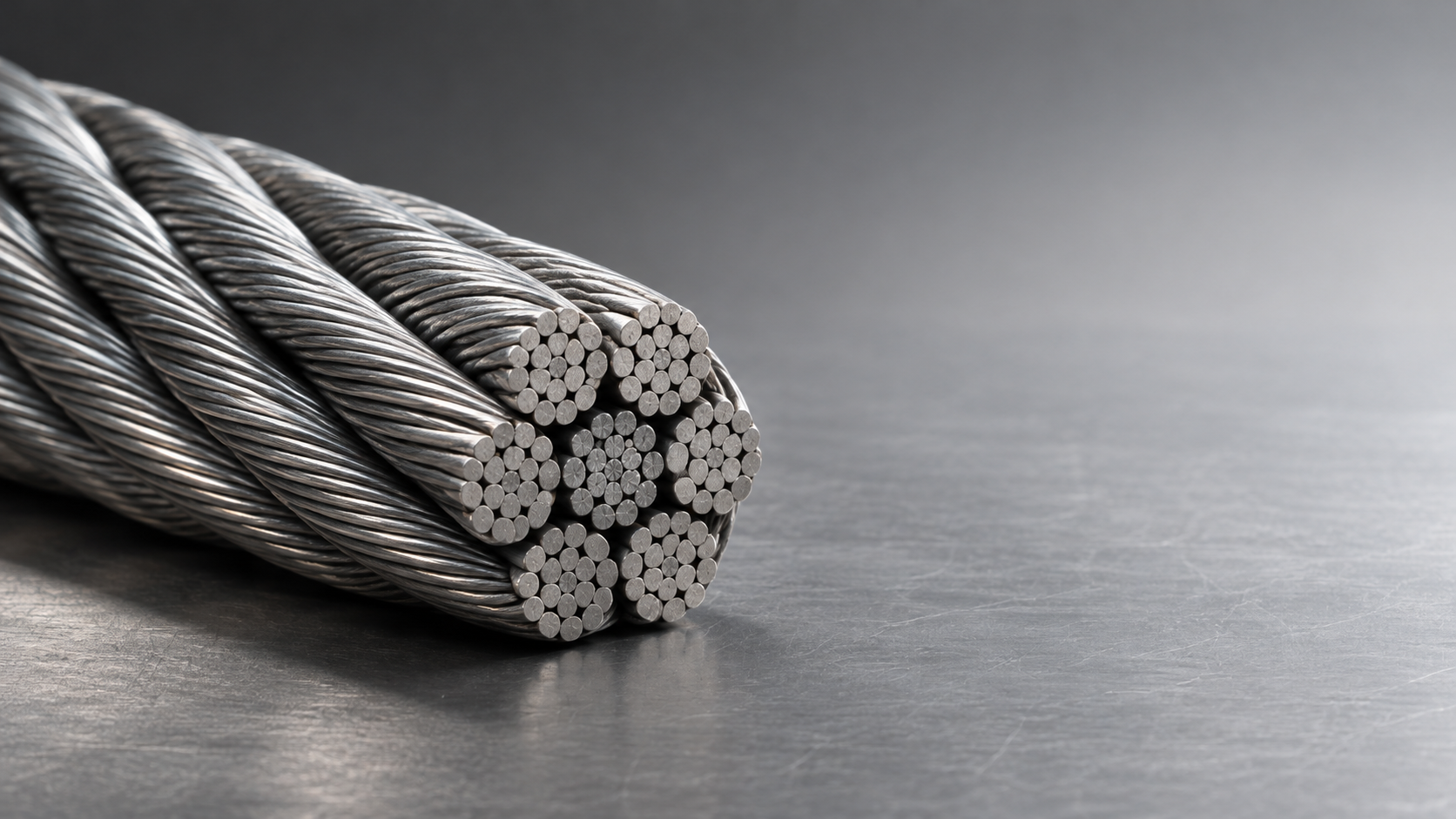
Extra high strength wire rope generally describes a product intended to have a higher specified breaking strength than a comparable lower-strength grade. However, “extra high strength” is not, by itself, a complete or universal specification. Its meaning depends on the applicable product standard, grade designation and rope construction.
For a technical comparison, start with the minimum breaking force for the exact rope being offered. Then examine the construction, material, diameter, end termination and operating conditions. A stronger rope on paper is not automatically the right replacement for an existing rope, particularly when the equipment involves bending, repeated loading or lifting people or materials.
What does “extra high strength” actually describe?
In a defined product specification, a strength designation distinguishes a rope or strand from other grades within that specification. It is usually related to the strength of the steel wires and the resulting minimum breaking force of the finished product. The designation only has a clear technical meaning when it is tied to a named standard or a manufacturer’s documented grade system.
The same words may also appear in a supplier’s general description without identifying a recognized grade. In that case, they are a comparative claim, not enough information to establish what load the product can carry.
Terminology also matters. Some specifications use “extra high strength” for particular steel wire strands, while other rope specifications use different grade names. A strand is an assembly of wires laid together; a wire rope commonly consists of multiple strands laid around a core. Do not assume that an EHS strand designation and a high-strength multi-strand rope designation are interchangeable.
When evaluating a listing, ask for the full product designation and the minimum breaking force for its exact diameter and construction. If a supplier offers a strength comparison, establish which grade and standard form the baseline.
Breaking force is not the permitted working load
The minimum breaking force is the specified lower limit for the force required to break a new rope under the applicable test conditions. It is a product property used for selection and verification. It is not a load that should be applied in service.
The allowable working load or rated capacity is established for the intended application using the applicable design requirements. Those requirements account for the consequences of failure and the conditions in which the rope or assembly operates. For lifting, the relevant rules for the equipment and complete sling or assembly govern the rating; a rope’s breaking force alone does not establish it.
As a simple illustration, two ropes may have the same nominal diameter but different minimum breaking forces. The rope with the higher value may support a higher calculated capacity under the same design basis, but only if the termination, fittings, equipment and other requirements also permit it. A weak or incompatible end fitting can limit the capacity of the assembly, regardless of the rope’s published strength.
Keep the document terms distinct: a minimum specified breaking force is not necessarily the same as an individual test result, and neither should be confused with a working load limit. Check the units as well as the numbers when comparing data sheets.
Compare the complete rope, not just the grade
Strength values are meaningful only when the compared products are described on the same basis. A useful comparison includes:
- Diameter and tolerance: Use the nominal size and applicable measurement method. A rope must also fit the equipment’s sheaves, drum and fittings.
- Construction and core: The number and arrangement of wires and strands, together with the core type, affect flexibility, support and operating behavior.
- Material and finish: Carbon steel, galvanized steel and stainless steel may meet different corrosion and strength requirements. A surface coating does not identify the strength grade.
- Minimum breaking force: Compare the specified value for each exact configuration, not a value taken from a different diameter or construction.
- Standard and grade: Record the applicable standard, edition and grade designation, or the manufacturer’s stated specification if no standard grade is claimed.
- Termination: Check the type, dimensions and rated capacity of the completed assembly, not just the rope supplied on a reel.
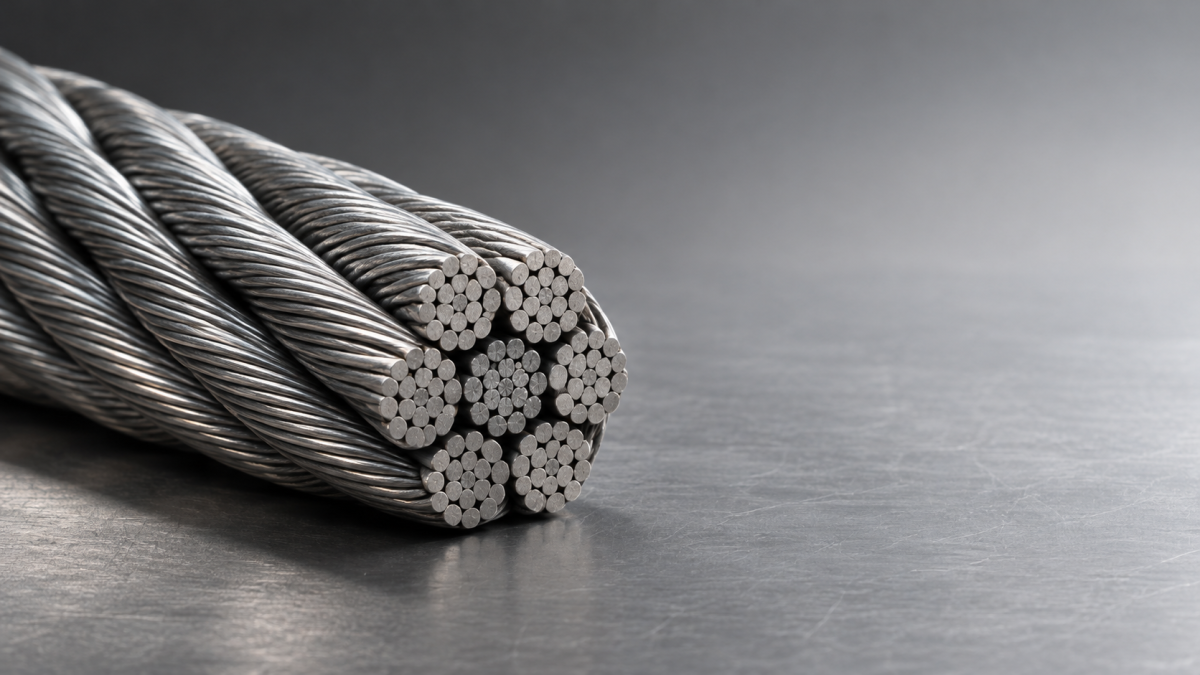
These details explain why a higher wire tensile strength does not translate into a universal percentage increase in finished-rope strength. The metallic area and the way wires share load also influence the result. A supplier’s table for the finished rope is more useful than a comparison based only on the tensile strength of an individual wire.
When higher strength can help, and when it can create problems
A higher-strength grade can be useful when an application needs a greater minimum breaking force within a fixed rope diameter. This may arise where existing hardware limits the available space, or where a static tension member needs to meet a defined load requirement. The benefit is real only when the complete assembly and its support structure are designed for the resulting forces.
That does not mean a higher grade should automatically replace the original rope. In equipment that runs over sheaves or winds onto a drum, bending performance and compatibility with the manufacturer’s specified rope are critical. Construction, wire size, lubrication and sheave condition all affect fatigue and wear. Increasing breaking strength alone does not establish better bending-fatigue life.
Nor does higher breaking strength eliminate damage from crushing, abrasion, corrosion, shock loading or poor installation. Depending on the design, a rope optimized for one property may involve a trade-off elsewhere. For example, a stiff strand may be useful in a relatively straight tension member but unsuitable for repeated tight bends.
For replacement on a crane, hoist or other controlled equipment, use the equipment manufacturer’s rope specification and applicable inspection and replacement criteria. A substitute needs to satisfy the complete specification, including construction and operating characteristics, not merely match or exceed the original breaking force.
Construction and corrosion resistance are separate decisions
A 1x7 construction has one center wire surrounded by six outer wires. It is a single strand and is generally stiffer than a comparable multi-strand construction, making it more relevant to relatively straight runs and controlled traction than to applications involving frequent bending around small sheaves.
For a small-diameter example, the 1x7 Stainless Steel Wire Rope 0.3-6.0mm use For Hanging Traction and guardrail is offered in several stainless steel materials and diameters. Its construction can be considered for hanging, guardrail or suitable traction applications, but the listing’s material and construction alone do not establish an extra-high-strength grade or a lifting capacity. The required breaking force and termination must be specified for the selected size.
Stainless steel selection also depends on exposure. For example, 316 stainless steel is often considered for more demanding chloride exposure than 304, but neither material removes the need to assess concentration, moisture, deposits and maintenance. Galvanized carbon steel may be appropriate in other environments. Compare the corrosion protection and strength data for the actual products rather than assuming one material is always stronger or immune to corrosion.
A plastic coating adds another selection detail: establish whether the stated diameter refers to the metallic strand or the outside of the coating. Fittings must be compatible with the rope and coating arrangement, and the condition of the metal beneath the coating must remain part of the inspection plan.
What to request before specifying a rope
Provide the supplier with the intended application, maximum expected loads, whether loading is steady or changing, environmental exposure, required service life and details of any sheaves, drums and end fittings. For an existing machine, include the equipment manufacturer’s rope requirements. This gives the supplier a basis for identifying a suitable construction rather than selecting on strength alone.
In return, request a written specification covering the exact construction, nominal diameter, material or finish, grade, applicable standard and minimum breaking force. For a fabricated sling or terminated assembly, request the assembly’s rated capacity, termination details and relevant identification or test documentation required for the application.
If the proposed product is described only as “extra high strength,” the next decision is not whether the label sounds sufficient. It is whether the documented rope and complete assembly meet the load, equipment and service requirements together.
Navigation
Send Us A Message



Shandong Faster Technology Co., Ltd. is a professional manufacturer of steel wire ropes.
Get in Touch
*We respect your confidentiality and all information are protected.