





How does galvanizing affect steel wire rope fatigue life?
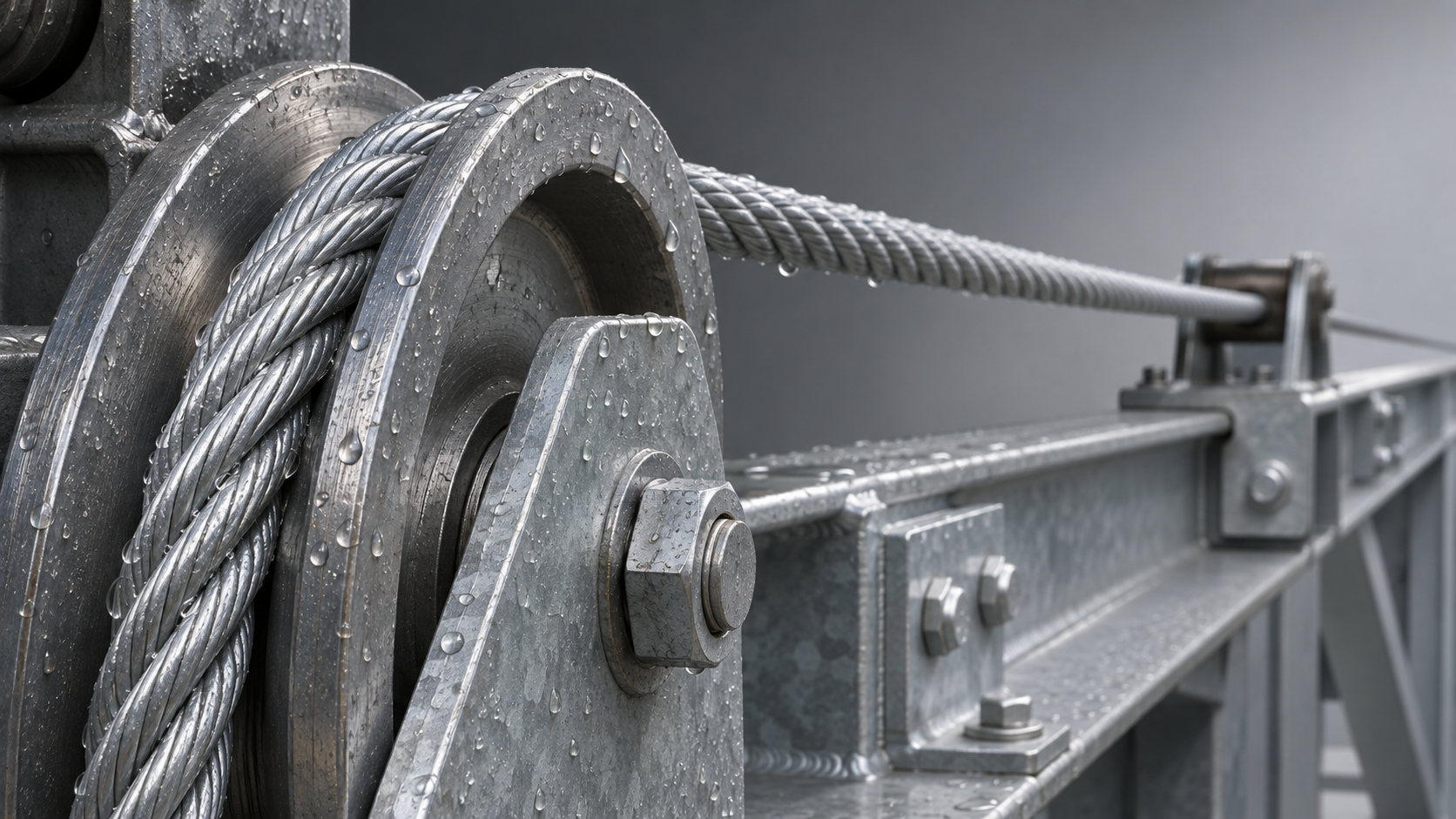
How does galvanizing affect steel wire rope fatigue life?
Galvanizing protects steel wire rope against corrosion, but its effect on fatigue life depends on more than the zinc coating alone. For technical evaluators, the key question is how corrosion resistance, coating characteristics, rope construction, bending cycles, and operating conditions interact over time. Understanding these factors helps determine when galvanized steel wire rope is the right choice for applications involving sheaves, repeated loading, or exposure to moisture—and what to consider when comparing fatigue performance.
The practical answer: galvanizing can help preserve fatigue life in corrosive service by delaying damage to the steel wires. It does not, however, guarantee more bending cycles than an otherwise comparable uncoated rope in every application. That comparison depends on the finished rope and the conditions under which it is tested and used.
Why corrosion changes the fatigue problem
A working rope is made from wires that bend, slide and bear against one another. As the rope travels over a sheave, individual wires experience repeated changes in stress. Fatigue cracks can form and grow until wires break, even when the operating load is below the rope’s minimum breaking force.
Corrosion makes that process harder to control. Rust and pitting damage the wire surface, creating local stress concentrations where cracks may initiate. Corrosion can also affect internal wires that are difficult to inspect. Zinc provides a physical barrier and sacrificial protection to exposed steel, helping delay corrosion-related damage while the coating remains effective.
This benefit matters particularly in wet, outdoor or marine-adjacent service. A rope on a port winch, for example, may encounter moisture and salt while repeatedly passing over sheaves. In a dry indoor system, corrosion may be less influential than bending geometry, load or abrasion. The same coating decision can therefore have different value in different machines.
The coating is one variable, not a fatigue rating
Galvanized rope is generally assembled from zinc-coated wires. Coating characteristics, wire manufacturing, rope construction and finishing can all influence how the completed rope behaves under cyclic loading. A zinc coating can wear at contact points, and its condition may change as wires bend and rub. The effect on measured fatigue life is specific to the product and test conditions; it should not be reduced to a universal percentage gain or loss.
When comparing galvanized and bright, or uncoated, rope, ask whether the samples have the same nominal diameter, construction, wire strength grade, core type and lay. Check their stated minimum breaking forces separately. If those details differ, a cycle-life difference cannot reasonably be attributed to galvanizing alone.
Coating designation also deserves attention. Request the applicable coating class or specification and evidence of conformity, rather than relying on a visual description such as “heavy galvanized.” A coating requirement establishes a property of the wire; it is not, by itself, a prediction of the rope’s service life.
Bending geometry often decides the outcome
The sheave-to-rope diameter ratio, commonly written as D/d, is a useful starting point. For a given rope, bending around a smaller sheave generally produces greater bending strain than bending around a larger one. Reverse bends, multiple sheaves, drum spooling and high operating tension can add to the fatigue demand.
Rope construction changes the trade-off. A construction containing more, finer outer wires may offer better bending flexibility, but those wires can be more vulnerable to external abrasion than larger wires. A rope selected only for corrosion resistance may therefore perform poorly if the sheave system or wear conditions are incompatible with it.
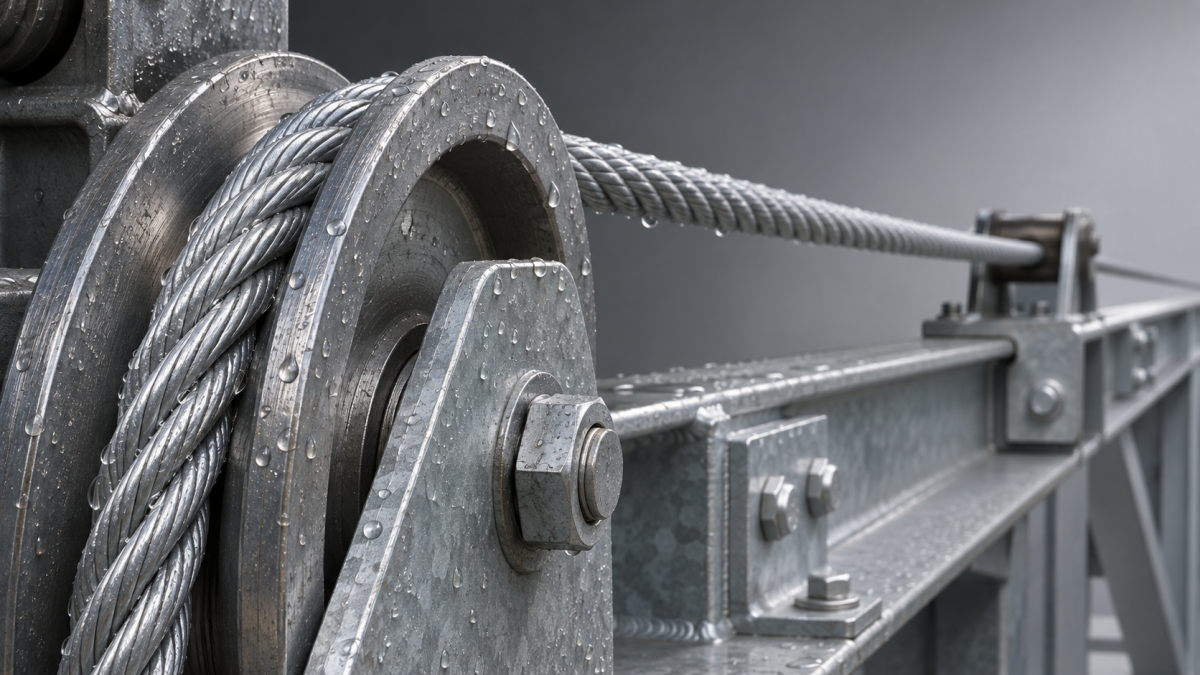
Inspect the entire rope path, not just the nominal sheave diameter. Groove condition, alignment, fleet angle and drum winding affect how the rope contacts the equipment. Damaged or poorly matched grooves can accelerate wear and local wire damage. Use the equipment and rope manufacturers’ requirements to assess the complete arrangement rather than applying a generic D/d value to every installation.
How to make a meaningful fatigue comparison
Breaking-force compliance is necessary, but it is not a substitute for a bending-fatigue assessment. A tensile test describes performance under a specified test condition; it does not establish how many trips a rope will survive on a particular machine.
For a defensible comparison, define the following before reviewing supplier data or commissioning a test:
- Rope identity: diameter, construction, core, lay, wire grade, finish, lubrication and minimum breaking force.
- Test geometry: sheave diameter and groove profile, rope path, number of bends and whether reverse bending occurs.
- Loading: applied tension, cycle definition, speed and any variation in load during a cycle.
- Environment: dry or wet conditions, salt exposure, contaminants and temperature where relevant.
- End point: the agreed condition for stopping the test, such as a defined number of broken wires or another specified failure criterion.
A laboratory bending test is useful for comparing candidates under controlled conditions, but it may not reproduce corrosion, dirt, shock loading or maintenance in the field. Cycle counts from different test rigs should not be treated as interchangeable unless the methods and acceptance criteria are sufficiently comparable.
Which standards should be checked?
The applicable standard depends on the rope type, equipment and market. ISO 2408 addresses general-purpose steel wire ropes, while the EN 12385 series covers steel wire ropes, with different parts addressing particular products and requirements. ISO 2232 addresses the zinc or zinc-alloy coating of individual round wires for ropes. Confirm the relevant edition, part, product scope and specified coating class in the purchase documentation.
For cranes, ISO 4309 provides guidance on the care, maintenance, inspection and discard of wire ropes. It should be used alongside the crane manufacturer’s instructions and applicable local requirements. Do not assume that a general-purpose rope specification establishes suitability for an elevator, a personnel-lifting system or another application with its own specific requirements.
Ask for a certificate or test documentation tied to the supplied rope, including the specified construction and minimum breaking force. If fatigue performance is a contractual requirement, agree on the test method, sample condition and acceptance criteria before ordering; a general statement of standard compliance may not answer that question.
Inspection remains essential after installation
Galvanizing does not eliminate the need for lubrication. A suitable lubricant can help limit corrosion and reduce friction between wires, but compatibility with the rope, equipment and environment should be confirmed. Lubricant can also conceal damage, so inspection must follow the applicable procedure rather than relying on surface appearance alone.
Pay particular attention to sections that repeatedly pass over sheaves, sit in corrosive deposits or terminate at end fittings. Broken wires, localized corrosion, diameter reduction, deformation and damaged terminations all warrant assessment under the relevant discard criteria. Internal deterioration may not be obvious from an intact-looking exterior. Where inspection indicates a discard condition, replacement takes priority over any remaining theoretical fatigue life.
Adjacent components need their own assessment. For equipment guarding or general securing, a short- or long-link product such as DIN5685 A/C Short or Long Link Chain may be considered separately from the working rope. Such general-purpose chain should not be assumed suitable for overhead lifting; suitability depends on the applicable rated product and system requirements.
What to confirm before specifying the rope
A useful specification connects the rope to the machine: operating loads, sheave and drum dimensions, expected cycling, exposure, lubrication plan and inspection regime. Include the applicable standard and documentation requirements, then ask the supplier to identify any construction or coating choices that change the comparison.
Shandong Faster Technology manufactures galvanized, stainless steel and plastic-coated wire ropes, including single- and multi-strand products in the stated 1–20 mm diameter range. Its wire drawing, stranding and rope-closing capabilities provide a basis for discussing construction and processing requirements alongside customized sling components. The relevant question for a particular project remains whether the proposed rope and its documented properties match the equipment and service conditions.
If corrosion is the dominant threat, galvanizing may preserve useful life that an uncoated rope would lose prematurely. If bending severity or abrasion dominates, changing the rope path, construction or maintenance practice may matter more. Establish which mechanism is likely to govern before treating the coating as the answer.
Navigation
Send Us A Message



Shandong Faster Technology Co., Ltd. is a professional manufacturer of steel wire ropes.
Get in Touch
*We respect your confidentiality and all information are protected.