





How zinc coating mass affects galvanized steel wire strand
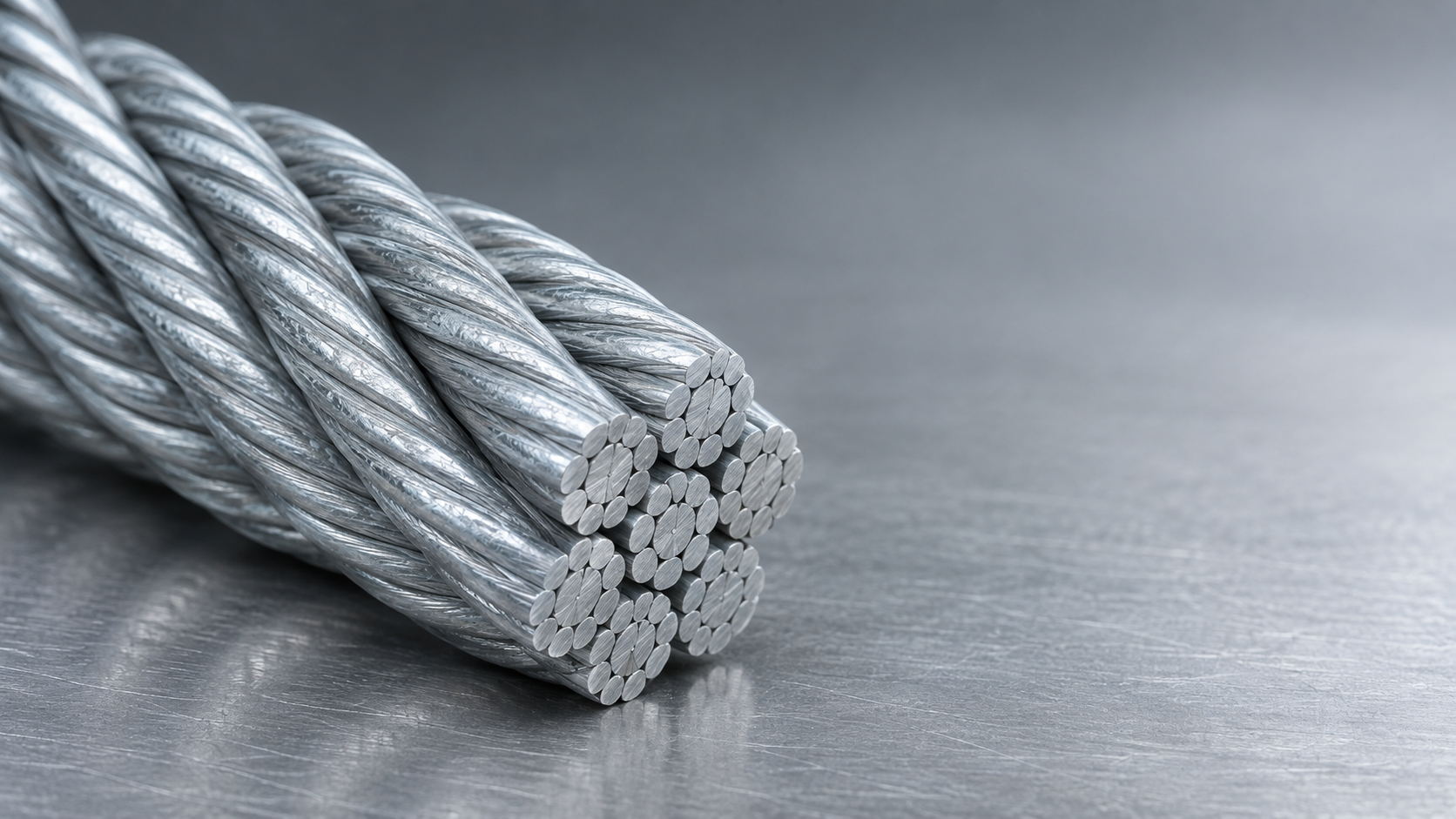
Zinc coating mass indicates how much zinc is present per unit of steel wire surface, usually expressed in grams per square metre (g/m²). A higher specified mass generally provides a larger zinc reservoir to protect a galvanized steel wire strand against corrosion. It does not, by itself, establish a service life or prove that a finished strand meets a particular standard. The required coating class, wire diameter, test method and service environment all affect the judgment.
For an acceptance decision, compare the measured coating mass with the minimum applicable to the individual wire under the specified standard and edition. A value without the corresponding wire diameter and coating class is difficult to interpret; an average for a whole rope also does not establish compliance for each tested wire.
What coating mass reveals about protection
Zinc protects steel in two related ways. It forms a barrier between the steel and the environment, and it can provide sacrificial protection where the underlying steel is exposed. As zinc corrodes, corrosion products form on the surface. Their protective effect varies with exposure: persistent moisture, salt deposits, acidic conditions and repeated wetting can consume the coating more rapidly than sheltered, dry service.
Given a comparable coating and exposure, greater mass generally means that more zinc is available before the steel becomes extensively exposed. The relationship is not a reliable service-life multiplier. Local damage, crevice conditions and abrasion can remove or exhaust zinc at selected points well before the average coating has been consumed.
Coating mass is related to thickness, but the two are different measurements. A mass result represents zinc relative to surface area over the tested specimen; a thickness reading describes a location or a defined measurement area. An average mass can conceal thin spots, while a single thickness reading can miss variations around or along a wire. Any conversion between the two relies on assumptions about coating density and uniformity, so it should not replace the acceptance method specified for the product.
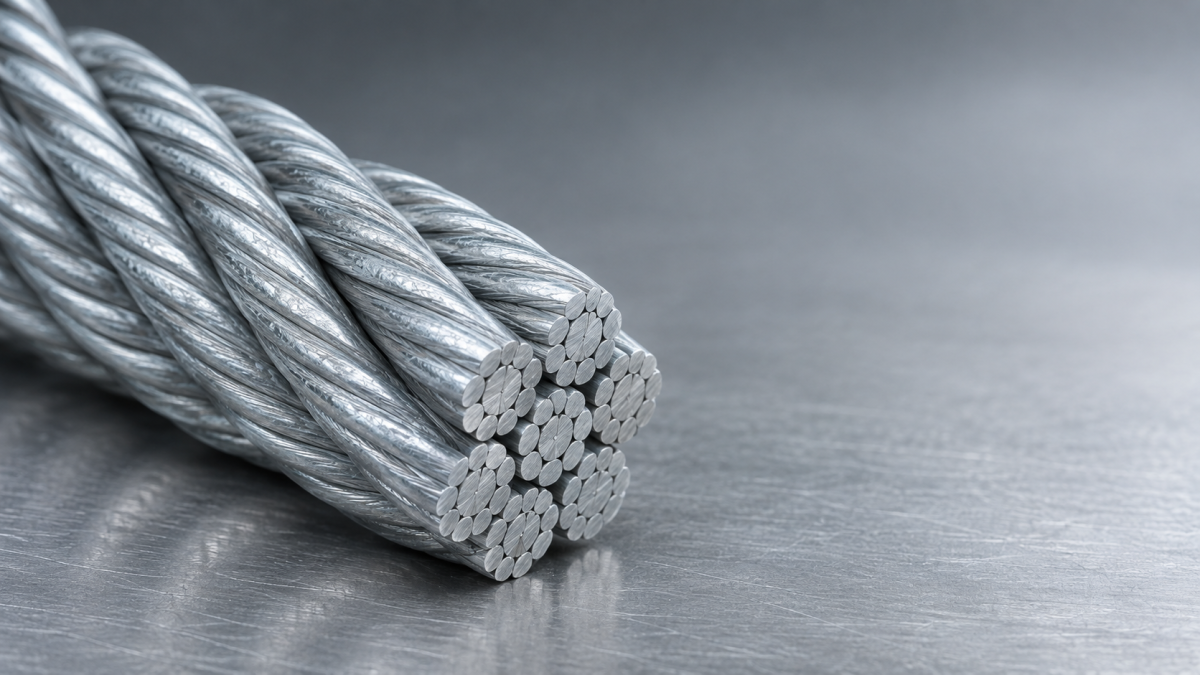
Read the coating requirement alongside wire size
Coating requirements are commonly applied to the component wires, not simply to the nominal diameter of the completed strand or rope. A rope contains wires of different positions and sometimes different diameters. The applicable minimum can therefore differ within the same construction. Confirm whether the specification addresses wires before stranding, wires taken from the finished product, or both; forming and subsequent handling can affect the coating that remains.
The designation “galvanized” alone is not a coating class. A purchase specification should identify the relevant product standard and edition, the zinc coating class or minimum mass, and the wire sizes to which the requirement applies. Where a standard defines sampling and acceptance rules, those rules determine how individual results are assessed. A test report should identify the samples and test method rather than only state that the product is galvanized.
EN 12385-4 is listed among the standards for the supplied 7x19 rope, but a reference to a rope standard alone should not be treated as proof of a particular zinc mass. Establish the applicable coating requirements and any referenced wire standard from the specified edition and order documents. Resolve a missing or conflicting coating designation before accepting a certificate against the order.
Mass, continuity and adhesion are separate properties
A coating can meet a mass requirement and still have localized defects that matter in service. Thin areas, bare spots, cracks or damaged regions at contact points provide paths for corrosion. Conversely, a dull or uneven appearance is not sufficient on its own to establish a coating failure. Visual observations should be assessed against the applicable acceptance criteria and, where needed, supported by testing.
Adhesion matters when wires are drawn, stranded or bent around sheaves. If zinc separates from the steel during handling or service, the mass measured on an undamaged specimen does not describe the remaining protection at the affected location. Adhesion and continuity tests, where specified, address different questions from a coating-mass test; one result cannot automatically substitute for the others.
Hot-dip and electro-galvanized wires can have different coating characteristics, but the process name is not a substitute for a measured mass or a specified class. Likewise, a bright coating is not evidence of a heavier deposit. Compare actual requirements and test results, including adhesion and surface condition where they are relevant.
Exposure changes the useful margin
A strand installed outdoors near salt water faces a different corrosion mechanism from one stored indoors. Salt deposits retain moisture and can accelerate attack, especially where water remains trapped between wires. Rain washing may remove some deposits from exposed areas, while sheltered crevices can remain contaminated. A heavier coating offers more zinc, but it cannot prevent water and contaminants from entering a strand.
Mechanical contact changes the picture again. On a crane rope, repeated bending, sheave contact and wire-to-wire movement can wear the coating locally. The visible outer wires may retain zinc while internal contact points experience damage, or the reverse. Suitable lubrication and maintenance can limit corrosion and friction where allowed by the equipment and rope instructions; they do not restore zinc already lost.
For example, the 7x19 galvanized steel wire rope 3.0-12.0mm use for Cranes is listed for crane and other lifting applications. Its construction and nominal diameter describe the rope, not the zinc mass on its individual wires. The order still needs to establish the coating requirement, breaking-force requirement and compatibility with the equipment. The listed 1770 and 1960 N/mm² values refer to tensile strength grades, not the minimum breaking force of a finished rope.
Testing and inspection after installation
Coating mass is commonly determined by removing zinc from a measured wire specimen and calculating the loss of mass relative to its surface area, using the method specified by the governing standard. This is a destructive test. Sampling from a finished rope also requires care: record the wire position, diameter and specimen identity so that each result is compared with the correct requirement. Do not infer the coating condition of an entire production lot from an isolated sample unless the agreed sampling plan supports that conclusion.
During service, inspect accessible rope surfaces for corrosion, coating damage, broken wires and changes in condition in accordance with the applicable equipment instructions and inspection criteria. Red rust indicates exposed or affected steel; white corrosion products indicate zinc corrosion, but their appearance alone does not quantify remaining coating mass. Internal deterioration can be present without an equivalent external indication, particularly where moisture is retained.
A coating certificate is an acceptance record for the tested material, not a replacement for in-service inspection or established discard criteria. When corrosion or wear raises doubt about continued use in a lifting application, assess the rope under the applicable inspection and discard requirements rather than estimating remaining capacity from the original zinc mass.
Navigation
Send Us A Message



Shandong Faster Technology Co., Ltd. is a professional manufacturer of steel wire ropes.
Get in Touch
*We respect your confidentiality and all information are protected.