





Does alloy steel wire rope offer higher tensile strength?
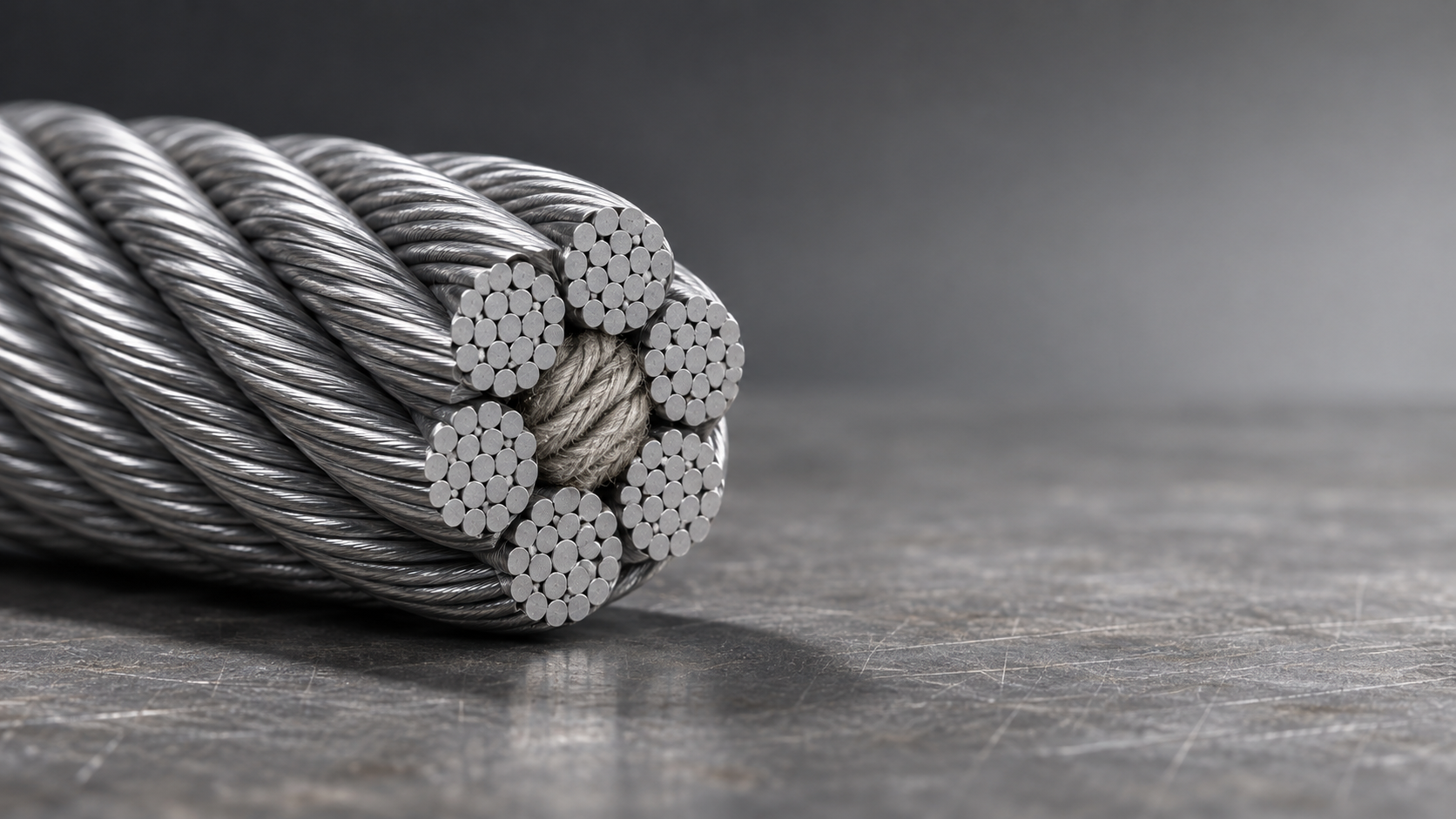
Alloy steel wire rope can have higher tensile strength than conventional carbon steel wire rope, but the material label alone does not establish that result. A valid comparison requires ropes of the same diameter, construction and applicable specification, with their minimum breaking forces stated in the same units. A higher-strength wire grade can increase breaking force; it does not automatically improve fatigue life, corrosion resistance or the rated capacity of a complete assembly.
For lifting or traction, start with the equipment’s specified rope and operating conditions. A rope that looks stronger on a material data sheet may be unsuitable if its diameter, bending behavior, rotation characteristics or termination do not match the installation.
Wire tensile strength and rope breaking force
Tensile strength, expressed in N/mm² or MPa, describes stress in the steel wire. Minimum breaking force describes the minimum force at which the complete rope is specified to break in a defined test. The two are related, but they are not interchangeable. A rope contains multiple wires arranged around a core, with spaces between them, so its full circular cross-section is not solid steel.
When comparing two ropes, request the minimum breaking force for each complete rope at the required nominal diameter. A higher wire tensile grade can produce a higher specified breaking force when the other relevant design features are comparable. However, strand arrangement, metallic area, core type and manufacturing process also affect the result. A comparison between different constructions cannot isolate the contribution of the steel grade.
For example, replacing a rope with a higher-grade wire does not establish that the new assembly can lift a heavier load. Terminations, fittings, design factors, reeving and equipment limits all affect the permitted load. Breaking force is a destructive test value, not a working load limit.
What alloying changes
Alloying elements can alter hardenability, strength and other properties of steel, but their effect depends on composition and processing. Wire drawing, heat treatment and final wire properties matter as well. Conventional high-carbon steel rope wires can already achieve high tensile grades through controlled manufacturing, so an alloy designation by itself is not proof of superior strength.
Ask for the specified wire grade and rope breaking force rather than relying on terms such as “alloy,” “high strength” or “heavy duty.” If the application has a documented specification, verify that the proposed material and construction meet it. A higher grade is a substitution that needs technical review, not an automatic upgrade.
Strength also has trade-offs. Higher-strength wire can be less tolerant of certain bending, abrasion or environmental conditions, depending on its metallurgy and manufacture. The relevant question is whether the proposed rope retains adequate performance throughout its intended service, including repeated bending and exposure, rather than whether its new-condition breaking force is highest.
Construction can change the comparison
Two ropes made from wire of the same tensile grade can have different breaking forces and service behavior. Construction determines the number and arrangement of wires, the core, and the way the strands share load. A steel core can offer different support and strength characteristics from a fiber core, while constructions with different wire sizes respond differently to bending and surface wear.
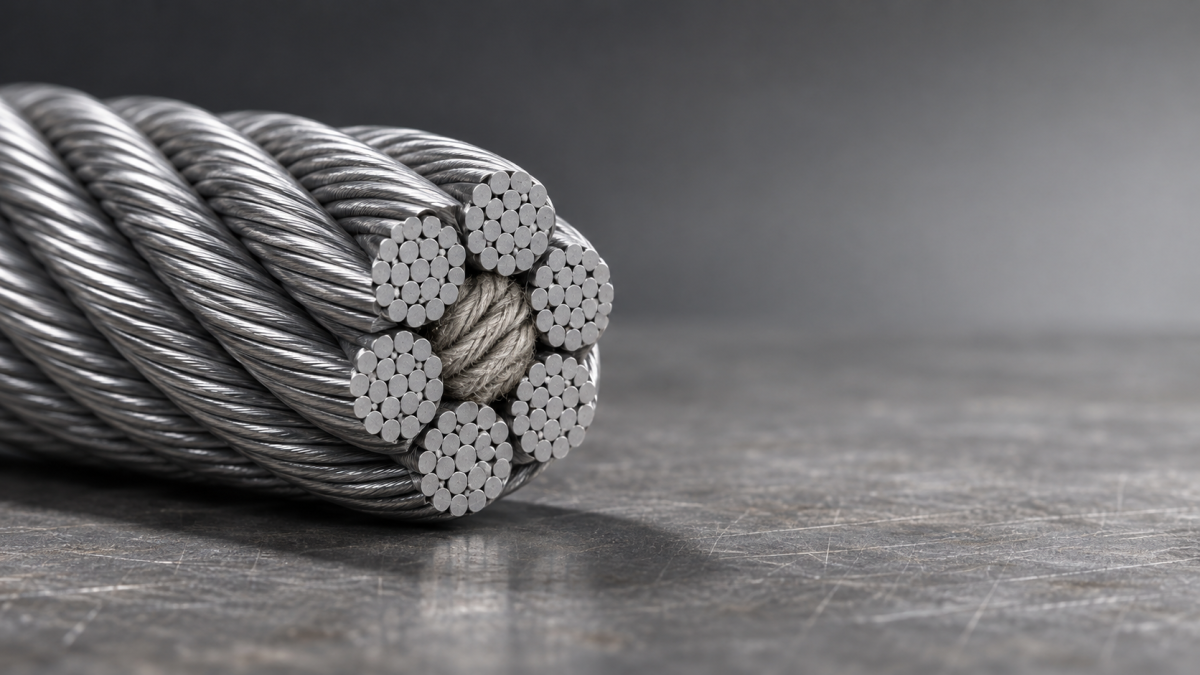
Smaller outer wires can be favorable for repeated bending, but they can also lose a greater proportion of their cross-section when abraded. Larger outer wires can resist surface wear better, while repeated bending over small sheaves places greater strain on them. These are design tendencies, not a substitute for the rope manufacturer’s application-specific rating.
Compaction and the amount of metallic area are also relevant. A compacted rope may achieve a higher breaking force at a given nominal diameter than a comparable non-compacted construction. It must still fit the drum grooves, sheaves and termination. Comparing its breaking force with that of a conventional rope without noting the construction could incorrectly attribute the difference entirely to alloy content.
When higher tensile strength does not decide the selection
Repeated bending: On a hoist with frequent cycles, rope life may be limited by bending fatigue before static breaking strength becomes the main concern. Sheave diameter relative to rope diameter, groove condition, bending frequency and rope construction all influence fatigue. A higher wire grade alone does not establish longer service life.
Corrosion: Moisture, salt or chemical exposure can reduce the effective wire cross-section and damage internal contact surfaces. Galvanized or stainless steel options may be considered where appropriate, but their breaking force must be compared using the actual product data. A coating or stainless designation does not make a rope immune to corrosion, particularly where deposits, crevices or unsuitable chemicals are present.
Traction and abrasion: Rope contact with sheaves, drums or ground surfaces introduces wear that a tensile-grade comparison will not capture. Groove profile, alignment, fleet angle and lubrication influence how load and wear are distributed. A rope with a greater initial breaking force may still require earlier replacement if its construction is poorly matched to contact conditions.
Rotation and termination: A suspended load may require a rope with specified rotation-resistant characteristics. Substituting a different construction can change handling and load behavior even if the diameter and breaking force appear acceptable. Confirm compatibility with the socket, wedge, swaged fitting or other termination, and use the assembly rating supplied for the chosen combination.
Comparing an actual replacement
Begin with the equipment documentation and identify the required nominal diameter, construction, core, lay, minimum breaking force and any rotation requirements. Then compare the proposed rope against those requirements using its product-specific data. Record the coating or material condition as well: a galvanized, uncoated or stainless version should not be assumed to have the same stated breaking force without confirmation.
Consider the rope path before accepting a higher-strength alternative. Measure or verify sheave and drum groove compatibility, review the bends the rope experiences in a normal cycle, and assess exposure to water, abrasive material or elevated temperature. If the rope is part of an assembly, the applicable rating must account for the termination and all connected components. A higher rope breaking force cannot raise the capacity of a lower-rated fitting or machine.
Chain is sometimes present in the same lifting or restraint arrangement, but its capacity cannot be inferred from the rope’s tensile grade. For example, the Welded Steel Electric Galvanized Ordinary Short Medium Long Link Chain is described in short, medium and long link forms using Q195 or Q235 carbon steel. Link dimensions and a general material-strength range do not establish an overhead-lifting rating; use a chain and assembly specifically rated for the intended duty.
Before installation, verify the delivered rope identification and documentation against the approved specification. During service, inspect for broken wires, deformation, corrosion and wear using the applicable equipment and rope instructions. An initially stronger rope remains unsuitable once its condition or configuration falls outside the permitted criteria.
Navigation
Send Us A Message



Shandong Faster Technology Co., Ltd. is a professional manufacturer of steel wire ropes.
Get in Touch
*We respect your confidentiality and all information are protected.