





Wire Rope vs Synthetic Rope: What Matters in Heavy Lifting
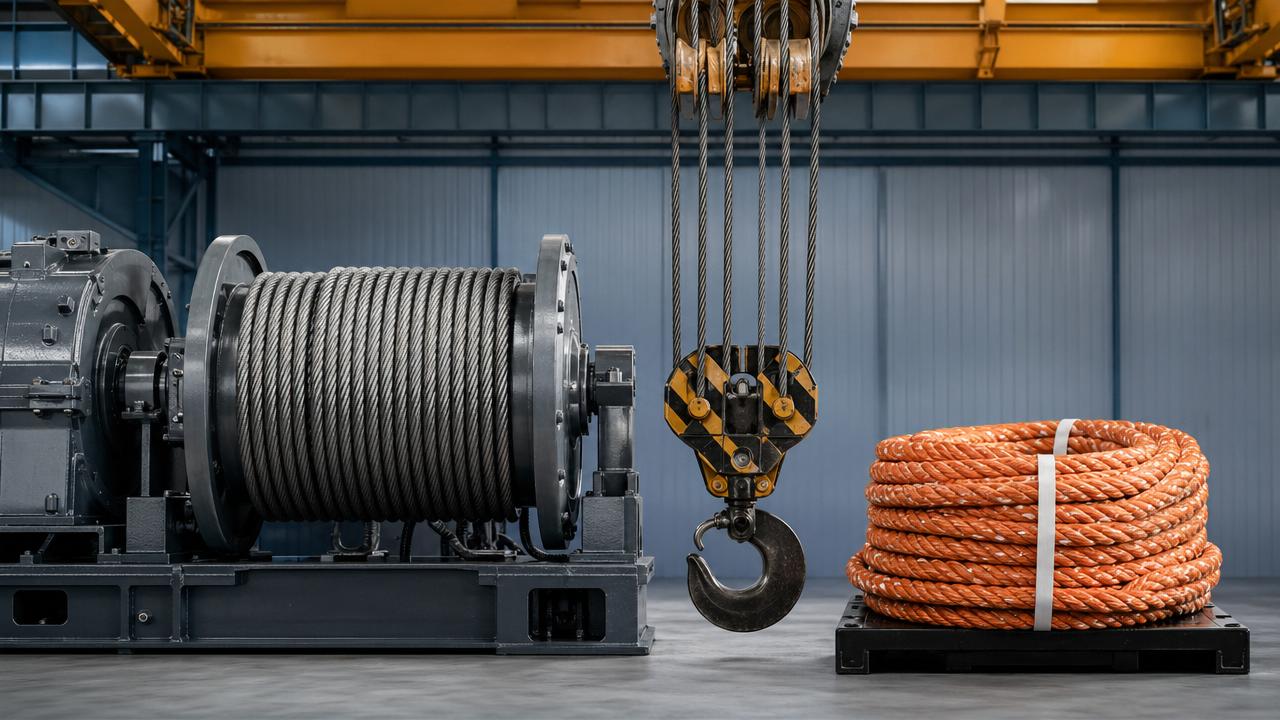
In heavy lifting projects, choosing between Wire Rope and synthetic rope can affect safety, efficiency, and long-term cost. For project managers and engineering leaders, the right decision depends on load requirements, environmental conditions, maintenance expectations, and compliance standards. This comparison highlights the practical factors that matter most, helping you evaluate which rope solution best fits demanding industrial applications.
Why scenario-based selection matters in heavy lifting
For industrial equipment projects, the debate is rarely about whether Wire Rope or synthetic rope is “better” in absolute terms. The real question is which option is better for a specific lifting environment, duty cycle, load profile, and risk tolerance. A port crane handling repetitive heavy loads, an offshore installation exposed to saltwater, and a construction site with frequent manual rigging will not evaluate rope performance in the same way.
Project managers usually care about downtime, replacement cycles, safety incidents, inspection burden, and total installed cost. Engineering leaders often focus on minimum breaking load, elongation, abrasion resistance, compatibility with sheaves or drums, and whether the rope system aligns with site procedures and standards. Because these priorities vary by application, the selection process should start with the operating scenario rather than the material category alone.
This is especially important when lifting equipment is part of a broader production system. A poor rope choice can create hidden costs through slower handling, additional maintenance labor, more frequent inspections, operator fatigue, or early retirement of connected components. In many cases, Wire Rope remains the preferred solution because of its strength, durability, and established use in critical industrial lifting, but there are applications where synthetic rope delivers clear handling or environmental advantages.
Key decision lenses before comparing products
- Load size, shock loading, and lift frequency
- Exposure to moisture, chemicals, heat, UV, or abrasive surfaces
- Inspection, maintenance, and operator skill availability
- Compliance expectations for critical lifting operations
- Weight, handling speed, and installation practicality on site
Typical lifting scenarios and where Wire Rope usually fits best
In heavy industry, common rope applications can be grouped into several practical scenarios. Each has different priorities, and that is why one specification sheet never tells the full story. Looking at use cases first helps teams avoid buying by habit or by lowest initial price.
Wire Rope is still widely selected for cranes, hoists, winches, mining systems, and lifting assemblies because it offers proven mechanical performance under heavy loads and predictable inspection practices. Synthetic rope may be attractive in lighter handling, special marine operations, or cases where reduced weight and easier manual handling create operational value, but the selection must be validated against the duty demands.
The table below summarizes how rope choice often aligns with real industrial scenarios rather than generic product claims.
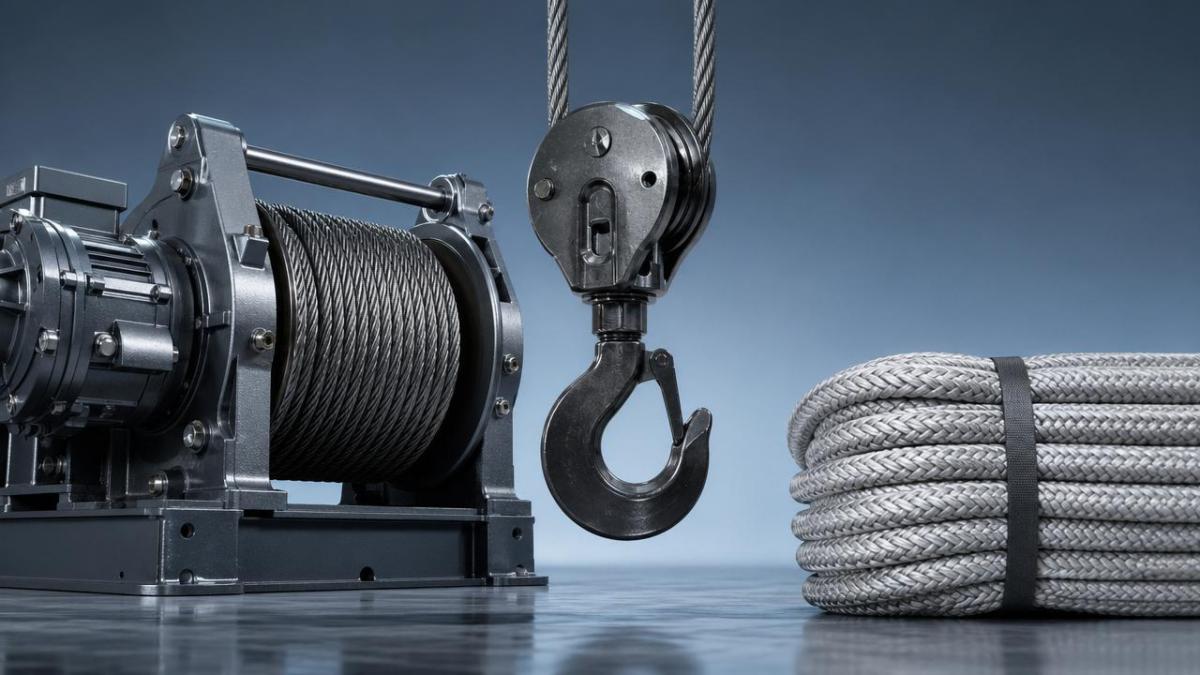
Scenario 1: Crane and hoist systems in manufacturing or construction
For fixed lifting systems such as bridge cranes, gantry cranes, and electric hoists, Wire Rope is commonly the preferred choice. These systems demand repeatable performance, controlled elongation, strong resistance to compressive forces on drums, and compatibility with grooves, sheaves, and reeving arrangements already designed around steel rope characteristics.
In this scenario, synthetic rope may appear attractive because it is lighter, but project teams must consider whether the rope can maintain dimensional stability, perform consistently under cyclic loading, and satisfy the equipment manufacturer’s design assumptions. If the lifting system was engineered around Wire Rope, substitution is not a simple material swap.
Scenario 2: Offshore, marine, and wet environments
Saltwater and humidity change the decision logic. Wire Rope can suffer from corrosion if not properly protected, lubricated, and inspected. In contrast, synthetic rope may offer benefits in terms of corrosion resistance and lower weight, especially where crews handle lines manually or where buoyancy characteristics matter.
However, for heavy lifting tasks with high consequence of failure, many offshore projects still favor Wire Rope because of its long history in regulated lifting applications and because its condition assessment methods are more familiar to industrial inspection teams. The right answer often depends on whether the rope is used for primary lifting, mooring support, auxiliary pulling, or temporary deployment operations.
Scenario 3: Mining, bulk handling, and abrasive sites
In dusty, abrasive, impact-prone environments, mechanical toughness usually outweighs handling convenience. Wire Rope often performs better where contact with rough surfaces, repetitive bending, and high working loads create severe wear conditions. For project managers, the bigger issue is not just break strength but service predictability under punishing duty cycles.
Synthetic rope can be vulnerable if abrasion, edge contact, or contamination is not tightly controlled. In these environments, teams should be cautious about assuming lighter weight automatically means better operational efficiency.
What changes from one scenario to another
Once the application is clear, the next step is to compare the actual requirement profile. The same rope can perform well in one environment and poorly in another because the stress factors are different. For example, a rope exposed mainly to static load behaves differently from one exposed to shock loading, repeated bending, or side abrasion.
For engineering decision-makers, this means procurement should align with operating realities rather than relying on one headline metric such as tensile strength. Wire Rope frequently wins when strength, structural stability, and compatibility with industrial lifting hardware are the top priorities. Synthetic rope becomes more attractive when handling weight, corrosion exposure, and crew ergonomics dominate the risk assessment.
The following categories are useful when comparing needs across scenarios.
Load behavior and mechanical demands
Where Wire Rope has a practical edge
Wire Rope is often selected where lifts are heavy, repetitive, and tightly integrated into equipment design. It generally offers strong crush resistance, dependable behavior on drums and sheaves, and broad acceptance in industrial lifting systems. This matters in high-cycle applications where even small performance changes can affect production stability.
Where synthetic rope needs closer validation
Synthetic rope may require more careful review of elongation, creep behavior, heat sensitivity, and interface wear depending on fiber type and operating conditions. These factors do not automatically disqualify it, but they make application fit more important.
Environment, maintenance, and inspection reality
Environmental conditions can shift the total cost equation. Wire Rope may need lubrication and corrosion management, but its wear modes are well understood by many maintenance teams. Broken wires, deformation, corrosion, and diameter reduction can be inspected within established routines.
Synthetic rope can reduce some corrosion concerns, yet it introduces different inspection questions such as internal fiber damage, cover wear, contamination, and heat effects. If a site lacks trained personnel for these checks, the operational advantage may be smaller than expected.
Handling, installation, and labor impact
- Synthetic rope is easier to move manually and may reduce rigging fatigue.
- Wire Rope is heavier but often aligns better with existing industrial lifting infrastructure.
- If replacement requires specialized equipment anyway, the weight advantage may be less decisive.
- In permanent installations, durability and system fit usually matter more than manual carrying convenience.
How project managers can match rope type to business needs
The best procurement outcome usually comes from translating technical features into business questions. Instead of starting with catalog language, teams should ask what failure would cost, how often the rope will be used, how much downtime is acceptable, and whether the site can support proper inspection and replacement planning.
For most heavy lifting projects involving cranes, hoists, winches, or load-handling systems, Wire Rope remains the safer default starting point because it is proven, widely specified, and supported by mature maintenance practices. That does not mean synthetic rope lacks value; it means the burden of proof is often higher when moving away from a conventional Wire Rope system in critical operations.
A practical selection process should combine technical review, site conditions, and lifecycle implications.
A simple evaluation framework
- Define the lift category: critical, repetitive, temporary, offshore, abrasive, or manually rigged.
- Confirm equipment compatibility: drum geometry, sheaves, terminations, and OEM recommendations.
- Assess exposure risks: corrosion, abrasion, heat, chemicals, and UV.
- Estimate lifecycle cost: purchase price, inspection labor, downtime risk, and replacement frequency.
- Verify compliance: internal procedures, customer requirements, and applicable standards.
Quick comparison for decision meetings
Common misjudgments that lead to costly rope decisions
One frequent mistake is treating all lifting tasks as if they were the same. Teams may select based on weight, corrosion resistance, or purchase price while overlooking bending cycles, drum pressure, edge abrasion, or regulatory scrutiny. In critical lifting, these oversights can create significant operational and liability risk.
Another common error is assuming that replacing Wire Rope with synthetic rope is a simple upgrade. In reality, rope choice interacts with terminations, sheaves, groove shape, operator habits, inspection methods, and load control procedures. A material change can affect the entire lifting system, not just one component.
The opposite mistake also happens: some teams automatically specify Wire Rope without revisiting whether the application has changed. If a project now involves frequent field deployment, manual rigging, or a highly corrosive environment, synthetic rope may deserve serious evaluation. Good decisions come from current use conditions, not legacy assumptions.
Warning signs during specification review
- Selection based only on break strength without duty-cycle review
- No confirmation of compatibility with lifting hardware
- No site-specific inspection plan
- No allowance for corrosion, abrasion, or shock loading
- No discussion of operator handling and replacement logistics
Final guidance: choose by application, not by trend
For project management teams in industrial equipment and components, the most reliable approach is to evaluate Wire Rope and synthetic rope through the lens of actual lifting scenarios. If the application involves high loads, repetitive cycles, existing crane or hoist systems, and strict compliance expectations, Wire Rope will often remain the most practical and defensible choice. Its performance history, mechanical robustness, and compatibility with industrial lifting equipment continue to make it the standard in many heavy-duty environments.
If the project places greater value on light handling, marine exposure, or temporary field mobility, synthetic rope may offer clear advantages, but only after confirming load behavior, inspection capability, and system integration. The right decision is rarely about one material outperforming the other in all cases. It is about matching the rope to the demands, constraints, and business consequences of the job.
Before finalizing procurement, compare the operating environment, required safety margin, maintenance resources, and equipment design basis. A structured review of those factors will help you determine whether Wire Rope is the right fit for your lifting scenario or whether an alternative deserves deeper engineering assessment.
Navigation
Send Us A Message



Shandong Faster Technology Co., Ltd. is a professional manufacturer of steel wire ropes.
Get in Touch
*We respect your confidentiality and all information are protected.