





Wire Rope Selection Mistakes That Lead to Early Failure
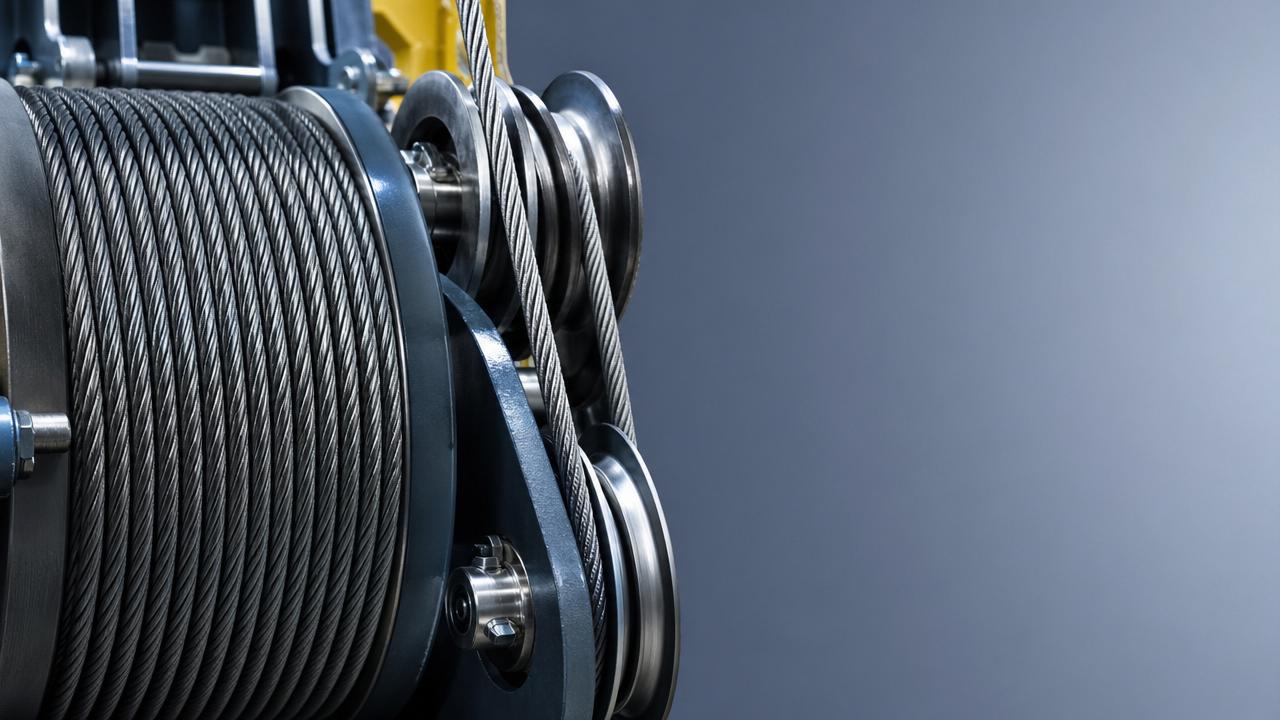
Choosing the right Wire Rope is more than a purchasing decision—it directly affects equipment reliability, safety, and service life. For technical evaluators, overlooking key factors such as load conditions, environment, construction, or material compatibility can lead to premature failure and costly downtime. This article highlights the most common wire rope selection mistakes and how to avoid them through informed technical assessment.
Why wire rope selection errors are becoming more visible
Across industrial equipment and components markets, Wire Rope is being asked to do more under tighter operating windows. Lifting systems are running at higher utilization rates, maintenance intervals are under pressure, and many facilities are balancing productivity goals with stricter safety expectations. In that environment, selection mistakes that once stayed hidden for months now show up quickly as broken wires, crushing, birdcaging, accelerated corrosion, or unstable drum behavior.
This shift matters for technical evaluators because early failure is not always caused by poor manufacturing alone. Very often, the root issue begins at the assessment stage: the wrong construction for bending fatigue, the wrong core for crush resistance, the wrong grade for environmental exposure, or the wrong diameter tolerance for existing sheaves and drums. The operating context has changed, and the evaluation process must change with it.
Another important signal is that procurement decisions are increasingly cross-functional. Safety teams, maintenance teams, operations managers, and sourcing departments all influence selection criteria. When Wire Rope is treated as a simple interchangeable commodity, these groups may optimize for price or lead time while missing application-specific performance requirements. That is one of the clearest pathways to premature failure.
Current signals technical evaluators should not ignore
The practical takeaway is simple: Wire Rope selection today is less forgiving than before. What used to be a minor mismatch may now become a visible reliability problem in a much shorter period.
The most common Wire Rope selection mistakes behind early failure
Most early failures can be traced to a limited number of assessment errors. These mistakes are common not because teams lack experience, but because the application details are often spread across drawings, maintenance records, equipment manuals, and operator feedback. A technically sound review must connect all of those inputs before a Wire Rope is approved.
In many plants, the default assumption is that matching diameter and nominal strength is enough. It is not. Construction, lay, core type, finish, lubrication characteristics, and compatibility with the reeving system all influence real operating life. Technical evaluators should view Wire Rope as a system component, not just a purchased item.
The mistakes below are especially relevant in lifting, hoisting, mining, marine, and general industrial handling applications where repeated bending and variable loading are common.
Mistake 1: Selecting by breaking strength alone
A Wire Rope with sufficient minimum breaking force can still fail early if it lacks flexibility, fatigue resistance, or crush resistance for the real duty cycle. Strength is essential, but it is only one part of suitability. Applications with frequent reeving over sheaves often need a different construction than applications dominated by straight pulls or drum layering pressure.
What to review instead
- Bending frequency and cycle count
- Shock loading or load variation
- Drum multilayer spooling pressure
- Required rotation resistance
Mistake 2: Ignoring the operating environment
Moisture, salt, chemicals, abrasive dust, and elevated temperature all change how Wire Rope performs. A rope that works well indoors may deteriorate quickly offshore, near furnaces, or in corrosive processing areas. Environmental mismatch often leads to internal corrosion that cannot be detected early enough through casual visual checks.
Mistake 3: Overlooking sheave, drum, and groove compatibility
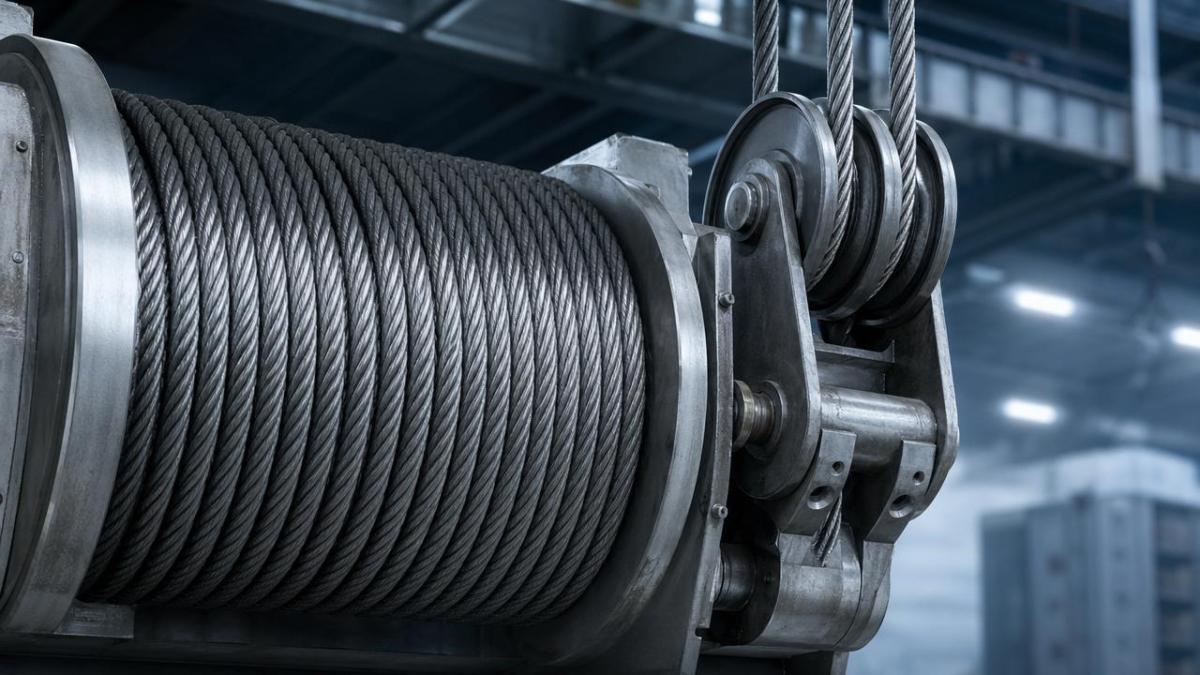
Even a high-quality Wire Rope will suffer if the drum groove profile is wrong, the sheave diameter is too small, or fleet angles are excessive. Evaluators sometimes focus on the rope specification while assuming the installed hardware is acceptable. In reality, rope and hardware must be treated as a matched interface.
Mistake 4: Using the same specification across different duty profiles
Standardization can simplify inventory, but it can also hide risk. Two machines may use the same nominal Wire Rope diameter while operating under very different bending cycles, load patterns, or environmental exposure. Applying one universal specification across all assets often creates avoidable failure points.
What is driving these mistakes in today’s industrial environment
The reasons behind poor Wire Rope decisions are changing. In the past, limited product data or local availability may have been the main constraint. Today, the issue is more often decision complexity. There are more product variants, more compliance expectations, and more application-specific performance demands than many evaluation processes were designed to handle.
At the same time, maintenance teams are increasingly expected to justify lifecycle cost, not just purchase price. That shifts the evaluation focus from “what fits” to “what performs reliably under this exact operating condition.” When assessment practices stay too generic, Wire Rope failure appears sooner and total cost rises through downtime, labor, and replacement frequency.
A further driver is equipment modernization. Newer systems may run faster, use compact drums, or impose tighter bending geometry. If replacement decisions are based on older rope assumptions, technical mismatch becomes more likely.
Key drivers behind selection risk
How early failure impacts different roles and business stages
Wire Rope selection mistakes do not affect only one department. Their impact spreads across technical review, maintenance planning, procurement performance, and operational safety. That is why trend-aware evaluation matters: the same failure mechanism may be experienced very differently by each stakeholder.
For technical evaluators, the main risk is approving a rope that appears compliant on paper but is poorly matched in service. For maintenance teams, the consequence is unstable wear patterns and difficult inspection intervals. For purchasing teams, repeated replacement can erase any initial unit-cost savings. For operations, the risk is downtime at the worst possible moment.
Seen this way, better Wire Rope selection is not only an engineering choice. It is also a reliability, safety, and cost-control decision that affects multiple business stages.
Impact by stakeholder
- Technical evaluators: higher responsibility for matching rope design to actual duty profile
- Maintenance teams: more inspection burden when rope behavior is inconsistent
- Procurement teams: apparent savings can convert into high replacement frequency
- Operations managers: production interruption and safety exposure increase
A useful decision shift
Instead of asking only whether a Wire Rope meets nominal specification, evaluators should ask whether it matches the failure mode most likely in the application. If bending fatigue dominates, prioritize flexibility and fatigue performance. If crushing dominates, prioritize structural support and drum compatibility. If corrosion dominates, prioritize material and surface protection. This shift improves technical relevance and reduces generic decision-making.
What technical evaluators should review before approving a Wire Rope
As selection requirements evolve, the most valuable response is a more disciplined review process. A good evaluation framework does not need to be complicated, but it must be specific enough to identify mismatch before installation. In practice, that means documenting real operating conditions rather than relying on assumptions or past purchase history.
The review should begin with duty profile, not catalog preference. How often does the rope bend? Is loading smooth or dynamic? Is there multilayer winding? What are the environmental exposures? What inspections are realistically possible in service? Those questions shape the correct Wire Rope more reliably than simple one-to-one replacement logic.
It is also wise to confirm whether previous failures were analyzed in detail. Surface wear, core collapse, strand nicking, and corrosion each point to different selection issues. Without that feedback loop, organizations tend to repeat the same mistake with a new purchase order.
Practical evaluation checklist
- Define actual load range, shock behavior, and duty cycle.
- Verify sheave diameter, groove profile, drum condition, and fleet angle.
- Match construction, lay, and core type to expected failure mode.
- Assess corrosion, heat, abrasion, and lubrication retention needs.
- Review inspection access, discard criteria, and replacement planning.
Signals that a reevaluation is overdue
A fresh Wire Rope assessment is usually justified when duty cycles increase, when equipment is modified, when ropes fail sooner than expected, or when visible wear patterns differ across similar assets. These are not isolated maintenance events; they are indicators that selection assumptions may no longer fit current operating reality.
How to make better forward-looking decisions
The broader industry direction is clear: Wire Rope selection is becoming more application-specific, more data-informed, and more closely tied to lifecycle performance. Technical evaluators who adapt early will be better positioned to reduce unplanned failures and support more predictable maintenance outcomes.
A strong next step is to formalize decision criteria around failure mechanisms, operating environment, and hardware compatibility. That can be done through standardized review forms, post-failure analysis records, and closer coordination between engineering, maintenance, and purchasing. These changes do not require a major system overhaul, but they do improve decision quality.
If your organization wants to judge whether current Wire Rope choices are aligned with future operating demands, focus on a few questions: Are current duty cycles higher than when the rope specification was first approved? Are environmental conditions accelerating hidden degradation? Are hardware dimensions and winding conditions still compatible? Are repeated failures being tracked back to root cause? The answers will show where selection risk is rising and where technical reassessment should begin.
Navigation
Send Us A Message



Shandong Faster Technology Co., Ltd. is a professional manufacturer of steel wire ropes.
Get in Touch
*We respect your confidentiality and all information are protected.