





How to Make a Reliable Wire Rope Loop: Methods, Fittings, and Common Mistakes
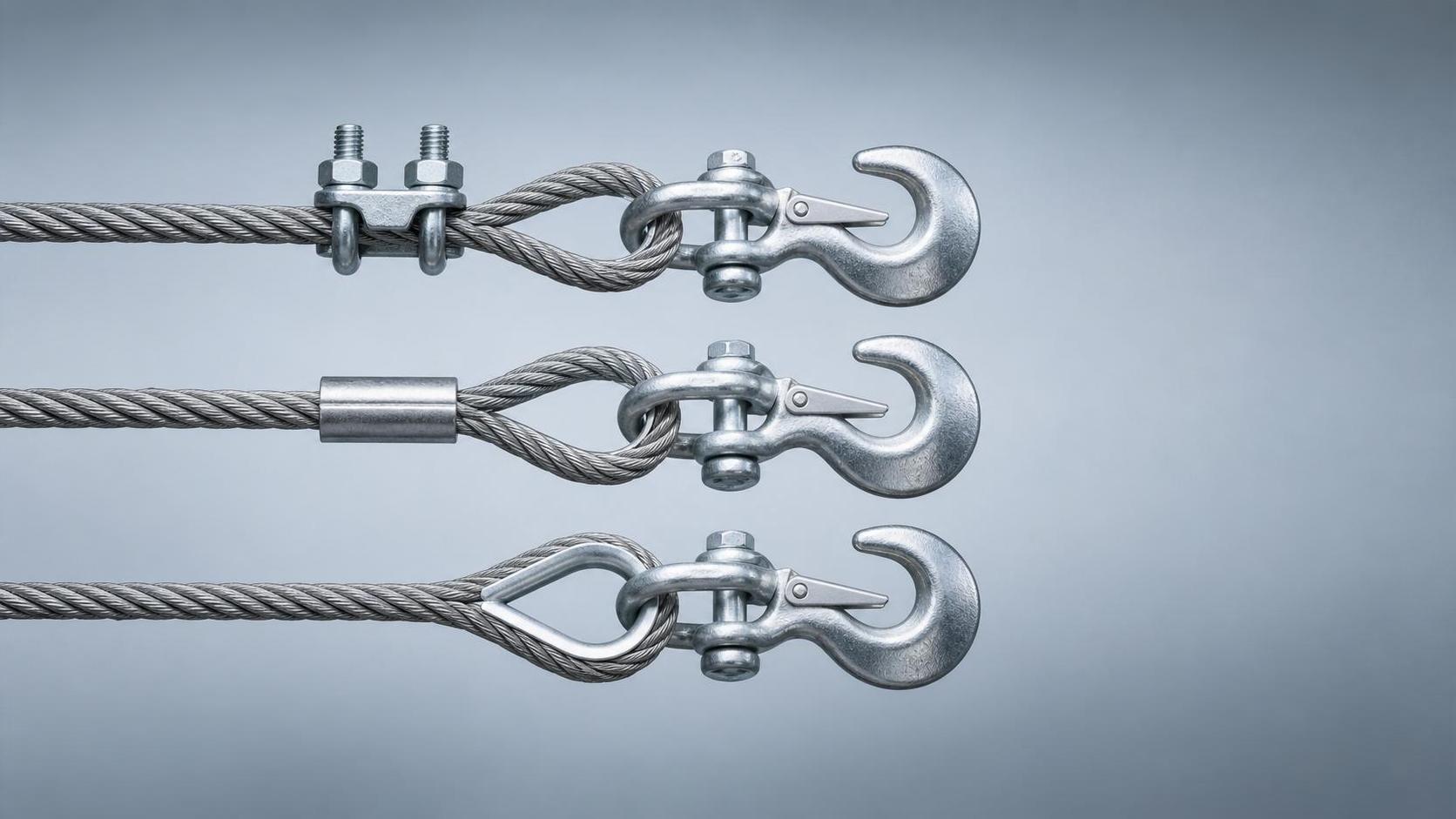
Why does a Wire rope loop matter so much in daily use?
A Wire rope loop looks simple, but it carries a critical job. It creates the connection point for hooks, shackles, anchors, and fixed supports.
If the loop is poorly formed, the rope may flatten, slip, or fatigue early. In lifting, pulling, or securing work, that weakness usually appears at the eye first.
A dependable loop protects rope strength, reduces abrasion, and makes inspection easier. That is why the method, fitting, and bend radius all matter together.
In practical terms, the right Wire rope loop is less about appearance and more about load path, grip, and wear control over time.
Which loop-making method is usually the right one?
That depends on load level, environment, inspection access, and whether the rope is temporary or permanent. There is no single best answer for every installation.
The most common options are wire rope clips, swaged sleeves, and hand-spliced or mechanically spliced eyes. Each has a different balance of cost, speed, and retained strength.
For many industrial maintenance tasks, clips are chosen because they are practical on site. For higher consistency, swaged fittings are often preferred.
If the rope works outdoors, in humidity, or near salt exposure, corrosion resistance becomes part of loop reliability, not a separate issue.
Do you always need a thimble in a Wire rope loop?
Not always, but often yes. A thimble supports the eye shape and prevents the loop from collapsing under pin or hook contact.
Without a thimble, the inner wires take sharper bending stress. That usually increases fretting, broken wires, and local crushing.
A thimble is especially useful when the loop moves frequently, carries repeated loads, or bears against hardware with a hard edge.
- Use a thimble for lifting eyes, towing points, and repeated tension cycles.
- It is also a good idea for outdoor fixation where vibration slowly changes rope position.
- For small static loops, a thimble may still extend service life at very low added cost.
In smaller-diameter assemblies, material choice matters too. A 7x7 construction can offer a practical balance between strength and moderate flexibility for compact bends.
That is why ropes such as 7x7 Stainless Steel Wire Rope 0.5-6mm use For clothesline and fence are often considered for outdoor fixation, marine traction, and small lifting tasks.
How do you choose fittings without guessing?
Start with four checks: rope diameter, working load, bend condition, and environment. These decide more than brand names or appearance ever will.
For example, a stainless loop in a wet or coastal area may outlast galvanized options by a wide margin. That directly affects maintenance intervals and replacement frequency.
When selecting a rope for a smaller Wire rope loop, make sure the structure suits the bend. A very stiff rope may resist forming a clean eye.
A point-contact 7x7 stainless rope is commonly used where moderate flexibility and good tensile performance are both needed. Typical diameters range from 0.5mm to 6mm.
Non-coated and plastic-coated versions also change how the loop behaves. Coating may improve handling and surface protection, but fitting compatibility must be checked first.
What mistakes usually weaken a loop before the rope wears out?
The most common problem is poor assembly. Even a good rope fails early when the loop geometry is wrong or the fitting is undersized.
- Clips installed backward, with the saddle on the dead end.
- Too few clips, or spacing that does not follow the fitting guidance.
- No retorque after initial loading, allowing the tail to slip.
- Using a loop that is too small, creating a sharp bend radius.
- Ignoring corrosion, especially where moisture stays trapped inside the eye.
Another frequent mistake is choosing rope by diameter alone. Construction, strand pattern, and material grade can change performance significantly.
In outdoor and corrosive service, a stainless option such as 7x7 Stainless Steel Wire Rope 0.5-6mm use For clothesline and fence may reduce rust-related failures, especially in light rigging and fixation work.
How can you tell whether the Wire rope loop is still safe to use?
Inspection should focus on the eye area first. This is where bending, bearing pressure, and trapped moisture often combine.
Look for broken wires, flattened strands, pulled tail ends, distorted thimbles, rust staining, and polished wear spots. Those are early warning signs, not cosmetic issues.
If the loop shape has changed, find the cause before reuse. Load shock, side loading, and poor alignment often leave visible clues at the eye.
For assemblies exposed to salt, chemicals, or constant weathering, inspection intervals should be shorter. Stainless steel helps, but it does not remove the need for checks.
A good rule is simple: if you cannot confirm the assembly method, hardware match, or wear condition, treat the Wire rope loop as suspect until it is verified.
What is the most practical next step before making your next loop?
Write down the actual service conditions first. Include rope diameter, load type, bending point, weather exposure, and whether the loop is adjustable or permanent.
Then compare loop methods against those conditions instead of defaulting to what is already on the shelf. That usually prevents both overspecifying and risky shortcuts.
A reliable Wire rope loop comes from matching rope structure, fittings, and inspection discipline. When those three align, service life and safety both improve.
For the best result, confirm fitting compatibility, use a proper thimble where needed, and set a clear inspection standard before the loop enters service.
Navigation
Send Us A Message



Shandong Faster Technology Co., Ltd. is a professional manufacturer of steel wire ropes.
Get in Touch
*We respect your confidentiality and all information are protected.