





Why fiber core wire rope needs different lubrication intervals
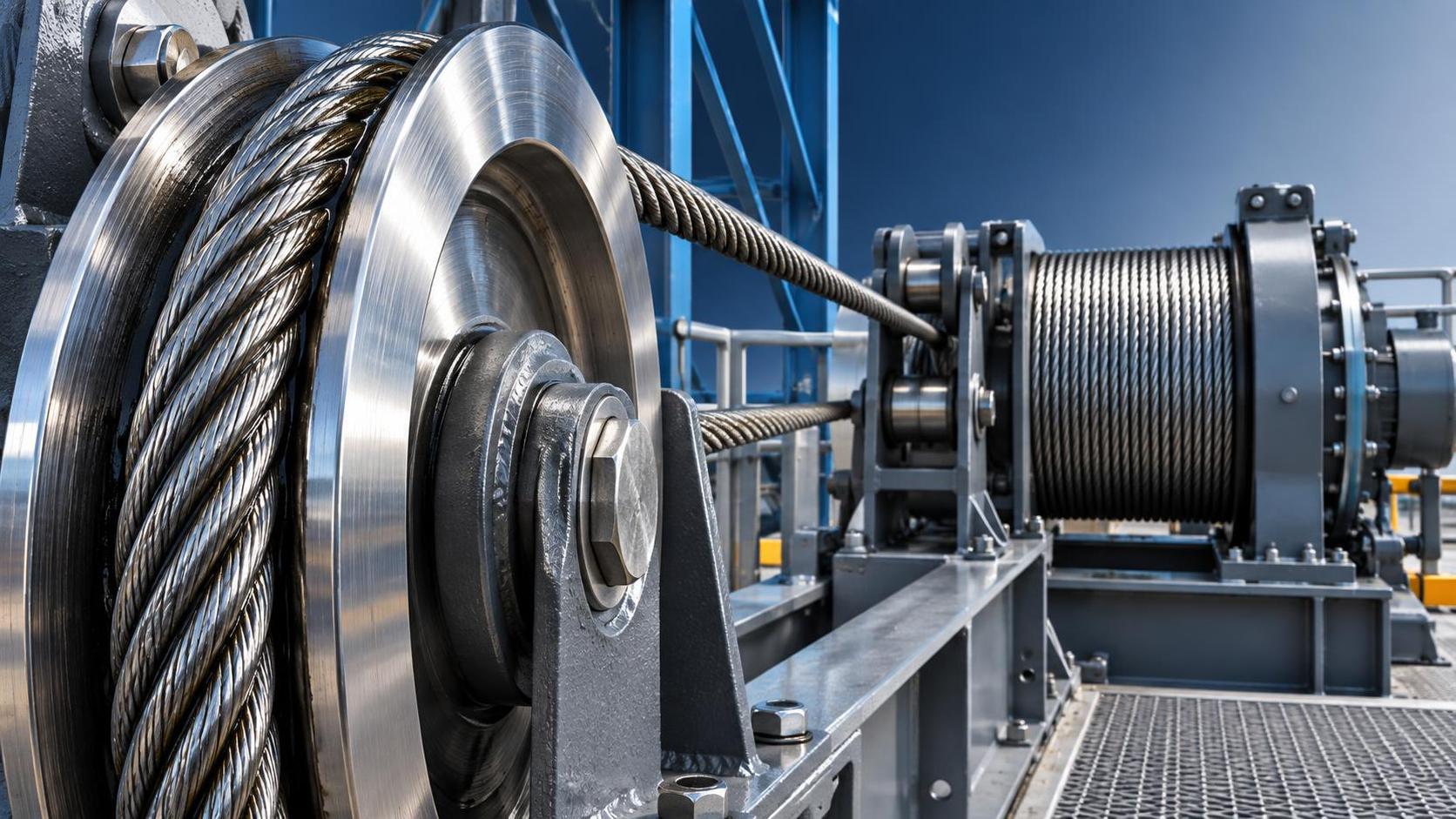
Fiber core wire rope does not need lubrication at a single universal interval because its condition changes according to how the rope bends, how much load it carries, what reaches its interior, and whether the original lubricant remains effective. A rope that appears adequately lubricated on the outside may still have a dry, compacted, or moisture-affected fiber core. For safety control, the right interval is therefore not a calendar rule; it is the point at which the rope’s internal lubrication reserve is no longer sufficient for its actual duty.
The practical consequence is important: delayed lubrication can accelerate wire-to-wire abrasion and internal corrosion, while excessive or unsuitable lubrication can conceal defects, attract abrasive contaminants, or create handling and braking problems. The maintenance interval must be linked to operating condition and inspection evidence rather than simply copied from another rope installation.
The fiber core is both a lubricant reservoir and a vulnerability
In a fiber core wire rope, the core supports the strands, helps maintain the rope’s round profile, and retains lubricant that can migrate toward the moving interfaces between wires and strands. This internal lubricant reduces friction when the rope passes over sheaves, drums, or bending points under tension.
That reservoir function is also why lubrication requirements vary. A fiber core can gradually lose its lubricant through repeated bending, heat, wash-off, drainage, surface wiping, or contamination. Once the core becomes dry or compressed, it cannot feed lubricant effectively into the rope structure. The outer surface may then receive lubricant, but penetration to the critical internal contact points can remain limited.
Fiber also reacts differently from an independent wire rope core. Natural or synthetic fiber can retain moisture if the rope is exposed to rain, spray, condensation, or aggressive cleaning. Moisture held near the internal wires creates a corrosion risk that may not be visible during a basic external inspection. In this condition, relubrication is not merely about reducing friction; it must be combined with an assessment of whether water, salt, grit, or chemical residue has entered the rope.
Bending cycles often matter more than elapsed time
Two ropes installed on the same date can require very different attention. A stationary guy rope or lightly loaded restraint rope may experience little internal movement. A hoist rope repeatedly running over small sheaves, a boom hoist line, or a traction rope used through frequent start-stop cycles experiences continual relative movement between its wires.
Every bend changes contact pressure within the rope. Under load, strands tighten and wires rub at their contact points. When the rope straightens, the structure relaxes. This cycle gradually displaces lubricant and produces fine metallic wear particles. Higher bending frequency and tighter bending geometry increase the rate at which the lubricant film is depleted.
For this reason, an interval based only on weeks or months can be misleading. A rope used intermittently on an outdoor lifting device may remain in good condition longer than a rope in sheltered service that completes many short lifting cycles every shift. Maintenance records should therefore include operating cycles, duty severity, drum and sheave conditions, and observed rope condition—not just the last lubrication date.
Load level changes what lubrication must accomplish
Heavy loads increase contact pressure between individual wires. The lubricant must maintain separation at the interfaces where strand movement occurs, especially around sheaves and at cross-over points on multi-layer drums. When the load spectrum includes frequent high-load lifts, shock loading, or abrupt acceleration and deceleration, lubricant can be forced away from contact zones more quickly.
Low average load does not automatically mean a long lubrication interval. Lightly loaded ropes can still suffer from poor lubrication if they operate at high speed, make repeated bends, or are exposed to abrasive dust. Conversely, a heavily loaded rope in clean, controlled service may show a stable lubricant condition if its bending cycles are limited and the correct product has penetrated the construction.
Lubrication cannot compensate for overload, poor fleet angle, damaged sheaves, excessive groove wear, or improper spooling. If those conditions are present, shortening the lubrication interval alone may only delay visible symptoms while internal damage continues. The cause of rapid lubricant loss must be investigated as part of rope-condition control.
Environment determines whether lubricant is lost, contaminated, or chemically unsuitable
Water exposure changes the maintenance decision immediately. Rain, washdown, marine spray, humidity cycles, and condensation can dilute, displace, or emulsify some lubricants. Salt contamination is particularly serious because it can remain active inside the rope after the outer surface appears dry. A rope used near ports, vessels, coastal construction, or wet processing areas should be inspected for lubricant wash-off and corrosion indicators more closely than an equivalent rope operating in a dry indoor environment.
Dust presents a different problem. In mining, aggregate handling, construction, and agricultural equipment, a wet or excessively heavy lubricant film can collect abrasive particles. Those particles can be carried into strand valleys during bending, turning lubrication into an abrasive medium. The answer is not to leave the rope dry. It is to remove loose contamination where practicable, use a lubricant compatible with the service environment, and apply only enough material to form a functional film and penetrate the rope.
Chemical exposure also requires caution. Acids, alkalis, solvents, fertilizers, and process chemicals may attack wire coatings, alter lubricant properties, or damage certain fiber materials. A lubricant selected for general lifting service may not remain stable in a chemical-processing area. Compatibility should be confirmed with both the rope manufacturer’s guidance and the lubricant supplier’s technical information.
Rope construction affects lubricant penetration
Fiber core ropes are not all equally open to relubrication. Strand count, lay length, rope diameter, compaction, coating, and accumulated dirt affect the path by which lubricant reaches internal interfaces. A more flexible construction generally has more relative movement and may require closer lubrication attention in bending service. A rope with a tight, compact structure may resist penetration, making application technique as important as the selected interval.
The distinction is especially relevant when maintenance teams apply the same practice to every steel rope on site. A rigid single-strand construction such as 1x19 Galvanized Steel Wire Rope 1.5mm 1.8mm 2mm Inner Wire Steel Core Brake Cables has a steel center wire rather than a fiber core and is intended for applications requiring straight-line tensile strength, low flexibility, and resistance to rotation. Its lubrication behavior, bending limitations, and inspection priorities are not interchangeable with those of a fiber core running rope. Construction must be verified before an interval or application method is assigned.
Condition indicators are more useful than a fixed schedule alone
A condition-based interval begins with routine observation of the rope in the zones where deterioration develops fastest: sheave contact areas, drum crossover regions, sections entering a termination, and portions exposed to water or debris. Several signs justify reassessment or earlier relubrication:
- A dry, bright metallic appearance where a protective film should be present.
- Rust staining, pitting, dark residue, or lubricant that has become hard, washed away, or contaminated with grit.
- Reduced flexibility, uneven strand movement, local flattening, or a rope that no longer sits correctly in sheave grooves.
- Fine metallic debris emerging from the rope, which can indicate internal wear rather than a simple lack of surface lubricant.
- Repeated need for lubrication far sooner than expected, suggesting an underlying mechanical or environmental problem.
These observations do not replace formal discard criteria. Broken wires, diameter reduction, core deterioration, kinking, crushing, heat damage, corrosion, and deformation must be assessed against the applicable equipment instructions and relevant rope inspection requirements. Lubrication is a preservation measure, not an acceptance decision for a damaged rope.
Applying more lubricant is not always safer
Over-application can create false confidence. A thick external coating may hide broken wires or corrosion, soil nearby components, and contaminate brakes, clutches, or traction surfaces. This is particularly important where ropes operate close to mechanical controls or where rope cleanliness is necessary for inspection. Lubricant should be applied to a clean, accessible rope surface in a controlled quantity, with the rope slowly moved so the material can enter strand valleys rather than accumulating as a superficial layer.
Before applying a new lubricant, residual material should be considered. Different lubricants may be incompatible, and hardened old lubricant can prevent penetration. Aggressive cleaning methods can also strip protective coatings or drive contaminants into the rope. When contamination is substantial, the appropriate action may be a detailed examination and controlled cleaning process rather than repeated coating.
Setting a defensible interval
A workable maintenance rule combines a baseline interval from the rope or equipment manufacturer with adjustments for bending frequency, load severity, environmental exposure, and inspection findings. The interval should become shorter when ropes are frequently bent under load, exposed to water or salt, operated in dust, subjected to heat, or showing rapid loss of lubricant. It can be reviewed less frequently only when inspection confirms that lubrication remains effective and the operating conditions are stable.
Records should identify the rope construction, diameter, installation date, lubricant type, application method, observed condition, and any abnormalities in sheaves, drums, or terminations. This creates a traceable basis for changing the interval and prevents a common failure in maintenance systems: treating all ropes as identical simply because they are installed on the same equipment fleet.
Fiber core wire rope needs different lubrication intervals because its internal condition is shaped by service, not by time alone. The safest interval is the one supported by rope construction, operating duty, environmental exposure, and disciplined inspection evidence—before dryness, contamination, or internal corrosion develops into a loss of rope integrity.
Navigation
Send Us A Message



Shandong Faster Technology Co., Ltd. is a professional manufacturer of steel wire ropes.
Get in Touch
*We respect your confidentiality and all information are protected.