





How to specify 1x19 rope for architectural tension systems
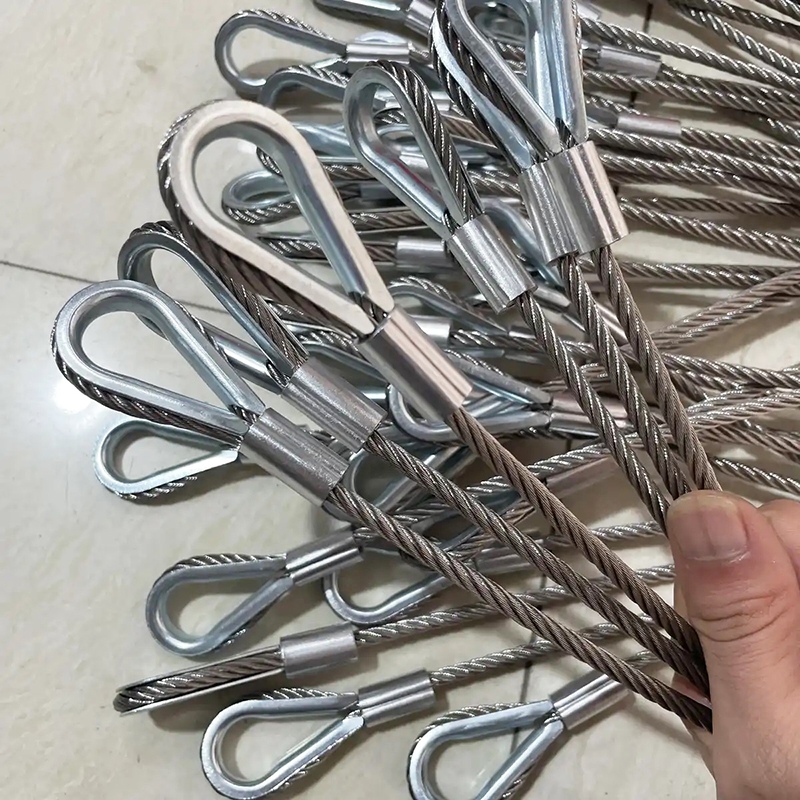
A 1x19 rope for an architectural tension system should be specified as a complete assembly requirement, not simply as “stainless cable, diameter X.” In a balustrade, façade support, green-wall grid, or bracing detail, the rope’s low stretch and clean appearance can be valuable, but those benefits are only realised when the material, construction, end fittings, dimensions, and design loads are defined together.
The issue often appears late in procurement: a drawing identifies a cable diameter but does not state the stainless grade, minimum breaking force, terminal type, thread direction, or finish. The supplied rope may then be strong enough in isolation yet unsuitable for the coastal environment, incompatible with the swage fitting, or unable to achieve the intended line tension without excessive adjustment. A usable 1x19 rope specification begins with the function of the cable and the load path through the finished system.
Start with the role of the rope in the structure
1x19 rope is a single-strand construction made from one central wire surrounded by successive layers of wires. It is comparatively stiff, has low constructional stretch, and holds a straight visual line under tension. These traits make it a common option for straight, permanently tensioned architectural runs.
It is not the right construction for every cable detail. A system that must repeatedly bend around sheaves, pass through tight-radius corners, or be frequently handled may need a more flexible rope construction. Specifying 1x19 rope where regular flexing is expected can lead to poor handling, difficult installation, and reduced service life. Conversely, selecting a flexible multi-strand cable for a long, straight balustrade run may create more visible elongation and a less stable finished appearance.
Before requesting quotations, identify whether the rope is intended for:
- infill lines in a cable railing or balustrade;
- straight tension members in a façade or decorative screen;
- trellis and green-wall support grids;
- non-lifting restraint or bracing arrangements; or
- a design-specific architectural tension assembly with engineered anchor points.
This distinction affects not only rope diameter, but also fitting selection, tension range, required documentation, and the assumptions used by the system designer.
Define the load requirement before choosing a diameter
Diameter is a purchasing reference, not a structural answer. Two ropes of the same nominal diameter can differ in breaking force because of material grade, wire dimensions, manufacturing tolerances, or stated test basis. The purchase specification should state the minimum breaking force required for the rope, then distinguish it from the allowable service tension used in the design.
Do not treat minimum breaking force as a permitted installation load. The working tension must account for the project’s safety approach, applicable building requirements, connection efficiency, installation method, and loads applied to the complete assembly. A terminal, swaged eye, fork, turnbuckle, or anchor plate can become the governing component even when the bare 1x19 rope has a high rated strength.
Ask the project engineer or system designer to provide the following inputs before release:
- design load and load direction for each cable run;
- maximum permitted deflection or sag;
- nominal and maximum installation tension;
- unsupported span and cable spacing;
- required factor of safety or governing project standard;
- anchor geometry and terminal-to-terminal length; and
- whether the cable is structural, protective, decorative, or a combination of these functions.
A long horizontal line can feel tight during installation yet still deflect substantially under lateral load. Increasing initial tension is not automatically the remedy, because it also raises force at posts, brackets, and end anchors. Diameter, span arrangement, intermediate supports, and allowable deflection need to be considered as one system.
Select the material for the exposure, not just the appearance
For many architectural installations, stainless steel is selected for corrosion resistance and visual consistency. The grade should be named in the specification. Type 304 stainless steel can suit dry indoor locations and many ordinary exterior applications, while Type 316 is generally the more appropriate choice where chloride exposure, coastal conditions, de-icing salts, pool environments, or persistent industrial contamination are expected.
Even Type 316 should not be described as maintenance-free. Deposits can trap moisture and contaminants on the rope surface, especially in sheltered exterior zones where rain does not wash the assembly. Specify a finish that fits the visual standard—commonly bright or polished—and include a practical cleaning expectation where the environment warrants it. A highly polished appearance does not replace appropriate material selection.
Galvanized 1x19 rope may be appropriate for certain utility or protected applications, but it gives a different appearance and corrosion profile from stainless steel. It should not be substituted into a visible stainless architectural system merely because the nominal diameter and breaking force appear similar.
Write the termination requirement with the same care as the rope requirement
Most specification failures happen at the ends. The rope can only perform as intended when its terminal is compatible with the cable diameter, rope construction, material, and installation method. State whether the system requires swaged studs, swaged forks, threaded terminals, eyes, jaw-and-jaw turnbuckles, looped ends, or another engineered connection.
For a clean railing detail, a typical procurement package may require one fixed terminal and one adjustable terminal so the installer can tension the run after cutting and positioning. In that case, clarify thread size, thread hand, adjustment travel, pin diameter, fork opening, and any requirement for locking hardware. “With turnbuckle” is insufficient because fitting proportions and usable adjustment length vary widely.
Factory-swaged assemblies can improve dimensional control and avoid dependence on field tooling, particularly where multiple cable runs must align visually. The order should provide finished pin-to-pin or bearing-to-bearing lengths, not only cut lengths of wire rope. Include the measurement reference points on drawings so that the supplier and installer are using the same basis.
Control dimensions that affect installation
A well-written order for 1x19 rope identifies nominal diameter, tolerance expectations where relevant, finished assembly length, and required quantity for each length. Cable railing layouts often contain small dimensional differences caused by post locations, slope changes, and corner details. Grouping all lines under one approximate length may create unnecessary field adjustment or force installers to shorten terminal travel.
For angled stairs and inclined façades, confirm the cable orientation relative to the fittings. Fork terminals may need to articulate around a pin, while rigid threaded fittings need suitable alignment to avoid side loading. A terminal that is pulled off-axis can reduce practical performance and create an untidy visual line. The anchor detail should allow the cable to load in its intended direction.
Also specify whether the delivered rope must be pre-cut, fitted with terminals, supplied on reels, or packed as individually labelled assemblies. For repetitive projects, labelling each cable with its location reference can reduce installation errors without changing the rope itself.
Separate architectural tension rope from lifting hardware
Procurement teams sometimes source cable, chain, and lifting accessories through the same industrial supply channel. That can be efficient, but the intended use must remain clear. A 1x19 architectural cable is not a lifting sling and should not be assigned lifting duties unless the complete assembly has been specifically designed and approved for that purpose.
Where installation logistics require separately rated lifting equipment for handling heavy steel posts, façade frames, or prefabricated components, a product such as En 818-2 G100 High Grade Short Link Alloy Steel Lifting Chain belongs to that separate lifting plan. Its Grade 100 alloy-steel chain construction, specified lifting ratings, and compatible lifting accessories address a different load case from a permanent stainless architectural tension line. Keeping these specifications separate prevents dangerous assumptions based on the word “tension.”
Request documents that match the purchase decision
Documentation should be proportionate to the project’s technical requirements. At minimum, request identification of rope construction, material grade, nominal diameter, minimum breaking force, and terminal details. When the assembly is supplied with fitted ends, ask for confirmation of the finished assembly capacity and the method used to produce the termination. Material traceability or inspection records may be required by the project specification, but the exact documentation level should be agreed before production rather than added after delivery.
Sample approval can be useful when surface appearance, terminal profile, or visible alignment is important. It should not replace checking the technical schedule. A visually acceptable sample may still have the wrong thread, insufficient adjustment, or a length measured from a different datum.
A practical specification format
A concise purchase description can read: “Stainless steel 1x19 wire rope, Type 316, nominal diameter [X], minimum breaking force not less than [X], bright finish, supplied as finished tension assemblies. Each assembly to include [fixed terminal] at one end and [adjustable terminal] at the other, compatible with drawing detail [reference]. Finished length measured [state points], adjustment travel not less than [X], quantity and identification according to cable schedule.”
The bracketed values must come from the approved design, not from a generic catalogue. Add exposure conditions, packing instructions, test or inspection requirements, and any restrictions on substitute materials. This gives suppliers a clear basis for quotation and makes it easier to compare offers on assembly performance rather than headline price alone.
Before placing the order, verify one final point: the stated capacity, terminal geometry, and installation tension must all relate to the same finished system. That alignment is what turns a length of 1x19 rope into a reliable architectural tension assembly.
Navigation
Send Us A Message



Shandong Faster Technology Co., Ltd. is a professional manufacturer of steel wire ropes.
Get in Touch
*We respect your confidentiality and all information are protected.