





Which marine rope is suitable for a mooring line?
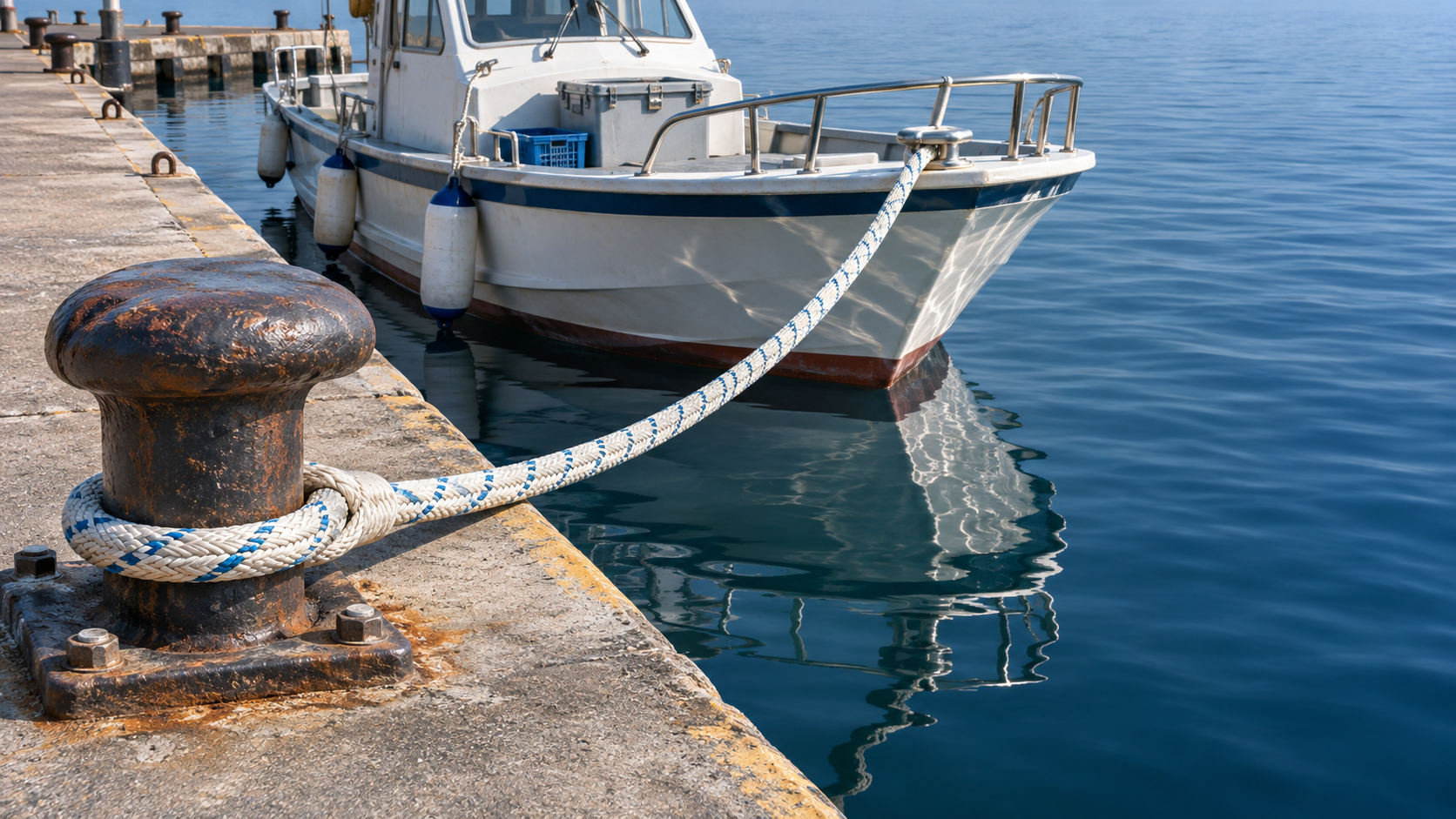
Choosing the right marine rope for a mooring line means balancing holding strength, shock absorption, durability and ease of handling. For many small vessels, nylon is a practical starting point because it stretches under load and helps soften sudden snatches. Polyester is worth considering when lower stretch, abrasion resistance and dimensional stability are more important. Neither material is automatically right for every berth: the vessel, its fittings and the movement at the dock all matter.
Nylon or polyester: which suits the berth?
Nylon is often the forgiving choice for a vessel exposed to passing wakes or a lively marina entrance. Its elasticity can reduce the severity of sudden loading on cleats and fairleads. Three-strand nylon is familiar to many crews, can be spliced and is often economical; braided constructions can be comfortable to handle, although handling and splice requirements vary by product.
That stretch is useful only when there is room for it. A line that allows a boat to move too far may let it contact the dock or another vessel. Nylon also loses some strength when wet, so compare the manufacturer’s wet-use information where available rather than relying on a dry breaking-strength figure alone. Repeated severe cycling can also generate heat within the rope.
Polyester generally stretches less and retains its strength well when wet. It also offers good resistance to sunlight and abrasion, making it a sensible candidate where movement must be more controlled. The trade-off is a less forgiving response to shock. In an exposed berth, a polyester line may need a properly selected snubber or another engineered arrangement for absorbing movement; adding a short spring or elastic component without checking its capacity is not a substitute for designing the mooring system.
Other materials have their place
Polypropylene floats and is easy to handle, which can be useful for a messenger line or a temporary job. Ordinary polypropylene is generally a less attractive choice for long-term exposed mooring because sunlight and abrasion can degrade it. Product formulations differ, so check the manufacturer’s intended use rather than assuming every floating rope performs alike.
High-modulus polyethylene ropes offer high strength for their weight and are used in demanding marine applications. Their low stretch, however, makes energy management especially important. They can also be damaged by heat, sharp contact and unsuitable splicing. They are not a simple upgrade for a small boat merely because their quoted breaking strength is high.
Steel wire rope is used in some engineered vessel and port mooring arrangements, but it is less forgiving to handle than conventional synthetic dock lines. It needs suitable drums, fittings, inspection and corrosion control. Do not replace a synthetic line with wire solely to reduce diameter: the change affects stiffness, handling risks and the loads transferred to fittings.
Size the whole arrangement, not just the rope
Boat length can help narrow a supplier’s recommendation, but it is not enough to establish a safe line size. Wind exposure depends on the vessel’s profile; a high-sided boat can load its lines differently from a low-profile vessel of similar length. Current, tidal range, wake, berth geometry and the number and direction of lines all change the picture.
Start with the vessel builder’s and rope manufacturer’s guidance, then account for the actual berth. For commercial vessels, follow the applicable vessel-specific mooring plan and port requirements. Where conditions are unusual or loads are uncertain, have the arrangement reviewed by a qualified marine professional.
Breaking strength is not a working load. The selected line needs an appropriate margin for dynamic loading, wear, terminations and service conditions. Check the strength and suitability of cleats, bollards, shackles, eyes and splices too: an oversized line does not make an undersized fitting safe. Conversely, a rope that is too thick for a cleat or fairlead can be difficult to secure and may suffer damage from poor contact.
Line length and lead deserve as much attention as diameter. Longer, appropriately led lines can accommodate more vessel movement than short, steep lines. At a tidal berth, allow for water-level changes without leaving the vessel free to reach a hazard. Bow and stern lines restrain movement away from the dock; spring lines help limit fore-and-aft movement. The exact layout depends on the berth and vessel.
Look closely at the contact points
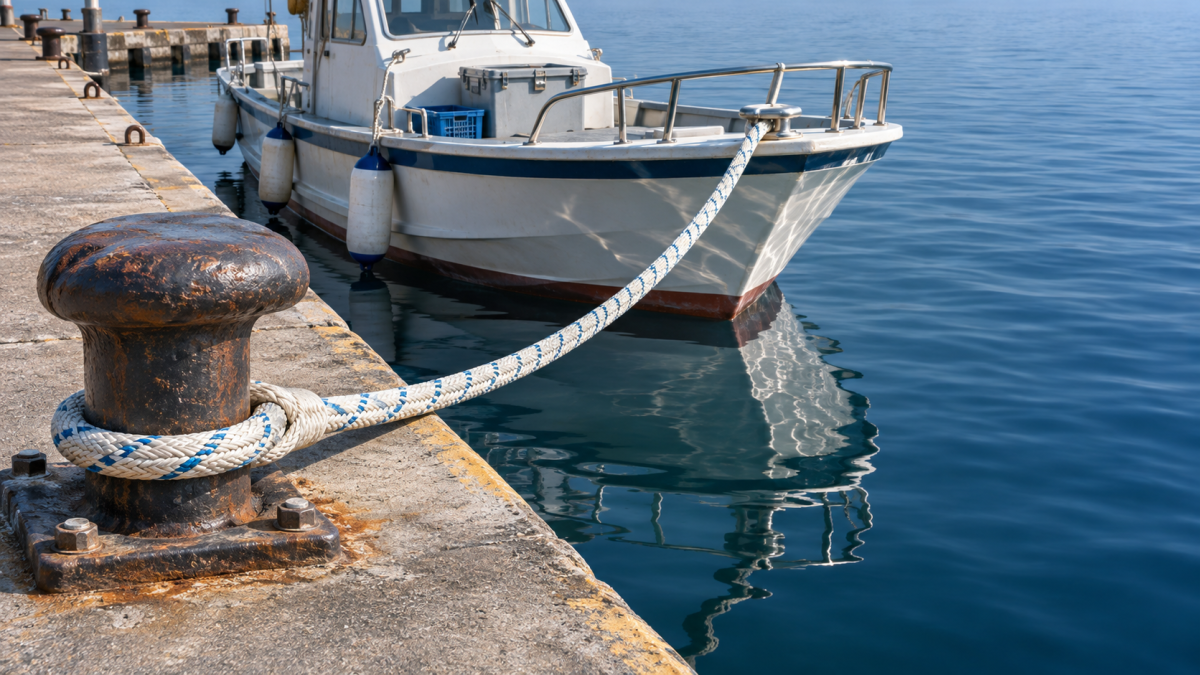
A good rope can fail early where it passes through a rough fairlead or rubs against a dock edge. Inspect those locations before choosing the final diameter and construction. Chafe protection should fit the line, stay in position as the vessel moves and be suitable for the loading and heat conditions. Check beneath it regularly: a protective sleeve can hide damage as well as prevent it.
Use properly made eyes and compatible thimbles where the connection calls for them. Knots can reduce rope strength; when a permanent eye is needed, use a splice made to the rope manufacturer’s instructions or a termination approved for that construction. Keep the line clear of sharp metal edges and avoid tight bends around hardware not intended for rope.
During handling, stay clear of tensioned lines and their potential recoil paths. Synthetic rope can release stored energy violently if it breaks, and the danger is not limited to the area directly behind the line. Never step over or stand in a bight of rope under load.
Where chain fits into a mooring system
Chain may be used in a suitably designed mooring arrangement where contact with the seabed or other abrasive surfaces is expected. It is not interchangeable with a rope line: chain adds weight, has different movement characteristics and requires compatible connectors and rated hardware.
Shandong Faster supplies wire rope, slings and chains, including DIN5685 A/C Short or Long Link Chain in short- and long-link configurations. Carbon steel and stainless steel options are available, but material and link shape alone do not establish suitability for a vessel mooring. Confirm the intended service, corrosion protection, dimensions, proof load and breaking load for the specific chain, as well as the requirements for every connection. Do not assume a general-purpose chain is approved for a critical mooring or for overhead lifting.
When should a mooring line be replaced?
Inspect lines throughout their length, paying particular attention to the dockside eye, fairlead contact points and sections hidden by chafe gear. Cuts, melted or hardened areas, severe abrasion, damaged splices and unusual stiffness warrant attention. External appearance alone may not reveal internal wear, especially after repeated heavy loading.
If damage is significant or its extent is uncertain, take the line out of service and consult the manufacturer’s retirement guidance. After an exceptional storm or a severe snatch load, inspect the fittings and connections as well as the rope. For a new selection, bring the supplier the vessel details, berth layout, expected exposure and existing hardware dimensions; those details are more useful than asking for the strongest rope available.
Navigation
Send Us A Message



Shandong Faster Technology Co., Ltd. is a professional manufacturer of steel wire ropes.
Get in Touch
*We respect your confidentiality and all information are protected.