





When is 5 mm steel wire strand suitable for bracing applications?
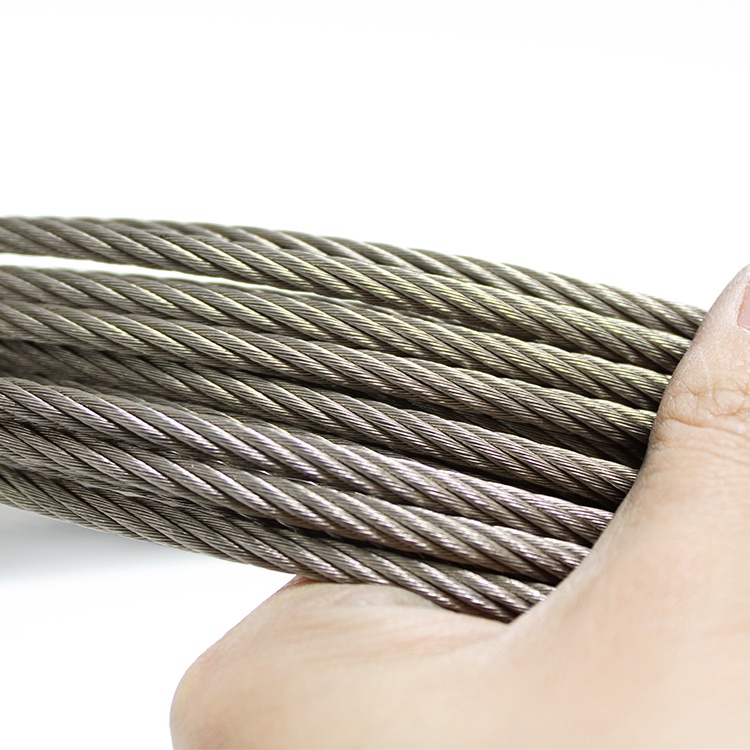
A 5 mm steel wire strand is suitable for bracing when the assembly needs a compact tension member for light-to-medium-duty stabilization, and the calculated design load—including dynamic effects and the required safety factor—remains within the rated capacity of the complete system. It is commonly considered for equipment supports, small frames, temporary structural restraint, guard assemblies, sign supports, light canopy bracing, marine fittings, and non-critical tension ties.
The key point for purchasing is that diameter alone does not establish suitability. A steel wire strand 5mm may look strong enough in a static installation, yet the actual bracing load can rise sharply when wind, vibration, angular loading, repeated tensioning, impact, or poor termination is involved. The strand, end fittings, anchors, turnbuckles, and supporting structure must be assessed as one load path.
Start with the bracing function, not the strand diameter
Bracing normally works in tension: it prevents a frame, machine, post, or suspended component from moving out of position. A 5 mm strand is most practical where the purpose is alignment, restraint, or moderate lateral support rather than primary structural support or heavy lifting.
For example, it can be a reasonable option where a light equipment enclosure needs diagonal restraint against ordinary operational vibration, where a small fabricated frame needs to stay square, or where a tensioned line supports a lightweight component over a short distance. Its relatively small diameter makes routing easier through confined spaces and reduces the visual and weight impact compared with a heavier rope or rod.
It becomes less appropriate when the bracing member is expected to absorb heavy shock loads, resist severe cyclic vibration, hold a large structure under high wind exposure, or act as a safety-critical support. In those cases, moving to a larger wire rope, a structural tension rod, or an engineered bracing system is usually more defensible than simply applying more tension to a small strand.
Check the complete load path before specifying a 5 mm strand
A frequent purchasing mistake is to compare only a supplier’s nominal breaking strength. Breaking strength is not the permitted working load. The usable load must account for the strand construction, steel grade, safety factor, connection efficiency, installation angle, and expected loading pattern. A termination that is incorrectly selected or installed can reduce the effective capacity well below that of the bare strand.
Ask the engineering or installation team for these details before releasing an order:
- The maximum expected tension in each brace under normal and abnormal operating conditions.
- Whether loads are steady, intermittent, vibrating, or subject to sudden movement.
- The angle between the brace and the member being restrained.
- The required design factor or applicable project specification.
- The strand construction, finish, and manufacturer-stated minimum breaking force.
- The type and size of thimble, clamp, swage sleeve, socket, shackle, turnbuckle, and anchor point.
Brace angle deserves particular attention. A shallow diagonal brace produces less useful lateral restraint than a steeper one and can generate substantially higher tension for the same lateral force. A line that appears lightly loaded during installation may therefore be unsuitable once the frame is exposed to actual service loads.
Connection hardware can govern the system rating
A 5 mm strand should not be paired with oversized or incompatible fittings simply because they are available in stock. The fitting must suit the rope diameter and construction. Where wire rope clips are permitted by the application, their quantity, orientation, spacing, and tightening method must follow the fitting manufacturer’s instructions. For permanent or high-repetition bracing, professionally swaged terminations are often more consistent than improvised field connections.
Do not bend the strand sharply around a bolt, small eye, or rough bracket. Tight bending damages wires, concentrates stress, and makes tension adjustment less predictable. A correctly sized thimble or smooth-radius termination helps preserve the strand geometry at the eye.
Where 5 mm strand is a practical choice
Match the material finish to the operating environment
Indoor dry applications may allow bright or lightly protected steel, but this choice becomes risky where condensation, washdown, coastal air, chemical fumes, or outdoor weathering are present. Corrosion does more than change appearance. It can reduce wire cross-section, weaken termination areas, and make inspection difficult where rust accumulates under clips or sleeves.
Galvanized strand is commonly selected for general outdoor or humid service. Stainless steel may be justified where corrosion exposure is more severe or where appearance and long-term cleanliness matter. Plastic-coated strand can reduce abrasion against adjacent surfaces and improve handling, but buyers should confirm whether the stated diameter refers to the metallic core or the overall coated diameter. The load-carrying area is determined by the steel core, not the coating.
In marine or port-side environments, inspect the interface between dissimilar metals as well. A corrosion-resistant strand connected to unsuitable galvanized or carbon-steel hardware may still develop problems at the fitting or anchor. The specification should cover the whole assembly rather than only the cable.
Decide whether the brace needs flexibility, adjustment, or positive positioning
Wire strand is flexible and easy to route, but it does not provide the same positional rigidity as a rod brace. It is a good choice when slight adjustment is acceptable and a turnbuckle can be used to set tension. It is less suitable where the assembly must hold an exact dimension without periodic adjustment, particularly under temperature changes or repetitive machine movement.
Some installations also need a separate connection or restraint component rather than a continuous tension line. For equipment securing, storage binding, or connection points where chain geometry is more useful than wire flexibility, an Welded Steel Electric Galvanized Ordinary Short Medium Long Link Chain may be considered alongside the bracing arrangement. Short-link chain generally offers more compact, stable connection geometry, while medium- and long-link versions can provide greater reach or easier attachment. It should be selected according to its own rated use and must not be assumed to replace a properly designed wire-strand brace.
Installation signs that the selection needs to be reconsidered
A correctly specified brace should tension smoothly and remain aligned with its anchors. Review the design when installers find that excessive force is needed to remove movement, the strand rubs against sharp edges, clamps distort the wires, or the turnbuckle has little remaining adjustment travel. These are not merely installation inconveniences; they can indicate that the brace geometry, anchor location, or strand size is wrong.
After initial tensioning, inspect for broken outer wires, flattening, birdcaging, coating damage, slackness, uneven clamp seating, corrosion around terminations, and movement at anchor points. Recurrent loosening in a vibrating installation may require a different termination method, improved locking of adjustment hardware, or a bracing design that reduces cyclic loading.
A procurement specification that avoids ambiguity
Rather than ordering only “5 mm steel wire,” specify the construction, nominal diameter, finish, required minimum breaking force, intended bracing function, length or reel requirement, termination method, and environmental exposure. Include the required certificates or inspection documentation where the project calls for them. This prevents a supplier from offering a visually similar product with a different construction or performance level.
A steel wire strand 5mm is a sound choice when it is used as a deliberately sized tension brace for controlled loads, protected from the environment, and terminated with compatible hardware. Where loads are uncertain, consequences of failure are significant, or the brace is exposed to heavy motion or weather, the design load and complete assembly rating should be confirmed before purchase rather than relying on diameter as the deciding factor.
Navigation
Send Us A Message



Shandong Faster Technology Co., Ltd. is a professional manufacturer of steel wire ropes.
Get in Touch
*We respect your confidentiality and all information are protected.