





When Is 304 Stainless Steel Wire the Right Material for Corrosive Environments?
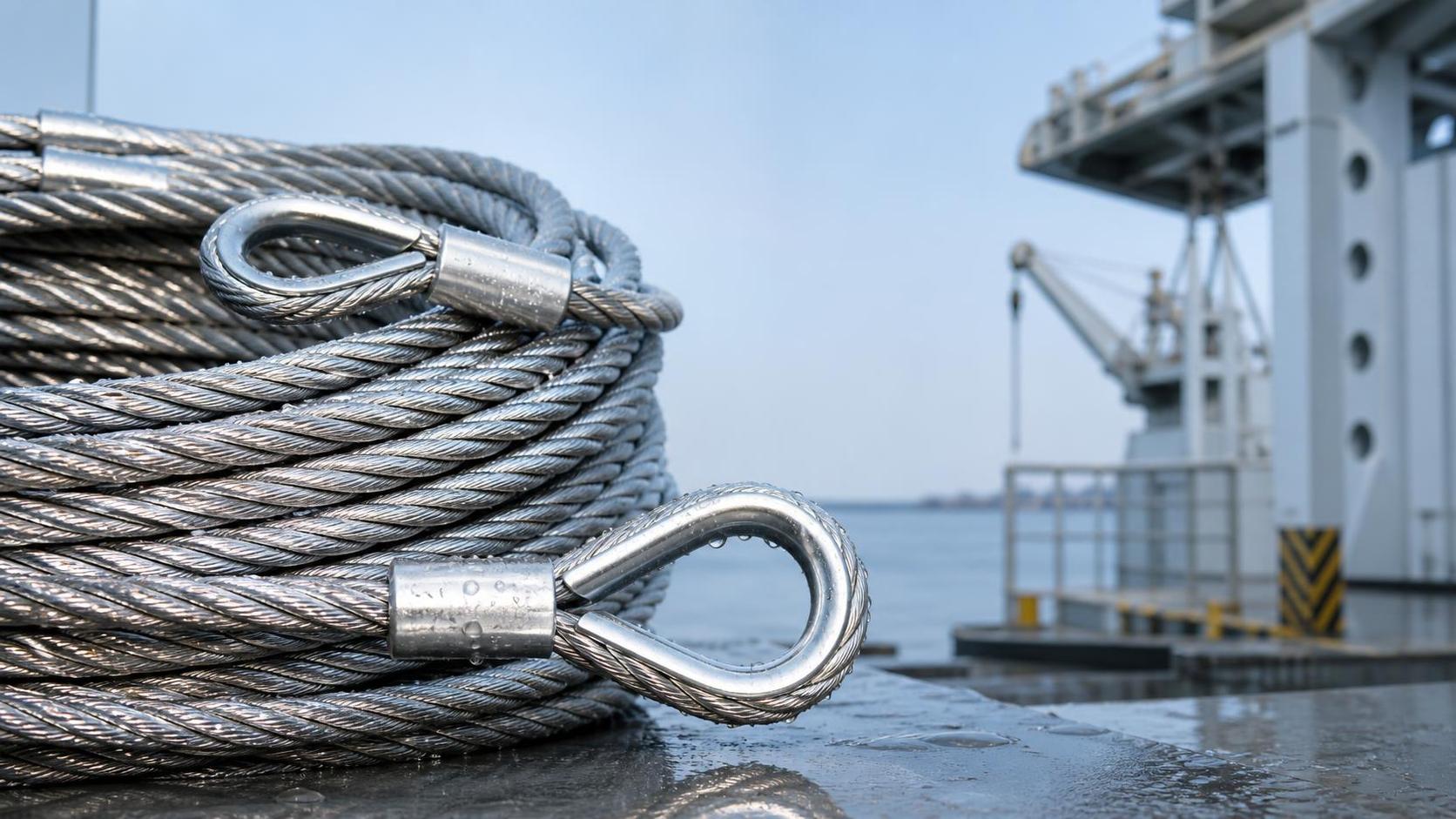
When Is 304 Stainless Steel Wire the Right Material for Corrosive Environments?
Selecting wire for a corrosive environment is rarely just a question of choosing “stainless” over “ordinary steel.” Moisture, salt deposits, cleaning chemicals, temperature cycles, crevice conditions, and load all affect service life. For many industrial applications, 304 stainless steel wire is a sensible middle ground: it offers dependable resistance to general atmospheric corrosion, good forming behavior, and a more manageable cost than higher-alloy stainless grades. Its limits, however, need to be understood before it is specified for a rope, sling, restraint, mesh, or fabricated assembly.
The practical decision is not whether 304 is corrosion-resistant in principle. It is whether the actual exposure allows its protective chromium-rich surface to remain stable over the required working life. Technical evaluators should therefore start with the environment, then check mechanical design, construction, end fittings, inspection access, and the consequences of failure.
Where 304 Stainless Steel Wire Performs Well
304 stainless steel wire is commonly appropriate where equipment sees humidity, rain, condensation, fresh water, intermittent washdown, or ordinary outdoor industrial exposure. It is also a practical option for architectural cable components, food-area equipment where chemical conditions are controlled, general machine guards, light rigging accessories, and wire assemblies installed in sheltered marine-adjacent locations.
Its value is especially clear when the wire must be drawn, bent, woven, or formed into a compact assembly. A material that resists rust but is difficult to fabricate can add cost and introduce quality variability at the termination or bending point. For single wires and multi-strand constructions, 304 generally provides useful ductility alongside corrosion resistance, provided the selected tensile condition and rope construction are suitable for the duty.
In lifting, pulling, and securing work, this material is often chosen not because corrosion is the only concern, but because maintenance access is limited. A wire rope installed around machinery, within an elevator-related mechanism, or on outdoor handling equipment may be difficult to lubricate or replace frequently. A stainless option can reduce the risk of visible red rust developing quickly in wet service, though it does not remove the need for periodic inspection.
The Exposure Conditions That Change the Decision
The most important limitation of 304 is chloride exposure. Saltwater spray, de-icing salts, seawater immersion, evaporating salt deposits, and some process chemicals can create conditions in which pitting or crevice corrosion becomes a concern. The problem is often more severe in the narrow contact zones of a wire rope, beneath clamps, inside sleeves, around ferrules, or where moisture remains trapped under a protective cover.
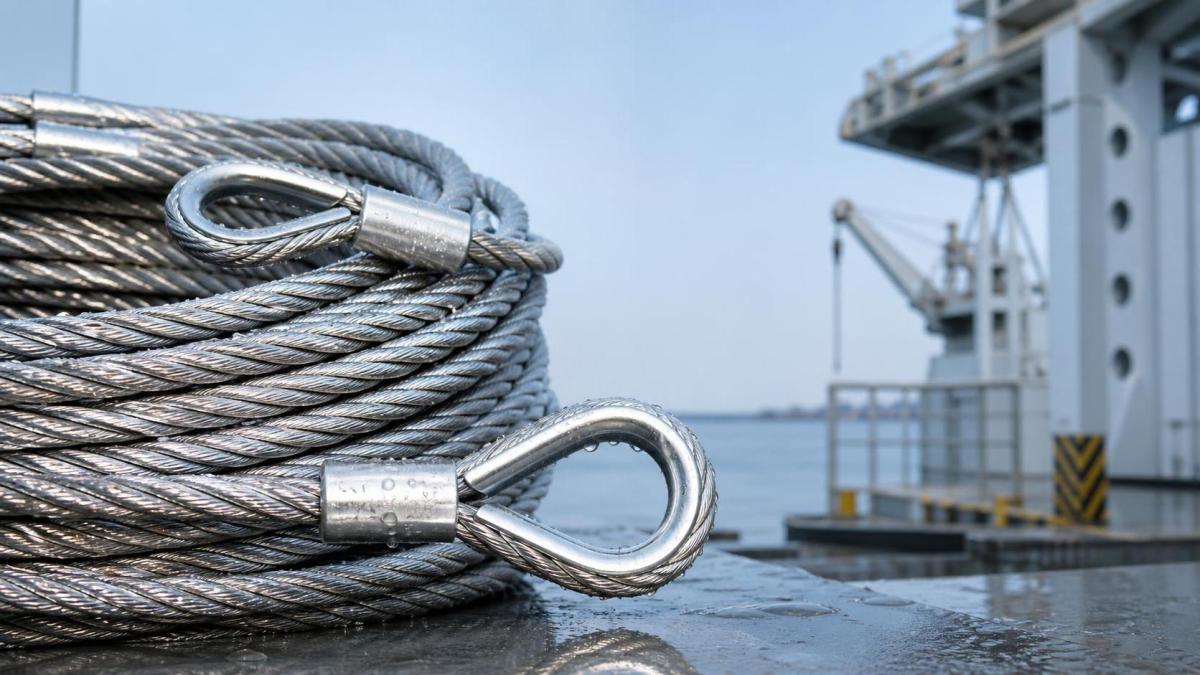
A port installation illustrates the distinction. A cable used outdoors near the coast but regularly rinsed and allowed to dry may be a reasonable 304 application after project-specific review. The same cable, continually wet with salt spray and packed with deposits at its terminations, requires a more cautious assessment. In that second case, 316 stainless steel or another corrosion strategy may be justified, particularly if replacement would interrupt operations or if deterioration could affect lifting safety.
Chemical exposure deserves the same level of scrutiny. “Washdown” is not a complete specification. Evaluators should identify the cleaning agent, concentration, temperature, contact duration, rinse process, and whether residues remain in crevices. Acidic, chlorinated, or high-temperature cleaning conditions can change a material decision that looked straightforward at room temperature.
Do Not Separate Corrosion Resistance from Mechanical Design
A corrosion-resistant wire is not automatically the correct load-bearing wire. Diameter, nominal tensile strength, lay direction, strand pattern, core type, bending radius, fatigue cycle, and termination efficiency all influence the usable assembly. For wire rope, the service load must be assessed with the applicable safety factors and governing project requirements; a material grade alone cannot establish a safe working load.
Small-diameter wire is particularly sensitive to handling damage. Kinks, abrasion against a sheave, flattening under a clamp, and localized bending can break the passive surface and concentrate stress. Stainless steel can still corrode at damaged or poorly drained interfaces. Good design therefore includes smooth load paths, compatible fittings, adequate drainage, and an inspection plan that reaches the areas where corrosion is most likely to begin.
Galvanic compatibility also matters. When stainless wire is coupled with dissimilar metals in a wet environment, the joint should be reviewed rather than assumed to be harmless. The fitting material, coating condition, electrical contact, and electrolyte exposure can all influence localized corrosion behavior. This is one reason complete assembly selection is preferable to choosing wire and end hardware independently.
304, Galvanized Steel, or a Higher Stainless Grade?
Galvanized wire rope remains a valid, cost-conscious solution for many outdoor lifting and rigging tasks, especially where exposure is moderate, service life is predictable, and inspection is routine. It should not be treated as interchangeable with 304 stainless steel wire: zinc protection and stainless passivation respond differently to damage, moisture retention, and chemical contaminants.
For example, an 8mm galvanized steel wire rope Sling soft eye 3tons Eye to Eye for Rigging & Hoisting may be well suited to controlled lifting, bundling, construction, or general rigging work where its rated configuration, end connections, and inspection regime match the job. If that same activity moves into persistent salt-laden exposure or demands long-term resistance with limited maintenance access, the material conversation should be reopened rather than solved by simply retaining the same rope design.
A higher-grade stainless material is usually considered when chlorides are persistent, crevice corrosion is hard to avoid, process fluids are aggressive, or downtime makes replacement disproportionately costly. That does not mean upgrading by default. Higher alloy cost can be wasted when the real failure mechanism is abrasive wear, incorrect sheave geometry, overload, or unsuitable termination practice. The best choice addresses the dominant failure risk.
Questions Worth Resolving Before Release
- Will the wire encounter chlorides, standing water, seawater spray, or chemical residues?
- Is exposure continuous, intermittent, or limited to occasional outdoor wetting?
- Can the rope or assembly dry and be inspected, especially at eyes, ferrules, clamps, and contact points?
- What are the required diameter, tensile range, construction, bending radius, and load-related design requirements?
- Are hooks, shackles, sockets, chains, and other connected parts compatible with the selected material and environment?
- Does the project require documentation, testing, or a particular standard that must be confirmed before manufacture?
These questions also help prevent an overly narrow purchasing specification. A request for “stainless wire” may need to become a defined rope assembly request: material grade, diameter, strand construction, core, length, end treatment, application, and environmental description. That level of detail gives the manufacturer a realistic basis for recommending a configuration rather than merely quoting an available item.
From Material Choice to a Workable Assembly
For projects spanning lifting, ships, ports, construction, mining, or elevator-related applications, material selection often sits within a larger rope-sling-chain decision. Shandong Faster Technology Co., Ltd. produces galvanized, stainless steel, and plastic-coated wire rope options in single- and multi-strand constructions from 1 mm to 20 mm, alongside customized pressed slings and chain products. Its wire drawing, twisting, rope-closing, and inspection capabilities support full-process control from raw material through finished product, which is relevant when consistency across repeated assemblies matters.
304 stainless steel wire is the right choice when the environment is wet or generally corrosive, fabrication performance matters, and chloride severity remains within a manageable range. It is not a shortcut around poor drainage, incompatible fittings, hidden crevices, or inadequate inspection. Before finalizing the specification, confirm the exposure profile and mechanical duty together; that is usually where the difference lies between a corrosion-resistant purchase and a durable working assembly.
Navigation
Send Us A Message



Shandong Faster Technology Co., Ltd. is a professional manufacturer of steel wire ropes.
Get in Touch
*We respect your confidentiality and all information are protected.