





How Gondola Wire Rope Prevents Twisting, Wear, and Safety Risks at Height
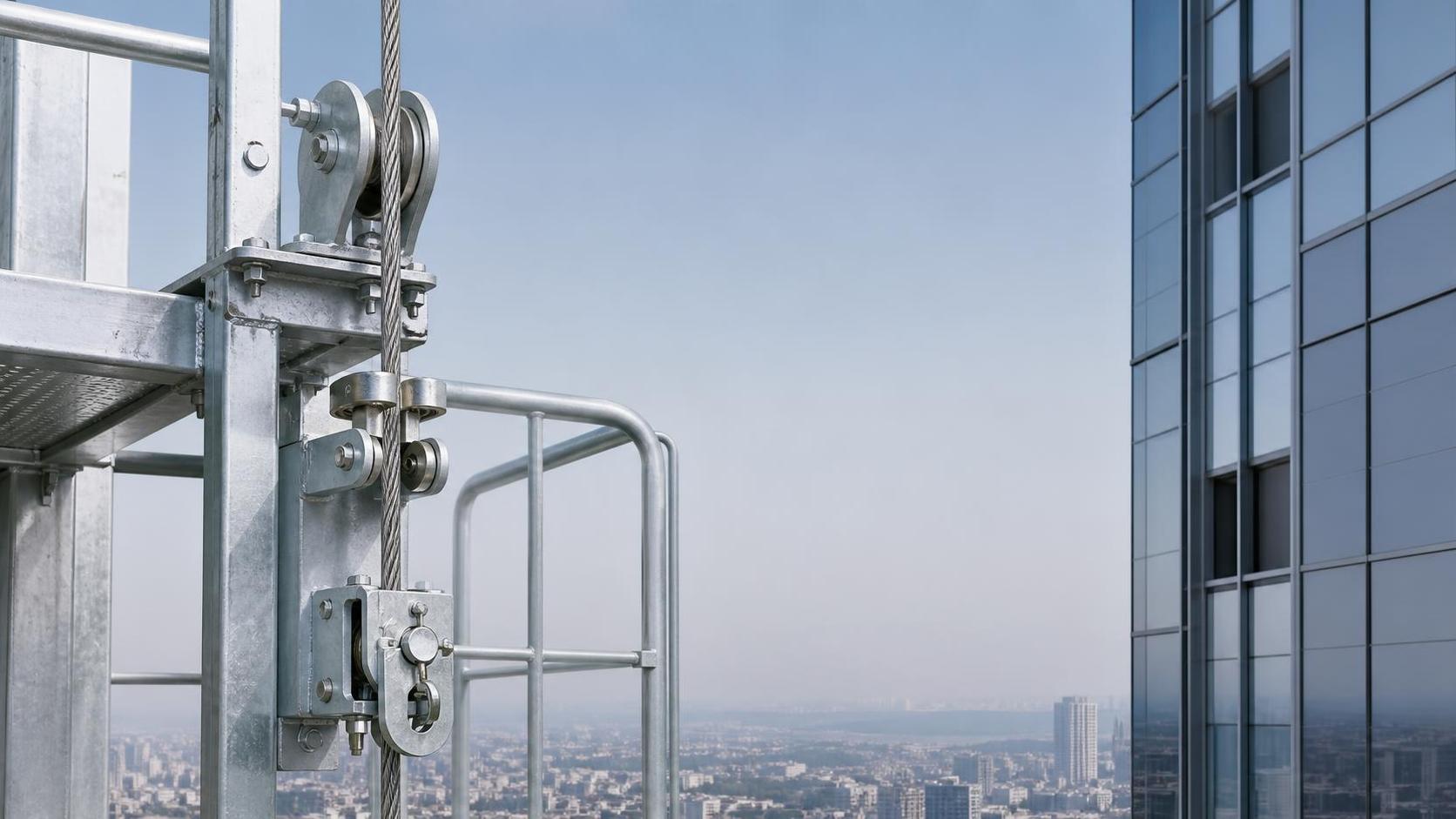
At height, wire rope behavior is never a minor maintenance detail. A suspension platform may appear stable at ground level, yet a rope that rotates under load, rubs excessively at sheaves, or develops hidden internal damage can change the working conditions quickly. For quality-control teams and safety managers, selecting the right Gondola wire rope is therefore about more than achieving a stated breaking force. It is about maintaining predictable travel, balanced loading, reliable safety-device engagement, and a rope condition that can be inspected with confidence.
Twisting, abrasion, and corrosion are often treated as separate problems. In real suspended-access systems, they influence one another. Rotation can create uneven contact at pulleys; uneven contact accelerates wear; worn outer wires admit moisture and contaminants; and a deteriorated rope becomes more difficult to assess before a serious safety event occurs. The most dependable approach begins with rope construction, then continues through installation, lubrication, daily inspection, and replacement control.
Why twisting creates more than an operational nuisance
When a platform is raised or lowered, the rope is subjected to tension, bending over sheaves, and repeated movement through guides and safety locks. If the rope construction has a strong tendency to rotate, the suspended platform can experience unwanted turning or load imbalance. Workers may notice a platform that does not sit level, a rope that tends to unwind, or a cage that requires repeated manual correction. Those are not symptoms to normalize.
Rotation resistance is influenced by the relationship between the rope’s outer strands, inner strands, and core. A properly designed rotation-resistant or low-rotation construction counteracts torque generated under load. However, “rotation-resistant” does not mean immune to installation errors. Incorrect reeving, mixed rope lengths, unequal tension between suspension points, or a rope allowed to spin freely during fitting can still introduce torsion.
For a Gondola wire rope, managers should verify that the rope type is appropriate for the specific suspended platform manufacturer’s requirements. Diameter, metallic area, nominal tensile grade, construction, surface finish, minimum breaking force, and compatibility with hoists and safety locks must all be reviewed as a package. Selecting a rope merely because it has the same diameter as the old one is a common and potentially costly mistake.
Installation controls that reduce torsional damage
- Unreel the rope correctly from a turntable or reel stand; avoid pulling loops from a coil.
- Prevent kinks during installation. A kink permanently disrupts strand geometry and significantly reduces safe service potential.
- Keep the rope from rotating uncontrolled while the end is being fitted or loaded.
- Confirm that both suspension ropes share load evenly before routine operation begins.
- Use the specified rope length and termination method; improvised clamping arrangements can alter load transfer and inspection visibility.
A rope can be new, clean, and correctly certified yet still be compromised by poor handling on the first day of installation. That is why receiving inspection and installation records deserve the same attention as routine in-service checks.
Wear usually starts at the contact points
Most visible wear occurs where the rope repeatedly meets sheaves, traction wheels, guide components, rollers, and safety mechanisms. The outer wires are designed to tolerate flexing, but they are not designed to endure sharp edges, contaminated grooves, incorrect sheave profiles, or side loading. Once the contact pressure becomes concentrated on a small area, wire breaks and flattening can develop much faster than expected.
The rope should sit properly in the groove rather than riding on its edges or bottoming out. A groove that is too narrow pinches the rope and increases crushing; one that is too wide reduces support and can encourage flattening or instability. Groove wear should therefore be inspected alongside the rope. Replacing rope without correcting a damaged traction sheave may simply transfer the same failure pattern to the replacement rope.
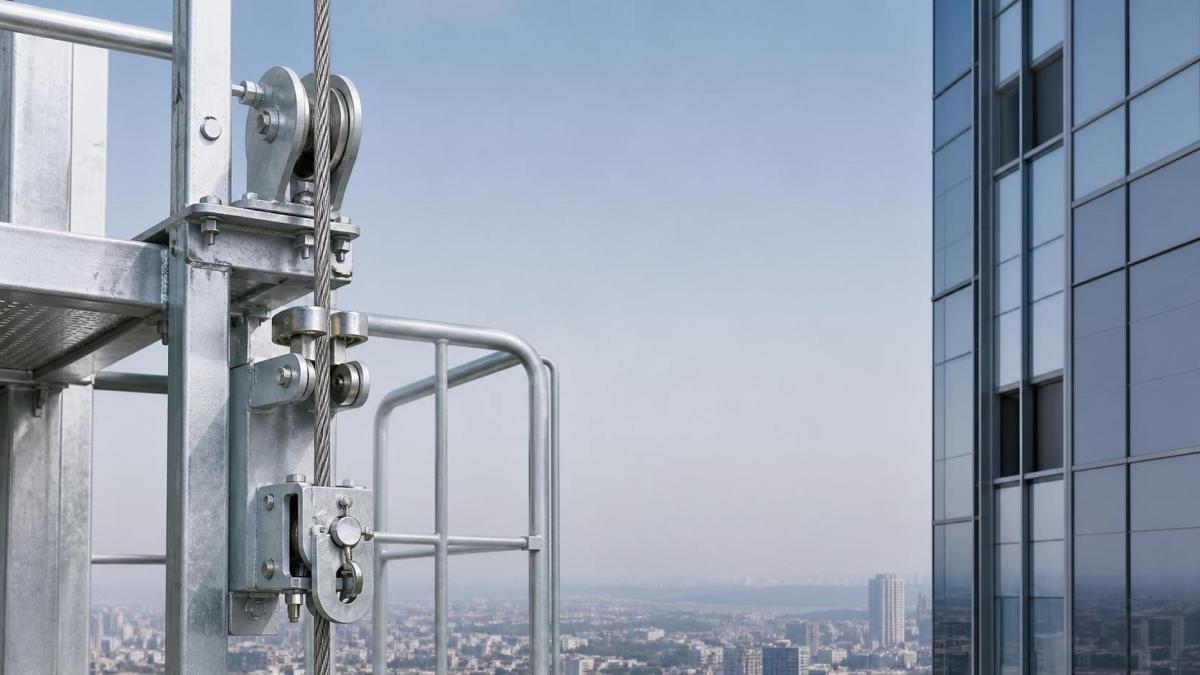
Pay particular attention to the sections that pass over sheaves most frequently. These zones may show polishing, reduced wire diameter, localized corrosion, or broken wires before less-used portions of the rope do. A practical inspection program marks and tracks critical rope sections so that the inspection is repeatable rather than dependent on whoever happens to be on shift.
Lubrication is a protection system, not a cosmetic treatment
Wire-rope lubricant serves several jobs at once: it reduces friction between wires and strands, supports bending fatigue resistance, and creates a barrier against moisture. The difficulty is that excessive or unsuitable lubricant can attract abrasive dust, obscure defects, or interfere with equipment components. The answer is not to run ropes dry. It is to use a compatible rope lubricant in a controlled amount, following the platform and rope supplier’s guidance.
Dry, reddish, or stiff-feeling ropes deserve attention even if there are few visible broken wires. Internal friction may already be increasing. In coastal construction, ports, shipyards, and humid outdoor projects, corrosion prevention needs to be part of the maintenance plan from the outset. Galvanized wire rope can provide useful surface protection, but galvanizing does not eliminate the need for correct storage, cleaning, and periodic condition checks.
Plastic-coated ropes can be useful in selected cable applications where lower surface friction, corrosion protection, and protection from exposed steel are priorities. For example, 7x19 PU coated Galvanized steel wire rope 5mm 6mm use for Gym Cable combines a galvanized high-carbon steel core with a PU outer layer for repeated motion in fitness equipment. Its wear-resistant covering helps reduce direct contact with pulleys and user-facing equipment surfaces. That does not automatically qualify a coated rope for suspended-platform duty: gondola systems must always use the rope construction, diameter, and approval criteria specified for the lifting and safety system.
What a meaningful inspection looks like
A reliable inspection routine combines operator observation with competent periodic examination. Daily checks should be short enough to be performed consistently, but specific enough to identify changes before they become normal background noise. Operators should look for broken wires, birdcaging, flattened sections, corrosion, diameter reduction, heat discoloration, kinks, contamination, and unusual rope tracking through the hoist or safety lock.
Safety managers should also ask a more useful question: Has the rope changed since the previous inspection? A sudden increase in broken wires in one area, an emerging bulge, or a new tendency for the platform to drift can reveal a developing problem even before a formal discard threshold is reached.
Red flags requiring removal from service or immediate technical review
- Visible kinks, crushed sections, severe flattening, or birdcage distortion.
- Broken-wire concentrations, especially near terminations, sheaves, or safety devices.
- Noticeable reduction in rope diameter or signs of internal core failure.
- Heavy corrosion, pitting, or rust extrusion from between strands.
- Unexplained platform rotation, uneven suspension, slipping, or abnormal traction behavior.
- Damage caused by electrical arcing, welding spatter, chemical exposure, or impact.
Discard criteria should follow the applicable local regulations, the platform manufacturer’s manual, and the rope standard governing the installation. A visual check cannot reliably reveal every internal defect. Where the operating environment is severe or rope history is uncertain, a competent inspector should determine whether enhanced examination or earlier replacement is necessary.
Procurement decisions should protect traceability
Quality control begins before the reel reaches the site. Purchase documentation should identify the rope construction, nominal diameter, finish, grade, length, batch or traceability information, and relevant test documentation. Incoming rope should be checked for shipping damage, reel condition, labeling consistency, and dimensional conformity. It is also wise to keep replacement ropes segregated by application; visually similar ropes can differ substantially in flexibility, rotation behavior, and suitability for a particular machine.
Manufacturers with controlled wire drawing, stranding, rope-closing, and inspection processes can provide a more stable basis for repeatable supply. Shandong Faster Technology Co., Ltd. produces galvanized, stainless steel, and plastic-coated wire ropes across multiple constructions, while also supporting rope, sling, and chain requirements for industrial users. For buyers managing diverse sites, the value lies in matching the product to the duty cycle and environment rather than applying one rope solution everywhere.
A safer platform starts with a rope system, not a rope alone
The best Gondola wire rope cannot compensate for worn sheaves, poor reeving, neglected lubrication, or an inspection process that only reacts after visible damage becomes severe. Conversely, a well-chosen rope supported by disciplined installation and monitoring can reduce unplanned downtime and give workers a more stable, predictable platform at height.
For safety and quality teams, the practical priority is clear: verify compatibility before purchase, control torsion during installation, inspect contact points as carefully as the rope itself, and treat every change in rope behavior as useful evidence. At elevation, small defects rarely stay small for long.
Navigation
Send Us A Message



Shandong Faster Technology Co., Ltd. is a professional manufacturer of steel wire ropes.
Get in Touch
*We respect your confidentiality and all information are protected.