





What makes 19x7 steel wire strand suitable for non-rotating lifts
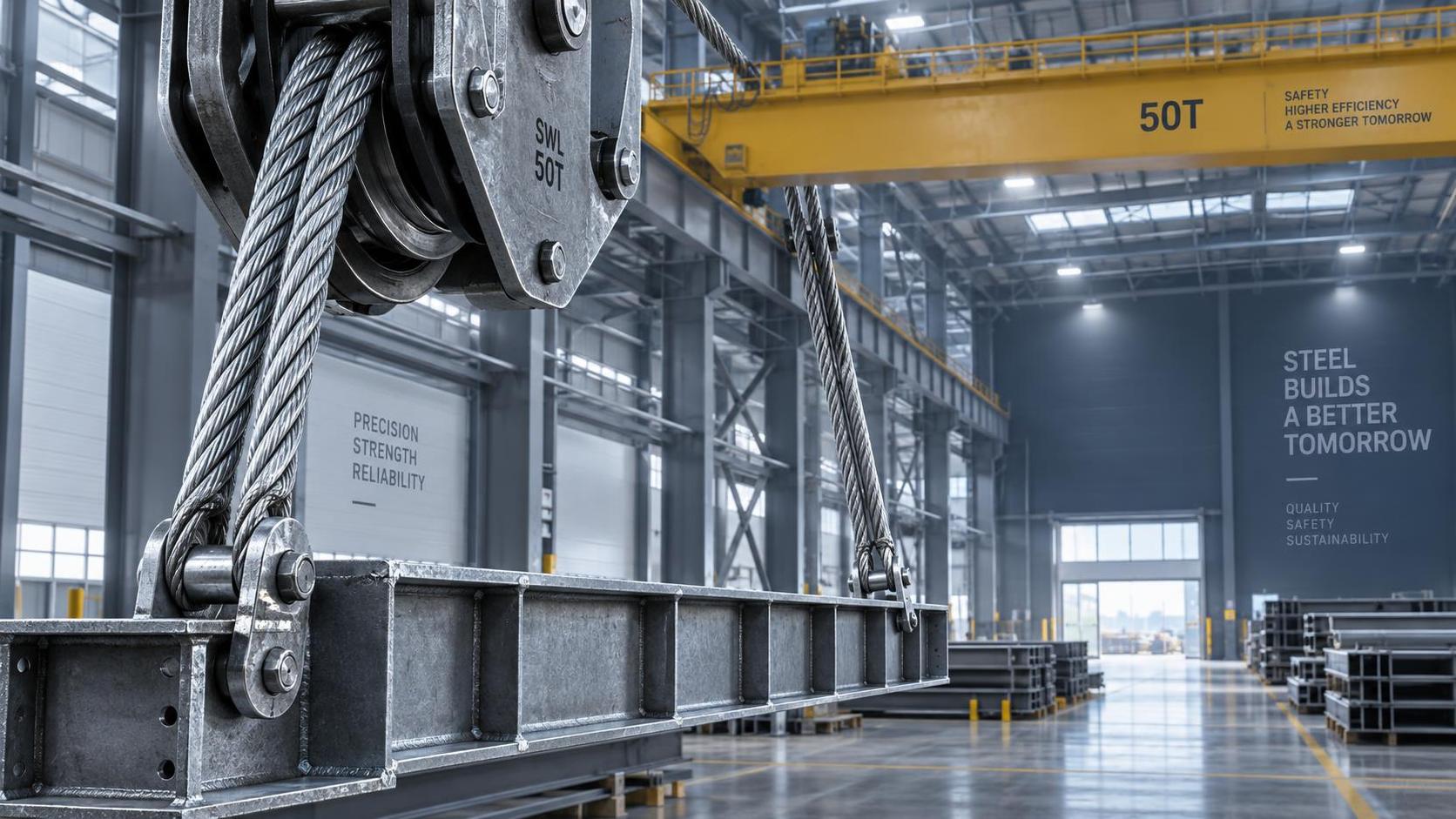
What Makes 19x7 Steel Wire Strand Suitable for Non-Rotating Lifts?
For lifting equipment buyers, rope rotation is rarely a theoretical concern. It becomes visible when a suspended hook block slowly turns, a long load begins to spin during transfer, or an operator has to stop a lift because tag lines are no longer controlling the load. In these situations, a 19x7 steel wire strand is often considered because its construction is designed to reduce the torque transmitted to the load under tension.
The term “non-rotating” should still be used carefully. In practice, 19x7 steel wire strand is generally regarded as a rotation-resistant rope construction, rather than a guarantee that no rotation can ever occur. Actual behavior depends on rope diameter, lay direction, rope length, number of falls of line, reeving arrangement, sheave condition, load level, and installation quality. For procurement, this distinction matters: the right rope can improve load stability substantially, but it cannot compensate for an unsuitable hoist design or poor field handling.
Why the 19x7 Construction Controls Rotation Better
A 19x7 steel wire strand consists of 19 strands, with seven wires in each strand. Compared with simpler constructions, it has a large number of small individual wires arranged in a multi-strand geometry. The strands are normally laid in opposing directions across layers, so part of the torsional effect generated under load is balanced internally rather than being passed directly to the hook or payload.
That internal torque balance is the central reason it is used in single-part lifts, crane hoists, elevator-related lifting systems, and applications where the load is free to turn. A conventional six-strand rope may be entirely adequate for many lifting duties, particularly where multiple falls of rope naturally restrain rotation. But on a long single-fall line, especially with a light hook block or asymmetrical load, its tendency to rotate can become a practical operating problem.
The trade-off is equally important. Rotation-resistant constructions are more complex and can be less tolerant of incorrect cutting, poor socketing, crushing on a drum, or severe fleet-angle problems. They should not be selected simply because “more strands” sounds safer. The rope has to match the lifting arrangement, drum geometry, sheave diameter, termination method, and inspection regime.
Where It Makes the Most Sense
The strongest case for a 19x7 steel wire strand is a lift where rotation directly affects control or safety. Typical examples include crane hooks handling long fabricated components, precast items, pipe sections, suspended baskets, drilling or mining hoists, and certain elevator or construction lifting systems. It is particularly useful where the load has limited natural resistance to turning.
It can also be a sensible choice when a site is experiencing repeated load spin despite acceptable lifting practices. However, buyers should check the system before changing rope construction. A damaged swivel, uneven reeving, incorrect sheave grooves, crossed wraps on the drum, or a rope installed against its preferred lay direction may be the real cause. Replacing the rope without correcting those conditions can produce disappointing results.
For compact, light-duty traction or fixing work, a 19x7 construction may be unnecessary. A 7x7 rope, for example, provides a tighter and relatively torsion-resistant structure for small lifting devices, light winches, door-machine traction, cable restraint, fencing, and fixed installations. Buyers sourcing these smaller-diameter applications may review 7x7 Steel Core Galvanized Steel Wire Rope 1.2-5.0mm use for Bundle and Fence as a more appropriate option where full rotation resistance is not the deciding requirement.
Strength Is Only One Part of the Purchase Decision
A common purchasing mistake is to compare only minimum breaking force. Breaking force is essential, but it does not tell the full story about rotation behavior, fatigue life, drum performance, or suitability for the planned termination. The required working load limit must be established through the applicable equipment design rules and safety factors; it should never be inferred by simply dividing a catalogue breaking force by an arbitrary number.
When comparing supplier quotations, request the complete rope description rather than a short label such as “19x7 non-rotating.” The purchase specification should clarify:
- Nominal diameter and permitted tolerance;
- Rope construction, core type, lay direction, and lay length where relevant;
- Wire tensile grade and verified minimum breaking force;
- Surface condition, such as bright, galvanized, stainless steel, or plastic-coated construction where appropriate;
- Lubrication requirements for the operating environment;
- Applicable standard and inspection documentation required by the project;
- Reel length, winding direction, packaging, and traceability markings.
These details prevent a surprisingly common problem: receiving a rope that has the requested diameter and nominal strength, but an unsuitable lay, coating, reel arrangement, or core configuration for the equipment. This is especially costly when the rope is destined for a shutdown window and the installation crew is already on site.
Material and Surface Finish Should Follow the Environment
For indoor crane service with controlled exposure, a bright lubricated rope may be suitable if corrosion control and regular inspection are in place. In ports, marine equipment, humid construction sites, or outdoor lifting systems, corrosion resistance becomes more influential. Galvanized wire rope can offer a practical level of protection, while stainless steel may be considered where corrosion exposure is more demanding and the operating conditions justify the cost.
Coating choice should not be made independently of fatigue requirements. A corrosion-resistant finish is valuable, but repeated bending over undersized sheaves, abrasive contamination, or inadequate lubrication will still shorten rope life. Procurement should involve maintenance or equipment engineering early, because they can confirm sheave groove condition, drum design, expected duty cycle, and the access available for inspection.
Installation Can Preserve—or Defeat—Rotation Resistance
Even a well-manufactured 19x7 steel wire strand can develop problems if it is uncoiled incorrectly. The rope should be paid off from a reel in a controlled manner rather than pulled in loops from the side. Twists introduced during handling can create kinks or localized distortion that cannot be repaired. Tensioned installation, correct fleet angle, and orderly drum winding are not minor details; they affect how the rope beds in and how evenly it shares load.
Termination also deserves special attention. Rotation-resistant ropes can react differently from ordinary lifting ropes when secured in wedges, sockets, or clips. The equipment manufacturer’s instructions and the applicable rope standard should govern the method. If a swivel hook is part of the assembly, its use must be checked against the rope manufacturer’s recommendations and the lifting arrangement. A swivel can be helpful in certain systems, but it may also allow residual rope torque to express itself as hook rotation.
What a Reliable Supply Partner Should Be Able to Confirm
For critical lifting purchases, the supplier should be able to discuss more than price and delivery time. Shandong Faster Technology Co., Ltd. operates wire drawing, twisting, rope-closing, and inspection processes within its manufacturing scope, which supports better communication around construction consistency and material selection. Its broader rope, sling, and chain supply capability can also be useful when a buyer needs to assess the complete lifting connection rather than treating the rope as an isolated component.
The practical question is not whether 19x7 is universally superior. It is whether the lift has a real rotation-control requirement and whether the rope, equipment, termination, and maintenance plan are specified as one system. If the answer is yes, 19x7 steel wire strand offers a well-established route to steadier suspended loads and more controlled lifting behavior. Before placing an order, confirm the exact rope construction against the hoist manufacturer’s requirements—not just the diameter and breaking-force figure on the quotation.
Navigation
Send Us A Message



Shandong Faster Technology Co., Ltd. is a professional manufacturer of steel wire ropes.
Get in Touch
*We respect your confidentiality and all information are protected.