





What is the strongest wire rope?
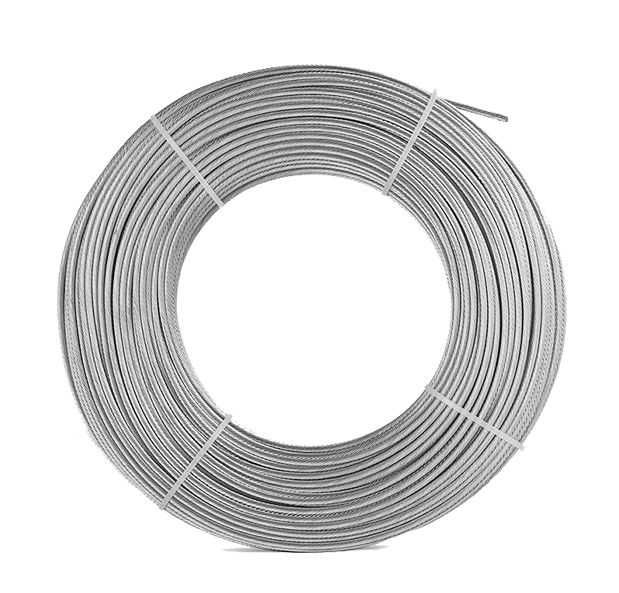
What Is the Strongest Wire Rope?
What is the strongest wire rope? The short answer is that there is no single rope that is “strongest” in every situation. In industrial equipment and components, wire rope strength is never just about the highest breaking force on paper. It also has to survive bending, abrasion, corrosion, shock loading, drum winding, and long service cycles. A rope that looks strongest in a catalog may fail early if it is wrong for the application.
That is why buyers in lifting, marine, mining, construction, port handling, and elevator systems usually evaluate wire rope through a combination of tensile grade, construction, diameter, material, and operating environment. The real question is not only “which rope is strongest,” but “which rope keeps its strength and safety margin in my working conditions?”
Strength starts with structure, not just steel grade
Wire rope strength depends first on how the rope is built. Diameter matters, of course, but construction matters almost as much. Different strand patterns change the balance between breaking load, flexibility, crush resistance, and fatigue life. A rope with fewer, larger outer wires may offer better abrasion resistance, while a rope made with more thin wires usually bends more easily and performs better over sheaves or drums.
In practice, “strongest” often points to high tensile carbon steel rope with an appropriate construction and a properly selected diameter. The supplied product range here includes minimum breaking strength grades such as 1770 N/mm² and 1960 N/mm², which are common reference points when engineers compare lifting and traction ropes. But even then, the stronger grade is not automatically the better choice if the rope will face repeated bending or dynamic loads.
Why the operating environment changes the answer
A wire rope used on a crane in a dry indoor workshop is judged differently from one used in ships and ports, mine hoists, or exposed construction sites. Corrosion can reduce service life long before nominal strength becomes the limiting factor. In marine or humid conditions, galvanized wire rope is often chosen because the zinc layer helps resist rust. Stainless steel wire rope may be preferred where corrosion resistance is the priority, although project decisions still need to consider load, cost, and mechanical requirements together.
Plastic coated rope can also make sense where surface protection, handling safety, or contact with surrounding equipment matters. The coating does not make the steel core stronger, but it can support durability in certain applications. This is one reason experienced suppliers typically offer galvanized, stainless steel, and plastic coated series instead of pushing one material for everything.
For cranes and repeated bending, flexibility can be part of strength
Many failures in the field are not pure overload failures. They come from fatigue, localized wear, crushing, or poor compatibility with sheaves and drums. In those cases, a flexible rope may outlast a stiffer rope with a higher theoretical breaking value. That is why constructions like 7x19 remain widely used in cranes, small winches, lifting machinery, elevators, and other equipment with frequent bending movement.
A 7x19 rope contains 7 strands, each made of 19 thin steel wires. That multi-wire structure gives it strong bending performance and good wear distribution, making it a practical option where traction stability and repeated motion matter more than extreme rigidity. In this sense, the “strongest” rope for a small crane or auxiliary lifting system may be the one that best balances flexibility, wear resistance, and sufficient breaking force, not the most aggressive specification available.
A representative example is 7x19 galvanized steel wire rope 3.0-12.0mm use for Cranes , which is produced for crane and traction-related uses in diameters from 3.0mm to 12.0mm. It is built from carbon steel grades such as 45#, 60#, 65#, and 70#, and can be supplied in bright, electric galvanized, or hot-dip galvanized versions depending on the exposure conditions.
How to judge wire rope strength in real procurement
When procurement or engineering teams compare wire rope, they usually need more than one number. A useful review should include:
- Minimum breaking force or tensile grade
- Rope construction, such as 7x19 or other strand patterns
- Diameter and length per reel
- Surface treatment and corrosion resistance
- Compatibility with sheave diameter, drum design, or termination method
- Applicable standards, such as GB/T 20118-2006, GB 8918-2006, or EN 12385-4 where required
This is also where manufacturing consistency becomes important. If rope geometry, galvanizing quality, or closing process varies from batch to batch, the strongest design on paper may become an unstable supply item in production. Shandong Faster Technology works with automated production lines for wire drawing, twisting, and rope closing, supported by inspection equipment for full-process control from raw material to finished rope. That matters because industrial users are often not buying one reel for a test; they need repeatability across ongoing orders.
The strongest option for one application may be wrong for another
Consider three common situations.
For heavy lifting with limited bending, a rope with higher tensile grade and a more abrasion-resistant outer structure may be favored. For elevators or small lifting equipment, stable traction and bending fatigue behavior can matter more. For ships and ports, corrosion resistance may dominate the selection process even if another rope has a slightly higher nominal strength.
This is why integrated supply capability can help. A manufacturer that handles rope, sling, and chain products together can usually look at the full load path rather than a single component in isolation. Shandong Faster, for example, supplies steel wire rope in diameters from 1mm to 20mm, with annual capacity above 70,000 tons, and also provides pressed slings and chain grades including G30, G43, G70, G80, and G100. For many industrial buyers, that makes technical coordination easier when the final requirement includes lifting, traction, and fixation in the same project.
A common mistake: confusing breaking strength with safe working use
One of the most common misunderstandings is to treat minimum breaking force as usable working load. It is not. Actual selection must account for safety factors, duty cycle, installation method, end fittings, bending ratio, and local or industry-specific rules. The right safety margin depends on the equipment type and the standard being followed. That part usually needs to be confirmed against the project specification rather than guessed from a basic product sheet.
The same caution applies to lead time and packaging. For industrial users, strength is not only a mechanical issue; it is also about supply reliability. If a rope needs to arrive in 500-3000m reels, packed on wooden, iron, plastic reels, or in rolls, that packaging choice can affect handling and installation efficiency. The available delivery window of 5-10 days may be useful, but only if the exact construction, standard, and reel format match the site requirement.
So, what is the strongest wire rope?
The strongest wire rope is the one that delivers enough breaking strength while still matching the real service conditions: load pattern, bending frequency, corrosion exposure, equipment geometry, and compliance standard. In some jobs, that means a higher tensile rope. In others, a galvanized 7x19 construction with better flexibility and wear behavior will be the more durable choice over time.
If you are comparing options, the next step is usually straightforward: confirm the load range, operating environment, rope construction, diameter, standard, and whether you need rope only or a broader rope-sling-chain solution. That is the point where a specification becomes a workable industrial choice rather than just a strong-looking number.
Navigation
Send Us A Message



Shandong Faster Technology Co., Ltd. is a professional manufacturer of steel wire ropes.
Get in Touch
*We respect your confidentiality and all information are protected.