





Can 6mm galvanized wire be used for fencing?
Can 6mm Galvanized Wire Be Used for Fencing?
Yes. Galvanized wire 6mm can be a durable choice for supporting fence mesh, reinforcing a boundary, or forming tensioned lines. Its zinc coating helps protect the underlying steel from corrosion, while its thickness provides substantial stiffness or strength, depending on its construction. Whether it is the right choice, however, depends on what you are fencing, how the wire is made, and whether the posts and fittings can handle the load.
For a small garden, 6mm wire may be more difficult to handle than necessary. For a long boundary or an enclosure exposed to animals, the bigger question is often not wire diameter but the strength of the entire fence.
Solid wire and wire rope are not the same thing
A listing for 6mm galvanized wire might refer to a single solid wire or a stranded steel wire rope. Both can have the same nominal diameter, but they behave differently during installation.
Solid wire is relatively stiff and can be awkward to bend around posts or through small fittings. Stranded wire rope is generally more flexible and easier to route through compatible hardware. It still needs correctly sized end fittings and a suitable tensioning arrangement; it should not simply be knotted and assumed secure.
Check what the stated diameter measures. With plastic-coated rope, a seller may quote the outside diameter including the coating rather than the steel diameter. That distinction matters when selecting clamps, thimbles, and tensioners.
Where 6mm wire makes sense
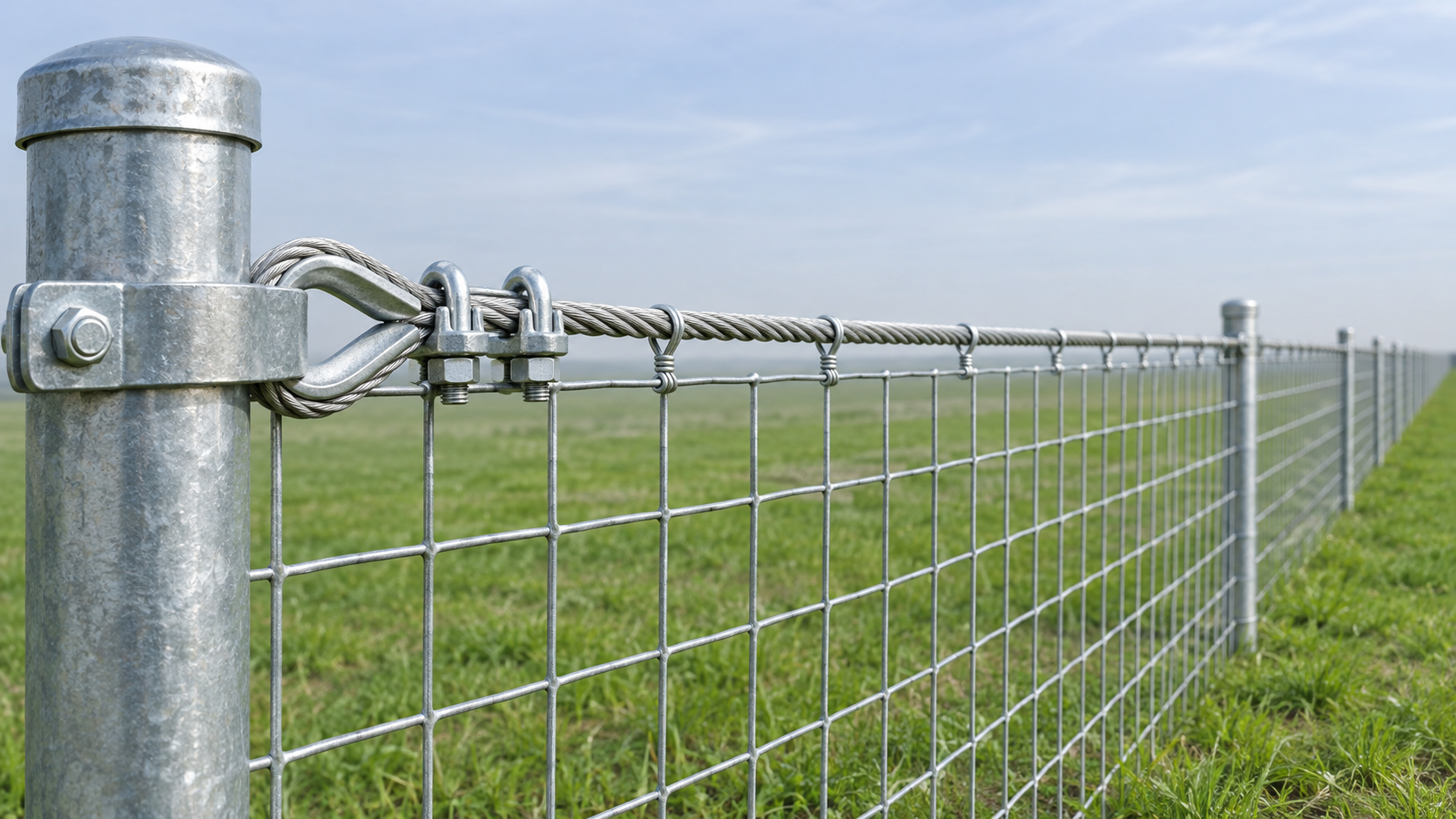
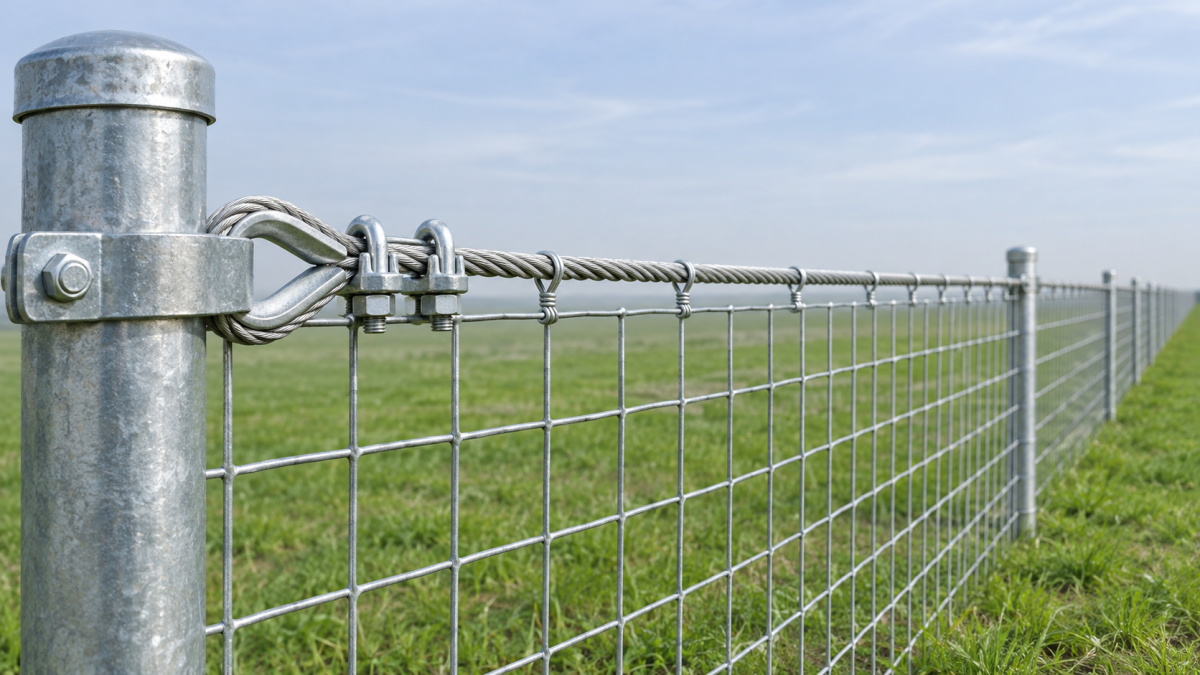
A useful application is a support line along the top or bottom of a mesh fence. The line helps carry and align the mesh, while separate ties attach the mesh to it. For a long run, intermediate posts keep the assembly in position; strong end and corner posts resist the pull from tensioning.
It can also be used as a boundary line where visibility and restraint are more important than creating a closed barrier. But one or two horizontal wires will not keep small animals in or out. If the goal is to protect vegetables from rabbits or contain a dog, mesh size, fence height, gaps at the ground, and gate details usually matter more than choosing a thicker support wire.
For livestock, do not assume that a heavier-looking wire is automatically safer or suitable. Animal type, impact, spacing, visibility, and the risk of entanglement all affect the design. Follow fencing guidance relevant to the animals and location, and avoid presenting a plain wire line as a safe vehicle or pedestrian barrier.
For a short decorative garden fence, 6mm solid wire can be unnecessarily hard to cut and terminate. A lighter purpose-made fencing wire or a complete mesh panel system may be simpler and less expensive once fittings and installation time are included.
The post and the termination often decide the result
A tensioned line pulls continuously on its end posts. If a post leans, the wire loses tension even when the wire itself is sound. Soft ground, a long unsupported run, or a change in direction can make the problem worse. Plan the end and corner bracing before buying a heavy wire, rather than trying to compensate by tightening it harder.
Use fittings intended for the construction and diameter of the wire. For wire rope, that may include a compatible tensioner, thimbles, and correctly installed rope clips or professionally pressed terminations. Follow the fitting manufacturer’s instructions for orientation, number of clips, spacing, and tightening. A fitting rated for a different rope construction or diameter may not grip as intended.
Wear eye protection and gloves when cutting or tensioning. Wire can spring back, and cut strands are sharp. Keep people clear of the line while tension is applied, and do not exceed the limits specified for the wire, fittings, or tensioning tool.
How much corrosion protection do you need?
Galvanizing provides a sacrificial zinc layer, but not all galvanized products have the same coating. Ask the seller for the coating specification and whether it is appropriate for the intended outdoor exposure. Coastal salt, persistent moisture, fertilizer, and contact with soil can all make corrosion more demanding than it would be in a sheltered garden.
Pay particular attention to cut ends, rubbed areas, and places where water or debris collects around fittings. A plastic coating can provide an additional physical covering, but damaged coating may conceal deterioration underneath. Inspect the line and its connections periodically rather than assuming a coated product is maintenance-free.
Stainless steel is another option when corrosion exposure or flexibility justifies the extra cost. For example, the 7x19 Stainless Steel Wire Rope 0.8-14mm Use for fishing industry is a flexible stranded-rope option available in several stainless grades, including 304 and 316. It is not galvanized wire, and its suitability for a fence still depends on the chosen diameter, fittings, load, and environment. Stainless steel is corrosion resistant, not corrosion-proof.
What to confirm before ordering
Ask for the construction, steel diameter, tensile or breaking-force information, and zinc-coating details for the specific product. Breaking force is not the same as a safe installation tension: connections, wear, shock loads, and the fence design all reduce the margin available. If the fence must withstand a defined load, have the complete arrangement assessed rather than sizing it from diameter alone.
Shandong Faster Technology supplies galvanized, stainless steel, and plastic-coated wire rope and can discuss specifications for different applications. When contacting a supplier, describe the fence length, number of corners, ground conditions, exposure, and whether the wire will support mesh or act as a boundary line. A photo or sketch of the posts and proposed terminations is often more useful than asking for “6mm wire” alone.
Choose 6mm where the fence design calls for it—not simply because thicker sounds better. If the posts are secure, the fittings match, and the enclosure does what you need it to do, the wire becomes one dependable part of the system rather than a substitute for good design.
Navigation
Send Us A Message



Shandong Faster Technology Co., Ltd. is a professional manufacturer of steel wire ropes.
Get in Touch
*We respect your confidentiality and all information are protected.