





What causes galvanized wire cable to rust prematurely?
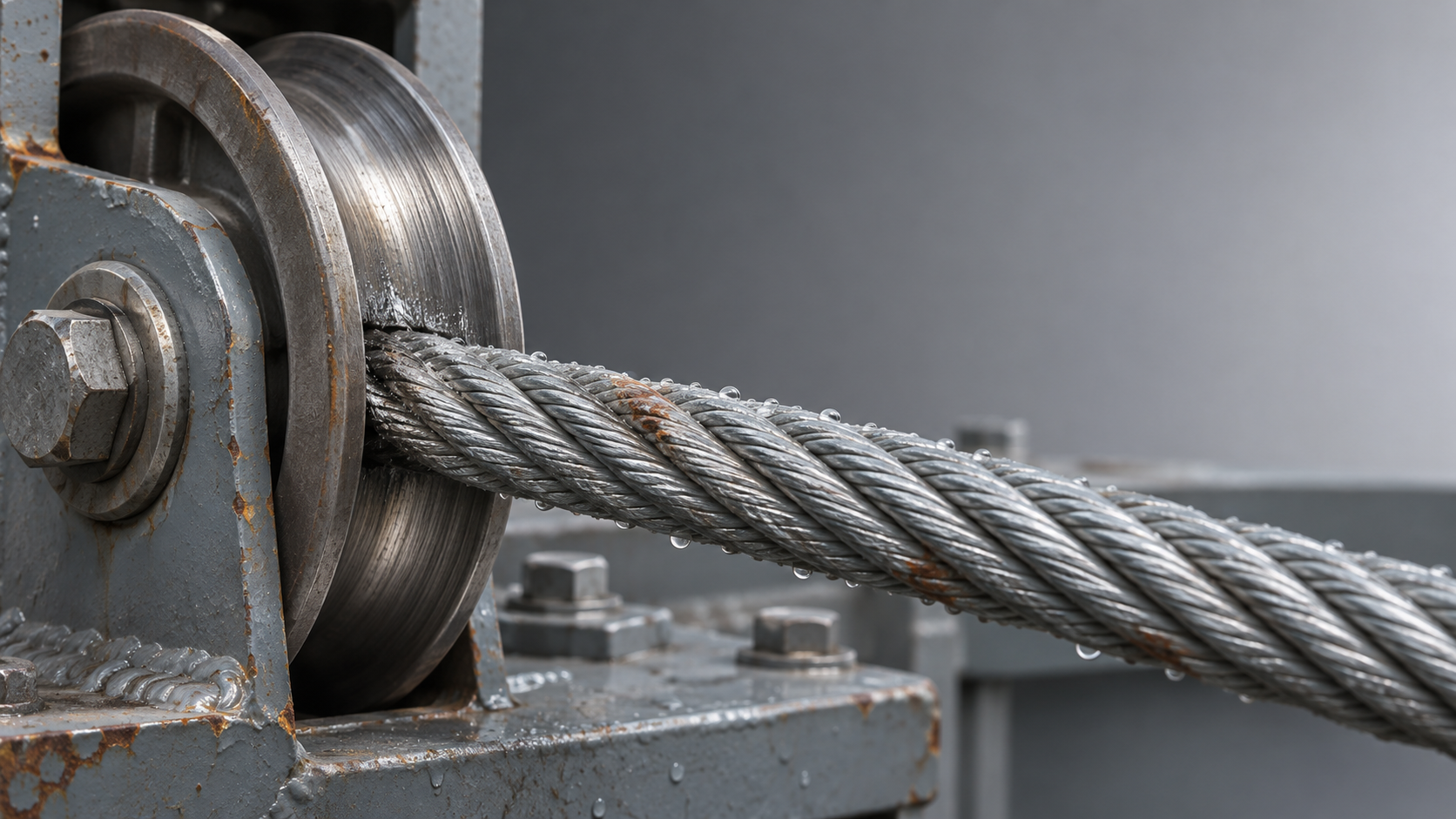
What causes galvanized wire cable to rust prematurely?
Galvanized wire cable is designed to resist corrosion, but rust can appear sooner than expected when its protective zinc coating is damaged or exposed to harsh conditions. Saltwater, moisture trapped between wires, abrasive wear and inadequate lubrication can all accelerate deterioration. For a maintenance team, the useful question is not simply whether rust is visible, but where it started, how far it has progressed and whether the cable can remain in service safely.
Zinc provides a barrier and can also protect exposed steel sacrificially. It is not a permanent shield, however. Once the coating is worn away or consumed, the underlying steel becomes more vulnerable. A cable may therefore corrode prematurely even when it was specified as galvanized, particularly if its operating environment differs from the conditions expected during selection.
Why rust often starts in places that are hard to inspect
A wire rope is not a solid bar. Moisture and contaminants can enter the spaces between wires and remain there after the outside appears dry. Cable wrapped on a drum, running through a guide or held inside a fitting may receive little airflow, making those locations especially worth checking.
Salt deposits make the problem more persistent. In port equipment, marine installations or outdoor machinery exposed to coastal spray, salt can remain on the rope after the water evaporates and attract moisture again. Mud, process residue and accumulated dust can have a similar practical effect: they hold contamination against the cable and obscure the surface during inspection.
Chemical exposure deserves separate attention. Acids, alkaline cleaners and other process chemicals can attack zinc or interfere with protective lubricants. A cleaning routine intended to keep equipment presentable may contribute to corrosion if the product is incompatible with the rope or leaves residue behind. Check the chemical supplier’s guidance and the rope manufacturer’s recommendations before changing cleaning procedures.
Coating damage and lubrication failures
Mechanical wear and corrosion frequently reinforce each other. When a rope rubs against a damaged sheave groove, a misaligned guide or an adjacent structure, friction can remove lubricant and zinc from the contact area. Once steel is exposed, moisture can attack it; corrosion products then make the surface rougher and can accelerate further wear.
Look for polished or flattened wires at recurring contact points. Also inspect sheaves and drums for damaged grooves, poor alignment and debris. Replacing the cable without correcting the contact problem may simply move the same wear pattern onto the new rope. Confirm groove condition and compatibility with the equipment manufacturer’s requirements rather than judging by appearance alone.
Lubrication matters inside the rope as well as on its surface. Individual wires move against one another as a rope bends and takes load. An appropriate wire-rope lubricant helps reduce friction and limit moisture ingress, but a thick external coating is not proof that the interior is protected. Dirt trapped under an incompatible or poorly applied product can also make inspection harder.
Use the lubricant and application method recommended for the rope and equipment. Clean only as permitted by those instructions, and avoid aggressive methods that could damage zinc, drive contaminants inward or remove essential internal lubricant. Some installations have special restrictions, so maintenance intervals should reflect the manufacturer’s guidance and the actual duty.
Reading the warning signs
White or gray deposits can be zinc corrosion products; reddish-brown staining may indicate exposed steel or contamination from nearby components. Color alone does not establish the rope’s remaining strength. Trace the staining to its source and inspect the surrounding wires rather than assuming every mark is either harmless or an immediate failure.
Pay particular attention to areas at end fittings, clamps, dead ends, drum crossover points and sections that travel over sheaves. These locations may combine trapped moisture with bending, pressure or abrasion. A rope can look acceptable along an accessible straight run while deterioration is concentrated at a termination.
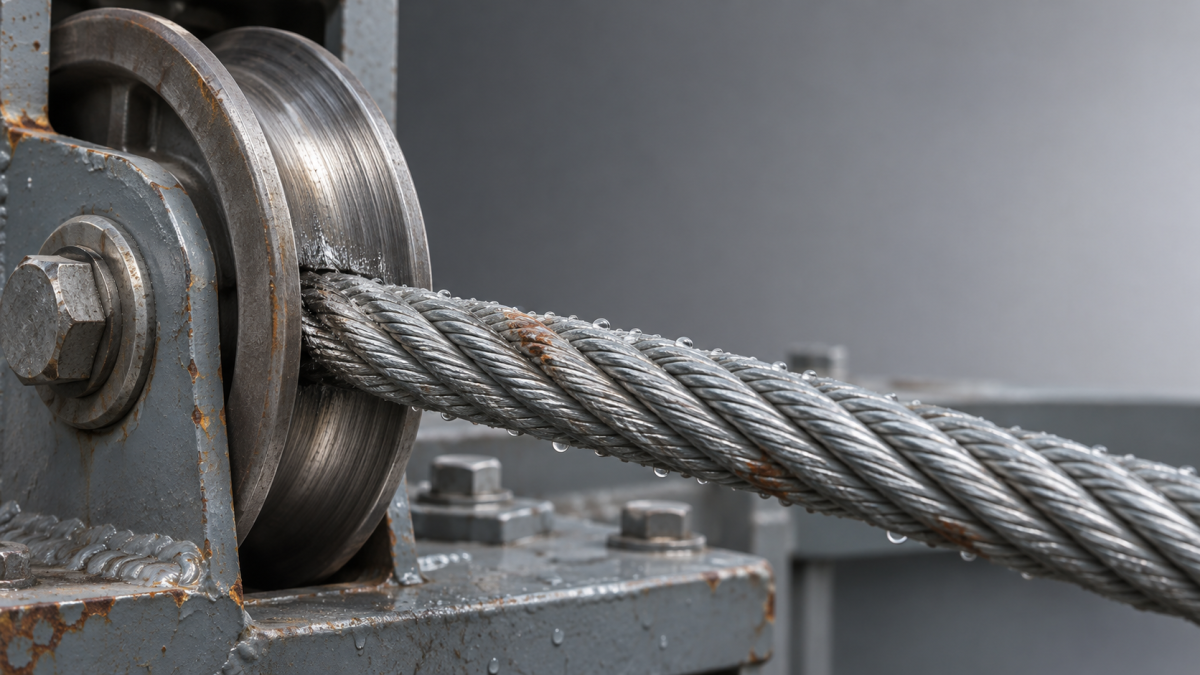
- Note the location and extent of discoloration, pitting, broken wires and visible coating loss.
- Check for stiffness, distortion or a change in rope diameter using the specified inspection method and a reliable baseline.
- Inspect fittings for corrosion, movement, cracks or damage; a sound-looking rope does not compensate for a compromised termination.
- Record operating conditions, cleaning agents and lubrication history so that a repeated pattern can be investigated.
Internal corrosion is difficult to assess from the outside. If there is reason to suspect it, refer the rope to a competent person for examination using the equipment manufacturer’s instructions and applicable inspection criteria. Do not open strands, load-test or otherwise disturb the rope unless the approved procedure specifically calls for it.
When cleaning is not enough
Light surface discoloration may warrant closer inspection and a maintenance review rather than an automatic replacement. Deep pitting, significant corrosion, broken wires, distortion or evidence of damage at a termination are more serious. The decision must follow the discard criteria applicable to the equipment and its use; visible rust alone cannot establish a safe residual capacity.
For lifting or other safety-critical duties, remove the equipment from service when the rope is suspected to be unsafe and have a competent person assess it before use. Painting over rust or applying fresh lubricant does not restore lost metal or strength. If a replacement is required, retain the inspection record and address the cause before the new cable enters service.
Choosing a replacement for a corrosive environment
Galvanized rope can remain a practical choice where exposure and maintenance are manageable. If repeated corrosion occurs despite correcting drainage, contamination and lubrication, review whether a different material or construction is warranted. Stainless steel may offer better corrosion resistance in some environments, but it is not immune to corrosion, particularly where chlorides collect in crevices.
For example, 1x7 Stainless Steel Wire Rope 0.3-6.0mm use For Hanging Traction and guardrail is available in grades including 304 and 316. Its single-strand construction can suit certain hanging, traction and guardrail applications. It should not be treated as a direct substitute for a flexible multi-strand rope: construction, bending requirements, minimum breaking force and termination compatibility all need review. Grade 316 may be considered for chloride exposure, subject to the actual environment and inspection requirements.
Plastic-coated cable is another option in some installations, but the coating can conceal damage or trap moisture if breached. It should be selected with an inspection plan, not assumed to eliminate corrosion.
When discussing a replacement, provide the supplier with the rope diameter and construction, equipment duty, sheave and drum details, termination type, exposure conditions and applicable requirements. Shandong Faster Technology Co., Ltd. manufactures galvanized, stainless steel and plastic-coated wire rope and also supplies customized slings and chains. That range can help frame a material discussion, but the equipment manufacturer or a qualified engineer should confirm suitability before any specification is changed.
Navigation
Send Us A Message



Shandong Faster Technology Co., Ltd. is a professional manufacturer of steel wire ropes.
Get in Touch
*We respect your confidentiality and all information are protected.