





How does 6x37 rope perform when bent over sheaves?
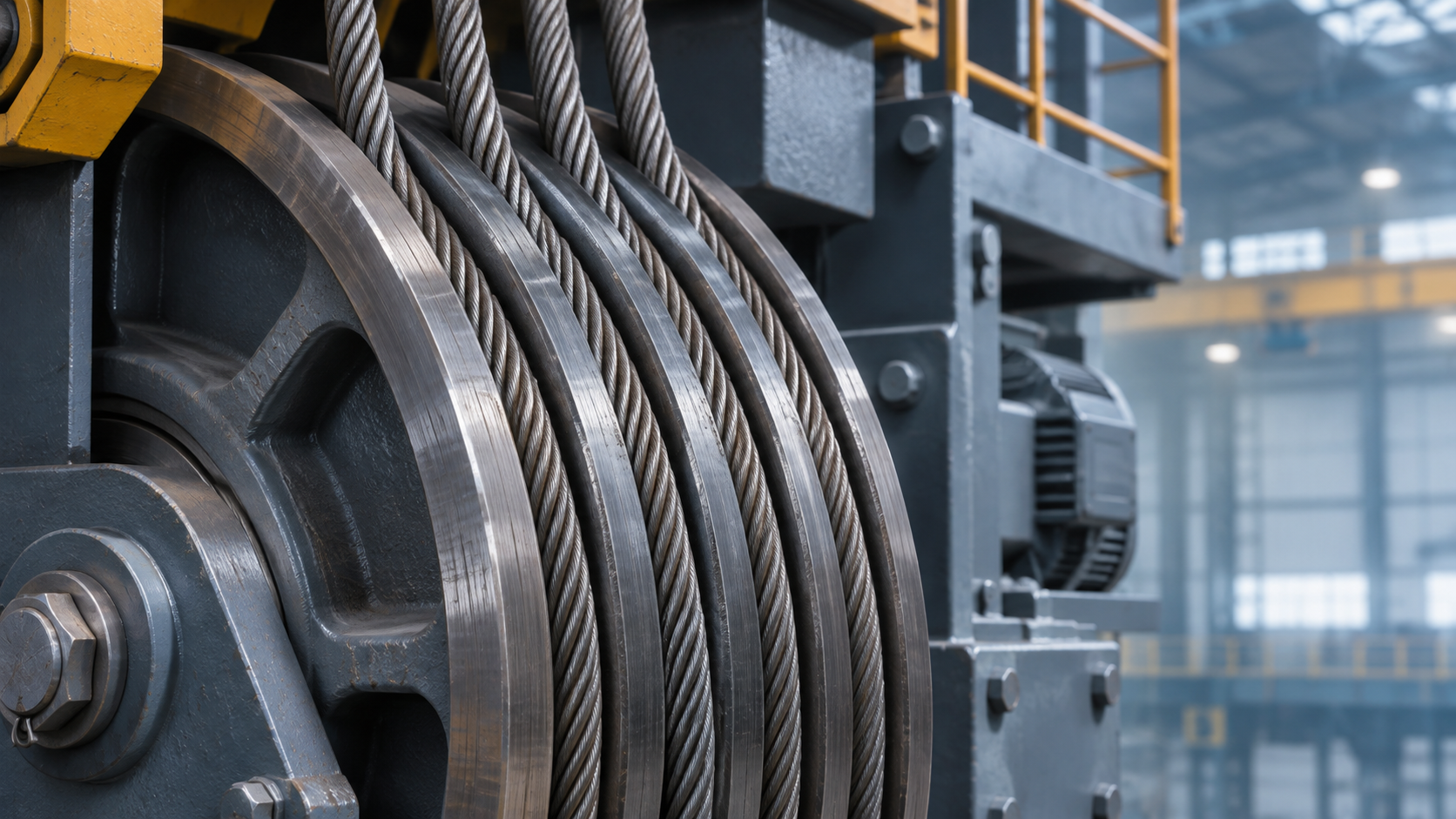
When a wire rope runs over a sheave, repeated bending can initiate fatigue long before its rated strength is reached. A 6x37 rope generally offers good flexibility because each strand contains many relatively small wires, but its service life depends on sheave diameter, groove condition, loading, lubrication and operating cycles. For technical evaluators, understanding these interactions is essential when comparing rope constructions and selecting a solution for lifting or traction applications.
The practical answer is that 6x37 construction is often a sensible candidate for repeated bending, particularly when fatigue is more concerning than surface abrasion. It is not, however, a guarantee of long life on a small pulley. The entire rope path matters, as do the exact construction and core specified by the rope manufacturer.
What happens as the rope passes over a sheave?
Each wire bends as it enters the groove and straightens as it leaves. Individual wires and strands also move relative to one another. Under tension, contact pressure develops both inside the rope and between the rope and the sheave. Repeated bending and contact can eventually produce fatigue cracks, including cracks that are not immediately visible on the outside.
The designation 6x37 describes a six-strand rope in the 37-wire class; actual wire arrangements can vary by construction. Its relatively fine wires generally bend more readily than the larger outer wires in a coarse-wire rope of comparable diameter. The trade-off is that fine outer wires can lose a meaningful proportion of their cross-section through abrasion or corrosion. Better bending characteristics therefore do not automatically mean better performance in every rope path.
Core selection matters too. A steel core and a fiber core do not provide identical support under transverse pressure. Before comparing options, obtain the exact strand construction, core type, diameter, strength grade and minimum breaking force rather than relying on the class designation alone.
Sheave diameter: the ratio that changes the discussion
The usual starting point is the D/d ratio: the sheave pitch diameter, D, divided by the nominal rope diameter, d. A larger ratio generally reduces bending severity; a smaller ratio forces the rope into a tighter curve. For example, if the applicable sheave diameter is 200 mm and the nominal rope diameter is 10 mm, the ratio is 20:1. That calculation describes geometry, not an approval or a predicted fatigue life.
Use the diameter definition required by the equipment specification or applicable standard when calculating the ratio. Then check the machine manufacturer’s minimum, the rope supplier’s recommendations and any requirements for the application. A ratio acceptable for a lightly used traction line may not be a sound choice for a heavily loaded hoist making frequent cycles.
Count bends, not just working hours. A section of rope that passes repeatedly over several sheaves can accumulate damaging bending cycles much faster than a section that moves only occasionally. Reverse bending, where the rope bends in opposite directions over successive sheaves, can be particularly demanding. When a machine offers a choice of reeving layouts, reducing unnecessary reverse bends may be more useful than selecting a rope on flexibility alone.
A suitable diameter cannot compensate for a damaged groove
Groove condition is easy to miss during a rope change. A groove worn too narrow can pinch the rope; one that is too wide may provide inadequate support. Corrugation, sharp edges and localized wear can concentrate contact pressure and accelerate damage. A sheave that does not rotate freely can also cause the rope to slide rather than roll, adding abrasion and heat.
Check groove profiles with an appropriate gauge and compare the results with the equipment and rope suppliers’ limits. Measure the rope itself as well: nominal diameter is a specification, while the installed rope’s actual diameter can change in service. Do not assume that a groove worn by the previous rope will suit its replacement, even when both have the same nominal diameter.
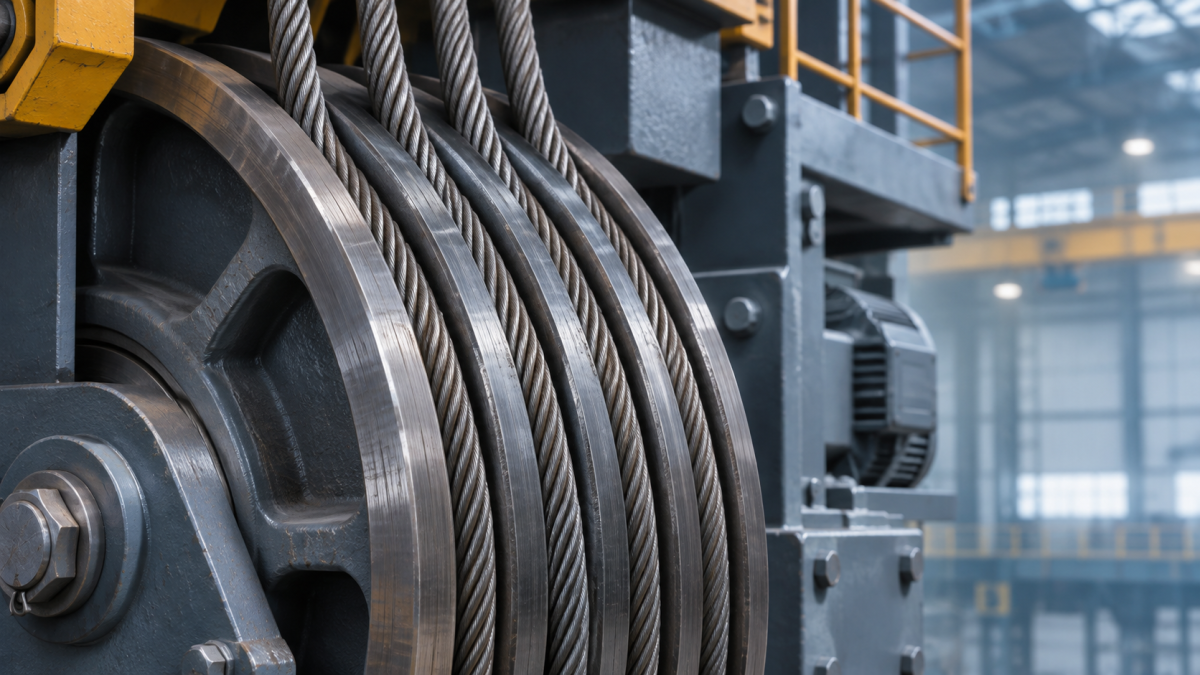
Alignment deserves the same attention. Excessive fleet angle can cause the rope to rub against the sheave flange or wind poorly on a drum. On an installation where broken wires appear repeatedly at one location, inspect the corresponding sheave, flange and drum path before attributing the problem solely to rope quality.
Comparing 6x37 with a coarser construction
A coarse-wire construction can be attractive where external rubbing is the dominant problem, because its larger outer wires provide more material to wear away. It will generally be less accommodating of repeated tight bending than a finer-wire construction of otherwise comparable design. Neither choice removes the need to check the machine’s approved rope specification.
For example, Shandong Faster offers the 6x7+FC Flexible Galvanized Steel Wire Rope 1.5-10mm Steel Cable for applications such as small winches and general traction. It is a six-strand, seven-wire-per-strand construction with a fiber core, not a 6x37 equivalent. Its listed diameter range is 1.5–10 mm. If a machine experiences frequent sheave bending, that difference in construction should prompt a fresh review of fatigue, groove fit and the equipment manufacturer’s approved rope type—not a direct substitution based on diameter alone.
The same caution applies in the other direction. Replacing a coarse-wire rope with 6x37 may improve bending behavior but can expose finer wires to faster external wear on an abrasive route. Rotation behavior, drum spooling, termination compatibility and required breaking force also need checking. A conventional six-strand rope should not be assumed to replace a rotation-resistant rope where the equipment requires one.
Inspection and standards: where the decision becomes operational
Lubrication limits corrosion and reduces friction between moving rope components, but the lubricant must be suitable for the rope and environment. A dry-looking rope in a wet or dusty application deserves investigation; adding an incompatible coating or heavy lubricant without guidance can make inspection harder or interfere with the system. Galvanizing helps protect steel, but it does not eliminate the need to control corrosion and inspect the rope.
Look for broken wires, reduction in diameter, corrosion, distortion and damage at terminations, as well as evidence of uneven sheave contact. Internal deterioration can be more difficult to detect than surface wear. Inspection intervals and discard decisions should follow the equipment instructions and the applicable standard; visible broken wires are not the only reason a rope may need removal.
EN 12385-4 addresses stranded ropes for general lifting applications, while ISO 4309 provides guidance on the care, maintenance, inspection and discard of steel wire ropes on cranes. Their applicability depends on the equipment and jurisdiction, and the relevant edition should be verified. Product conformity, inspection criteria and machine suitability are separate questions: a rope made to a standard is not automatically approved for a particular sheave system.
Before specifying a replacement, give the supplier the rope diameter, construction and core, sheave dimensions and groove condition, load history, reeving layout and expected duty. Shandong Faster manufactures wire ropes and related lifting components, but the final selection still needs to be checked against the machine documentation and the actual operating conditions. If a rope is failing early, inspect the sheaves and operating pattern before ordering the same construction again.
Navigation
Send Us A Message



Shandong Faster Technology Co., Ltd. is a professional manufacturer of steel wire ropes.
Get in Touch
*We respect your confidentiality and all information are protected.