





What Load and Flexibility Tradeoffs Matter in 7x7 Nylon Coated Stainless Steel 304 316 Wire Rope
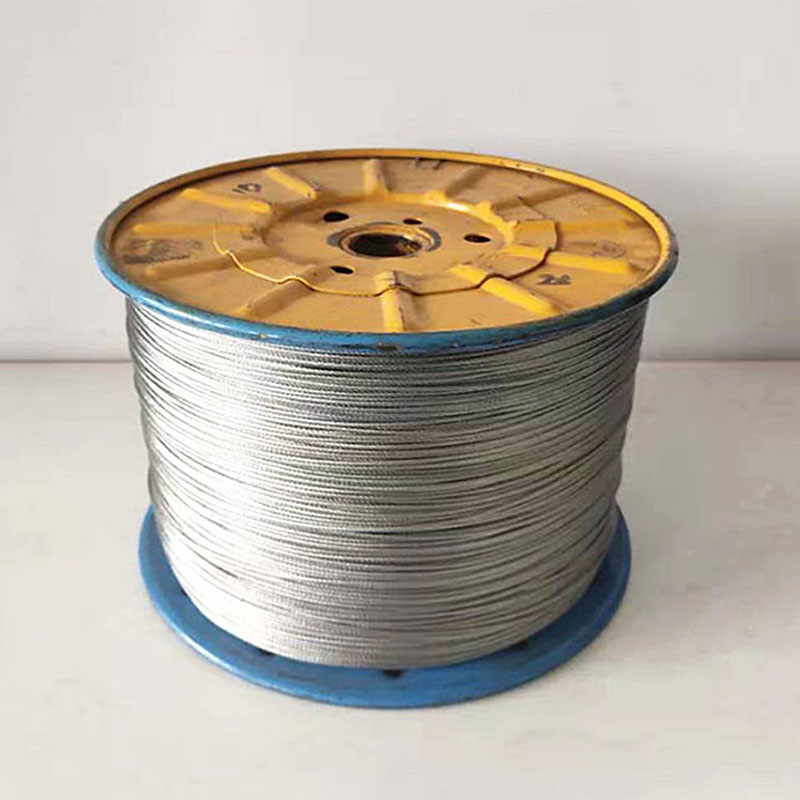
For a 7x7 Nylon coated stainless steel 304 316 wire rope, the main tradeoff is straightforward: the more the rope is optimized for compact strength and shape retention, the less easily it bends around small radii, tight pulleys, and hand-operated routing points. A 7x7 construction sits in the middle of that balance. It is typically more flexible than a stiffer 1x19 strand arrangement, yet firmer and more load-oriented than a finer 7x19 construction. That middle position is exactly why it appears in guards, control lines, light restraint systems, marine fittings, architectural supports, and some mechanical guiding applications.
The “7x7” designation means seven strands, each made of seven wires. That internal geometry matters because load is not carried by the nylon jacket. The metallic core carries the tensile force; the coating mainly adds surface protection, improves handling, reduces metal-to-metal contact, and can help with cleanliness or user contact. A common mistake is to treat coating thickness as added structural capacity. It is not. In most technical evaluations, the rated strength should be based on the bare stainless wire rope diameter and grade, while the outside coated diameter is mainly relevant for fit, abrasion behavior, and appearance.
Where the load side starts to matter
When people compare 304 and 316 stainless in a 7x7 nylon coated stainless steel 304 316 wire rope, they often focus first on corrosion resistance, but load behavior is part of the decision too. Both alloys can be used for strength-bearing cable, yet their field selection usually depends more on environment than on a dramatic difference in tensile performance. If the rope works in general indoor, mildly wet, or non-chloride conditions, 304 may be acceptable. If it will see salt spray, washdown chemicals, coastal air, or repeated wet exposure, 316 is often preferred because it generally offers better resistance to pitting and crevice corrosion.
That corrosion point feeds directly back into load reliability. A rope that looks adequate on paper may lose practical safety margin if the environment attacks the wire surface, especially at strand contact points or under fittings where moisture remains trapped. In coated rope, that risk can be harder to spot because early corrosion may begin beneath the jacket or near a swaged terminal. For this reason, the best load decision is rarely only about nominal breaking force. It also includes how much of that strength remains available after installation, bending, exposure, and service wear.
Load performance is also affected by bending fatigue. A rope may support a static load successfully and still fail early if it is forced to cycle over undersized sheaves or pulleys. With 7x7 construction, moderate flexibility helps, but it is still not a substitute for a highly flexible running rope when repeated motion is severe. If the application involves many bend cycles, even a strong stainless cable can harden locally, flatten at contact points, or develop broken wires sooner than expected.
Why 7x7 is often chosen instead of stiffer or softer constructions
A 1x19 stainless rope is usually selected when low stretch, clean appearance, and high axial stiffness are more important than bending ease. It works well for straight runs, stays, and bracing, but it does not like tight bends. At the other end, 7x19 is commonly chosen when frequent flexing, tighter pulley travel, or easier manual handling matters more. The 7x7 Nylon coated stainless steel 304 316 wire rope sits between those two patterns. It can hold shape better than 7x19 in some assemblies, while still being flexible enough for many routing and handling situations that would be harsh for 1x19.
That middle-ground behavior becomes valuable in installations where the rope must pass around guides, enter fittings cleanly, and remain reasonably stable under tension without becoming overly springy. Guardrail infill, small winch accessories, tensioned restraint cables, and certain marine support lines are typical examples. The tradeoff is that 7x7 is rarely the absolute best at either extreme. It is selected because the application needs a workable balance rather than a single performance peak.
How the nylon coating changes the practical decision
Nylon coating improves surface feel and may reduce abrasion against nearby components, but it also changes the way the rope fits hardware. Engineers sometimes specify by outside diameter only, then discover that the actual steel core is smaller than expected because the coating took part of the dimension. For any clamp, ferrule, pulley groove, eyelet, or guide tube, both the bare rope diameter and coated diameter should be confirmed. A mismatch can create excessive compression, uneven wear, or slippage.
Coating also influences flexibility in a subtle way. The steel construction defines the main bending capability, but a thicker or harder jacket can make the cable feel stiffer in hand, especially in colder conditions. Nylon may also show wear marks before the steel is affected, which is useful as a visual warning, but it can conceal internal strand damage if inspections rely only on surface appearance. In moving systems, once the coating is cut, peeled, or flattened, dirt and moisture can collect at the damage point and accelerate hidden deterioration.
- A thin, smooth coating generally preserves more of the rope’s natural bend behavior.
- Heavier coating may improve surface protection, though it can reduce tolerance for tight routing and may complicate fit in standard hardware.
- Where cleanliness or hand contact matters, coating can be beneficial even if the application is not highly corrosive.
Small-radius bending is where many wrong selections show up
If a 7x7 rope is expected to wrap around a small drum, pass through repeated directional changes, or cycle under vibration, the “load versus flexibility” issue becomes more visible. A rope sized mainly for tensile reserve may still perform poorly if the bending radius is too tight. This is especially common in compact equipment where designers try to save space by using small pulleys. The rope may then experience higher localized stress than the simple straight-line load calculation suggests.
In field service, some failures attributed to “bad stainless” are actually geometry problems: too small a bend radius, a sharp-edged thimble substitute, an improperly sized swage, or clamps applied over the coated surface without considering grip behavior. Stainless wire rope also tends to show different wear characteristics from bright carbon steel rope, so practices transferred from one material family to another should be checked carefully.
That distinction matters in mixed lifting and restraint systems. For example, assemblies using wire rope slings for heavier picks may rely on far more load-focused constructions such as 6x19, 6x24, 6x37, 19x7, or 7x19 depending on movement, core type, and end termination. In those contexts, a coated 7x7 stainless rope is often better suited to guiding, lanyard, tether, or control roles than to primary heavy lifting duty. A separate rigging component such as 3 Leg bright oil steel Wire Rope Sling Hook and Loop 3tons Lifting Slings would typically be considered in a different load class and duty pattern, where branch angle, force distribution, and sling termination design become central issues.
304 or 316 under real working conditions
In dry indoor systems, the choice between 304 and 316 may come down to exposure uncertainty and maintenance access. If the rope will be enclosed, hard to inspect, or installed near cleaning agents, 316 can reduce long-term risk even when the environment does not look aggressive at first glance. In marine or dockside conditions, 316 is frequently treated as the safer baseline because chlorides can attack stainless surfaces unpredictably, especially where oxygen is limited and water remains trapped.
Neither alloy should be assumed maintenance-free. Salt deposits, metal dust, and chemical residue can remain on the coating or around fittings. If water gets into a damaged jacket and stays there, the corrosion benefit of stainless may still be compromised over time. Periodic wiping, fresh-water rinsing where appropriate, and inspection around terminals, bends, and abrasion points are often more useful than simply looking at long straight sections of cable.
Processing and termination details that affect both flexibility and load
The way a rope is cut and terminated can shift actual performance more than the material label suggests. Clean strand geometry, controlled closing during manufacture, and proper tension balance matter because an uneven rope will not share load uniformly among wires. At the assembly stage, swaged fittings, crimped ferrules, mechanical terminals, and hand-spliced terminations each influence usable strength and bend behavior differently. Some terminations grip the rope securely but create a stiffer transition zone; others allow a neater profile yet demand more precise dimensional control.
With coated rope, termination choice becomes even more specific. Some fittings require coating removal before swaging so the metal strands can be gripped directly. Others are designed around the finished outside diameter. Confusion between those two approaches can lead to poor retention or cosmetic damage that later spreads under service movement. Installation teams sometimes discover this only after the rope has already been cut to length, which is a costly point to learn it.
Transport and storage also deserve attention. Stainless rope with nylon coating should not be dragged across rough steel decking, stored under crushing loads, or bent sharply for packing if the final application expects clean, stable curvature. Coating set, strand distortion, and kinks introduced before installation can remain in the rope and alter both handling and fatigue life.
In practical terms, 7x7 Nylon coated stainless steel 304 316 wire rope is chosen when neither maximum stiffness nor maximum flexibility is the priority. It works best when moderate tensile capacity, controlled bending, corrosion resistance, and a protected outer surface all need to coexist. Once the route becomes tighter, the bend cycles increase, or the duty moves toward primary lifting, the tradeoff shifts, and another construction may fit the job more honestly than forcing 7x7 beyond its natural range.
Navigation
Send Us A Message



Shandong Faster Technology Co., Ltd. is a professional manufacturer of steel wire ropes.
Get in Touch
*We respect your confidentiality and all information are protected.