





304 vs 316 7x7 Nylon Coated Stainless Steel Wire Rope for Marine Use
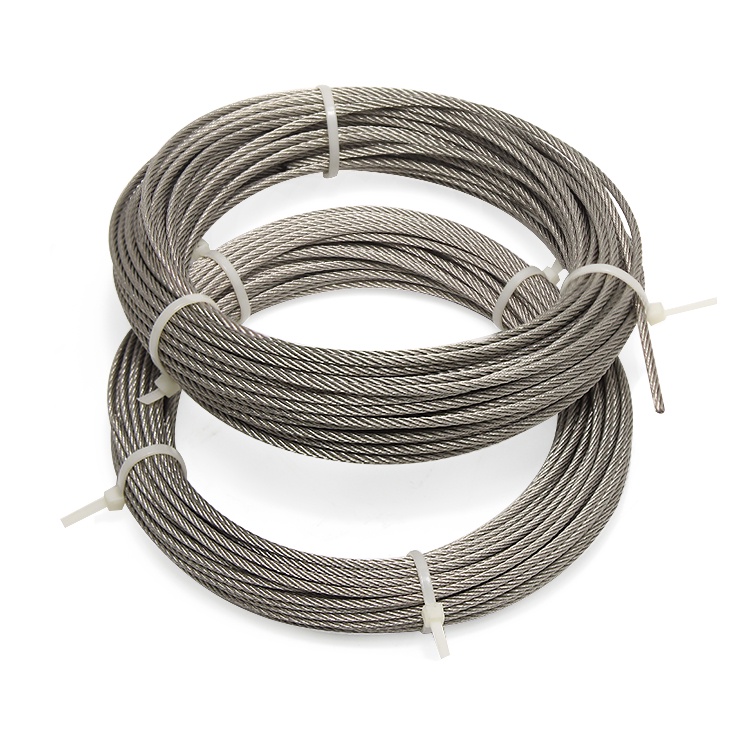
Choosing between 7x7 nylon coated stainless steel wire rope in 304 and 316 for marine use is mainly a corrosion decision. If the cable will work around salt spray, seawater, washdown cycles, or humid coastal exposure, 316 is usually the more reliable choice. If the environment is only mildly corrosive and cost control matters more than maximum salt resistance, 304 can still be a practical option.
For technical evaluators, the key is not only the stainless grade but the full working condition. A correct selection must consider chloride exposure, bending frequency, coating purpose, required breaking strength, fitting compatibility, inspection interval, and expected replacement cycle. In marine applications, a lower initial price can quickly disappear if corrosion leads to early failure, unplanned maintenance, or safety risk.
What Is the Real Difference Between 304 and 316 in Marine Service?
Both 304 and 316 are austenitic stainless steels widely used for wire rope, but their field performance in marine environments is not equal. The main reason is molybdenum content in 316, which improves resistance to pitting and crevice corrosion caused by chlorides.
In practical terms, 304 performs well in freshwater, indoor humidity, and many general outdoor conditions. However, when exposed to seawater, salt mist, deck runoff, or trapped moisture around terminals, 304 is more likely to develop surface staining, localized pits, and progressive deterioration.
316 is better suited for these chloride-rich conditions. For yacht control cables, dock-side rigging accessories, marine traction lines, and exposed coastal installations, 316 generally delivers a longer service life and more stable appearance. That matters when the rope must maintain both structural reliability and low maintenance demand.
Why the 7x7 Structure Matters for Marine Selection
The keyword focus is often on material grade, but the 7x7 construction also matters. A 7x7 wire rope is made from seven strands, each consisting of seven wires. This gives it a balanced profile of moderate flexibility and relatively good strength.
Compared with a stiffer construction, 7x7 can handle small pulleys, guide paths, and repeated directional changes more effectively. Compared with finer, more flexible constructions, it often offers a stronger and more wear-resistant structure for applications where the rope sees traction, restraint, or light lifting rather than highly dynamic running cycles.
For marine use, this makes 7x7 suitable for control cables, small hoist lines, outdoor fixation, marine environment traction, and selected rigging needs where a combination of bendability and tensile performance is required. It is also commonly specified for fences, drying systems, and equipment restraints in corrosive outdoor environments.
Does Nylon Coating Improve Marine Performance?
Nylon coating adds a useful protection layer, but it should not be treated as a substitute for choosing the right stainless grade. The coating can reduce direct surface abrasion, improve handling feel, limit metal-to-metal contact, and provide a cleaner finish for applications where appearance or user contact matters.
In marine settings, nylon coating also helps protect the wire rope from splash, intermittent contaminants, and minor surface damage during handling or routing. For yacht control cables or outdoor fitness and drying systems near the coast, that can improve service stability and reduce visible wear.
However, coatings are not a complete corrosion solution. If the coating is cut, cracked, or worn through, trapped saltwater can remain in contact with the steel surface. In that case, the underlying alloy quality becomes even more important. That is why 316 nylon coated wire rope is generally the safer specification for long-term marine exposure.
When Is 304 Good Enough, and When Is 316 the Better Decision?
304 is usually good enough when the rope works in sheltered environments with limited chloride contact. Examples include indoor industrial equipment near the coast, freshwater systems, occasional outdoor use, or decorative and light-duty applications where direct seawater exposure is rare and inspection is easy.
316 is the better decision when the rope operates on vessels, marinas, port-side equipment, coastal infrastructure, or any installation exposed to sea air, salt spray, or regular washing with chloride-containing moisture. It is also preferred where failure consequences are high or where replacement access is inconvenient.
A simple rule helps most evaluations. If the rope will live near seawater, specify 316 first and only move to 304 when the environment, duty level, and maintenance plan clearly justify it. This reduces lifecycle uncertainty and avoids under-specification during procurement.
How Technical Evaluators Should Compare Lifecycle Cost
Initial material cost often favors 304, but procurement price alone is not the right basis for marine selection. Technical evaluation should include service life, inspection frequency, cleaning demand, failure risk, downtime exposure, and replacement labor.
In many marine applications, 316 has a better total cost outcome because it resists corrosion longer and preserves mechanical reliability over a longer operating window. This is especially true for cables installed in hard-to-reach positions or integrated into equipment where replacement interrupts operations.
For buyers comparing 7x7 nylon coated stainless steel 304 316 wire rope, the more useful question is not “Which is cheaper today?” but “Which grade gives stable performance over the intended maintenance cycle?” In marine service, that question often points to 316.
What Specifications Should Be Verified Before Approval?
Material grade is only one line in the specification. Technical evaluators should also verify diameter, coating type, rope construction, reel length, surface condition, minimum breaking load data, packaging method, and whether the product matches the routing and end-fitting design.
For example, 7x7 stainless steel wire rope is commonly available in diameters from 0.5mm to 6mm, with non-coated or plastic-coated options and packaging such as wooden reels, iron reels, plastic reels, or rolls. These details influence installation efficiency, storage condition, and downstream assembly performance.
It is also important to confirm certifications and production consistency. Suppliers with process control from raw material through drawing, twisting, and rope closing are generally better positioned to deliver stable quality across batches. That consistency matters when a project requires repeatable mechanical behavior across multiple cable assemblies.
Typical Marine and Outdoor Use Cases for 7x7 Stainless Wire Rope
7x7 stainless wire rope serves a wide range of practical uses beyond heavy marine rigging. It is often used for yacht and sailboat control cables, small lifting systems, outdoor fixation points, traction and bundling of equipment, and load-bearing cables in exposed installations.
It can also support clothesline, fence, wire rope net, drying rack, and outdoor fitness equipment applications where corrosion resistance and moderate flexibility are both needed. In these cases, plastic-coated 304 or 316 variants help improve handling and protect surrounding surfaces.
One reference option in this category is 7x7 Stainless Steel Wire Rope 0.5-6mm use For clothesline and fence. Its available material range includes 201, 304, 316, and 316L, with diameter coverage from 0.5mm to 6mm for varied light-duty outdoor and marine-related applications.
How Supplier Capability Affects Product Reliability
Even with the right grade selection, poor manufacturing control can weaken real-world performance. Rope uniformity, strand consistency, coating quality, and dimensional accuracy all influence bending behavior, wear rate, and service life.
For industrial buyers, supplier capability should therefore be part of technical evaluation. A manufacturer with automated production lines, inspection equipment, and stable annual capacity can usually support better quality consistency, shorter lead times, and more dependable batch repeatability.
Shandong Faster Technology Co., Ltd. focuses on steel wire rope, sling, and chain manufacturing for industries including ships, ports, construction, mining, and lifting. With production capacity exceeding 70,000 tons annually and support for customized rope, sling, and chain solutions, the company can serve buyers looking for both standard products and integrated industrial supply.
Final Selection Guidance for Technical Evaluators
If your project involves marine exposure, the best default choice is usually 316 7x7 nylon coated stainless steel wire rope. It provides stronger resistance to chloride attack, lowers long-term corrosion risk, and usually supports a more predictable maintenance schedule.
304 remains useful where the environment is less aggressive, access for inspection is easy, and budget sensitivity is high. But it should be selected based on confirmed operating conditions, not as a general substitute for 316 in saltwater-related service.
In short, choosing between 304 and 316 is really a decision about risk tolerance, maintenance burden, and lifecycle value. For marine use, 316 is typically the sounder engineering choice, while 304 fits controlled environments where chloride exposure is limited and performance expectations are clearly defined.
Navigation
Send Us A Message



Shandong Faster Technology Co., Ltd. is a professional manufacturer of steel wire ropes.
Get in Touch
*We respect your confidentiality and all information are protected.