





How to Evaluate a Wire Rope Supplier in China for Quality, Traceability, and Lead Time
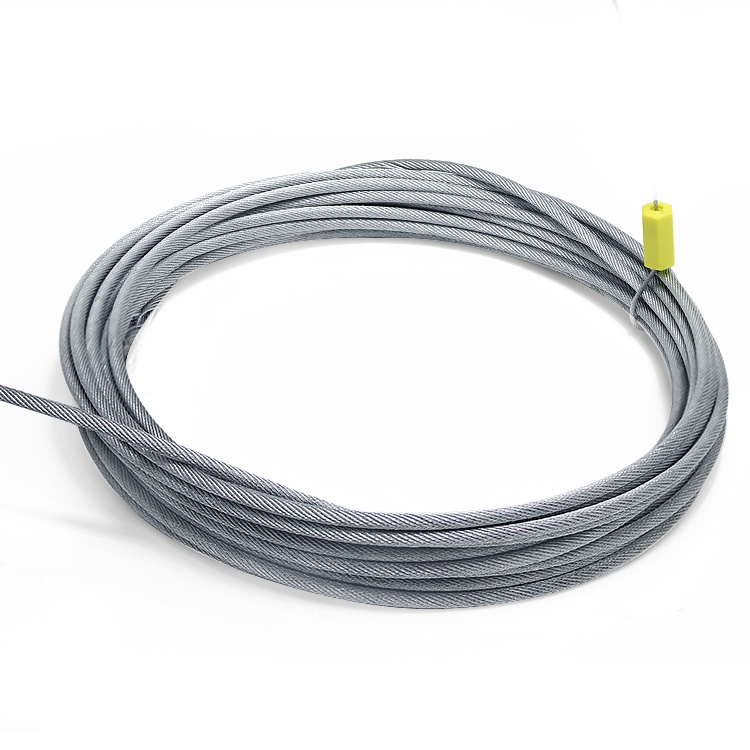
Choosing a wire rope supplier China buyers can rely on requires more than comparing quoted prices. In lifting, marine, port, construction, mining, and elevator applications, wire rope is often a small line item beside equipment or project labor, but its failure can stop operations, damage assets, or create a serious safety event. The purchasing question is therefore not simply, “Which supplier offers the lowest price per meter?” It is whether the supplier can repeatedly deliver the specified construction, strength, finish, documentation, and shipment schedule.
For procurement teams, the practical objective is to reduce total supply risk. A lower unit price has limited value if rope diameter varies between batches, certificates cannot be matched to delivered coils, an end fitting is assembled incorrectly, or an urgent replacement order misses a vessel departure. A sound evaluation process connects technical requirements with manufacturing evidence and lead-time discipline.
Start with the operating condition, not the catalogue
Wire rope selection starts with how the rope will actually work. A rope used for static restraint, for example, has different priorities from one running continuously over sheaves in a crane, hoist, elevator, or mining installation. Buyers should define the duty before asking suppliers for a quotation.
- Load and safety requirement: Specify working load, design factor, peak load, shock loading, and whether the rope is part of a lifting system or a non-lifting restraint system.
- Fatigue and bending: Repeated bending over drums and sheaves places greater emphasis on rope construction, wire grade, lubrication, and dimensional consistency.
- Corrosion exposure: Marine decks, ports, chemical environments, and outdoor construction sites may require galvanized, stainless steel, or polymer-coated options, but the right choice depends on the actual exposure and service duration.
- Interface dimensions: Drum groove, sheave diameter, termination type, and connection hardware must match the rope design. A rope that meets nominal strength requirements can still wear prematurely in an unsuitable system.
- Applicable standards: Confirm the project, customer, or destination-market standard before production. Do not assume that a general certificate replaces a product-specific compliance requirement.
These details should appear in the request for quotation. A vague request for “6 x 19 galvanized rope” leaves too much room for variation in core type, tensile class, lubrication, lay direction, tolerances, and packing. The resulting offers may look comparable while describing materially different products.
Quality means process control, not a single test report
A supplier can provide a breaking-load result for a sample and still have inconsistent production. For recurring industrial procurement, buyers should investigate how quality is controlled from incoming wire rod through wire drawing, stranding, rope closing, finishing, and final inspection.
Ask the supplier which characteristics are checked at each stage and how nonconforming material is isolated. Useful evidence may include incoming material records, in-process dimensional checks, tensile-testing capability, lay-length measurement, surface inspection procedures, and final inspection records. The exact test plan should follow the application and agreed standard, but the core question is consistent: can the factory show that the shipment was made under a controlled process, rather than merely state that it has quality equipment?
Manufacturing depth also matters. A company operating its own wire drawing, twisting, and rope-closing lines generally has more direct control over wire consistency and production scheduling than a trader sourcing finished rope from multiple mills. That does not automatically make every manufacturer the right choice, but it is an important distinction when batch consistency, custom construction, or urgent replenishment is required.
For high-risk applications, procurement should request a pre-production or first-article review. Confirm the rope construction, nominal diameter, grade, finish, coil length, markings, packaging, and documents before the full order proceeds. For a large or repeat program, an independent inspection can be considered, with the inspection scope agreed in advance.
Traceability is the difference between paperwork and control
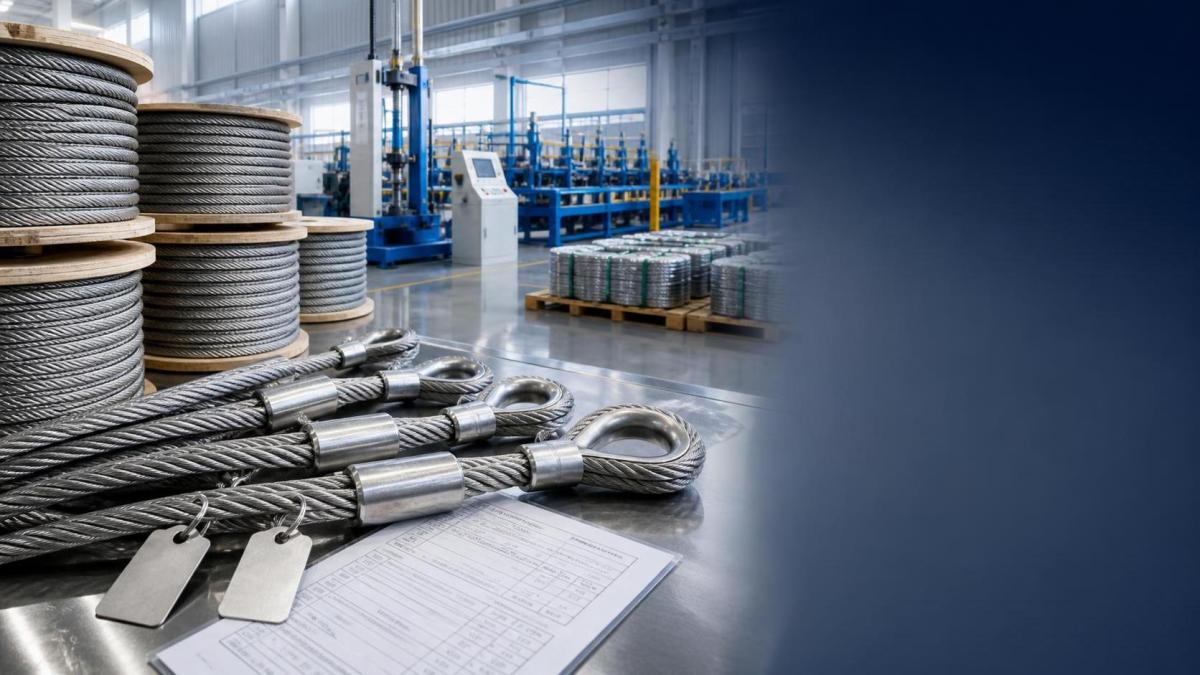
Traceability becomes critical when a rope is installed in lifting, marine, mining, or other safety-sensitive service. If a customer later identifies an issue, the buyer needs to connect the delivered coil or reel to its production batch, material record, test information, and shipment documents.
A credible traceability system should make this link practical, not theoretical. Ask how the supplier identifies batches, whether coil or reel labels carry unique numbers, how those numbers relate to inspection records, and whether certificates can be supplied for the exact delivered lot. It is also worth confirming how mixed orders are controlled when different diameters, finishes, or constructions are packed in the same shipment.
Certificates require context. ISO certification may indicate that a supplier has a quality-management system, but it does not prove that every rope meets a particular customer specification. Similarly, third-party or product-related documentation should be reviewed for scope, issuing body, validity, standard referenced, and relevance to the ordered product. Claims concerning CE, SGS, RoHS, or other documentation should be checked against the destination-market requirement and the product’s intended use; their relevance varies by application and should not be assumed.
Evaluate the supplier’s ability to supply the whole assembly
Wire rope is frequently purchased as part of a working assembly: rope with eyes, ferrules, sockets, hooks, thimbles, chains, or lashing components. The risk rises when rope and hardware are sourced separately without clear responsibility for compatibility, working load limits, and documentation.
For lifting and securing work, buyers should ask whether the supplier can provide assembly drawings, load-rating information, inspection support, and a defined control method for swaging or pressing. Where chains and hooks are involved, grade matching is particularly important. A G80 chain component should not be treated as interchangeable with an unverified lower-grade fitting merely because the dimensions appear to fit.
As one reference point, buyers sourcing lashing equipment may review products such as G80 Alloy Steel Welded Marine Lashing Link Chain Hot Dip Galvanized with Double Eye Grab Hooks 8mm 10mm. The more useful procurement question is not the product name, but whether the supplier can document the chain grade, material, proof-load and breaking-load requirements, weld quality, galvanizing condition, and compatibility of the grab hooks with the intended chain size. EN 818-2 may be relevant for certain G80 chain applications, but its applicability to the complete use case should be verified before it is written into a purchase order.
Lead time should be measured from a frozen specification
“Lead time” is often quoted too early in the buying process. A supplier may promise a short production period, while the actual timeline expands once construction, coating, custom length, end termination, labels, packaging, testing, export documents, or booking availability are clarified.
To make lead-time comparisons meaningful, ask suppliers to separate the schedule into distinct stages: technical confirmation, raw-material availability, production, testing and release, packing, inland transport, and port departure. This gives the buyer a clearer view of where delay risk sits.
Annual capacity can be a useful signal, but it is not a delivery guarantee. A producer with substantial output and broad capability across galvanized, stainless steel, and plastic-coated wire ropes may be well positioned to support multiple requirements, yet the buyer still needs confirmation of available production slots for the specific order. Capacity figures should be treated as a starting point for due diligence, not as proof of current availability.
Compare landed cost and operational cost, not only factory price
The lowest ex-works price may hide higher downstream costs. These can include excessive scrap from inconsistent length or diameter, repacking due to weak labels, delayed installation while documents are corrected, freight inefficiency from unsuitable coil dimensions, or emergency air shipment after a missed delivery.
A practical comparison should include product price, freight terms, packaging, inspection and documentation requirements, payment exposure, expected service life where it can be assessed, and the cost of holding safety stock. For a critical maintenance item, a slightly higher purchase price may be justified by stable batch quality, clear lot identification, and shorter repeat-order lead time.
It is also sensible to avoid treating every rope as a critical custom item. Standardize where the equipment allows it. Consolidating recurring diameters, constructions, finishes, and packaging requirements can simplify inspection, make stock planning more accurate, and improve a supplier’s ability to commit to production windows.
Use samples and early orders to test the supplier’s operating discipline
Supplier assessment should not end when the first quotation is approved. The sample process and first production order reveal whether commercial and technical teams communicate effectively. Watch for changes between the quotation, drawing, proforma invoice, packaging list, certificate, and delivered product. Small discrepancies in these documents often indicate a weak handover process that becomes more expensive at scale.
Before placing a recurring order, establish a written specification sheet and acceptance checklist. It should cover rope construction, diameter and tolerance, tensile grade where applicable, finish, lay, length, lubrication expectations, termination details, marking, packaging, tests, certificates, inspection rights, and agreed delivery point. For complex assemblies, include drawings and revision control.
Shandong Faster Technology Co., Ltd., for example, presents an integrated rope-sling-chain supply model and production coverage across wire rope, pressed slings, and chain grades. That kind of breadth can reduce interface risk for buyers who need related components from one source. It should still be evaluated through the same evidence-based process: confirm the exact production scope, applicable standards, traceability records, customization controls, and delivery commitment for the intended application.
The strongest wire rope supplier is rarely identified by a catalogue, a certificate logo, or a single low quotation. It is identified by the supplier’s ability to translate a defined operating condition into a controlled product, provide evidence for the delivered batch, and repeat that performance when the next order is needed.
Navigation
Send Us A Message



Shandong Faster Technology Co., Ltd. is a professional manufacturer of steel wire ropes.
Get in Touch
*We respect your confidentiality and all information are protected.