





What Is WSC Wire Rope and When Should You Choose It Over Fiber Core?
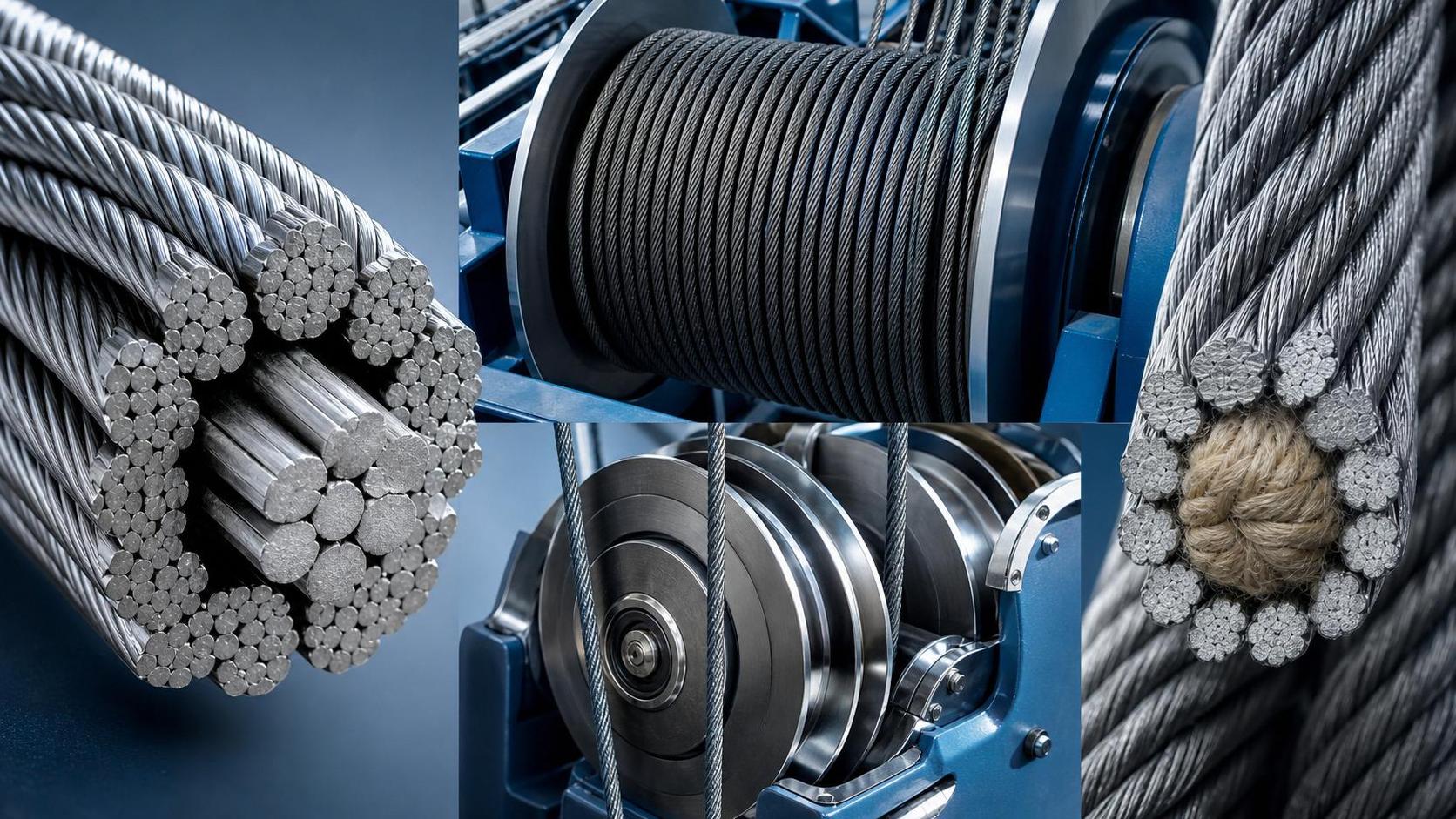
What does WSC wire rope actually mean?
WSC wire rope uses a wire strand core instead of a fiber center. That sounds like a small construction detail, but it changes how the rope behaves under load.
In simple terms, the steel strand core gives the rope more internal support. That usually improves strength, dimensional stability, and resistance to crushing.
Fiber core ropes still have value. They are often lighter, more flexible, and sometimes easier to handle on systems with frequent bending over smaller sheaves.
The real decision is not whether WSC wire rope is always better. It is whether the operating conditions demand the extra support that a steel-based core can provide.
When is WSC wire rope the safer choice than fiber core?
WSC wire rope is usually preferred when the rope faces high pressure, repeated shock loading, or drum winding conditions that can deform a softer core.
A common example is equipment where multilayer spooling creates compressive stress. In that situation, fiber core can flatten or shift more easily.
Heat is another important factor. If the rope works near hot process zones or sees friction-related temperature rise, steel core designs generally hold shape better.
For lifting systems that demand stable diameter and predictable performance, WSC wire rope often reduces the risk of early structural distortion.
- Heavy-duty hoisting with high radial pressure
- Drum winding with multiple rope layers
- Applications exposed to elevated heat
- Systems where crush resistance matters more than low weight
How does WSC wire rope compare with fiber core in daily operation?
The short answer is balance. WSC wire rope favors support and durability, while fiber core often favors flexibility and lower mass.
That tradeoff becomes clearer when the rope enters real service. Selection should match the machine, not just the catalog specification.
In practice, that means fiber core remains attractive for bending-intensive service where lower weight and flexibility matter more than maximum crush resistance.
Which applications tend to favor one core type over the other?
WSC wire rope is often considered for cranes, port handling systems, construction lifting, and other installations with higher load concentration.
Fiber core ropes are more common where bending performance is a priority, especially when pulley diameters are tighter and rope handling ease matters.
One useful reference point is mixed application ranges. Some 8x19S constructions appear in elevators, cableways, lifting equipment, shipping, and mooring service.
For example, Elevator steel wire rope 8x19S wear-resistant 6-22mm machine rope covers 6.0-22mm sizes and includes FC and steel-core variants.
That kind of range is useful because it shows the decision is rarely about the strand pattern alone. Core choice must still match duty cycle, sheave geometry, and operating environment.
What are the most common mistakes when choosing between WSC and fiber core?
The biggest mistake is choosing by breaking load alone. Two ropes can look similar on paper while behaving very differently once pressure, bending, and heat enter the picture.
Another common issue is ignoring the drum and sheave system. A rope that performs well in straight lift service may wear faster in a bending-heavy layout.
It is also easy to overcorrect. Some teams specify steel core for every case, then discover that extra stiffness increases fatigue in small-diameter reeving systems.
- Do not compare only nominal diameter
- Check rope path, sheave ratio, and multilayer winding
- Review temperature exposure and lubrication conditions
- Confirm whether weight affects system efficiency or installation
Where flexibility and wear life must be balanced, 8x19S constructions with FC options can still be relevant, especially in elevator-related or machine rope service.
How should you evaluate cost, lead time, and specification fit?
Initial price is only one part of the decision. WSC wire rope may cost more upfront, but that can be justified if it reduces deformation, replacement frequency, or downtime.
Specification fit should include material finish, diameter range, packaging, and delivery practicality. Bright, electric galvanized, and hot dip galvanized options can affect service suitability.
It also helps to verify supply details early. Some rope programs offer reel lengths from 500m to 3000m, with delivery windows around 5-10 days.
Certifications such as SGS, CE, and Rohs ISO are worth checking when documentation consistency matters across projects or export channels.
If a comparison is still unclear, build a short matrix using load profile, bending frequency, heat exposure, and maintenance interval. That usually makes the better core type obvious.
So when should you choose WSC wire rope over fiber core?
Choose WSC wire rope when the application demands higher structural support, stronger crush resistance, and better tolerance to pressure or heat.
Choose fiber core when flexibility, lighter weight, and bending performance are more critical than maximum internal support.
The better decision usually comes from matching core type to operating stress, not from following a general preference for steel or fiber.
Before final selection, review the rope path, spool pattern, temperature, diameter range, and expected service life. Then compare at least one WSC option against one FC option under the same duty assumptions.
That approach gives a more reliable answer than choosing on familiarity alone, and it keeps WSC wire rope in the right role: a targeted solution for demanding conditions.
Navigation
Send Us A Message



Shandong Faster Technology Co., Ltd. is a professional manufacturer of steel wire ropes.
Get in Touch
*We respect your confidentiality and all information are protected.