





What Causes Twist and Imbalance in a 4 Leg Wire Rope Sling Carbon Steel
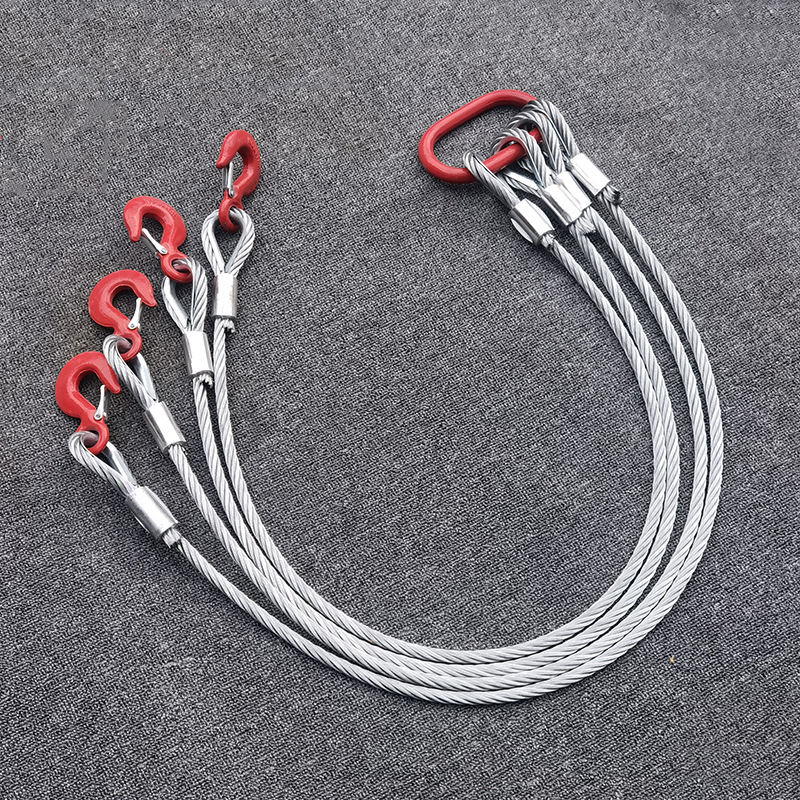
What Causes Twist and Imbalance in a 4 Leg Wire Rope Sling Carbon Steel
Twist and load imbalance in a 4 Leg Wire Rope Sling Carbon Steel assembly rarely come from one single defect. In field maintenance, the problem is usually a combination of rigging practice, sling condition, load geometry, and hardware matching. When one leg begins to carry more than its share, the sling stops behaving like a balanced lifting tool and starts acting like four separate load paths fighting each other. That is when rotation, unequal tension, premature wear, and unstable lifting show up.
For maintenance teams, the practical question is not just “why did it twist,” but “what changed compared with normal service.” A sling that worked well last month can become unpredictable after overload, hook substitution, rough handling, or a change in lifting point arrangement. Finding the root cause early matters because twist is not only a visual issue. It can reduce effective working condition, damage wire rope structure, and create side loading on fittings.
Uneven leg length is the first place to look
A four-leg sling is very sensitive to length consistency. Even a small difference between legs can shift load to one or two ropes while the others appear loose or lightly loaded. In a real lifting setup, not all four legs carry equal force unless the load is symmetrical, the connection points are correctly positioned, and the leg lengths match within the intended tolerance.
Length mismatch may come from manufacturing variation, but in service it is more often linked to deformation of end fittings, pressed sleeve movement, wire rope stretch after misuse, or unauthorized repair. If one leg has been kinked or shock loaded, its structure may no longer sit naturally. That can create visible spiraling and change the way the leg settles under tension.
Incorrect rigging angles create hidden imbalance
Maintenance personnel often see a sling that “looks fine” on the ground but twists once the lift begins. A common reason is unequal leg angle. In a 4 Leg Wire Rope Sling Carbon Steel setup, if one pair of legs is steeper and another pair is flatter, the flatter legs can attract higher force. The sling then tries to equalize itself during lifting, which may cause rotation or crossing.
This is especially common when lifting irregular fabrications, machine bodies with offset centers of gravity, or loads with lifting lugs installed at slightly different heights. The rope is not defective in itself; the geometry is forcing unequal loading. Inspection should therefore include the master link position, hook seating, and whether the lifting points are truly aligned in three dimensions rather than only from one viewing angle.
Twist can originate from poor handling before the lift starts
Not every twist is generated under load. Sometimes it is introduced during storage, transport, or hookup. Dragging the sling across the floor, pulling one leg through another, hanging it with residual torsion, or connecting it in a partially rolled state can preload the rope with rotation. Once the load comes on, that stored twist becomes visible.
This is one reason experienced manufacturers pay attention to process control long before the sling reaches site. Shandong Faster Technology Co., Ltd., for example, operates automated wire drawing, twisting, and rope closing lines together with inspection equipment so the rope, sling, and chain system can be controlled from raw material to finished product. That kind of consistency does not eliminate misuse in the field, but it helps maintenance teams separate service damage from manufacturing-related concerns.
Wear, deformation, and fitting condition matter more than many teams expect
When a sling starts twisting repeatedly, inspect more than the wire rope body. Look closely at thimbles, ferrules, hooks, connecting links, and the master link. A slightly opened hook throat, a worn saddle area, or an elongated connecting component can change the line of pull enough to create imbalance. The same applies when accessories from different systems are mixed without checking dimensional compatibility.
In some applications, especially where lifting and temporary securing overlap, maintenance teams also work with chain-based components. If shortening or lashing devices are used alongside slings, fitting quality becomes critical. A chain assembly built from alloy steel 20Mn2, with EN 818-2 alignment and full-welded links, may offer better durability for binding and fixing heavy objects in logistics or construction environments. One example is G80 Alloy Steel Welded Marine Lashing Link Chain Hot Dip Galvanized with Double Eye Grab Hooks 8mm 10mm, which is intended for heavy-object fixing and lifting assistance rather than replacing the sling itself. The point is simple: mismatch between rope sling hardware and auxiliary restraint hardware can introduce side forces that maintenance staff later read as “sling twist.”
Load distribution is often the real problem
A four-leg sling does not guarantee that all four legs share the load equally. In practice, depending on the load shape and lifting point accuracy, only two or three legs may take most of the force at certain moments. If the center of gravity is off, one leg can tighten first, then the others catch up unevenly. Operators may interpret that sequence as twisting, but the root issue is unstable load distribution.
This gets worse with long loads, flexible loads, or assemblies that shift during hoisting. A steel frame may sag slightly; a packaged machine may settle inside its base; a mining or port load may move after initial tensioning. When the load moves, the sling readjusts. What looks like a rope problem can actually be dynamic movement of the load itself.
What to check during troubleshooting
A useful inspection routine is to compare the suspect sling against three questions: has the geometry changed, has the hardware changed, or has the rope condition changed?
- Lay the sling out flat and check whether all legs settle naturally without crossing or rolling.
- Measure effective leg lengths under consistent reference points.
- Inspect for birdcaging, kinks, crushed areas, strand displacement, or localized abrasion.
- Check ferrules, thimbles, hooks, and master links for deformation or unusual wear marks.
- Confirm that the lifting points on the load are positioned and rated as intended.
- Review whether the sling has recently been used at a different angle, on a different load family, or with different connecting hardware.
If the sling passes visual inspection but still twists in service, the next step is usually to review the rigging plan rather than keep changing slings. That includes angle calculation, hook orientation, and whether a different assembly type would control the load better.
Prevention usually comes down to system thinking
The most effective prevention method is to stop treating the sling as an isolated component. Rope, sling, chain, hooks, load points, and operating method work as one system. Manufacturers with integrated rope-sling-chain capability are often better placed to support this kind of evaluation, especially when users need customized pressed slings, corrosion-resistant options such as galvanized or stainless wire rope, or matching chain grades from G30 up to G100 for related fixation and handling tasks.
For after-sales maintenance work, that means documenting actual service conditions, not only nominal specifications. If a 4 Leg Wire Rope Sling Carbon Steel assembly keeps showing twist or imbalance, do not assume the rope is at fault or that replacement alone will solve it. Check leg equality, connection geometry, fitting wear, load movement, and any auxiliary hardware in the lifting setup. Usually the answer is found there.
Where conditions are harsh or the load shape is awkward, it is worth confirming whether the original sling design still matches the application, or whether a revised configuration, alternative end fitting, or related securing component such as G80 Alloy Steel Welded Marine Lashing Link Chain Hot Dip Galvanized with Double Eye Grab Hooks 8mm 10mm is more appropriate for part of the job. That decision usually needs to be made against actual parameters, handling method, and the relevant lifting standard.
Navigation
Send Us A Message



Shandong Faster Technology Co., Ltd. is a professional manufacturer of steel wire ropes.
Get in Touch
*We respect your confidentiality and all information are protected.