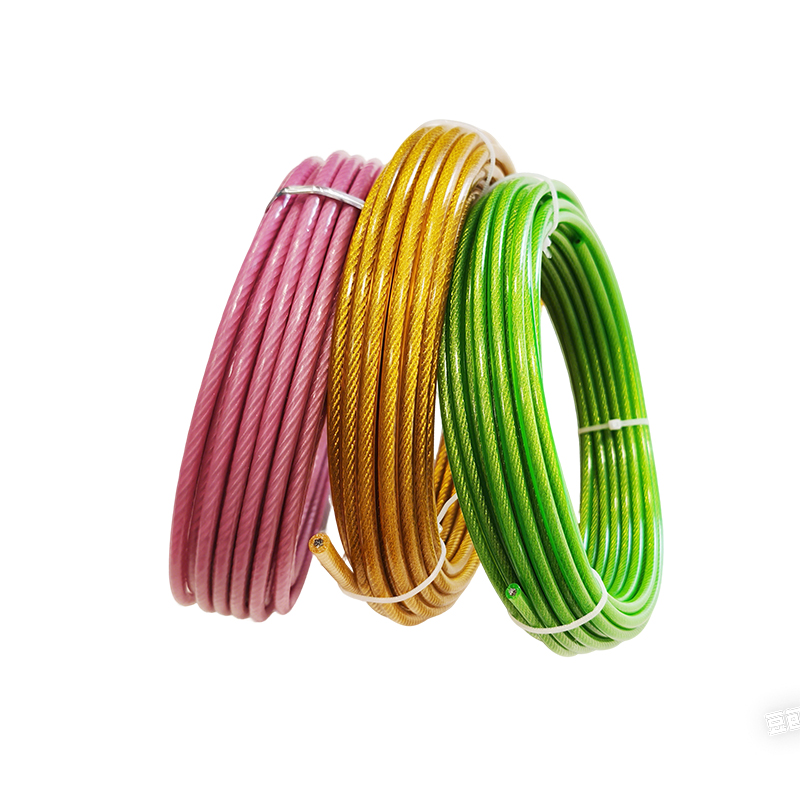
How to Choose Coated Wire for Corrosive and Wet Environments
In wet plants, marine facilities, construction zones, and outdoor agricultural setups, coated wire often fails earlier than expected for one simple reason: it was chosen only by diameter or price, not by the actual exposure conditions. Once moisture, salt, chemicals, or repeated abrasion get involved, the wrong wire can corrode from the inside, crack at the coating surface, or lose flexibility long before its planned replacement cycle.
If you are comparing options for lifting support, bundling, towing, fixing, or general industrial handling, the key is to evaluate coated wire as a system rather than just a surface finish. Coating type, base material, strand structure, load pattern, and maintenance conditions all affect whether the wire will remain reliable in corrosive and wet environments.
Why coated wire selection becomes difficult in real working conditions
Many selection problems start with a reasonable but incomplete assumption: if the wire has a coating, it must already be protected. In practice, that is only partly true. A coating can reduce direct contact with water or contaminants, but it does not automatically solve every corrosion problem. If the wire is exposed to standing moisture, mud, salt spray, cleaning chemicals, repeated bending, or friction against pulleys and edges, the protective layer may wear down in specific points first. Once that happens, corrosion often begins locally and then spreads.
Another common issue is that wet environments are rarely only wet. Ships and ports bring salt. Mining and construction bring grit and abrasion. Agricultural use may involve fertilizer, soil, and frequent outdoor storage. In these cases, choosing coated wire only on the basis of “rust resistance” misses the bigger question: what kind of damage is most likely to happen first, and can the wire structure tolerate it?
For technical buyers and maintenance teams, the consequence is usually not immediate total failure. More often, it shows up as shortened service life, rising inspection frequency, poor handling, surface damage, or uncertainty about whether the wire is still safe to keep in use.
Common mistakes when choosing coated wire
One frequent mistake is treating all coatings as equivalent. Galvanized, plastic coated, and stainless-based wire products behave differently. Galvanizing improves corrosion resistance, but the level of protection still depends on the process and the environment. Plastic coating can add another barrier, but if the coating is cut or damaged during use, the underlying material still matters. Stainless options may perform better in some corrosive settings, but they are not automatically the best fit for every load or cost target.
A second mistake is ignoring the wire core and construction. In wet environments, flexibility and fatigue resistance are often just as important as surface protection. A wire used in repeated bending or movement may need a structure that balances strength with easier handling. Buyers sometimes focus on tensile strength alone and overlook whether the construction suits towing, tying, light lifting, or fixed-position restraint.
The third mistake is selecting by short-term appearance. A bright new surface can look convincing during purchase, but what matters is how the wire behaves after exposure, contact wear, and repeated loading. Coated wire should be judged by expected service conditions, not by how clean it looks on the reel.
How to assess coated wire for corrosive and wet environments
A practical way to choose coated wire is to work through a shortlist of conditions instead of jumping straight to product names. This helps prevent overbuying in light-duty jobs and under-specifying in more demanding ones.
- Define the exposure clearly. Ask whether the wire will face fresh water, salt water, humid indoor air, mud, washdown cleaning, or chemical splash. Corrosion behavior changes a lot between these conditions.
- Check whether abrasion is constant or occasional. If the wire drags, rubs, or bends frequently, coating damage may happen faster than chemical corrosion. In that case, the strand design and wear resistance matter as much as the coating.
- Confirm the load type. Static fixing, periodic towing, and repeated lifting create different stresses. A coated wire for bundling may not be suitable for cyclic movement.
- Look at flexibility requirements. Tighter routing, smaller pulleys, and frequent handling usually call for a more flexible construction. A stiffer wire can become harder to manage and more vulnerable to localized fatigue.
- Match the base material to the environment. Coating is only the outer defense. The substrate still determines what happens if the surface is worn, cut, or aged.
- Review standards and supply consistency. In industrial purchasing, reliable production control and recognized manufacturing standards help reduce variation between batches.
When galvanized coated wire makes sense
Galvanized coated wire is often a sensible choice when the environment is wet or intermittently corrosive, but the application still requires a practical balance of strength, availability, and cost control. It is commonly considered for cargo bundling, light to medium traction, building material fixing, ship-related handling, and general outdoor use where unprotected bright wire would not hold up well enough.
For example, in applications where the wire needs corrosion resistance plus workable flexibility, a galvanized rope construction with a fiber core may fit better than a more rigid alternative. A product such as 6x12+7FC Galvanized Steel Wire Rope 3-12mm Use for Tying Towing Light Load Agriculture is the kind of option buyers often review when they need support for tying, towing, light load agriculture, cargo bundling, or small and medium-sized lifting under mixed outdoor conditions. The useful point here is not the product name itself, but the combination of galvanized surface protection, multi-wire structure, and a fiber core that can help with flexibility in handling.
That said, galvanized coated wire is not a universal answer. If the wire will stay in aggressive chemical exposure, permanent salt spray, or applications where coating damage is unavoidable and severe, you may need to compare it against stainless or additional protective approaches rather than assuming galvanizing alone is enough.
How to compare options without overcomplicating the decision
If you are stuck between several coated wire options, it helps to reduce the decision to four comparison points.
First, compare the environment severity. For mild outdoor moisture, a galvanized solution may be adequate. For frequent salt exposure or long-term corrosive contact, the selection threshold should be higher.
Second, compare movement and bending. A wire used in repeated towing or routing around equipment needs a construction that can tolerate motion. This is where strand arrangement and core design become important, not just nominal diameter.
Third, compare inspection practicality. Some coated wire products are easier to inspect visually for wear, broken wires, or coating damage. In operations with limited maintenance windows, easier inspection can be a real operational advantage.
Fourth, compare supply suitability. Diameter range, packaging form, required reel length, and delivery stability are not secondary details. They affect installation efficiency and replacement planning. In many industrial settings, a supplier with stable process control, broad rope specifications, and the ability to align rope, sling, and chain supply can simplify purchasing and reduce mismatch between components.
That is one reason companies working across lifting, ships, ports, construction, mining, and similar sectors often look for manufacturers with consistent production capability in galvanized, stainless, and plastic coated wire rope, along with inspection control from raw material to finished product. It gives buyers more room to match the coated wire choice to the actual job instead of forcing one material into every scenario.
A practical selection checklist before placing an order
- Identify whether the wire will face fresh water, salt, mud, or chemical contact.
- Confirm whether the main task is lifting, towing, bundling, fixing, or static restraint.
- Check if the wire will bend repeatedly or mostly stay in one position.
- Choose the diameter based on load and handling needs, not only on existing habit.
- Verify the material and finish, such as bright, electric galvanized, hot dip galvanized, stainless, or plastic coated.
- Review relevant manufacturing standards and whether the supplier can provide stable quality across batches.
- Confirm packaging, reel length, and replacement logistics for your site conditions.
This kind of checklist prevents a very common purchasing problem: ordering coated wire that looks technically acceptable on paper but does not align with how the site actually uses it.
Frequently Asked Questions
Is coated wire always better than uncoated wire in wet environments?
Usually yes, but only if the coating and base material match the environment. A coating improves protection, but it does not remove the need to evaluate abrasion, load pattern, and corrosion severity.
How do I know whether galvanized coated wire is enough for my application?
Start by checking the actual exposure. For outdoor moisture, intermittent wetting, and many general industrial uses, galvanized options are often practical. For aggressive salt or chemical conditions, compare galvanized wire against higher-resistance materials and consider how quickly surface damage may occur in use.
Does higher tensile strength automatically mean longer service life?
No. Higher tensile strength matters, but service life also depends on fatigue resistance, flexibility, coating durability, and whether the rope construction suits the movement and contact conditions.
Can one coated wire type cover lifting, towing, and bundling at the same time?
Sometimes, but it should not be assumed. These tasks create different stresses. A wire that performs well for bundling or light towing may not be the right choice for repeated lifting duty without confirming the construction, diameter, and intended use.
Final takeaway
The best coated wire for corrosive and wet environments is not simply the one with the most protective-sounding finish. It is the one that fits the real exposure, movement, load, and inspection conditions of your application. If you compare coating type, base material, strand construction, and site handling requirements in a structured way, the selection becomes much clearer.
For many industrial users, that means starting with a realistic environment review, then narrowing the options to coated wire products that offer the right balance of corrosion resistance, flexibility, and strength. When the job includes light to medium outdoor handling, tying, towing, bundling, or similar work, a galvanized rope option such as the linked product may be a sensible reference point during evaluation, provided the final choice is still checked against the actual duty conditions.