





PU Coated Galvanized Wire: Where It Adds Abrasion Protection and When It Does Not
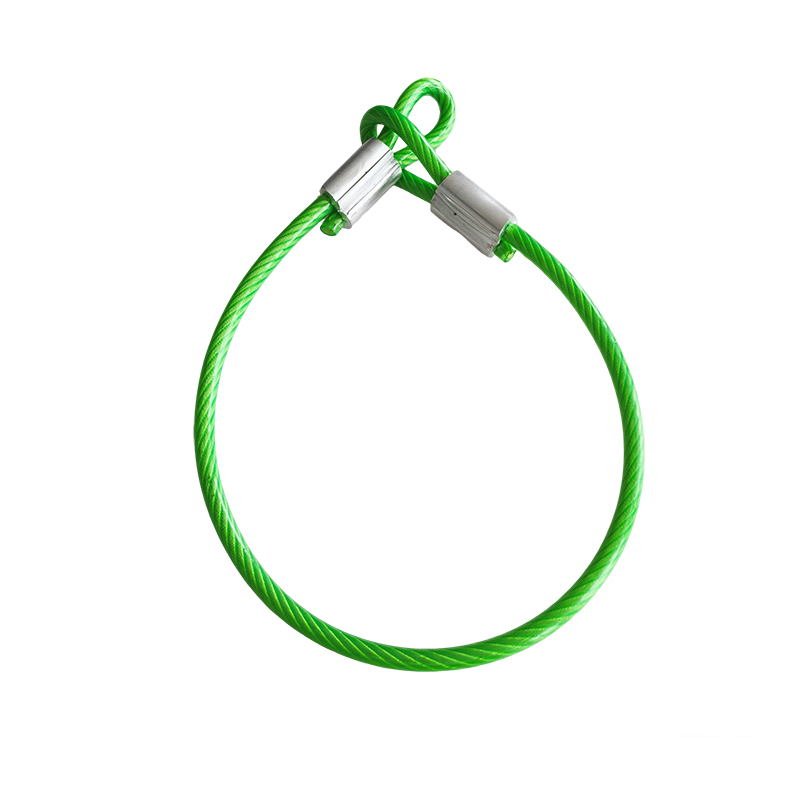
Where PU Coated Galvanized Wire Actually Helps
PU coated galvanized wire is usually selected for mixed environments, not extreme ones.
The zinc layer supports corrosion resistance, while the PU surface improves handling, reduces direct metal contact, and protects nearby parts from scuffing.
That combination sounds like a simple abrasion upgrade. In practice, abrasion performance depends on movement type, contact pressure, edge geometry, and contamination.
A PU coated galvanized wire can last well in one installation and fail early in another, even under similar loads.
Different Jobsite Conditions Create Different Wear Patterns
The main mistake is treating all abrasion as the same problem.
Some applications involve light rubbing against smooth frames. Others involve repeated flexing, dragged contact over rough steel, or trapped grit acting like sandpaper.
In cleaner indoor assemblies, PU coated galvanized wire often adds meaningful surface life.
In dirty outdoor equipment, the coating may protect at first, then wear through faster once debris embeds into the surface.
That is why material selection should begin with motion and contact conditions, not with coating type alone.
Low-impact routing and protective bundling
One of the better uses for pu coated galvanized wire is cable guidance, light restraint, and organized routing inside equipment frames.
Here, the coating helps prevent metal-to-metal marking and gives a cleaner touch surface during installation or maintenance.
Abrasion risk is usually moderate because motion is limited and contact edges are often controlled.
In these cases, the added layer can be useful even when it is not thick, because the goal is surface protection rather than severe wear resistance.
Repeated sliding across edges or channels
The judgment changes when wire passes through guides, slots, or metal openings under repeated motion.
If the edge radius is tight, local pressure rises quickly.
A pu coated galvanized wire may still reduce initial scuffing, but the coating can cut, peel, or flatten if the path geometry is poor.
Once the PU layer is breached, performance returns to the galvanized substrate, and wear behavior changes immediately.
This is where guide redesign often matters more than changing wire finish.
Outdoor handling with moisture and dirt
Outdoor assemblies often motivate the use of pu coated galvanized wire because corrosion and appearance both matter.
The benefit is real when contact remains intermittent and surfaces stay relatively smooth.
The limit appears when mud, dust, or mineral particles build up around the contact zone.
Under those conditions, abrasion is no longer just rubbing. It becomes abrasive grinding, and the coating may wear unevenly.
Periodic cleaning then becomes part of material performance, not a separate maintenance issue.
The Comparison That Usually Clarifies the Choice
A short comparison helps separate suitable uses from over-specification.
When Adjacent Components Change the Decision
Wear is often driven by the mating component, not only by the wire.
For example, a coated wire near lifting or transport hardware may encounter chain, hooks, brackets, or vibrating frames.
In those systems, the better solution may be to separate functions.
Use coated wire where surface protection and light restraint are needed, and use dedicated load components where force transfer and dragging dominate.
That is why related hardware choices matter.
In conveying, hoisting, or equipment fixing layouts, an option such as Welded Steel Electric Galvanized Ordinary Short Medium Long Link Chain may fit better for connection or binding duties.
Its electric galvanized finish, Q235 or Q195 carbon steel base, and size range from 2-32mm address a different working envelope.
Short, medium, and long link forms also make more sense where span, flexibility, and load path control must be balanced.
Common Misjudgments Before Specification
- Assuming abrasion protection means resistance to sharp-edge cutting.
- Checking coating presence but ignoring coating thickness and hardness.
- Looking at corrosion needs only, while motion frequency stays undefined.
- Treating indoor vibration and outdoor dragging as similar conditions.
- Comparing purchase price without considering inspection and replacement intervals.
These errors usually lead to false confidence.
A pu coated galvanized wire can be a practical specification, but it is rarely a cure for aggressive wear geometry.
A Practical Way to Judge Fit Before Final Selection
Start by mapping the real contact path.
Confirm whether the wire rubs, flexes, slides, or only stays under light restraint.
Then review edge shape, contamination level, exposure to moisture, and expected inspection access.
If abrasion comes from frequent sliding or heavy dragging, redesigning the interface is usually more effective than relying on coating alone.
If the need is cleaner handling, reduced surface marking, and moderate environmental protection, pu coated galvanized wire is often a reasonable choice.
Where the assembly also includes lifting, binding, or transmission sections, compare whether wire and chain should perform separate tasks.
A component such as Welded Steel Electric Galvanized Ordinary Short Medium Long Link Chain can cover applications that need tensile strength in the 300-700N/mm² range and breaking strength at 2-4 times working demand.
The most reliable decision comes from matching each material to its actual wear pattern, load role, and maintenance reality.
Navigation
Send Us A Message



Shandong Faster Technology Co., Ltd. is a professional manufacturer of steel wire ropes.
Get in Touch
*We respect your confidentiality and all information are protected.