





Is 7x7 Nylon Coated Stainless Steel 304 316 Wire Rope Worth the Higher Cost
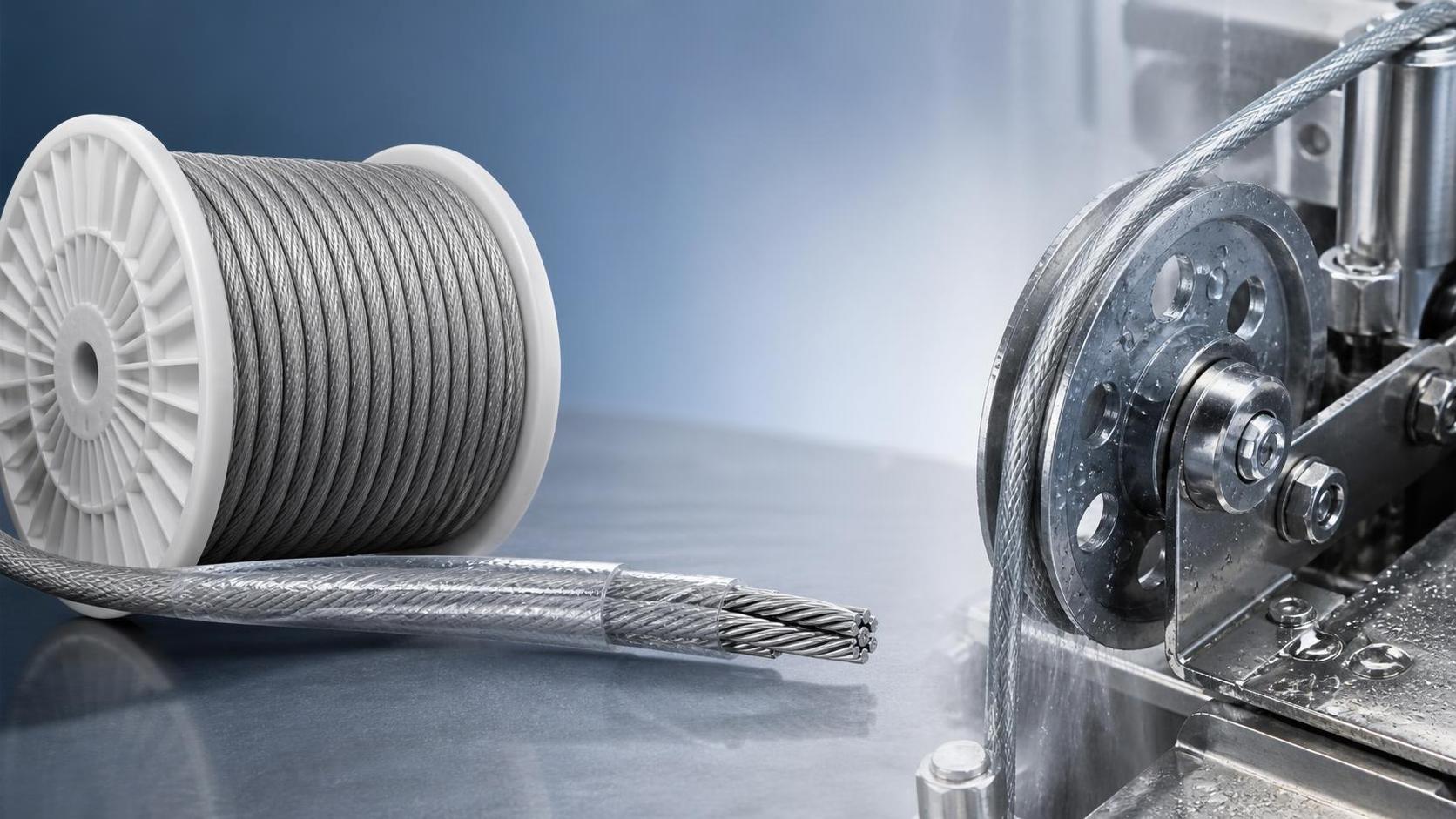
Meta Title: Is 7x7 Nylon Coated Stainless Steel 304 316 Wire Rope Worth the Higher Cost
If you are approving a purchase and comparing quotes, the higher price of 7x7 Nylon coated stainless steel 304 316 wire rope only makes sense when it reduces a bigger cost somewhere else. In practical terms, that usually means fewer replacements, less corrosion-related failure, lower maintenance time, and less risk of damaging nearby equipment or finished surfaces. If the rope will work indoors, stay dry, and see light duty, the premium may be hard to justify. If it will face moisture, salt, chemicals, repeated handling, or visible wear, the higher-cost option often pays for itself over time.
A short answer: 7x7 Nylon coated stainless steel 304 316 wire rope is worth the extra cost when downtime, corrosion, safety exposure, or appearance matter more than the cheapest unit price. It is usually not the best value when the application is simple, dry, temporary, and easy to replace.
Why buyers hesitate, and why that hesitation is reasonable
Finance teams usually see the first number on the quotation, not the full service life of the rope. That is why this product can look expensive at first glance. You are paying for several things at once: the stainless steel base material, the 7x7 construction, and the nylon coating.
Each of those adds cost for a reason. Stainless steel improves corrosion resistance. A 7x7 construction gives a useful balance between flexibility and strength for many control, support, guiding, and light-to-medium duty applications. The nylon coating adds another protective layer, reduces surface marking, and can improve handling in applications where the rope contacts pulleys, frames, railings, or finished parts.
The common mistake is to compare it only against plain carbon steel rope or even uncoated stainless rope by purchase price per meter. That comparison is too narrow. A better question is: what is the cost per month of usable service in the actual environment?
Where 7x7 Nylon Coated Stainless Steel 304 316 Wire Rope earns its price
The premium is easiest to justify in wet or corrosive environments. Marine hardware, port facilities, coastal construction, food-related washdown areas, outdoor architectural installations, and equipment exposed to rain or humidity all create conditions where lower-grade rope can degrade faster than expected.
This is where the 304 versus 316 choice matters. 304 stainless steel works well in many general environments, especially where moisture is present but chloride exposure is limited. 316 is typically the better fit when saltwater, coastal air, de-icing chemicals, or more aggressive corrosive conditions are involved. It costs more, but replacing failed rope in the field usually costs much more than the material difference.
The nylon coating adds value when the rope must do more than just hold load. In real installations, buyers often need to protect hands, reduce abrasion on contact surfaces, improve appearance, or avoid metal-to-metal marking. On paper, coating looks like a minor feature. In use, it can mean fewer complaints from maintenance teams and fewer damaged surrounding parts.
For financial approval, that matters because hidden costs rarely show up in the original quote. They show up later as service calls, emergency replacement, line stoppage, rejected finished goods, or faster asset wear.
When the higher cost is probably not justified
Not every application needs this specification. If the rope is used indoors, away from moisture, with limited movement, easy access, and a short replacement cycle, a lower-cost alternative may be perfectly rational. The same is true for temporary installations or noncritical applications where failure does not stop operations or create a safety issue.
Another point buyers sometimes miss: nylon-coated rope is not automatically the right answer for high-temperature conditions or applications where the coating may be damaged by sharp abrasion. In those cases, you need to verify the operating environment, bending conditions, and contact points before approving the premium version.
So the right buying decision is not “premium is better.” It is “premium matches the failure risk.”
How a finance approver should evaluate total cost
When operations or procurement asks for 7x7 Nylon coated stainless steel 304 316 wire rope, ask these five questions before signing off:
- What is the actual environment: dry indoor, outdoor weather, washdown, chemical, or marine?
- How expensive is replacement labor compared with the rope itself?
- What happens if the rope fails early: inconvenience, downtime, or safety exposure?
- Does the application benefit from coating because of surface protection, handling, or appearance?
- Is 304 enough, or is 316 justified by chloride or salt exposure?
If the team cannot answer these clearly, the decision is being made on habit rather than lifecycle logic.
In many industrial supply programs, the cheapest rope is only cheapest at the time of purchase. That is especially true where access is difficult or replacement must be scheduled with maintenance shutdowns. A rope that lasts meaningfully longer and avoids corrosion-related service events can be the lower-cost option over a year, even if the invoice line is higher today.
Supplier quality affects the cost equation more than many buyers expect
One more issue deserves attention: two ropes with similar descriptions do not always perform the same in service. Manufacturing consistency, wire drawing quality, strand closing control, coating uniformity, and inspection discipline all affect service life. For a finance approver, that means the decision is not just about material grade. It is also about whether the supplier can deliver repeatable quality.
Shandong Faster Technology Co., Ltd. works in the steel wire rope, sling, and chain sector with automated production lines for wire drawing, twisting, and rope closing, supported by inspection equipment for full-process quality control. The company supplies galvanized, stainless steel, and plastic-coated wire ropes in the 1-20mm range and also provides integrated rope, sling, and chain solutions for lifting, marine, port, construction, mining, and related uses. That kind of manufacturing breadth is useful when the real task is not simply to buy one rope, but to standardize reliable components across multiple working conditions.
In some projects, comparing rope alone is also too narrow. If the same site uses chains for lifting or traction, it can be useful to review adjacent product standards at the same time. For example, NACM90 EN818-2 G80 Black Heavy Duty 6mm 8mm 10mm Alloy Steel Lifting Chain is relevant when buyers need to separate rope applications from certified heavy lifting chain applications, especially in ports, construction, mining, or machinery handling. It is not a substitute for stainless wire rope, but it is a good reminder that the correct product category matters as much as the price category.
A practical approval rule
If the rope is used in corrosive, visible, safety-sensitive, or maintenance-heavy conditions, approve the better specification and focus on supplier consistency. If the application is low-risk and easy to service, challenge the premium and ask for a simpler option.
That is the cleanest way to think about 7x7 Nylon coated stainless steel 304 316 wire rope. You are not buying stainless and nylon for prestige. You are buying time, reliability, and fewer operational interruptions. When those three have real cost inside your business, the higher price is usually justified. When they do not, it probably is not.
FAQ
Is 316 always better than 304 for wire rope?
No. 316 is usually the better choice in salt-rich or chloride-heavy environments. In many standard indoor or mildly wet applications, 304 may be sufficient and more economical.
Does nylon coating make the rope stronger?
Not in the sense most buyers mean. The coating mainly helps with protection, handling, abrasion reduction, and surface contact. It does not replace proper load selection.
Is 7x7 the best construction for every job?
No. 7x7 is a practical middle ground for flexibility and strength, but the right construction depends on bending needs, load conditions, and service environment.
What is the biggest purchasing mistake?
Approving by unit price alone. For this product, replacement frequency, downtime, and environment usually matter more than the lowest initial quote.
Internal Link Anchor Text Suggestions
- stainless steel wire rope selection guide: guide or blog page
- 304 vs 316 wire rope for marine use: comparison page
- plastic coated wire rope applications: product category page
- how to choose lifting chain and wire rope: technical article
- industrial rope sling chain solutions: solutions page
External Authority Source Suggestions
- wire rope manufacturer technical documentation
- industry association standards and safety guidance for lifting and rigging
- stainless steel corrosion reference materials from recognized materials institutes
Navigation
Send Us A Message



Shandong Faster Technology Co., Ltd. is a professional manufacturer of steel wire ropes.
Get in Touch
*We respect your confidentiality and all information are protected.