





Independent Wire Rope Core Explained: Benefits, Trade-Offs, and Typical Applications
Independent Wire Rope Core Explained: Benefits, Trade-Offs, and Typical Applications
Choosing rope construction is rarely a small detail. It affects strength, bending behavior, wear rate, and how reliably the rope performs under pressure.
An independent wire rope core is often selected when higher crush resistance and stronger strand support are required in harsh service conditions.
At the same time, this design is not automatically the best choice for every installation. The real value depends on load pattern, drum condition, and bending demands.
This article breaks down what an independent wire rope core does, where it works well, and what should be checked before selection.
What Is an Independent Wire Rope Core?
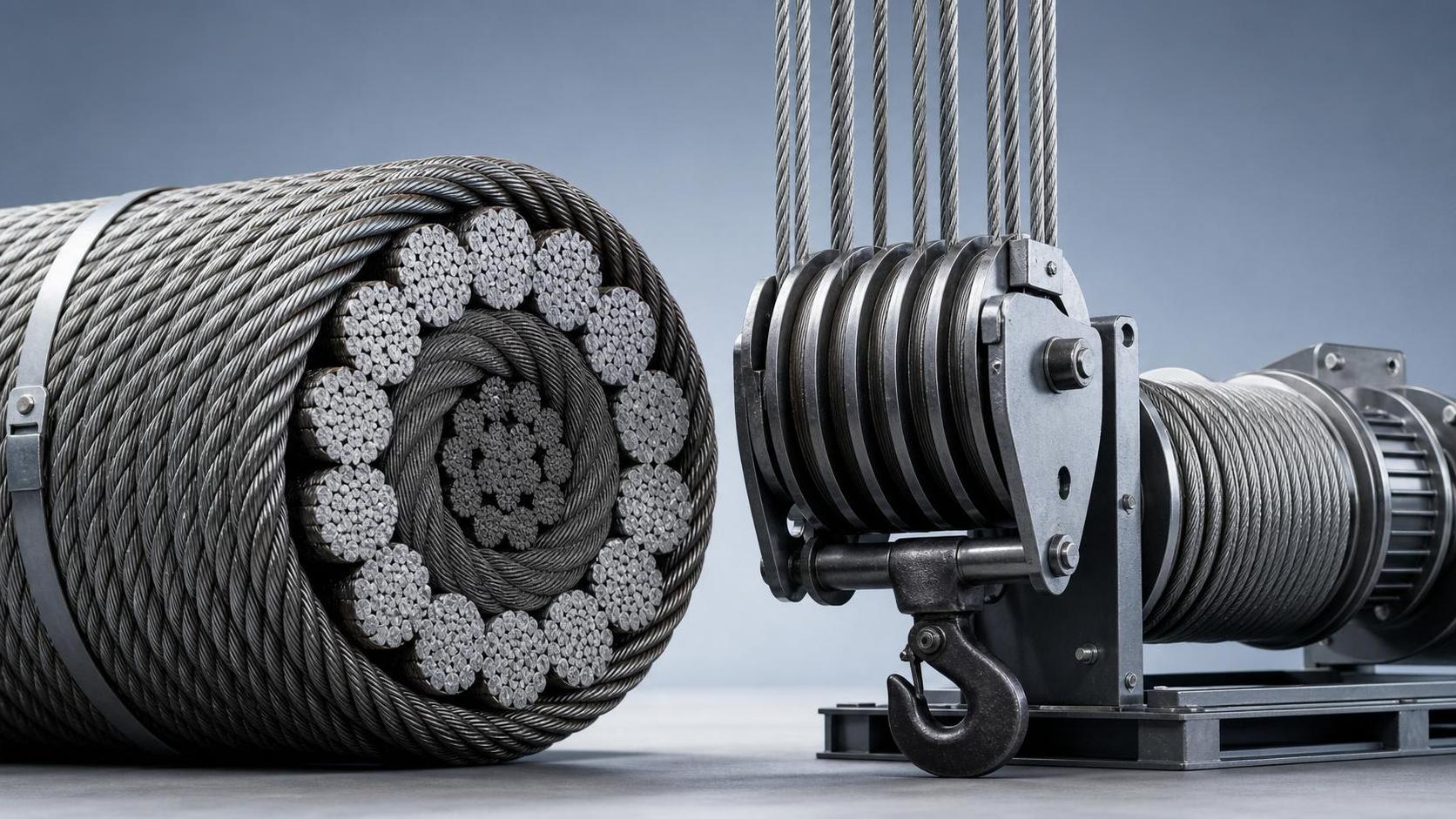
An independent wire rope core, often shortened to IWRC, is a wire rope with a separate steel wire rope used as its core.
That inner rope supports the outer strands. It gives the full assembly more structure than a fiber core or a simpler steel strand core.
In practical terms, the independent wire rope core helps the rope keep its shape when exposed to compression, multi-layer spooling, and heavier working loads.
This is why the independent wire rope core is common in lifting, hoisting, marine handling, mining, and other demanding industrial applications.
How It Differs From Other Rope Cores
The main comparison is usually against fiber core ropes and wire strand core ropes. Each design solves a different operating problem.
- Fiber core ropes are usually more flexible and may carry more lubricant, but they offer less support under compression.
- Wire strand core ropes provide steel support, yet they are generally less robust than an independent wire rope core.
- An independent wire rope core usually improves shape stability, load support, and resistance to crushing.
So the choice is not about which core is universally better. It is about matching construction to service conditions.
Key Benefits of an Independent Wire Rope Core
1. Better Crush Resistance
One of the biggest reasons to choose an independent wire rope core is better crush resistance.
When rope winds in multiple layers on a drum, upper wraps can press heavily on lower wraps. A stronger core helps the rope resist deformation.
2. Improved Support for Outer Strands
The independent wire rope core supports the outer strands more effectively. That support can reduce flattening and internal distortion during loading cycles.
More stable strand geometry often means more predictable performance, especially where rope movement is repetitive and stress levels are high.
3. Higher Strength Potential
In many constructions, an independent wire rope core contributes to a higher metallic content. That can support higher strength compared with fiber core alternatives.
This does not replace proper engineering calculation, but it often matters in heavy-duty specifications.
Trade-Offs You Should Not Ignore
The independent wire rope core has clear advantages, but there are trade-offs that should be understood before ordering.
- It is usually less flexible than fiber core rope.
- It may experience more internal stress on small sheaves or tight bending paths.
- It can be heavier, which may influence handling and system efficiency.
- It may cost more, depending on construction and surface treatment.
These trade-offs matter most when equipment uses small drum diameters, frequent reverse bending, or applications where flexibility is the main priority.
That is why independent wire rope core selection should always be linked to the actual machine layout, not just the load rating.
Typical Applications for IWRC Construction
An independent wire rope core is commonly used where ropes face high pressure, repeated loading, or rough operating environments.
- Overhead cranes and hoists
- Winch systems with multi-layer spooling
- Mining and quarry equipment
- Offshore and marine handling systems
- Construction lifting equipment
- Industrial pulling and tensioning systems
From a maintenance perspective, these are also environments where outer strand support and shape retention directly affect service life.
In contrast, lighter-duty securing tasks may call for a completely different product type, such as ASTM A413-80 Standard G30 Proof Coil Chain Galvanized Link Chain Q235 Carbon Steel Chain, which is suited to bundling, hanging, and non-lifting restraint work.
What to Check Before Selecting an Independent Wire Rope Core
Before specifying an independent wire rope core, focus on operating details rather than product labels alone.
- Check drum and sheave diameters. Small bending radii can reduce the benefits of a stiffer rope.
- Review spooling conditions. Multi-layer drums often favor an independent wire rope core.
- Confirm load type. Static, shock, and cyclic loading affect rope behavior differently.
- Evaluate the environment. Moisture, abrasion, dirt, and heat all influence rope life.
- Match lubrication and inspection practices to the rope design.
This step is where many selection mistakes happen. A strong rope can still perform poorly when the system geometry is wrong.
Quick Comparison Table
Final Takeaway
An independent wire rope core is a strong option when crush resistance, strand support, and structural stability matter more than maximum flexibility.
Its advantages are most visible in hoisting, winching, marine duty, and other high-demand systems where rope distortion can shorten service life.
The trade-off is straightforward. An independent wire rope core can be stiffer and less forgiving in tight bending situations.
The best decision comes from comparing load, drum geometry, environmental exposure, and inspection strategy together.
When those factors are reviewed carefully, the independent wire rope core becomes easier to evaluate and much easier to specify correctly.
Navigation
Send Us A Message



Shandong Faster Technology Co., Ltd. is a professional manufacturer of steel wire ropes.
Get in Touch
*We respect your confidentiality and all information are protected.