





Electro Galvanized Wire vs Hot-Dip Galvanized Wire: Key Differences for Industrial Use
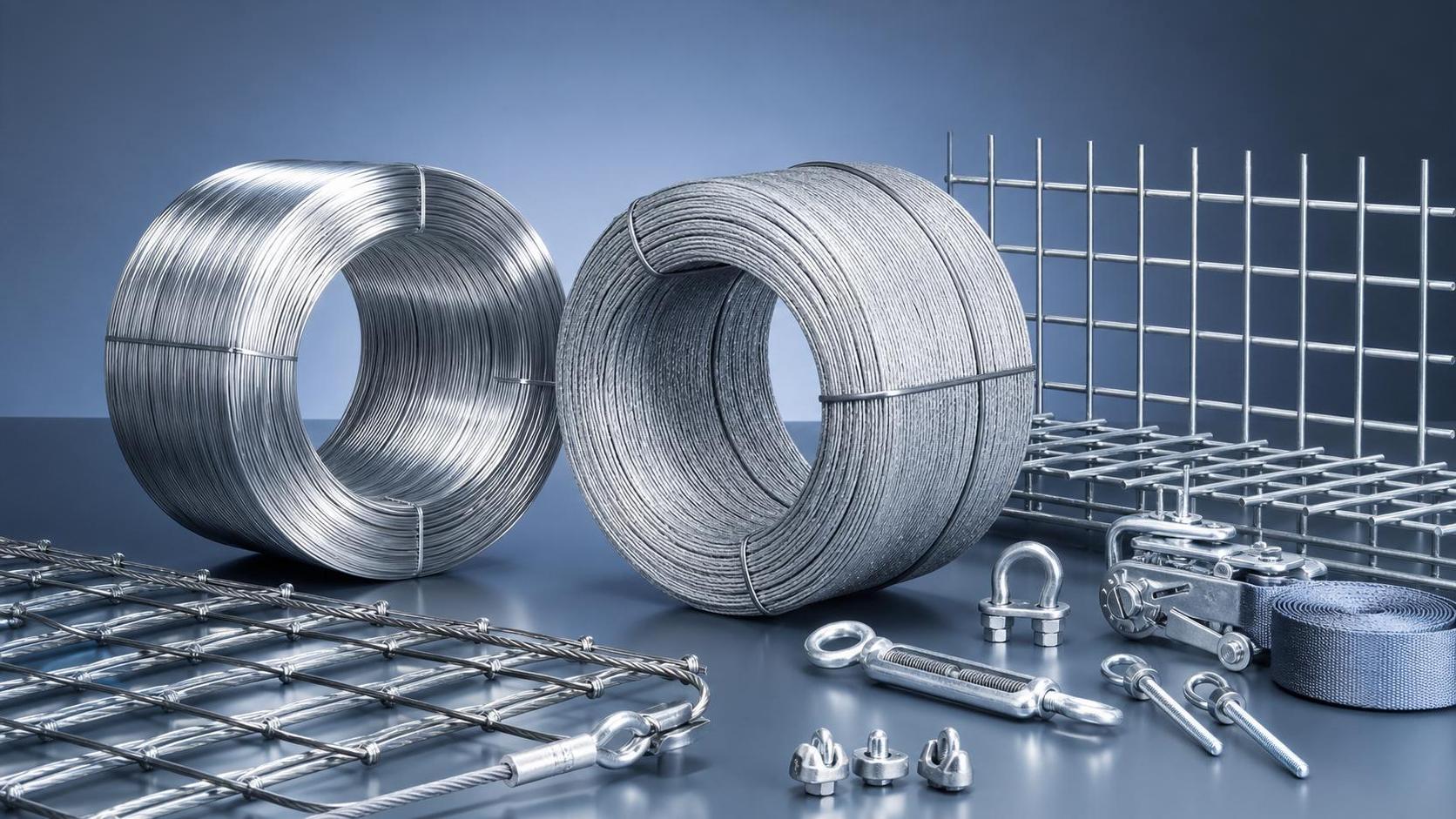
Choosing between electro galvanized wire and hot-dip galvanized wire affects more than appearance. It shapes corrosion resistance, service life, maintenance intervals, and the real cost of industrial operation.
In equipment, components, transport fixtures, and site hardware, the wrong coating can fail early. The right one supports stable performance under moisture, abrasion, storage exposure, and repeated handling.
That is why electro galvanized wire remains a frequent comparison point. It offers a clean finish and cost efficiency, but it does not behave the same way as hot-dip galvanized wire in harsh service.
What separates the two galvanizing methods
The main difference starts with how zinc is applied.
Electro galvanized wire receives zinc through an electroplating process. The coating is usually thinner, smoother, and more uniform in visual finish.
Hot-dip galvanized wire is immersed in molten zinc. This creates a thicker zinc layer, often with a rougher surface and a more industrial look.
Simple appearance can be misleading. In industrial specification work, coating thickness and bonding behavior usually matter more than brightness.
Why the distinction matters in industrial use
Industrial wire is rarely chosen in isolation. It works inside systems that include mesh, fasteners, cages, supports, link assemblies, and transport restraints.
When corrosion starts, failure often spreads through connection points first. That makes wire coating a reliability issue, not just a finishing choice.
Electro galvanized wire can be a practical option for shelving, light fabrication, internal partitions, and dry storage accessories. In these conditions, its cleaner surface and lower cost can be useful.
Hot-dip galvanized wire becomes more valuable where rain, salt, condensation, construction dust, or long outdoor storage are part of normal service.
Current evaluation focus
Today, coating choice is being reviewed more carefully because downtime and replacement labor are expensive. A cheaper wire can become the higher-cost option after installation.
Another factor is compliance. Projects tied to marine, logistics, construction, or lifting support often require closer review of finish durability and supporting material standards.
Performance trade-offs beyond corrosion
Corrosion resistance is central, but it is not the only issue.
Electro galvanized wire usually offers better cosmetic consistency. This can matter in visible assemblies or where smooth handling reduces minor surface marking.
Hot-dip galvanized wire usually performs better when the surface is scratched during installation or transport. The heavier zinc layer gives more protection margin.
This is especially relevant in lashing, bundling, or fixed-point contact applications. Repeated friction changes the life of coated metal parts faster than lab conditions suggest.
A related example is G80 Alloy Steel Welded Marine Lashing Link Chain Hot Dip Galvanized with Double Eye Grab Hooks 8mm 10mm. In logistics transportation and engineering construction, hot-dip galvanized protection supports exposed chain components that must resist wear and environmental attack together.
Where each wire type usually fits
The better choice depends on exposure, handling pattern, and replacement difficulty.
- Use electro galvanized wire for indoor racks, light welded products, packaging supports, and parts stored in controlled environments.
- Use hot-dip galvanized wire for fencing, agricultural installations, outdoor cages, marine-adjacent equipment, and transport hardware with weather exposure.
- Review either option carefully when the wire will bend often, rub against steel edges, or hold load-bearing attachments.
In mixed systems, coating alignment also matters. If wire connects to hot-dip galvanized chains, hooks, or frames, matching durability levels often improves whole-system consistency.
For example, a lashing assembly built around G80 alloy steel, EN 818-2 compliance, and hot-dip galvanized protection reflects a common industrial logic: strong base material, reliable welding, and corrosion control must work together.
How to judge the right specification
A useful decision process starts with the service environment, not the unit price.
- Check whether exposure is indoor, outdoor, coastal, humid, or chemically active.
- Estimate how often the wire will be touched, dragged, tensioned, or flexed.
- Review expected lifespan and whether replacement is simple or disruptive.
- Match coating type with related components, including hooks, chains, cages, and anchors.
- Ask for coating data, relevant standards, and finish consistency samples before approval.
This is where electro galvanized wire should be assessed carefully. It can be the correct answer, but mainly when the environment supports its thinner protective layer.
If the application includes heavy objects, irregular loads, or exposed fixing points, the wire should be evaluated as part of the larger restraint system.
A practical way to move forward
For most industrial comparisons, the choice is straightforward once the operating conditions are clearly mapped.
Electro galvanized wire suits controlled settings where finish quality and budget matter more than long-term exposure resistance. Hot-dip galvanized wire suits harder environments where maintenance risk is less acceptable.
The next step is to compare wire coating, handling pattern, connected components, and expected replacement cycle on the same checklist. That usually leads to a more defensible specification than price comparison alone.
Navigation
Send Us A Message



Shandong Faster Technology Co., Ltd. is a professional manufacturer of steel wire ropes.
Get in Touch
*We respect your confidentiality and all information are protected.