





How to spot broken wires in crane wire rope
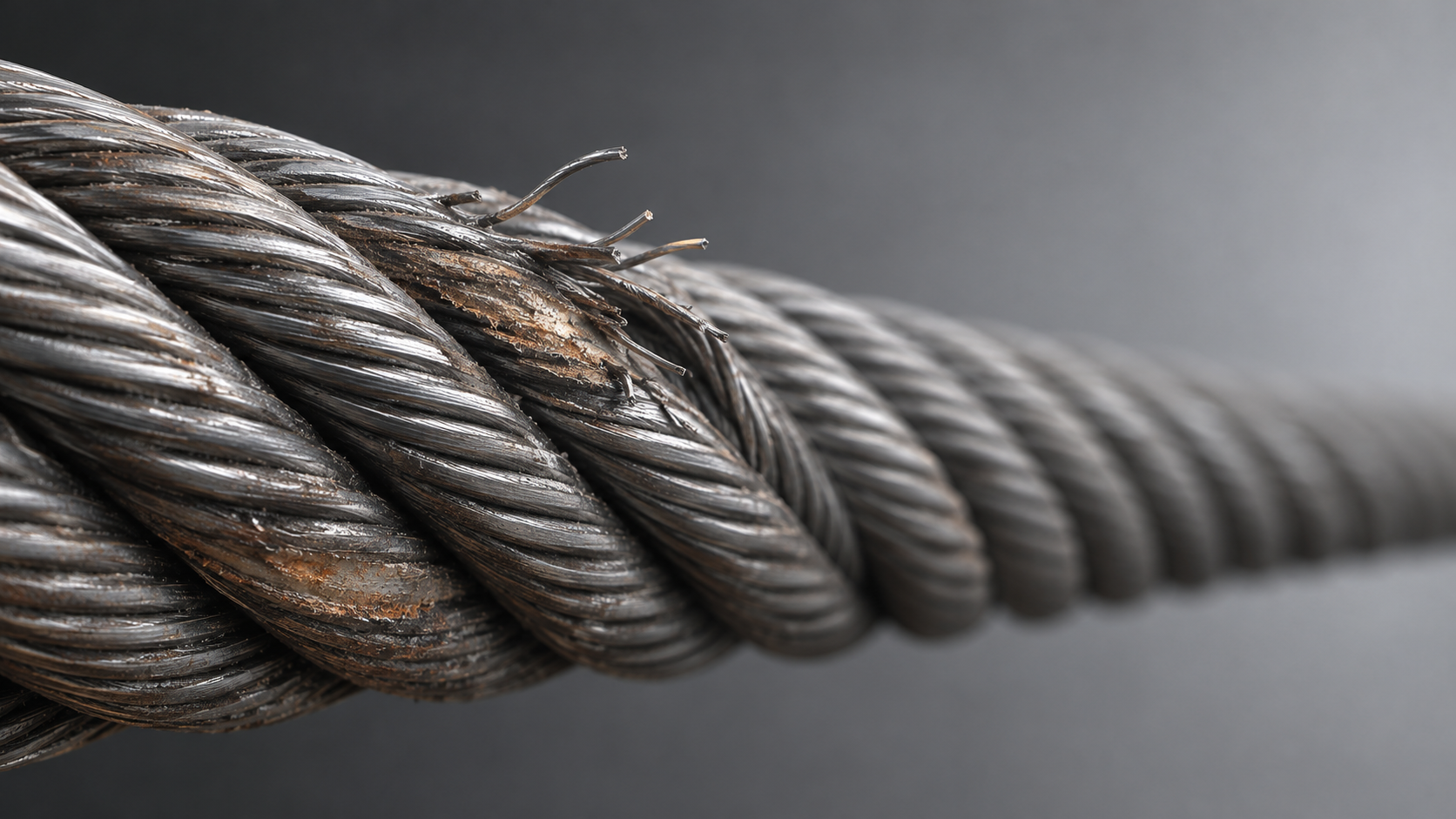
A broken wire in a crane wire rope may look like a short, bright end sticking out of a strand, a fine line across a worn surface, or a small gap where a wire has fractured. Look closely at sections that bend over sheaves, wind onto the drum, or sit near end connections. These areas can accumulate damage that is easy to miss from the cab.
Finding one broken wire does not automatically tell you whether the rope has reached its discard limit. The location, number and distribution of breaks, rope construction, and applicable criteria all matter. If you find damage or cannot determine its extent, stop using the affected rope, report it, and have a qualified person assess it before the crane returns to service.
Make the rope safe and accessible before looking
Follow the site’s crane isolation and inspection procedure. Place the load safely down, secure the equipment against unintended movement, and inspect only from a safe position. Never hold or wipe a moving rope. If the full working length cannot be seen from one position, arrange access under the site procedure; some sections may be hidden on the drum or at a sheave.
Use adequate lighting and position yourself so the light falls across the rope surface. Side lighting can make protruding ends and changes in surface texture easier to see. Remove loose dirt or excess lubricant only as permitted by the rope manufacturer’s instructions and site procedure. Heavy deposits can conceal damage, but aggressive cleaning can also remove needed lubrication or make the rope harder to assess.
Wear suitable hand protection and avoid running bare hands along the rope. A broken wire can be sharp even when it barely projects from the strand. A cloth can snag on a broken end, but snagging alone is not a reliable inspection method and should not replace a close visual examination.
What a broken wire looks like
Examine the rope strand by strand, looking at the outer wires as well as the grooves between strands. A break is not always dramatic. Depending on how the wire fractured and how the rope has moved, an end may stand proud, lie almost flush, or remain partly concealed.
- Protruding ends: Short, sharp tips may stick out from the rope surface. Several ends close together can give the rope a bristled appearance.
- Fine fractures: A wire may show a narrow line or separation across its surface, especially in a flattened or worn area.
- Gaps or uneven surfaces: A missing section of outer wire, a raised wire, or a local change in the strand pattern warrants closer examination.
- Rust staining or debris: Corrosion products around a strand or termination can obscure breaks and may indicate damage that needs further assessment.
Distinguish individual wires from the larger strands they form. A cluster of breaks in one small area can be more concerning than the same number spread over a longer length, depending on the applicable discard criteria. Do not estimate the condition from a quick glance at the rope as a whole.
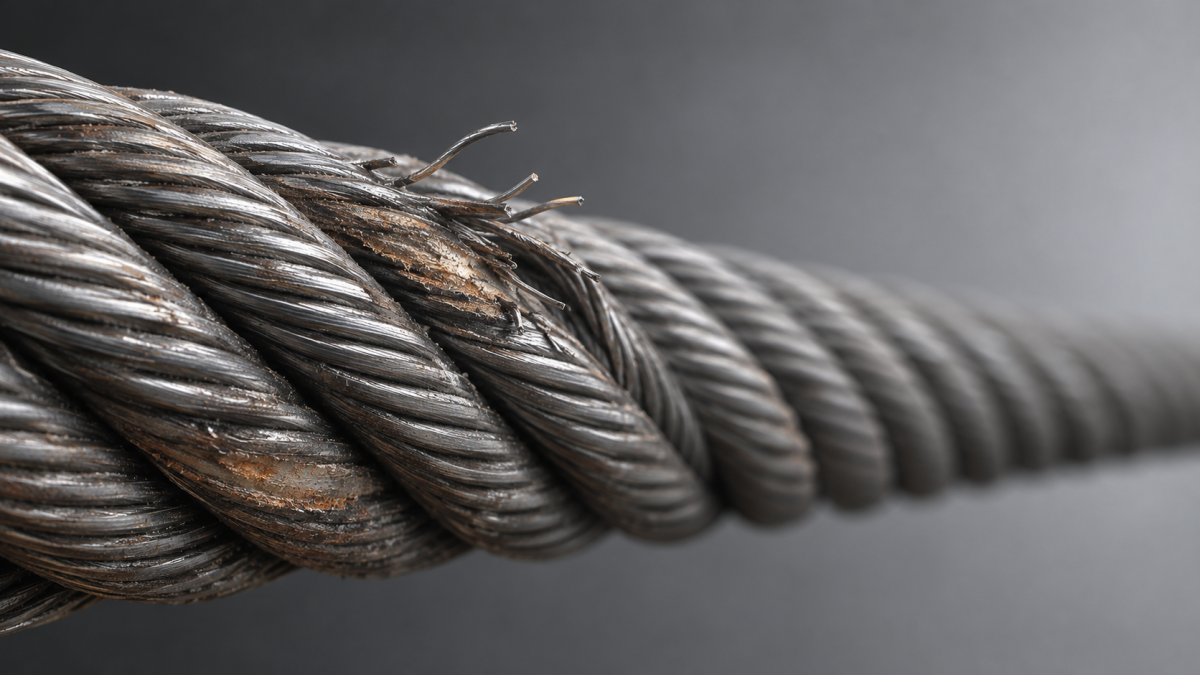
Some damage is difficult to see externally. A rope can have internal corrosion or broken wires between strands without obvious protruding ends. Do not pry the strands apart or bend the rope sharply to investigate unless an authorized inspection method calls for it. A qualified person should decide whether further examination is needed.
Where to look first
Sections passing over sheaves. Repeated bending can fatigue wires. Inspect the rope along the length that travels through the sheave system, paying particular attention to portions that repeatedly bend during normal lifting. Look on all accessible sides, including the grooves between strands.
Drum winding areas. Check sections that wind onto and off the drum, as well as transition areas where the rope changes layers. Crossovers, poor winding and contact between adjacent wraps can create localized wear or crushing. A damaged area may be hidden under another wrap, so a view of the exposed top layer alone is not a complete inspection.
Near end connections. Examine the rope where it enters a socket, wedge termination, clamp assembly or other fitting, as access permits. Also look for corrosion, distorted wires, movement or damage around the connection. Do not dismantle or adjust a termination unless you are authorized and following the applicable procedure.
Areas exposed to contact or contamination. Inspect places where the rope may rub against crane structure, touch abrasive material, or be exposed to moisture and corrosive deposits. A damaged section can appear polished, flattened or discolored rather than obviously broken.
Inspect the rest of the accessible rope as well. Damage can occur away from the expected wear points, especially after an incident involving overload, snagging, crushing or contact with an obstruction.
Record what you find, not just how it looks
When reporting a suspected break, identify the crane and rope, describe where the damage is, and note how the position can be found again. Record the number of visible broken wires and whether they are scattered or concentrated. Photographs can help communicate the condition, but include a reference to the location and provide a close enough view for the wires to be distinguished.
Also report related changes: a reduction or unevenness in diameter, kinks, crushed sections, displaced strands, corrosion, heat damage, or unusual rope movement. These observations may affect the assessment even when only a few broken wires are visible. Do not straighten a kink or trim protruding wire ends to make the rope appear serviceable.
A qualified person can compare the findings with the crane and rope manufacturers’ instructions, the applicable inspection standard and site requirements. The relevant limits depend on the rope and application; a count taken over the wrong length or applied to the wrong rope construction can lead to a false decision. Some conditions require removal from service regardless of the visible broken-wire count.
Do not overlook the lifting sling
The crane’s installed hoist rope and a removable wire rope sling are separate lifting components. Both can develop broken wires, but they must be inspected against the requirements applicable to each. For example, a two-leg assembly such as the Double Leg Swaged Wire Rope Sling with Safety Hook Galvanized High-Strength has two rope legs, swaged terminations and hooks that need examination as an assembly. Check each leg and the accessible areas at the fittings; damage to one leg is reason to remove the sling from use for assessment rather than continue lifting on the assumption that the other leg is sound.
Inspection should end with a clear disposition: the rope is accepted under the applicable criteria, remains out of service pending further examination, or is removed from service. Record that decision and the responsible person’s findings so the next operator does not have to guess whether a visible defect was assessed.
Navigation
Send Us A Message



Shandong Faster Technology Co., Ltd. is a professional manufacturer of steel wire ropes.
Get in Touch
*We respect your confidentiality and all information are protected.