





6x19 FC Wire Rope Applications: When Flexibility Matters More Than Abrasion Resistance
6x19 FC Wire Rope Applications: When Flexibility Matters More Than Abrasion Resistance
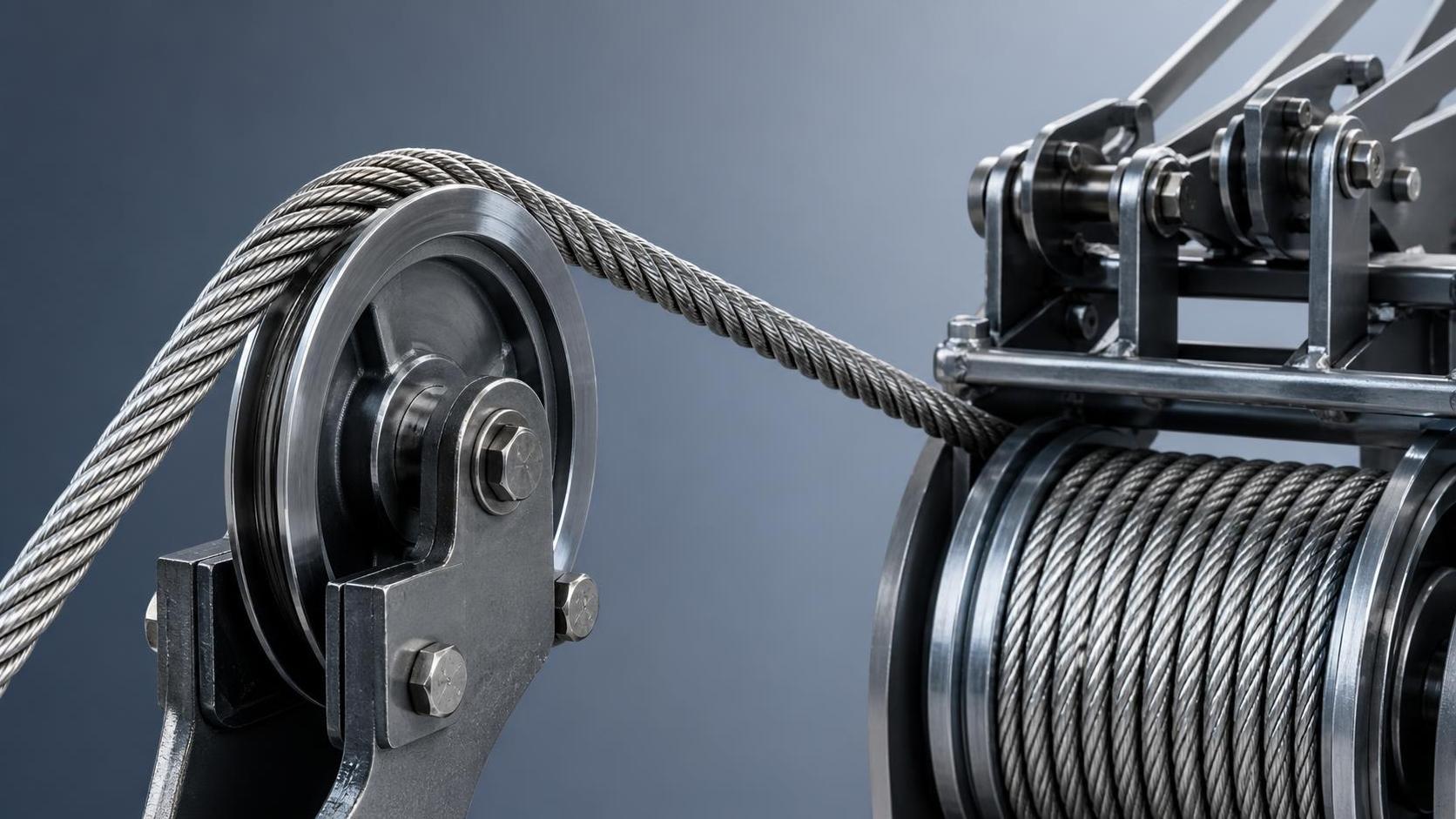
Selecting wire rope is rarely a matter of choosing the strongest construction on paper. In a working lifting, traction, or handling system, the rope must also travel smoothly around sheaves, bend repeatedly on a drum, retain lubrication, and avoid creating unnecessary stress in the equipment it serves. A 6x19 FC wire rope is often considered when those bending demands are more important than maximum resistance to surface abrasion or crushing.
For technical evaluators, the key question is not simply, “Can this rope carry the load?” It is, “Will this rope perform reliably through its intended duty cycle?” A rope that looks suitable by nominal breaking force alone may wear prematurely if it is too stiff for small sheaves. Conversely, an overly flexible construction may not be the right answer in a harsh, abrasive environment. The fiber-core 6x19 design sits in a useful middle ground, but only when its limits are understood.
What the 6x19 FC construction changes
The designation 6x19 generally describes a rope with six outer strands, each containing approximately 19 wires, laid around a central core. “FC” means fiber core. Depending on the rope specification, that core may be natural fiber or synthetic fiber designed to support the strands and retain internal lubricant.
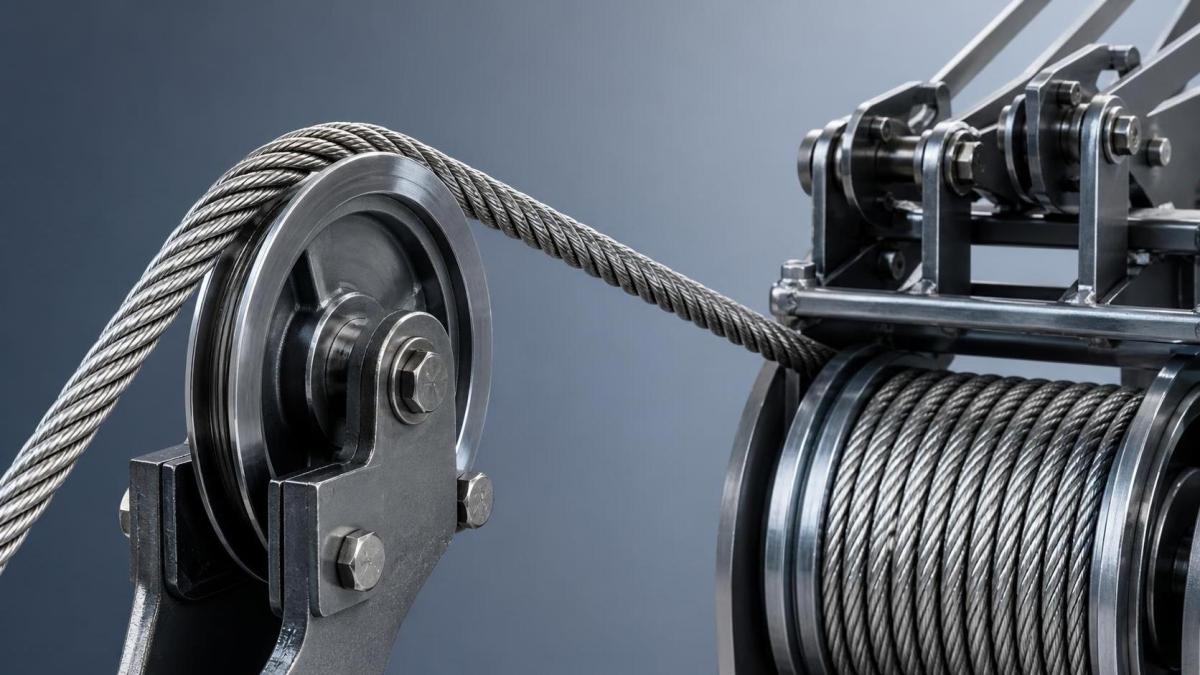
Compared with an independent wire rope core (IWRC), a fiber core is more compressible and allows the rope to bend more readily. This can be valuable where the rope repeatedly passes over sheaves, pulleys, capstans, or winch drums. The core also acts as a lubricant reservoir, helping reduce internal wire-to-wire friction when lubrication is properly maintained.
That flexibility comes with trade-offs. A 6x19 FC wire rope generally has lower minimum breaking force than an equivalent diameter rope with a steel core. It is also less resistant to crushing, flattening, and deformation under multiple wraps on a drum or where high side pressure is present. The selection therefore depends on the complete mechanical environment, not just the rope’s diameter and construction code.
Situations where a fiber core is the practical choice
A 6x19 FC construction is particularly relevant when bending fatigue is a primary design concern. It is commonly evaluated for lighter-to-medium duty lifting arrangements, manual or powered hoists, small winches, counterweight systems, utility traction, and general-purpose rigging where the rope travels over relatively small sheaves without severe crushing loads.
It can also be a sensible option for equipment that operates intermittently but experiences frequent rope articulation. Think of a compact workshop hoist lifting fabricated steel components, a dockside handling device cycling through short lifts, or a construction support system where a rope is continually reeved through pulleys. In these scenarios, a slightly more compliant rope may run more smoothly and place less stress on associated components.
The design is less attractive for severe mining duties, heavy multi-layer drum winding, high-impact grabs, or applications where the rope is dragged continuously across abrasive surfaces. In such cases, an IWRC rope or a construction with different strand geometry may provide better support against crushing and a higher metallic cross-section for the required design factor.
A useful comparison: flexibility is not the same as softness
How to judge whether abrasion is becoming the dominant risk
The phrase “abrasion resistance” can be misleading because rope wear is not caused by one mechanism. External abrasion occurs when outer wires rub against sheaves, guides, loads, or rough surfaces. Internal abrasion develops as wires and strands move against each other during bending. A fiber core can help manage internal lubrication, yet it cannot protect a rope from an improperly grooved sheave, a sharp edge, or abrasive debris.
Before specifying 6x19 FC, inspect the travel path. Are sheave grooves matched to the actual rope diameter? Is the rope likely to rub on structural steel during a lift? Will it spool in multiple layers, where upper wraps press into lower wraps? Is there dirt, salt, slurry, or metal scale that will work into the rope? These details often decide service life more clearly than a general statement that one construction is “wear resistant.”
For equipment exposed to ports, docks, fisheries, or marine-adjacent work, corrosion must be evaluated alongside flexibility. Galvanized, stainless steel, and plastic-coated rope options can address different exposure conditions, but coatings should not be treated as a substitute for correct rope construction, inspection, and lubrication.
From rope selection to a usable sling assembly
When the rope is made into an eye-to-eye sling, the assembly must be assessed as a system: rope construction, eye formation, ferrule or pressing process, thimble use where applicable, angle of loading, end fittings, and the geometry of the lifted object. A sling should never be selected from rope diameter alone. Its working load limit must be verified for the actual configuration and supported by the supplier’s identification and documentation.
For applications involving small equipment, steel parts, or machinery-factory components, a PVC-coated sling can add a practical protective layer. The coating helps reduce direct metal-to-metal contact and can limit scratches on finished surfaces. It may also simplify visual identification when different colors are assigned to particular duties or load categories. For example, the 12mm PVC coated wire rope Sling 5tons Heavy Duty Eye to Eye combines an eye-to-eye format with a colored PVC sheath for handling environments where surface protection and easier identification are useful.
Technical teams should still distinguish between the coated outside diameter and the load-bearing steel rope diameter. A PVC layer affects groove fit, bending behavior, inspection visibility, and sling handling; it does not automatically increase load capacity. If a coated rope is specified for a sheave system, confirm that the groove profile accommodates the finished diameter without pinching or excessive flattening.
Checks that prevent an otherwise good selection from failing early
- Match the sheave diameter to the rope: Smaller sheaves increase bending stress. Confirm the equipment manufacturer’s D/d guidance and the rope supplier’s recommendations for the intended duty.
- Review drum spooling: A fiber core is not ideal where severe multilayer winding creates crushing pressure. Check fleet angle, drum groove condition, and crossover zones.
- Do not ignore termination efficiency: Pressed eyes, clips, sockets, and other end terminations have different performance characteristics. Use the approved assembly method for the required rating.
- Inspect for broken wires and shape change: Broken outer wires, localized flattening, strand opening, kinks, birdcaging, and core protrusion are reasons for closer assessment or removal from service.
- Keep lubrication purposeful: The fiber core can retain lubricant, but external relubrication may still be necessary. Use a lubricant compatible with the rope environment and any coating.
Making the final call
A 6x19 FC wire rope is not a universal answer, and it should not be selected merely because it feels easier to bend by hand. Its value lies in applications where rope flexibility, smooth running over sheaves, and fatigue behavior deserve priority, while crushing loads and severe external abrasion remain controlled. This often makes it a practical construction for general lifting, light-to-medium hoisting, and equipment with frequent rope travel.
For a defensible specification, define the load, duty cycle, sheave and drum geometry, reeving arrangement, environmental exposure, termination type, and inspection plan before placing an order. Manufacturers able to supply galvanized, stainless steel, and plastic-coated ropes across multiple constructions can then help align the rope, sling, and chain components with the actual operating conditions rather than forcing the application to fit a standard product.
Navigation
Send Us A Message



Shandong Faster Technology Co., Ltd. is a professional manufacturer of steel wire ropes.
Get in Touch
*We respect your confidentiality and all information are protected.