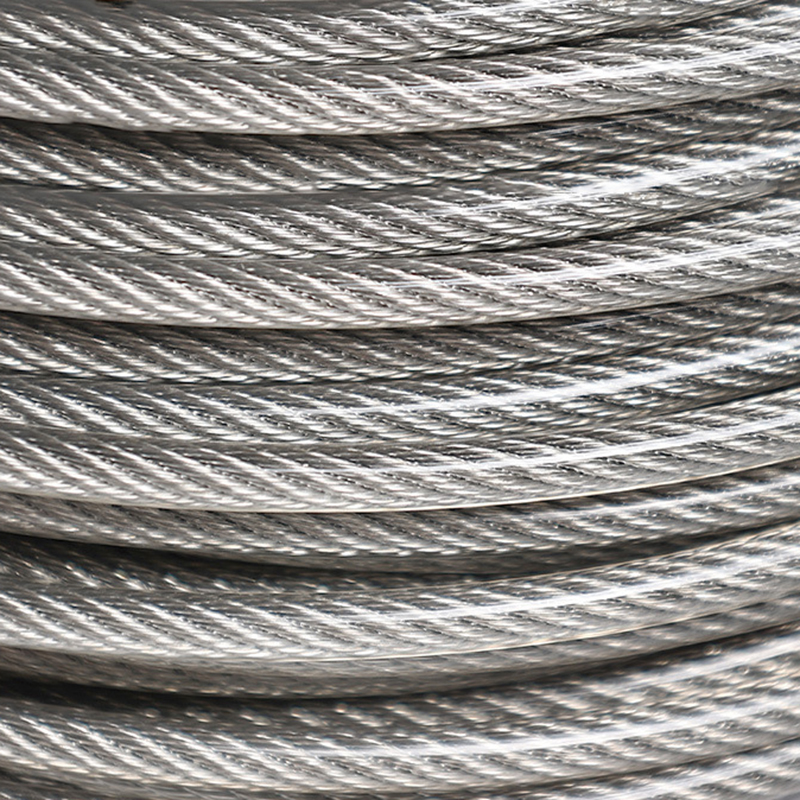
How to Reduce Handling Damage to Coated Wire in Storage and Transport
Coated wire often leaves the production line in good condition but starts losing value during storage, loading, unloading, or jobsite transfer. Scratches, flat spots, crushed coils, moisture exposure, and poor stacking are common issues, and once the coating is damaged, the wire may become harder to use, less resistant to corrosion, and more likely to fail early in demanding environments.
If you are responsible for warehouse handling, packaging, purchasing, or field installation, the challenge is usually not a single mistake. It is a chain of small decisions: how the coil is packed, how it is lifted, where it is stored, what it touches during transport, and whether anyone checks the condition before use. Getting those details right is the practical way to protect coated wire.
Why handling damage to coated wire becomes a recurring problem
Many teams assume coated wire is protected simply because it has an outer layer. In real handling conditions, that coating is often the first part to suffer. Rough contact with steel edges, dragging coils across the floor, tight strapping, forklifts pressing on the outer wraps, and long exposure to damp storage areas can all create damage before the wire is ever installed.
The frustrating part is that the damage is not always obvious at first glance. A coil may still look usable, but small cuts, abrasions, or compression marks can reduce the coating's protective effect. In industrial settings such as ports, construction sites, marine work, mining support, or rigging preparation, that can lead to extra inspection time, more waste, and avoidable replacement.
Common signs that coated wire has been mishandled
Before changing procedures, it helps to identify what kind of damage you are actually seeing. Different symptoms often point to different handling problems.
- Surface scratches or scuffing usually suggest dragging, rubbing against rough pallets, or poor separation between coils.
- Flattened areas or coil deformation often come from over-stacking, point loading, or lifting the bundle incorrectly.
- Coating cracks can appear when wire is bent too tightly in cold conditions or forced around sharp corners during loading.
- Sticky, stained, or discolored surfaces may indicate contamination from oils, chemicals, or prolonged contact with wet packaging.
- Rust marks near damaged coating are a warning that moisture has already reached the underlying material.
When these signs appear repeatedly, the issue is usually procedural rather than material-related. That is why random spot fixes rarely solve the problem for long.
Where Coated wire is most vulnerable during storage and transport
A useful way to reduce losses is to think in stages. Coated wire is exposed to different risks at each stage, and the protective method should match that stage.
During internal storage: coils stored directly on the floor can absorb moisture and collect dirt. Stacks that are too high can compress lower layers. Shared storage with chains, hooks, or sharp steel parts increases the chance of abrasion.
During warehouse movement: forklift tines can pierce packaging, and unprotected contact points can squeeze the wire. Manual handling also causes problems when coils are rolled, dropped, or pulled by the outer wrap.
During transport: vibration, shifting loads, and overtightened tie-downs can damage the coating even when the packaging looked fine at dispatch. Long-distance shipments add another layer of risk because moisture, salt exposure, and repeated movement work together.
A practical checklist to reduce handling damage
The most effective approach is usually a simple handling standard that everyone can follow. It does not need to be complicated, but it does need to be consistent.
- Store coils off the ground. Use pallets, racks, or dunnage to keep coated wire away from standing water, dust, and direct floor contact.
- Separate wire from hard metal edges. Keep distance between coated wire and chains, angle steel, or tools that can cut or rub the surface.
- Use protective wrapping that matches the route. For short indoor moves, basic wrap may be enough. For marine or outdoor transport, stronger moisture-resistant packaging is more appropriate.
- Lift from supported points. Avoid methods that pinch the coil or concentrate weight on a narrow contact area.
- Control stacking pressure. Do not place heavy loads on top of coils unless the packaging and support method are designed for it.
- Prevent movement in transit. Secure the load so it cannot slide, bounce, or rub continuously against the truck bed or neighboring cargo.
- Inspect before dispatch and after arrival. A quick visual check helps separate transport damage from later jobsite damage and makes process gaps easier to trace.
How to handle coils and slings without damaging the coating
One common mistake is using whatever lifting accessory is available, even if the contact point is too hard or too narrow. For coated wire, the lifting method matters because pressure concentration can leave marks that become long-term weak points in the outer layer.
When moving smaller bundles or related rigging items, a flexible wire rope sling can be easier to control than rigid hardware, especially in tighter working spaces. In some lifting and bundling situations, products such as 8mm galvanized steel wire rope Sling soft eye 3tons Eye to Eye for Rigging & Hoisting may be used as part of the handling setup when matched correctly with the load and connection points. The practical advantage is not that it eliminates risk, but that a lighter and more flexible sling can help operators position and secure items with better control when compared with bulkier alternatives in small handling tasks.
That said, the sling or accessory should never be treated as a substitute for good packaging. Even well-chosen lifting gear cannot protect Coated wire if the bundle is already exposed to crushing, sharp contact, or unstable stacking.
Storage methods that work better in real warehouse conditions
In many facilities, ideal storage space is limited. That is why the best method is usually the one that can be followed every day, not just during audits. A few practical adjustments make a big difference.
Use dry, ventilated storage areas where temperature swings and condensation are limited. If outdoor storage cannot be avoided, keep the wire raised, covered, and protected from trapped moisture rather than sealing it in a way that holds water inside. Covers should block rain but still allow some air circulation where appropriate.
Label coils clearly so operators do not keep moving them just to identify size or type. Repeated unnecessary handling is a common source of scratches. It also helps to arrange stock by turnover speed. When faster-moving items are more accessible, workers are less likely to drag one coil past another to reach the correct batch.
For suppliers handling multiple materials such as galvanized, stainless steel, and plastic coated wire in diameters from 1-20mm, the storage rule should reflect the most damage-sensitive surface in the group. A mixed storage area without separation tends to create the same problems again and again.
Transport precautions that are often missed
Transport damage usually comes from movement, compression, or weather exposure. What gets missed is that these factors often interact. A coil that shifts slightly during the trip may rub against a rough support point for hours. A package that looked dry at loading may collect condensation overnight. A tie-down that feels secure may be too tight for a coated product.
To reduce these risks, use stable load layouts, add padding at contact points, and avoid over-tensioning restraints directly onto unprotected coated surfaces. Make sure the load cannot rotate or settle into a position where metal parts start pressing into the wire. If the route includes ports, marine air, or long outdoor stops, moisture protection deserves more attention than it would for short internal transfers.
It is also worth standardizing what the receiving team checks on arrival. A short incoming checklist for packaging condition, visible coating marks, deformation, and moisture signs can catch handling issues before the wire is mixed into inventory.
Common Questions
Is light surface scuffing on coated wire a serious problem?
It depends on depth and location. Minor cosmetic marks may not affect immediate use, but repeated abrasion or cuts that expose the underlying wire should be treated as a warning sign. If scuffing appears often, the handling route should be reviewed.
Can coated wire be stacked the same way as uncoated wire?
Usually that is not a good assumption. Coated surfaces are more vulnerable to pressure marks and rubbing damage, so stacking height, support points, and separation materials should be checked more carefully.
What is the biggest mistake during transport?
In many cases, it is uncontrolled movement. Even good material can be damaged if it keeps rubbing against hard surfaces or if restraints create local crushing during transit.
Should every damaged package be rejected immediately?
Not necessarily. The better approach is to inspect the packaging and then inspect the wire itself. Some outer packaging damage is superficial, while some small-looking package failures hide real coating damage underneath.
Final takeaway
Reducing handling damage to Coated wire is mostly about controlling contact, pressure, movement, and moisture at every step from storage to delivery. The useful shift is to stop treating damage as an isolated accident and start treating it as a process issue. When storage layout, lifting methods, packaging, and receiving checks are aligned, coated wire is much more likely to reach the jobsite in the condition it was meant to be in.
For teams that regularly work with wire rope, slings, and related lifting products, keeping handling methods matched to the product type is a practical part of quality control. That includes choosing suitable accessories, using flexible options where they improve control, and reviewing whether the current process protects the surface as well as the strength of the material.