





How Salt Spray Exposure Impacts 304 and 316 Nylon Coated Wire Rope
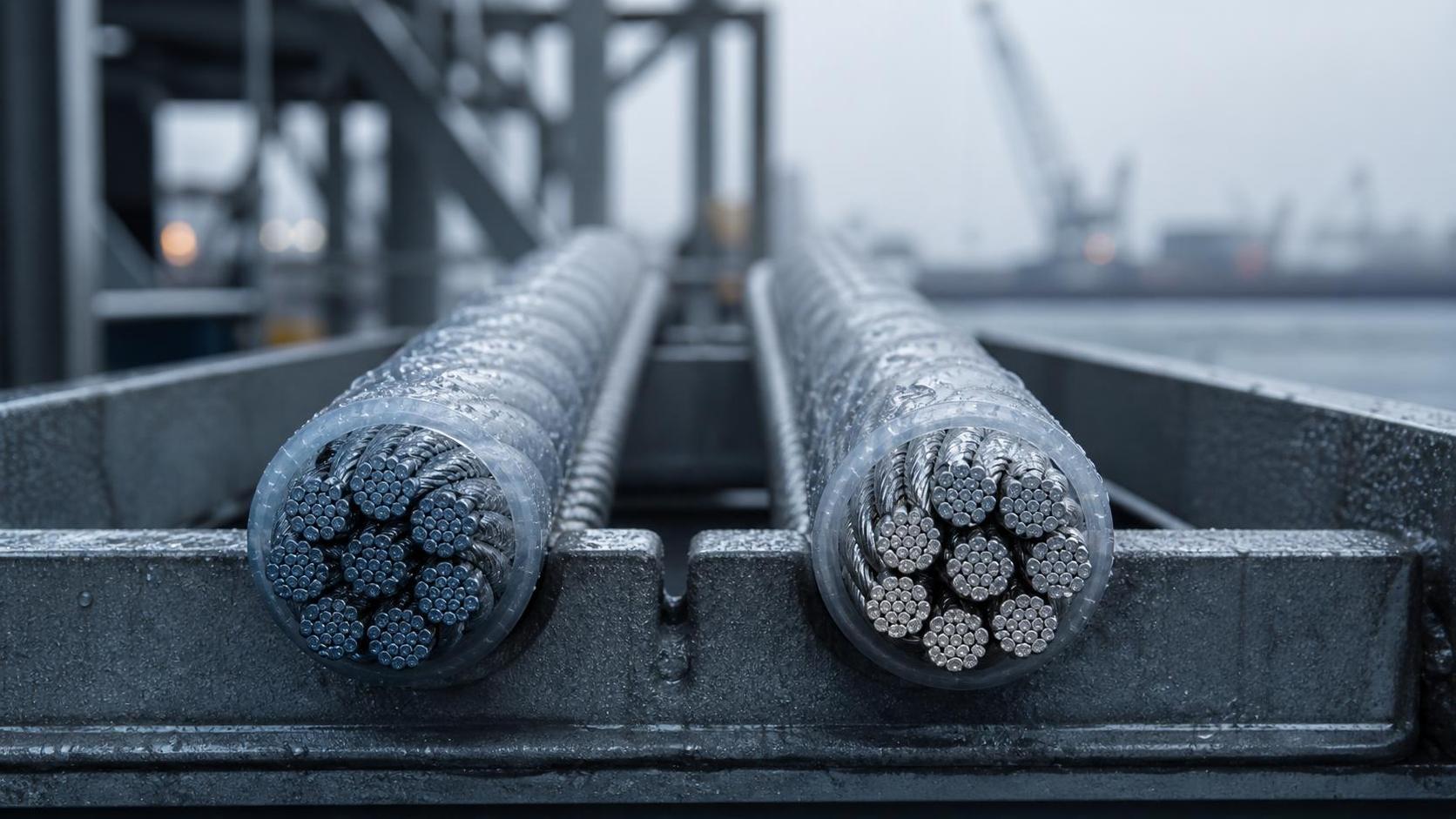
For technical evaluators comparing corrosion-resistant cable options, understanding how salt spray affects 7x7 Nylon coated stainless steel 304 316 wire rope is essential. While nylon coating adds surface protection, long-term performance in marine, port, and high-humidity environments still depends heavily on the stainless steel grade, coating integrity, and service conditions. This article examines the real impact of salt exposure on 304 and 316 structures to support more accurate material selection.
What Technical Evaluators Are Really Trying to Determine
When users search for 7x7 Nylon coated stainless steel 304 316 wire rope, they are usually not looking for a basic definition. They want to know which option will survive longer in salt-laden conditions.
The core decision is practical: whether nylon coating alone is enough to protect the rope, or whether the base alloy still determines service life, maintenance interval, and failure risk.
For technical evaluators, the most important questions are clear. How quickly will corrosion begin, what happens if the coating is damaged, and when does 316 justify its higher material cost?
Short Answer: Salt Spray Still Separates 304 from 316
The overall judgment is straightforward. In salt spray environments, 316 nylon coated wire rope generally performs better than 304 nylon coated wire rope, even when both use similar coating thickness and construction.
Nylon helps by limiting direct contact between the metal surface and chloride-bearing moisture. However, once coating defects, edge exposure, abrasion, or micro-cracks appear, the stainless steel grade becomes the decisive factor.
This is why nylon coating should be viewed as a protective layer, not as a substitute for proper alloy selection. In aggressive coastal, marine, and port environments, 316 usually provides a larger corrosion safety margin.
Why Salt Spray Is So Demanding on Stainless Wire Rope
Salt spray exposure is more severe than ordinary humidity because chloride ions actively attack the passive film that gives stainless steel its corrosion resistance. Repeated wet-dry cycles make this problem worse.
On wire rope, the challenge is amplified by geometry. Multiple wires create crevices, contact points, and tiny surface discontinuities where moisture can remain trapped longer than on flat stainless components.
With 7x7 constructions, flexibility improves usability, but the greater number of contact interfaces can increase the number of locations where retained salt solution may concentrate over time.
That means the real exposure condition is not just external splash. Evaluators must also think about hidden moisture, local abrasion, coating breach points, and cyclic bending during service.
How 304 Behaves Under Salt Spray Exposure
304 stainless steel offers good general corrosion resistance and works well in many indoor, lightly humid, or mildly corrosive settings. It is often selected because it balances availability, processability, and cost.
Under salt spray, however, 304 is more vulnerable to chloride attack than 316. The first issue is often surface staining or rust spotting, especially near damaged coating areas, cut ends, or stressed contact zones.
Once the passive film is locally broken down, pitting can begin. Even if visible corrosion seems limited at first, localized attack is more concerning than uniform discoloration because it can reduce reliability unpredictably.
For evaluators, the key point is that 304 nylon coated rope may still be acceptable in occasional salt exposure or splash-prone areas with regular inspection, cleaning, and lower consequence of failure.
How 316 Performs Differently in the Same Environment
316 stainless steel contains molybdenum, which improves resistance to chloride-induced pitting and crevice corrosion. This is the main reason it is preferred for marine hardware and coastal industrial components.
In the same salt spray conditions, 316 usually shows slower corrosion initiation and better resistance once small coating defects appear. That difference becomes more valuable as service intervals lengthen or inspection access becomes harder.
For port equipment, ship-related fittings, outdoor lifting accessories, and humid coastal installations, 316 often reduces the probability of early corrosion-related replacement, appearance issues, and localized degradation.
It is important to stay precise, though. 316 is not corrosion-proof. If the nylon jacket is repeatedly cut, crushed, or worn through, prolonged chloride exposure can still damage the rope over time.
What the Nylon Coating Actually Contributes
Nylon coating provides several real benefits. It creates a barrier against splash and airborne salt, reduces direct surface abrasion, lowers noise, improves handling comfort, and can protect adjacent equipment surfaces.
It also helps reduce contamination buildup on the metal surface during early service life, especially where the rope is routed near structures that produce intermittent salt mist, washdown residue, or condensation.
But technical evaluators should avoid a common mistake: treating coating as complete sealing. In practice, coatings can develop pinholes, scratches, edge exposure, stress whitening, or wear points during transport and use.
Once that happens, salt solution can penetrate locally. If the application includes bending over pulleys, repeated tension cycling, or contact with metal guides, coating integrity may decline faster than expected.
Failure Risk Usually Starts at the Weakest Point
In salt environments, corrosion rarely develops evenly across every part of the rope. It typically starts where protection is weakest, such as cut ends, terminations, clamps, bent zones, or sections with coating damage.
This matters because system reliability is governed by local defects, not by the best-looking sections. A rope can appear acceptable externally while hidden corrosion develops at concentrated exposure points.
For that reason, salt spray evaluation should include the full assembly design. The rope grade, coating, end fitting design, drainage conditions, contact materials, and maintenance access all affect real service life.
When 304 Nylon Coated Rope Is Still a Reasonable Choice
304 remains a practical option when chloride exposure is light, intermittent, or secondary rather than constant. Examples include sheltered outdoor installations, inland humid sites, and equipment with frequent inspection cycles.
It can also make sense where replacement is easy, loads are moderate, and the cost premium of 316 does not produce meaningful lifecycle savings. In these cases, specification discipline matters more than defaulting to the highest grade.
However, the evaluator should confirm that salt deposition is not underestimated. Many “general outdoor” locations near coastlines, ports, or deicing operations behave more aggressively than initial site descriptions suggest.
When 316 Is the Better Engineering Decision
316 should usually be prioritized when the rope faces regular salt spray, marine atmosphere, dockside exposure, offshore support conditions, or washdown environments containing chlorides.
It is also the stronger choice when failure consequences are high, inspection is difficult, appearance retention matters, or the rope is expected to remain in service for long intervals without frequent replacement.
For technical evaluators, this is often the real threshold question: not whether 316 is better in theory, but whether the cost difference is justified by lower corrosion risk and better lifecycle predictability.
In many industrial settings, the answer is yes. The incremental material cost is often modest compared with shutdown risk, labor for replacement, and the consequences of premature corrosion in the field.
How to Evaluate 7x7 Nylon Coated Stainless Steel 304 316 Wire Rope More Accurately
A useful evaluation starts with exposure mapping. Identify whether the rope will face direct spray, airborne salt, occasional cleaning chemicals, standing moisture, or only seasonal contamination.
Next, review mechanical damage risk. A coating performs best when contact pressure, sharp edges, and repeated flexing are controlled. If abrasion is likely, coating benefit may decline much faster than lab assumptions suggest.
Then assess maintenance reality. If the installation can be rinsed, inspected, and replaced easily, 304 may remain viable. If maintenance is irregular or access is restricted, 316 deserves stronger consideration.
Finally, examine the termination and rope construction details. Even the right stainless grade can underperform if assembly points trap chlorides or expose unprotected metal during installation.
Related Product Structures Can Change the Selection Logic
Not every application needs the same rope construction. Flexible 7x7 nylon coated rope is often chosen for handling and routing benefits, but some traction and support scenarios require higher rigidity and lower stretch.
In such cases, a single-strand product such as 1x19 Stainless Steel Wire Rope 0.4-5.0mm use For Traction Drive may be more appropriate, especially for precision-guided movement or compact installation paths.
That type of structure is used in traction drive, elevators, outdoor facilities, curtain wall support, medical devices, and precision machinery. Available stainless grades include 201, 304, 316, and 316L, with diameters from 0.4 to 5.0 mm.
For evaluators comparing alternatives, this is a useful reminder: corrosion performance is not the only criterion. Structure, rigidity, bending behavior, and installation geometry also affect the right material decision.
What to Ask a Supplier Before Finalizing the Specification
Ask which stainless grade is used under the nylon layer, how coating thickness is controlled, and whether cut ends or exposed sections need additional protection during assembly.
Request information on applicable standards, test capability, and production consistency. Manufacturers with full-process control from wire drawing to rope closing can usually offer more stable quality across batches.
It is also worth confirming available diameters, reel lengths, packaging, and lead times early, especially for projects requiring custom assemblies or integrated rope, sling, and chain supply.
For industrial buyers, supplier capability matters beyond product data sheets. Stable process control reduces variation in coating quality, strand consistency, and mechanical reliability across large-volume orders.
Conclusion
Salt spray exposure does not affect all stainless nylon coated ropes equally. Between 304 and 316, the more chloride-resistant 316 grade usually delivers better long-term performance once real-world coating damage and moisture retention are considered.
Nylon coating adds meaningful protection, but it cannot fully compensate for the limits of the underlying alloy in aggressive marine or coastal service. For technical evaluators, the right decision comes from balancing exposure severity, inspection conditions, failure consequence, and lifecycle cost.
If the environment is mildly corrosive and maintenance is easy, 304 may still be sufficient. If salt exposure is regular, hidden, or operationally critical, 316 is generally the more defensible specification for 7x7 Nylon coated stainless steel 304 316 wire rope.
Navigation
Send Us A Message



Shandong Faster Technology Co., Ltd. is a professional manufacturer of steel wire ropes.
Get in Touch
*We respect your confidentiality and all information are protected.