





How to Choose Wire Rope by Load, Bending Cycle, Environment, and Safety Factor
Knowing how to choose wire rope is not simply a matter of matching a diameter to a stated lifting load. For a project manager, the rope is part of a working system that includes the hoist or winch, sheaves, drums, terminations, sling angles, load shape, operating environment, and inspection routine. A rope that looks adequate on a capacity sheet can still wear prematurely, crush on the drum, corrode internally, or create an unsafe lift if those conditions are ignored.
The most reliable selection process starts with the actual duty rather than the product catalogue. Ask what the rope will carry, how often it bends, where it will operate, and what happens if a component fails. Those answers lead to a more defensible specification than choosing the highest nominal strength available.
Start with the real load, not just the rated load
The first calculation should identify the maximum load seen by the rope in service. This may include the lifted item, lifting beam, hook block, rigging hardware, attachments, and any dynamic effect created by starting, stopping, snagging, or uneven handling. A static weight is only one part of the picture. Construction lifting, port handling, mining, and vessel operations often introduce movement that should be considered during engineering review.
For sling assemblies, load distribution deserves special attention. A four-leg bridle does not automatically mean that all four legs share the load equally. The load’s center of gravity, pick-point position, leg angle, and stiffness of the object can cause one or two legs to carry more than expected. In practical lifting work, a stable load and correctly positioned pick points are often more valuable than adding legs without confirming how they will actually tension.
Wire rope minimum breaking force, working load limit, and the capacity of the complete assembly are related but are not interchangeable. Terminations, hooks, master links, ferrules, and sling geometry can govern the final rating. The appropriate safety factor should be determined from the equipment type, intended duty, applicable regulations, and the governing project or local standard—not selected casually from a generic rule of thumb.
Bending cycles often decide rope life
A rope used as a fixed restraint has a very different life profile from one that repeatedly travels over sheaves and winds through multiple drum layers. Every bend creates stress between wires. Over time, this bending fatigue can lead to broken wires even when the rope is never close to its maximum rated load.
This is where rope construction matters. A more flexible construction with a larger number of smaller wires can perform better where repeated bending is the dominant concern. A construction with fewer, larger outer wires may offer stronger resistance to abrasion in a rough-duty application, but it may not be the best answer for a high-cycle reeving system. There is no universally “best” construction; the duty cycle determines the trade-off.
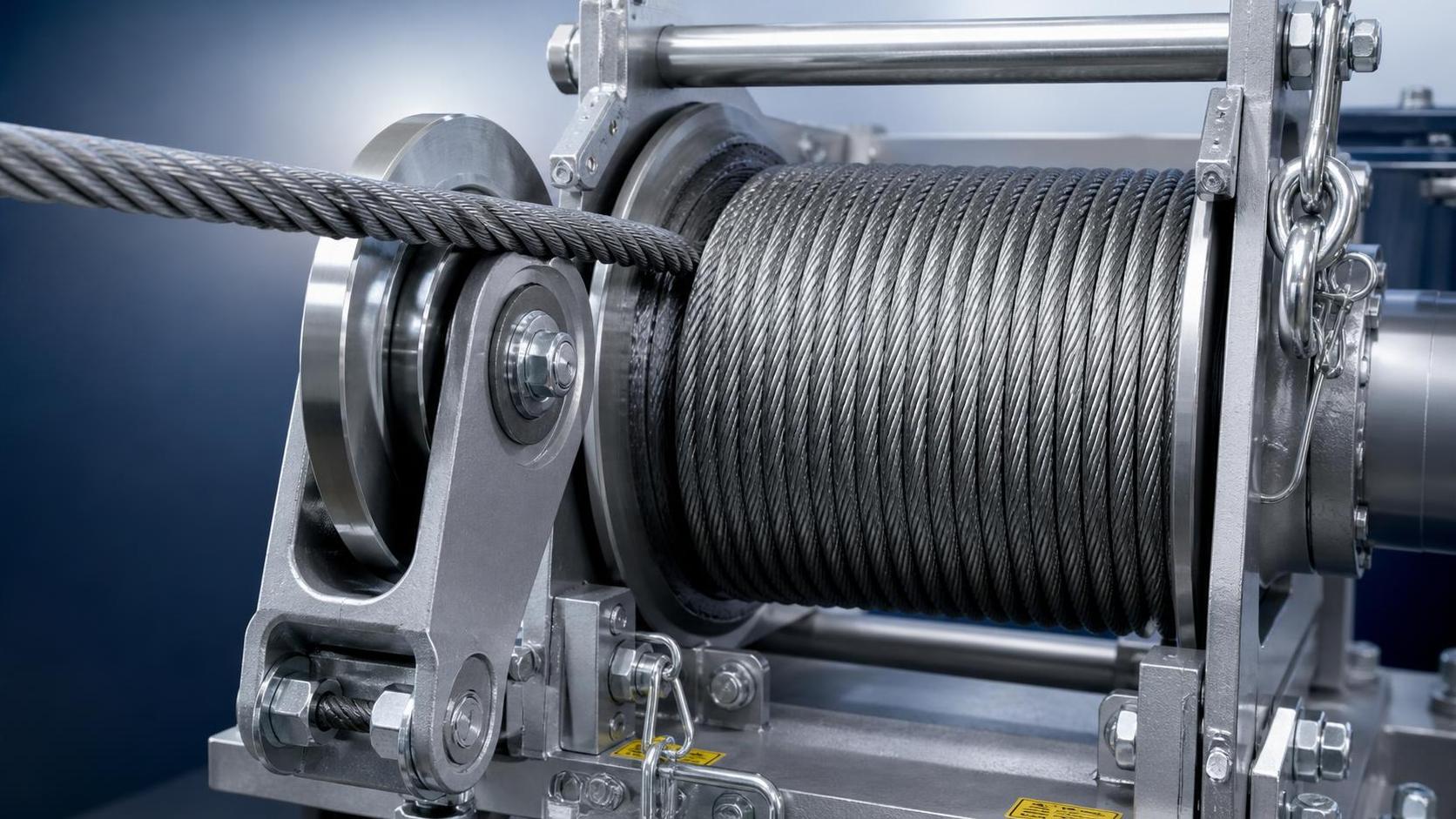
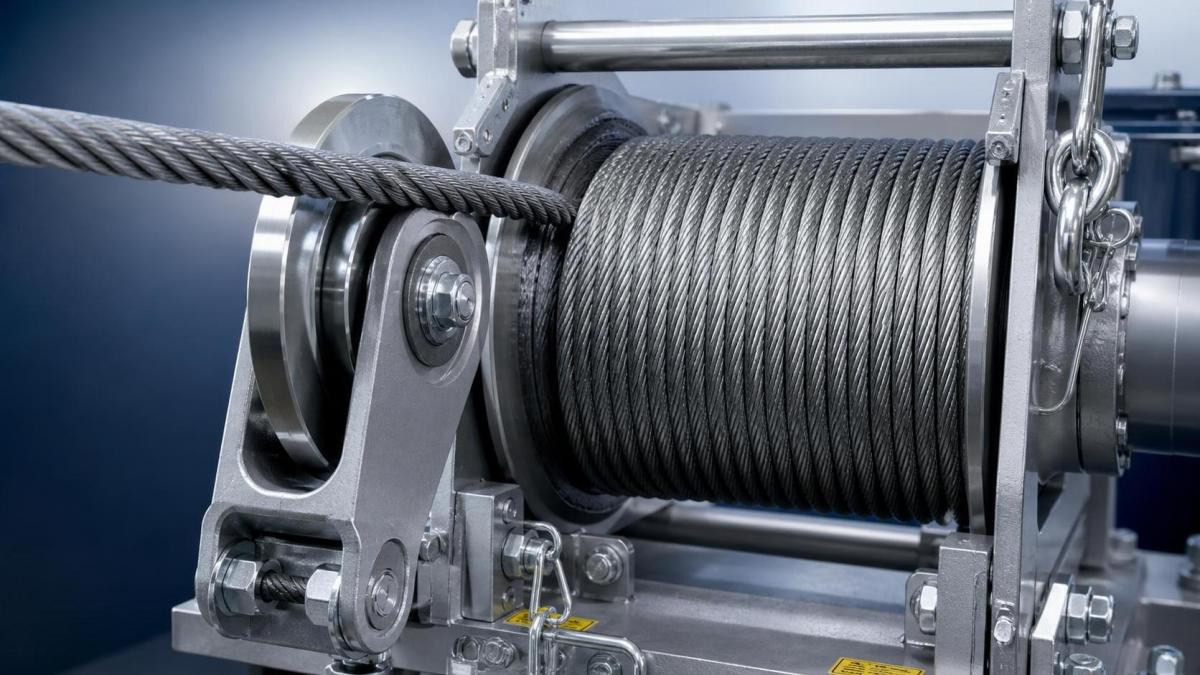
The sheave and drum arrangement must be reviewed at the same time. Sheave diameter, groove condition, fleet angle, drum grooving, and multilayer spooling all affect fatigue and crushing. A rope selected carefully for a crane can still be damaged quickly by a worn groove or poor spooling pattern. If a replacement rope repeatedly fails in the same location, the equipment geometry should be inspected before changing rope grade again.
Match the rope to corrosion, abrasion, and contamination
Environmental exposure is frequently underestimated during procurement. Bright steel rope may be suitable for controlled indoor use when lubrication and inspection are maintained, but it is not automatically appropriate for wet construction sites, ports, fishery equipment, or marine lifting. Salt, standing water, airborne chemicals, dust, and abrasive particles do more than affect appearance; they can accelerate surface wear and make internal degradation harder to detect.
Galvanized wire rope is commonly considered where corrosion resistance is needed without moving to stainless steel. Stainless steel may be justified in more demanding corrosive environments, although its selection should still be based on the specific exposure, mechanical requirement, and cost of lifecycle replacement. Plastic-coated ropes can help in applications that require surface protection, identification, or reduced contact damage, but the coating also needs inspection because it can conceal corrosion or broken wires beneath it.
In abrasive service, look beyond corrosion protection. Contact with sharp edges, damaged pulleys, ore, concrete, or steel structures can remove outer wire material rapidly. Edge protection, correct sling positioning, and avoiding side loading on hooks are operational controls, not optional accessories. No rope construction can compensate for dragging a loaded sling across an unprotected sharp edge.
Choose the core and construction for the equipment
Core selection affects stretch, crushing resistance, flexibility, and behavior on the drum. A fiber core can provide flexibility and lubricant storage in suitable applications. An independent wire rope core (IWRC) generally provides greater resistance to crushing and lower stretch, which can be useful in demanding lifting, hoisting, and multilayer spooling conditions. The choice should reflect the machine design rather than a blanket preference for one core type.
Common constructions such as 6x19, 6x24, 6x37, 7x19, and 19x7 are chosen for different balances of flexibility, abrasion resistance, rotational behavior, and handling needs. For example, a project involving a running line over sheaves should prompt a different discussion from a short, fixed-length sling. Tell the supplier whether the rope is for a winch, elevator-related equipment, lifting sling, guy line, marine application, or traction duty. “General purpose” is rarely enough information to specify a critical rope correctly.
Treat the sling assembly as a system
When the task calls for rigging rather than bulk rope, the assembly details matter: leg length, master link clearance, thimble size, mechanical splice or ferrule method, hook type, latch condition, and the expected hitch arrangement. A four-leg assembly can offer good load stability when the load is properly balanced and each leg is set up to engage as intended.
For heavy lifting where ready-made end attachments are needed, an assembly such as the 4 Leg Wire Rope Sling Carbon Steel With Latched Eye Sling Hook for Heavy Lifting may be evaluated as part of the rigging plan. Its mechanically formed thimble eyes, oblong master link, and latched hooks address practical connection needs, but the project team must still verify leg angle, total assembly rating, hook compatibility, and load balance before use. A sling should never be selected only because the number of legs appears reassuring.
Build safety factor into the decision, then maintain it
Safety factor is not a substitute for inspection or correct use. It is a design margin applied within an approved lifting or operating framework. Once the rope is in service, its condition changes. Broken wires, corrosion, diameter reduction, kinking, birdcaging, heat damage, crushed sections, and damaged end terminations may all require action according to the relevant inspection criteria and site procedures.
A useful procurement question is: who will inspect this rope, and what information will they have? Traceable product details, construction, diameter, core type, finish, and assembly configuration make later inspection and replacement more controlled. This is especially important when different crews handle lifting equipment across shifts or sites.
What to provide when requesting a quotation
A complete request should state the maximum working load, lifting or pulling arrangement, number of falls or legs, operating frequency, sheave and drum information where relevant, required length, environmental conditions, end fittings, and applicable project requirements. Photos or drawings are valuable when replacing an existing sling or when clearances are tight.
Manufacturers with control over wire drawing, stranding, rope closing, and finished-product inspection can usually provide more useful technical feedback because they can discuss construction and processing together. Shandong Faster Technology Co., Ltd., for example, supplies galvanized, stainless steel, and plastic-coated wire ropes in 1–20 mm diameters, alongside customized sling processing and chain grades from G30 through G100. That integrated rope-sling-chain capability is helpful when a project needs the connection points and lifting components reviewed together rather than purchased as unrelated items.
The practical answer to how to choose wire rope is therefore not “choose the strongest rope.” Choose the rope and assembly that suit the load path, bending exposure, environment, equipment geometry, and required safety margin—and make sure the inspection plan is realistic for the people who will use it.
Navigation
Send Us A Message



Shandong Faster Technology Co., Ltd. is a professional manufacturer of steel wire ropes.
Get in Touch
*We respect your confidentiality and all information are protected.