





Buying 8mm Galvanized Wire: How Coating Weight and Tensile Strength Affect Value
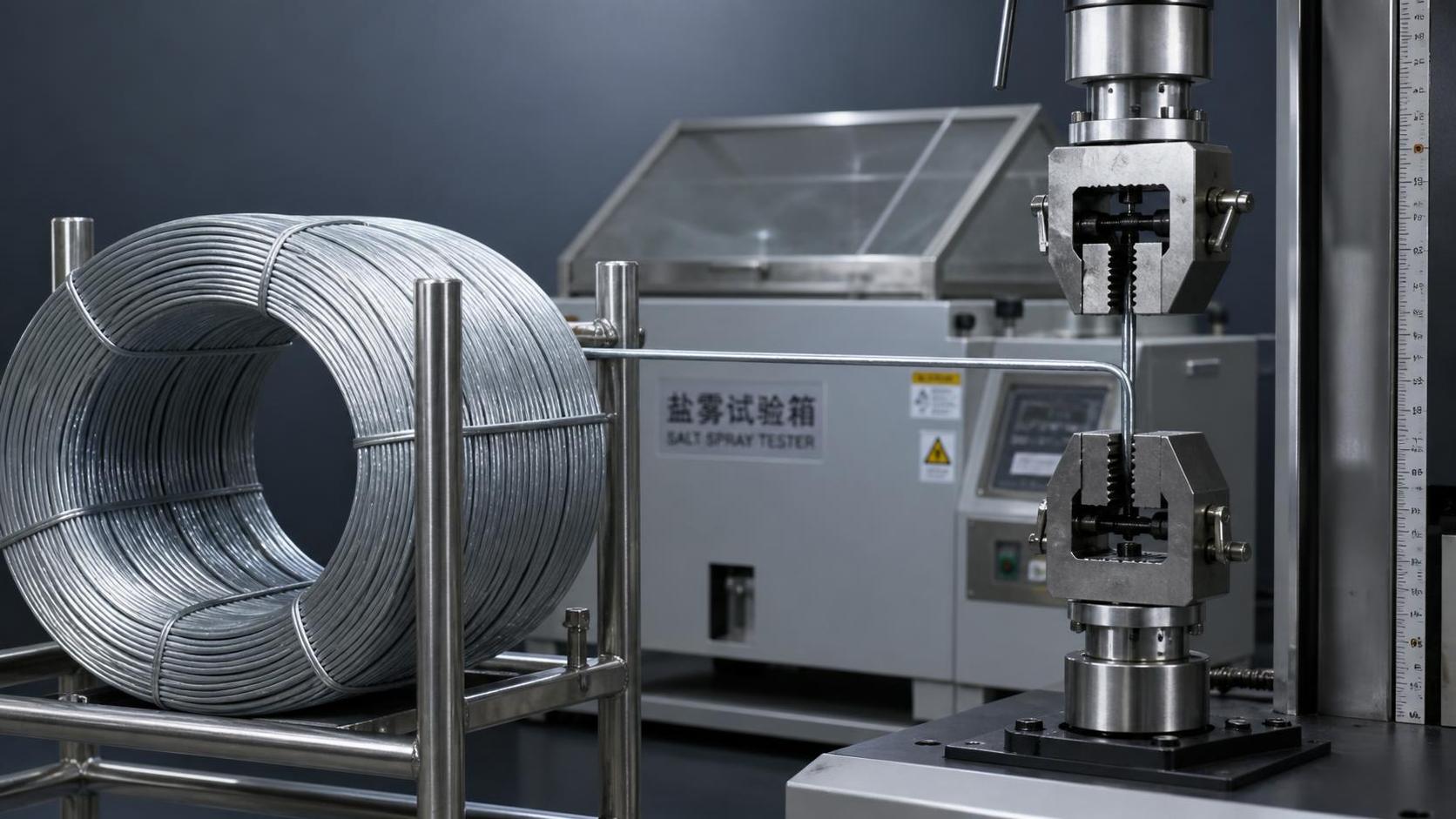
Unit price can make one 8mm galvanized wire offer appear interchangeable with another, yet the installed cost may differ sharply once corrosion exposure, mechanical loading, handling losses, and replacement intervals are considered. For galvanized wire 8mm, coating weight and tensile strength are the two specifications most likely to alter that comparison. They should be stated separately from diameter, coil weight, and finish, then assessed against the actual duty rather than treated as generic quality claims.
An 8mm wire may be used for securing, tensioning, structural tying, barriers, industrial fastening, or selected fabrication work. These uses expose it to different combinations of moisture, salt, abrasion, bending, and sustained load. A low initial price has limited value when the zinc layer is consumed early, or when the wire strength does not match the required working condition.
Coating weight changes the corrosion-cost equation
Galvanizing protects steel primarily by placing zinc between the base metal and the environment. Coating weight, normally expressed per unit area, is a more useful purchasing reference than visual brightness alone. A wire can look uniformly silver at delivery while carrying a comparatively light zinc layer. Surface appearance cannot establish how much protection remains after outdoor storage, installation abrasion, and prolonged exposure.
For dry indoor use, a lighter coating may be technically sufficient if the wire will not contact corrosive materials and can be inspected easily. Conditions change materially around ports, coastal construction, wash-down areas, mines, chemical dust, agricultural environments, and locations where rainwater remains trapped at contact points. In these cases, coating weight should be agreed as a measurable requirement, with the applicable test method and acceptance basis recorded in the purchase specification.
Hot-dip galvanized wire generally has a heavier and more robust zinc coating than electro-galvanized wire, although the required result should still be confirmed by the stated coating requirement rather than assumed from the process name. Hot-dip surfaces may be less cosmetically smooth, while electro-galvanized wire can have a brighter appearance. Neither characteristic alone defines service suitability. Where surface finish affects forming, threading, welding preparation, or contact with other components, it should be reviewed alongside corrosion performance.
Coating thickness also interacts with handling. Repeated dragging across concrete, sharp-edged guides, or steel members can remove zinc locally. Tight bends may crack an unsuitable coating. A practical comparison therefore includes the coil or reel arrangement, protective wrapping, and whether the wire will pass through guides, clamps, or other wear points after installation.
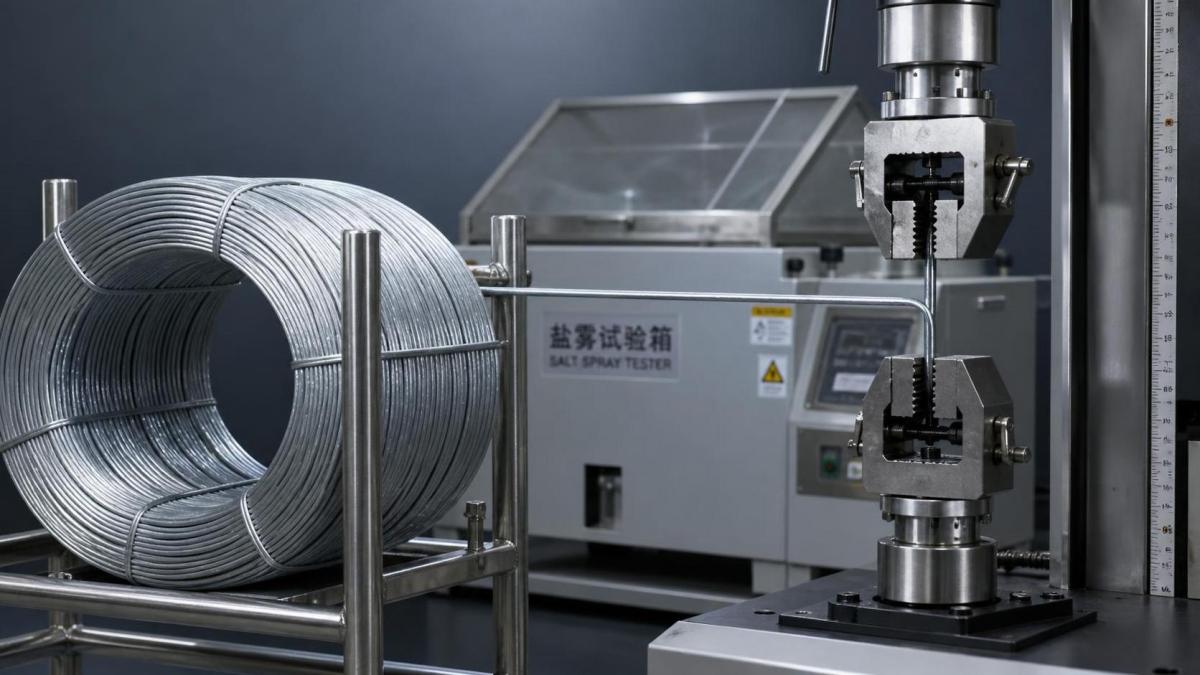
Tensile strength must match the intended duty
Tensile strength describes the stress at which a wire specimen fractures under a tensile test. It is commonly stated in N/mm² or MPa. For an 8mm round wire, the nominal cross-sectional area is approximately 50.3mm², calculated from the nominal diameter. Multiplying that area by a specified tensile strength can indicate an approximate theoretical breaking load. It must not be used directly as an allowable working load.
Actual service capacity can be reduced by bends, knots, threads, weld heat effects, gripping methods, corrosion, wear, fatigue, and load direction. Assemblies involving hooks, clips, turnbuckles, anchors, or other fittings must be evaluated as a system. The lowest-rated element, and the relevant application rules, determine the permissible arrangement. A wire selected for static restraint may be unsuitable for cyclic tension or lifting-related service even when its nominal breaking result appears high.
Higher tensile strength can support a higher breaking load at the same diameter, but it may also affect ductility and forming behavior. If an 8mm galvanized wire must be bent repeatedly, wrapped around a small radius, or formed on site, excessive hardness can create installation problems or increase the risk of localized damage. The specification should therefore identify whether strength, bendability, surface condition, or fatigue resistance has priority.
Do not compare tensile grades without confirming their test basis. A supplier quotation should identify the minimum tensile range, the nominal diameter tolerance, and whether the reported value applies to the finished galvanized wire. Values based on uncoated drawn wire may not represent the same finished condition. When strength is safety-sensitive, a test certificate linked to the delivered heat or production lot gives a clearer basis for release than a general catalogue value.
Diameter tolerance and zinc mass should be read together
A stated 8mm diameter is a nominal designation. The actual finished diameter may vary within an agreed tolerance, and galvanizing contributes to the final measurement. Comparing material only by kilograms can conceal meaningful differences: a heavier coil may reflect greater steel mass, more zinc, a larger actual diameter, or simply a different delivered length. Ordering by length, weight, or number of coils without defining the other variables can create disputes at receipt.
Request the following fields in the same technical schedule:
- Nominal diameter of 8mm and the permitted finished diameter tolerance.
- Steel grade or required tensile-strength range, including the test condition.
- Galvanizing method and minimum coating weight, with a referenced measurement method.
- Coil or reel net weight, internal diameter, winding direction, and permitted joins where relevant.
- Required straightness, surface condition, lubricant status, and any restrictions on white rust or exposed base steel.
These details prevent a common mismatch: receiving wire that meets an approximate diameter and weight target but cannot run through existing forming equipment, fit a specified clamp, or survive the expected environment. They also make quotations comparable where different suppliers use different coil sizes or tolerances.
Where the lower-cost option can become expensive
Lightly coated wire stored outdoors before installation may begin losing protection before it enters service. This is especially relevant when delivery staging is uncertain or coils remain on open ground. Packaging should keep coils dry, off the floor, and protected from condensation. Wet packaging should be opened and the wire allowed to dry rather than left sealed with trapped moisture.
Strength-related cost often appears after installation. A wire that elongates excessively under sustained tension can require re-tensioning, while a wire with poor consistency between coils can disrupt forming settings or fastening operations. Receiving inspection should include coil identification, visible coating continuity, diameter sampling at several positions, and documentation review. Any destructive tensile or coating test should be agreed in advance so that sample selection, method, and disposition are clear.
For lifting machinery and frequent bending duties, round galvanized wire should not be substituted for a designed wire rope simply because the nominal diameter is similar. A 6x37+IWRC rope has multiple wires arranged in strands around an independent wire-rope core, giving a different balance of flexibility, breaking force, and pulley interaction. Where the application calls for a rope in the 10-22mm range, the construction and minimum breaking force should be selected from the applicable rope specification, such as the details associated with 6x37 Galvanized Steel Wire Rope 10-22mm used for lifting machinery, rather than inferred from an 8mm wire requirement.
Build value into the comparison sheet
Separate commercial comparison from technical release. First normalize offers to the same delivered unit, such as cost per metre or per kilogram at the same requested coil size. Then record coating weight, tensile range, actual diameter tolerance, packaging, inspection documents, and lead-time assumptions on the same line. An offer missing a required value should remain marked as unconfirmed instead of being treated as equivalent.
For a corrosive but low-load application, allocating cost to a heavier zinc coating may be more defensible than paying for a higher tensile grade. For a dry, high-tension application with controlled installation, tensile performance and dimensional consistency may carry greater weight. Where both corrosion and load are significant, reducing either requirement merely transfers risk into maintenance, downtime, or premature replacement.
The most reliable specification for galvanized wire 8mm is therefore specific about the environment and the duty. It defines the coating requirement, strength range, finished diameter tolerance, delivery form, and verification documents before material is ordered. That level of definition makes price differences traceable to real material differences instead of leaving value to be judged from a coil’s appearance or a single quoted number.
Navigation
Send Us A Message



Shandong Faster Technology Co., Ltd. is a professional manufacturer of steel wire ropes.
Get in Touch
*We respect your confidentiality and all information are protected.