





DIN5685 A/C Chain Tolerances and What They Mean for Fit and Safety
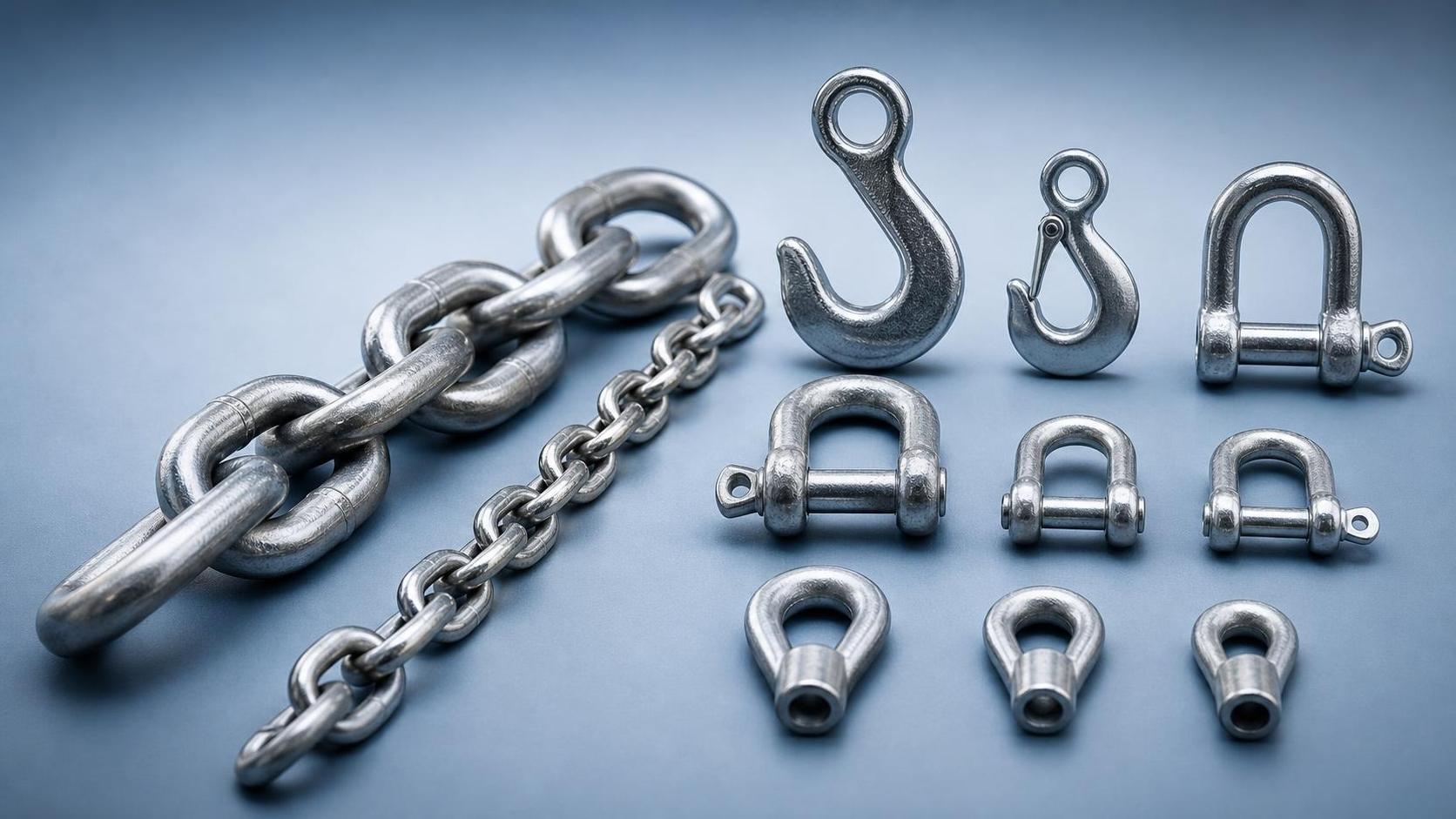
When specifying DIN5685 A/C Short or Long Link Chain, tolerance is more than a dimensional detail—it directly affects assembly fit, load distribution, and operational safety. For quality control and safety managers, understanding how chain tolerances influence compatibility with hooks, sprockets, and connecting components is essential to reducing risk and ensuring reliable performance in demanding industrial applications.
Why Tolerance Matters More Than Many Buyers Expect
For quality and safety teams, the core issue is simple: a DIN5685 A/C chain that meets nominal size but drifts outside practical tolerance can still create field problems.
That is why tolerance should never be treated as a minor manufacturing note. It determines whether the chain fits mating hardware correctly and whether force is transferred as intended.
In real operations, poor tolerance control often appears first as assembly resistance, unstable engagement with hooks, uneven movement through guides, or accelerated wear at contact points.
These symptoms are not cosmetic. They can lead to side loading, local deformation, unexpected vibration, and a higher chance of premature failure under repeated service conditions.
For DIN5685 A/C Short or Long Link Chain, tolerance review is especially important when the chain is used with connectors, lifting accessories, securing points, or motion-related components.
What DIN5685 A/C Chain Tolerances Usually Cover
When buyers discuss tolerance, they often think only about wire diameter. In practice, several dimensions matter together, and each one influences fit in a different way.
Typical checkpoints include material diameter, inside link length, inside width, outside width, and overall link consistency across a production batch.
Short link and long link versions do not behave identically. A short link chain usually offers tighter articulation and more compact geometry, while a long link chain provides larger internal clearance.
That difference affects how the chain seats in hooks, passes through guides, wraps around hardware, or aligns with surrounding components during loading and movement.
For inspection teams, the key is not only whether one link passes measurement, but whether dimensional variation remains controlled across the full chain length.
How Tolerance Affects Fit With Hooks, Connectors, and Attachments
The most immediate safety consequence of chain tolerance appears at connection points. If inside width is too small, a hook or shackle may not seat fully.
If the width is too large, the connection may become unstable, allowing excessive movement, rotation, or impact loading during service. Neither condition supports predictable performance.
Link length tolerance also matters. Excessive variation can change the chain pitch relationship and create irregular positioning when connected to repeated or fixed-dimension hardware.
For safety managers, this means compatibility must be verified with actual mating parts, not judged only from catalog nominal sizes or general assumptions about standard interchangeability.
This is particularly relevant in multi-component lifting systems, where chain dimensions must work alongside wire rope assemblies, master links, hooks, and end fittings without unwanted play.
In some heavy lifting applications, buyers combine chain accessories with rope-based assemblies such as 3 Leg bright oil steel Wire Rope Sling Hook and Loop 3tons Lifting Slings to build a more adaptable rigging setup.
In that kind of arrangement, dimensional consistency across every connection point becomes critical because the system safety depends on the whole assembly, not on one compliant part alone.
Why Tolerance Has a Direct Impact on Load Distribution and Wear
Chain systems do not fail only because of extreme overload. Many problems begin with uneven load sharing caused by dimensional inconsistency between links or between the chain and its hardware.
When one connection point carries load differently because of poor fit, force concentration increases locally. That raises surface pressure and speeds up wear, indentation, and deformation.
Over time, repeated small impacts become more damaging than they first appear. A chain that rattles, binds, or shifts excessively can lose service life well before visible fracture occurs.
For long-term reliability, tolerance control helps preserve smoother load transfer. It also reduces the likelihood of link twisting or abnormal contact under dynamic or intermittent loading.
This matters in ports, construction sites, mining environments, and marine handling, where vibration, contamination, and repeated starts and stops magnify the effects of poor dimensional control.
What Quality Control Teams Should Actually Check
For incoming inspection, the best approach is practical and repeatable. Start by confirming the applicable DIN5685 A or C type, short link or long link configuration, and intended application.
Then measure the dimensions that affect fit most directly, especially wire diameter, internal link length, and internal width. Sampling should cover more than one location in the batch.
Visual inspection is also necessary. Even when dimensions are acceptable, burrs, weld irregularities, inconsistent finishing, or local distortion can still interfere with safe assembly.
For critical use, a go or no-go compatibility check with actual hooks, shackles, pins, or guides is often more valuable than measurement data alone.
Quality teams should also verify batch traceability, material consistency, and whether the supplier can show stable process control rather than isolated final inspection results.
A capable manufacturer should be able to explain how dimensional stability is maintained from raw material through forming, welding, finishing, and final quality verification.
How Safety Managers Can Judge Supplier Capability
From a safety perspective, the question is not only whether the supplier can produce chain, but whether they can produce chain with repeatable dimensional discipline.
That usually depends on process control, inspection methods, equipment stability, and the ability to manage variation at scale. Documentation matters, but manufacturing consistency matters more.
Suppliers serving industrial lifting, marine, construction, and mining sectors should understand that chain is rarely used in isolation. It must integrate with broader rigging and securing systems.
Shandong Faster Technology Co., Ltd. operates as a comprehensive manufacturer of wire rope, slings, and chains, which is useful for buyers who need one source to evaluate compatibility across related products.
Its production scope covers galvanized, stainless steel, bright, and plastic-coated steel wire rope products, along with chain grades such as G30, G43, G70, G80, and G100 for varied industrial scenarios.
That kind of integrated supply capability can help reduce mismatch risk during procurement, especially when buyers need custom combinations instead of selecting parts from disconnected vendors.
For example, projects involving construction, ports, or heavy equipment handling may require coordinated selection between DIN chain components and rope sling products with different strengths, structures, and end forms.
Where a lifting plan also uses customized multi-leg assemblies, products such as 3 Leg bright oil steel Wire Rope Sling Hook and Loop 3tons Lifting Slings illustrate how system-level thinking often matters more than single-item selection.
Common Mistakes That Lead to Avoidable Risk
One common mistake is buying only by nominal size and price. That approach ignores tolerance interaction with mating components and often shifts the real cost into downtime, rework, and safety exposure.
Another mistake is assuming all DIN5685 A/C chains from different suppliers perform the same if they look similar. Small dimensional differences can create major compatibility issues in use.
Some teams also rely too heavily on paperwork without performing physical fit checks. Certificates are useful, but they do not replace application-specific verification.
Finally, buyers sometimes evaluate chain separately from the rest of the rigging system. In actual service, safe performance depends on the complete load path and connection geometry.
How to Make Better Specification Decisions
If the application requires compact engagement, controlled movement, or closer interaction with hardware, short link chain may offer better fit control than long link chain.
If larger internal clearance or easier attachment handling is needed, long link chain may be the better choice, provided tolerance remains well managed for the connected components.
The right decision should be based on actual use conditions: static or dynamic loading, frequency of assembly, connector dimensions, environmental exposure, and inspection requirements.
For procurement documents, it is good practice to specify not only the chain standard and nominal size, but also the critical fit dimensions, inspection expectations, and intended mating hardware.
That makes supplier evaluation more objective and reduces the chance of disputes caused by technically compliant but operationally unsuitable material.
Conclusion
For DIN5685 A/C Short or Long Link Chain, tolerance is not a background specification. It is a direct control point for fit, wear behavior, and operational safety.
Quality control personnel should focus on dimensional consistency, real compatibility checks, and supplier process discipline. Safety managers should evaluate the full assembly path, not the chain alone.
When tolerance is understood in practical terms, buyers make better decisions, reduce hidden risk, and build lifting or securing systems that perform more predictably in demanding industrial environments.
Navigation
Send Us A Message



Shandong Faster Technology Co., Ltd. is a professional manufacturer of steel wire ropes.
Get in Touch
*We respect your confidentiality and all information are protected.