





How Rigging Hardware Load Ratings Affect Lifting Safety
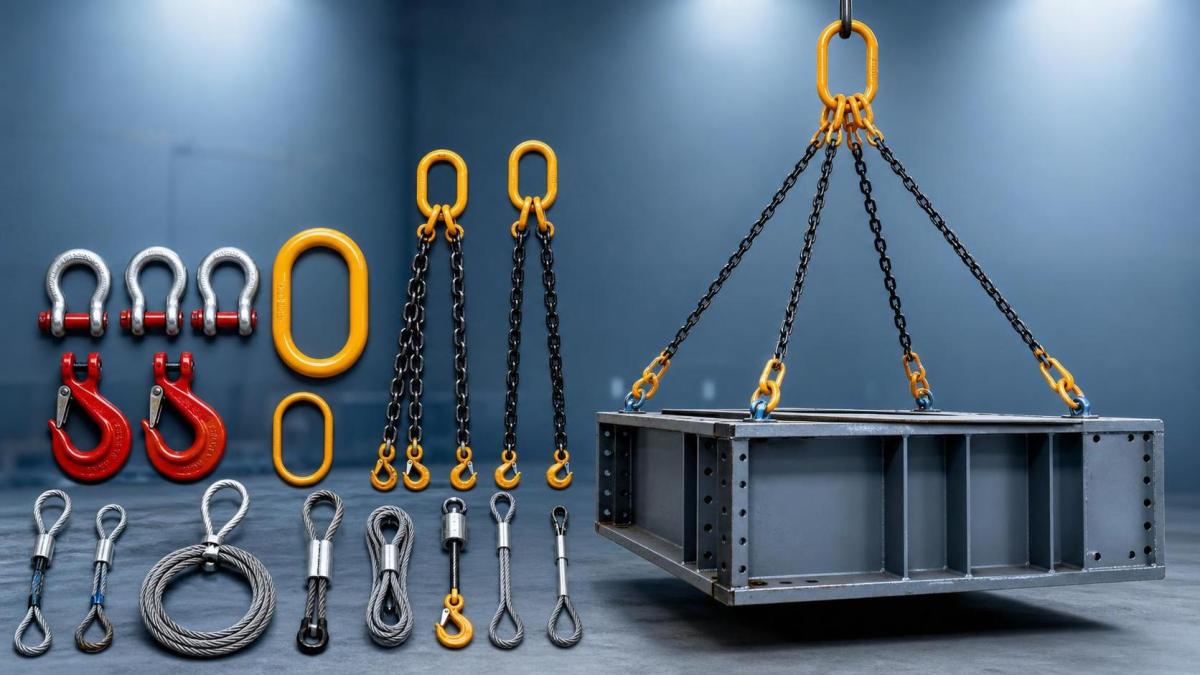
In lifting work, load ratings are where paperwork turns into real risk control. A shackle, hook, master link, chain sling, or wire rope assembly can look oversized and still be the weak point if the marked capacity does not match the actual lifting condition. For QC and safety teams, the practical question is not whether a component has a rating, but whether that rating still applies after you factor in sling angle, connection method, wear, environment, and how the full rigging set has been assembled.
Start with the rating that is actually marked
The first check is simple and often skipped under schedule pressure: find the identification and read it. Reliable rigging hardware should have a clear working load limit or equivalent rated capacity mark, along with traceable product information such as size, grade, batch, or manufacturer reference where applicable. If the mark is missing, painted over, illegible, or does not match the certificate or tag, stop there. A component with unknown capacity is not a lower-confidence part; it is an unverified part.
This matters because people regularly confuse three different numbers:
- Working Load Limit (WLL): the permitted service load under defined conditions.
- Minimum Breaking Force or Breaking Load: a failure threshold, not a lifting allowance.
- Proof or test load: a verification load used during testing, not a field operating limit.
If your team mixes these up, overload incidents become much more likely, especially with small-diameter wire rope and light-duty assemblies where the numbers can look deceptively close.
Check the entire rigging path, not just the headline component
One common failure in lifting reviews is approving the hook and ignoring everything between the hook and the load. The usable capacity of a rigging system is controlled by the lowest-rated compatible component in the load path. That includes end fittings, connectors, sockets, thimbles, chain links, wire rope terminations, and attachment points on the load itself.
A quick review table helps here:
Do not treat load rating as a fixed number in every lift
Load ratings only mean something inside their intended use conditions. A hardware item rated for straight-line loading may not keep the same allowable load under side pull, choke hitch, basket hitch, shock loading, or repeated dynamic loading. QC teams should verify which configuration the rating applies to by checking the product marking, manufacturer data sheet, and the lifting plan.
This is especially relevant when wire rope, sling hardware, and chains are sourced as a combined solution. A supplier with integrated rope-sling-chain capability can reduce mismatch risk, but your review still needs to confirm that all parts were selected as one assembly rather than mixed later in the yard or workshop.
Compare material and coating with the service environment
The rating on the tag is not the whole story if corrosion, abrasion, or temperature exposure changes the condition of the hardware in service. Galvanized, stainless, plastic-coated, and bright-finish products each solve different problems. In ports, ship service, coastal construction, mining transfer points, and wet outdoor duty, corrosion protection is not a cosmetic choice. Once surface loss or pitting starts, inspection frequency and rejection criteria become more important than the original catalog number.
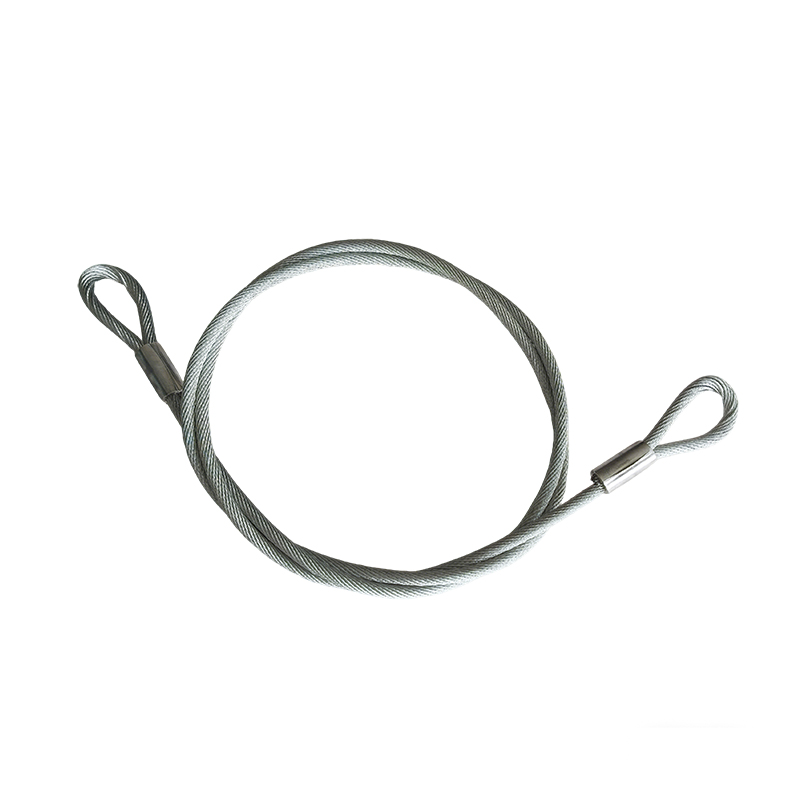
For lighter-duty traction and fixation applications, a compact galvanized rope may be appropriate, but it still needs to be judged by the actual task. For example, 7x7 Steel Core Galvanized Steel Wire Rope 1.2-5.0mm use for Bundle and Fence is positioned for light load scenarios such as small lifting, traction fixation, small winches, and fixed rope applications. The useful detail for a safety review is not the product name itself; it is the fact that diameter, construction, galvanizing option, and minimum breaking force vary by size, so assembly selection cannot be done by appearance alone.
Separate product strength data from allowable lifting use
This is where many internal approvals go wrong. Technical sheets for wire rope often list minimum breaking force by diameter and tensile grade. Those values are useful for engineering comparison, but they are not the same as an approved in-service lifting load unless the finished assembly, termination method, safety factor, and applicable standard are all defined.
If you are reviewing a rope in the 1.2-5.0 mm range, the right question is: what is this rope being asked to do? Small lifting device, traction line, fixed support, and fence or curtain wall restraint do not share the same acceptance logic. A rope that is suitable for traction fixation may not be suitable as a lifting sling component without the correct design basis and end fitting qualification.
Inspect wear in the places that fail first
Formal inspections often spend too much time on general appearance and not enough on the high-stress points. Put attention on bearing surfaces, pin holes, saddle areas, hooks at the throat, chain link contact zones, rope terminations, and the section just behind fittings where bending and fretting accumulate. A component can still look serviceable from a distance and be close to rejection where the load actually transfers.
If the hardware has been exposed to impact loading, snagging, heat, or unauthorized repair, remove it from lifting service until it is reviewed against the manufacturer’s criteria and your internal acceptance rules. Load rating depends on condition. Once the geometry is altered, the marked number on the part is no longer enough.
Traceability is part of lifting safety
Good load control starts before the lift. For incoming inspection, match the hardware marking to the certificate, standard reference, size, grade, and ordered configuration. Where steel wire rope is involved, documents such as GB/T 20118-2006, GB 8918-2006, or EN 12385-4 may be relevant depending on the product and market, but the practical step is to verify which document applies to the exact item you received and whether the supplied declaration matches the construction, diameter, and finish on the material itself.
Manufacturing control also matters here. Suppliers with full-process control from raw material through drawing, twisting, rope closing, and final inspection are generally better positioned to deliver consistent rope properties across batches. That does not replace your inspection, but it does reduce unexplained variation in strength and finish.
Use a short approval sequence before release to site
- Verify the marked rating and identification are readable.
- Confirm the rating matches the planned lifting configuration, not just the load weight.
- Check every connected component and set the system capacity by the lowest-rated verified item.
- Review environment, coating, material, and wear condition against the actual duty.
- Match certificates and standard references to the exact delivered product.
- Reject mixed, modified, or untraceable assemblies from lifting service.
That sequence is usually enough to catch the expensive mistakes: treating breaking force as WLL, mixing unmatched rigging hardware, ignoring angle effects, and approving parts whose markings no longer tell the truth. When load ratings are checked in context instead of in isolation, lifting safety gets much more predictable.
Navigation
Send Us A Message



Shandong Faster Technology Co., Ltd. is a professional manufacturer of steel wire ropes.
Get in Touch
*We respect your confidentiality and all information are protected.